

French Authorities Raid X's Paris Office as Grok AI Probe Expands
French prosecutors expand investigation into X and Grok AI with Paris office raid, examining allegations of child pornography distribution and Holocaust denial content.
French cybercrime investigators raided X's Paris office on Tuesday, marking a significant escalation in an ongoing probe that now encompasses Grok AI. The joint operation involving Europol and French police represents the most aggressive regulatory action yet taken against Elon Musk's social media platform in Europe.
The investigation, initially launched last year, has expanded to include serious allegations: complicity in child pornography possession and distribution, denial of crimes against humanity related to Holocaust denial content, and claims of algorithmic manipulation. Both Musk and former X CEO Linda Yaccarino have been summoned for hearings scheduled for April.
When AI Becomes the Target
The inclusion of Grok AI in the investigation marks a watershed moment for AI regulation. Unlike traditional social media content moderation issues, this probe examines whether AI systems themselves can be held accountable for generating or facilitating illegal content.
Grok, launched as a "less censored" alternative to other AI chatbots, positioned itself as offering more unrestricted responses. That very feature—marketed as a selling point—may now be its legal liability. The AI's willingness to engage with controversial topics without heavy filtering could expose it to charges of facilitating harmful content.
This raises fundamental questions about AI governance. When an AI system generates problematic content, who bears responsibility? The company that trained it? The user who prompted it? Or the AI system itself?
Europe's Hardening Stance
France's aggressive approach signals a shift in how European regulators view big tech accountability. The European Union's Digital Services Act (DSA) provides the legal framework, but individual member states are now interpreting it with increasing severity.

The move from administrative fines to criminal investigations represents a qualitative change in enforcement. Previous regulatory actions against tech giants typically resulted in monetary penalties—however large. Criminal charges carry different stakes entirely: potential imprisonment for executives and operational bans for companies.
Other major platforms are watching closely. Meta, Google, and TikTok all operate AI systems that could face similar scrutiny. The precedent being set in Paris could reshape how AI companies approach content moderation globally.
The Algorithm Question
The allegation of algorithmic manipulation adds another layer of complexity. Prosecutors suggest X deliberately modified its recommendation systems to promote or suppress certain content. If proven, this could establish that platforms have active editorial control—and therefore editorial responsibility—for the content they amplify.
This challenges the long-held platform defense of being neutral conduits for user-generated content. If algorithms actively shape what users see, platforms may be publishers in the eyes of the law.
For AI systems like Grok, the implications are even murkier. Unlike traditional algorithms that surface existing content, AI models generate new text. This creative act could make them more akin to publishers than platforms under existing legal frameworks.
Global Ripple Effects
The investigation's outcome will likely influence AI regulation worldwide. American tech companies have long operated under more permissive content policies, but European enforcement actions increasingly set global standards through practical necessity.
Chinese AI companies, already subject to strict domestic content controls, may find their more restrictive approaches validated by European actions. Meanwhile, smaller AI startups face the challenge of building compliance systems that satisfy increasingly stringent international requirements.
Authors
Related Articles
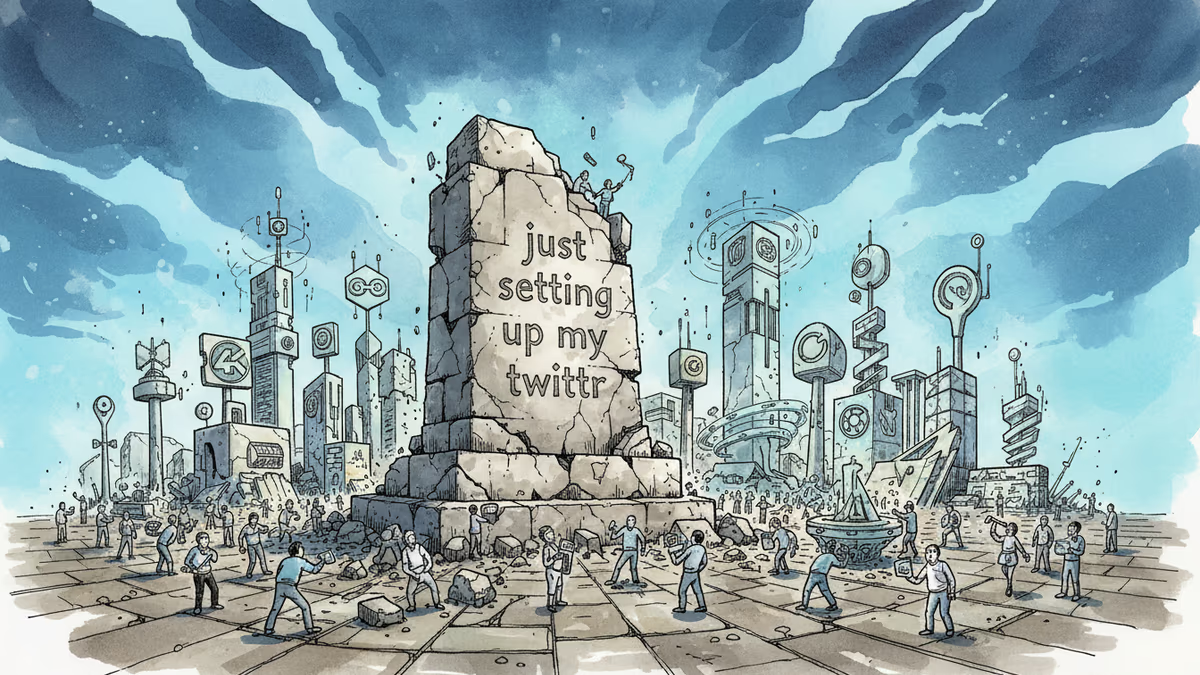
Jack Dorsey's six-word post launched a platform that shaped elections, movements, and media. Two decades later, Twitter is now X — and the story gets stranger.
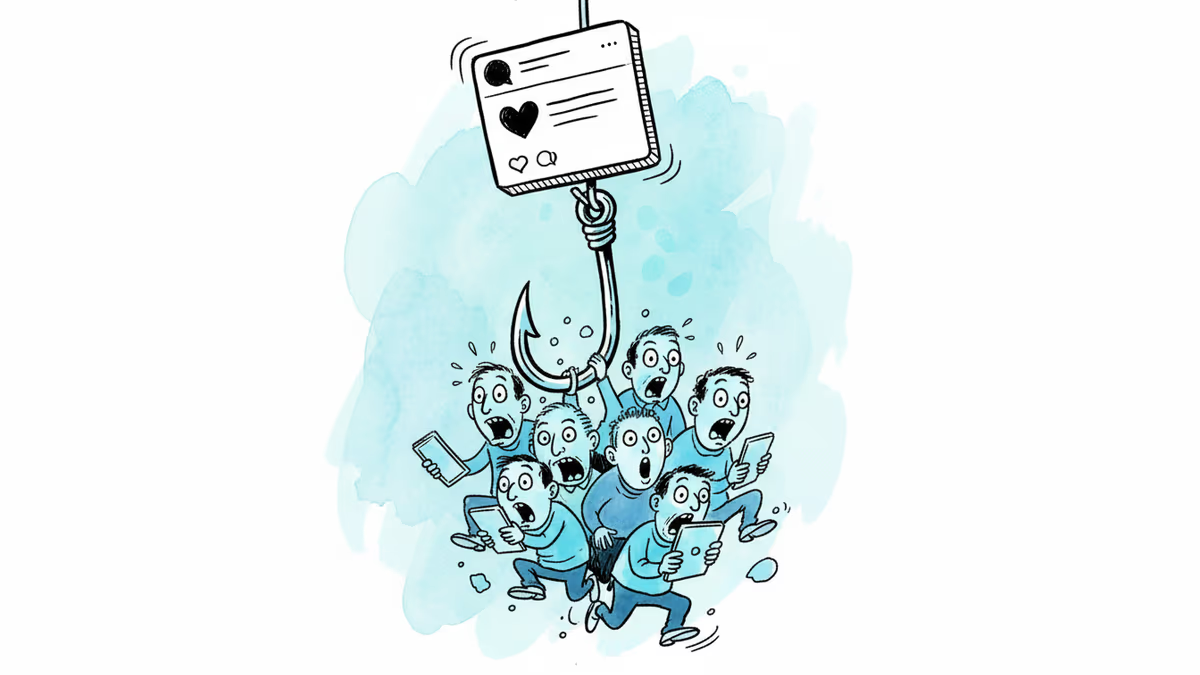
X is experimenting with recommendation links beneath posts mentioning companies. A Starlink ad appeared under a Starlink mention - could this reshape social media advertising?
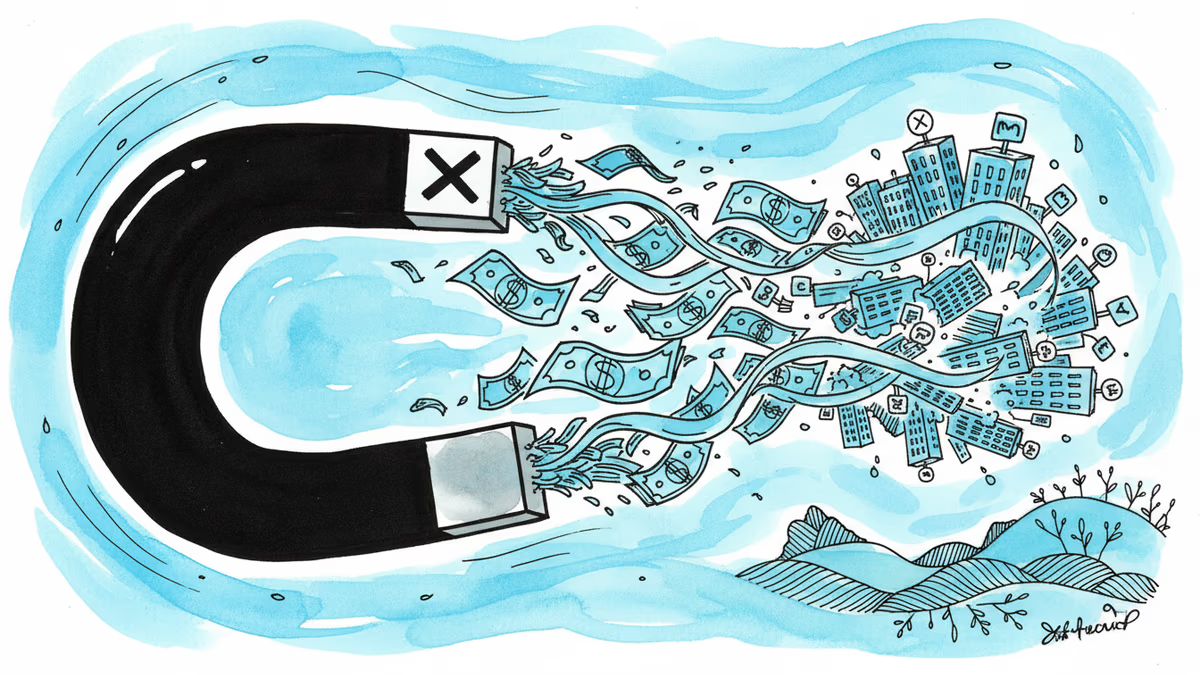
Elon Musk's X revamped its creator monetization with exclusive threads, new paywalls, and partnership labels. It's not just feature updates — it's a bid to reshape the creator economy.
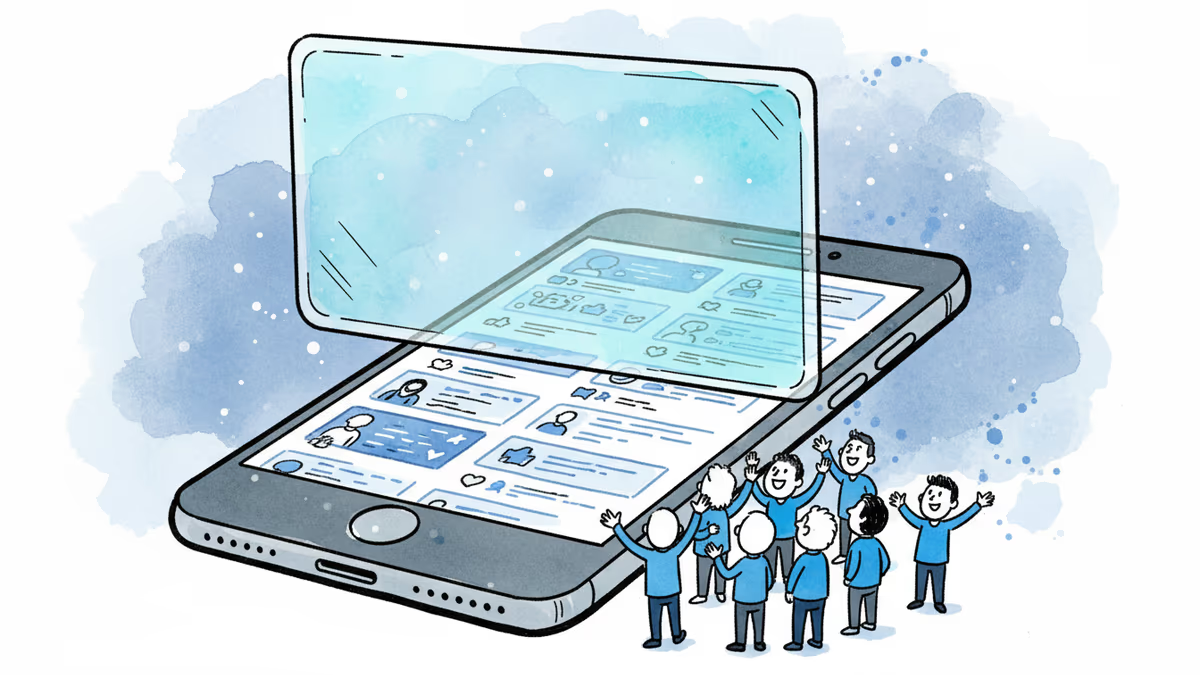
X introduces 'Paid Partnership' labels 7 years after Instagram. This isn't just about compliance—it's about platform survival in the creator economy.
Jack Dorsey's six-word post launched a platform that shaped elections, movements, and media. Two decades later, Twitter is now X — and the story gets stranger.
X is experimenting with recommendation links beneath posts mentioning companies. A Starlink ad appeared under a Starlink mention - could this reshape social media advertising?
Elon Musk's X revamped its creator monetization with exclusive threads, new paywalls, and partnership labels. It's not just feature updates — it's a bid to reshape the creator economy.
X introduces 'Paid Partnership' labels 7 years after Instagram. This isn't just about compliance—it's about platform survival in the creator economy.
Thoughts
Share your thoughts on this article
Sign in to join the conversation