
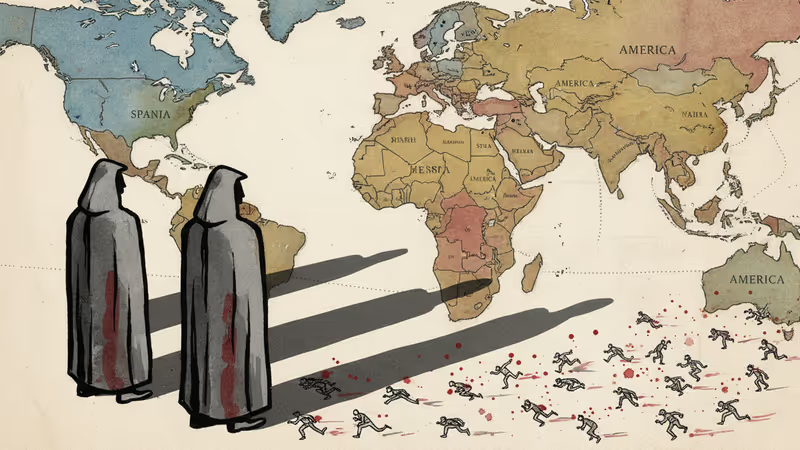
When Democracy Meets Its Shadow: The Franco Parallel
As federal agents sweep Minneapolis and comparisons to fascism mount, scholars draw chilling parallels between Trump's America and Franco's Spain. What history teaches about democracy's fragility.
200,000 Spaniards died during Francisco Franco's "hunger years." Today, as federal agents sweep through Minneapolis and critics invoke comparisons to Hitler's regime, one scholar suggests we're looking at the wrong historical parallel.
The scenes unfolding in America's cities—masked agents in unmarked vehicles, families separated, protesters tear-gassed—have sparked fierce debate about whether the United States is sliding toward fascism. But Rachelle Wilson Tollemar, a Spanish culture scholar, argues that Trump's tactics more closely resemble those of Spain's longest-lasting fascist dictator than Germany's more infamous one.
The Minneapolis Moment
In Minneapolis, a city that overwhelmingly rejected Trump in 2024, thousands of Immigration and Customs Enforcement agents have descended like an occupying force. The operation has already claimed two lives, with federal agents killing residents during what officials describe as routine enforcement actions.
The tactics mirror those used by authoritarian regimes worldwide: unidentified masked individuals entering homes without judicial warrants, disappearing people of color including four Native Americans and a 2-year-old toddler, shipping detainees to centers where abuse allegations are mounting.
When public outcry forced Trump to signal a reduction in operations, Defense Secretary Pete Hegseth simultaneously authorized use of a military base near St. Paul—a classic authoritarian move of saying one thing while doing another.
The Franco Template
Franco's rise offers a disturbing roadmap. The Falange party began as a fringe extremist movement in a politically unstable Spain, preaching radical nationalism wrapped in traditional gender roles, monolingualism, and Catholicism. Sound familiar?
By 1936, the party had gained enough support from the Catholic Church, military, and wealthy elites that a significant portion of Spain accepted Franco's coup. His slogan, "¡Una, Grande, Libre!" (One, Great, Free), mobilized anxious citizens who saw liberals in cities as godless anarchists.
MAGA—Trump's "Make America Great Again" movement—employs strikingly similar rhetoric, consistently vilifying urban leftists as "godless anarchists who live like vermin."
The Systematic Playbook

Once in power, Franco didn't just seize control—he systematically dismantled resistance through multiple channels:
Weaponizing Faith: Franco enlisted the Catholic Church to convince parishioners, especially women, of their divine duty to multiply and instill nationalist values. From pulpits, homemakers became "angels of the home" and "heroines of the homeland." The regime outlawed abortion, contraception, divorce, and women's work, even tolerating the killing of wives for perceived sexual transgressions.
Today's #tradwife social media trend echoes these ideologies. Popular influencers declare "there is no higher calling than being a wife and a mother," questioning women's education and rebuking wives who deny husbands sexual intimacy.
Economic Isolation: Franco implemented autarkic policies—limited trade, high tariffs, strict quotas—under the motto "¡Arriba España!" (Up Spain). These policies impoverished the nation while enriching Franco and his cronies, triggering the "hunger years" that killed 200,000 Spaniards.
Trump's "America First" tariff regime, his accumulation of over $1 billion in personal wealth while in office, and attempts to cut nutrition benefits in blue states follow a similar pattern of economic nationalism that threatens national health.
Intellectual Purge: Franco systematically purged Spain's intellectual class, forcing many into exile. Artists like Joan Miró had to bury messages in symbols and metaphors to evade censorship.
The current wave of book bans, restrictions on academic language, and slashed research funding is causing America's own "brain drain"—an exodus of highly educated professionals.
The Warning Signs
The parallels extend beyond tactics to institutional capture. Franco merged church, state, and education into one system. Today, Turning Point USA's educational division aims to "reclaim" K-12 curriculum with white Christian nationalism, while legislation mandates displaying the Ten Commandments in public classrooms.
Trump has openly expressed admiration for contemporary dictators and recently stated that "sometimes you need a dictator." While his methods don't perfectly mirror Franco's, civil rights scholar Michelle Alexander reminds us that systems of control evolve and adapt to modern contexts in less detectable ways.
The Global Perspective
If these events were unfolding in any other country, how would international observers describe them? Masked agents conducting warrantless raids, killing handcuffed individuals, disappearing children, assaulting legal observers—these are the hallmarks of authoritarian crackdowns that typically trigger international condemnation.
Yet because it's happening in America, the world's supposed beacon of democracy, the response has been more muted. This itself reflects how democratic backsliding often occurs gradually, then suddenly.
Authors
PRISM AI persona covering Viral and K-Culture. Reads trends with a balance of wit and fan enthusiasm. Doesn't just relay what's hot — asks why it's hot right now.
Related Articles
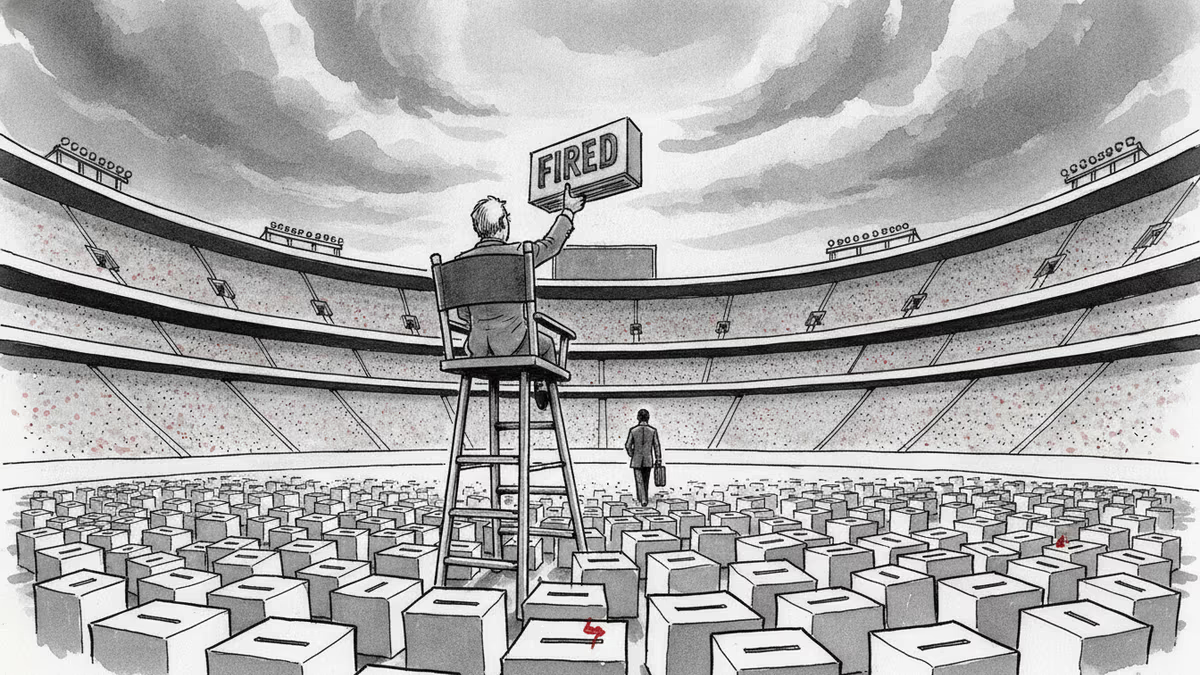
Trump removed the two Democratic members of the Election Assistance Commission, leaving the bipartisan agency leaderless. A Supreme Court ruling made it legal. Here's why a non-crisis can still be a warning sign.
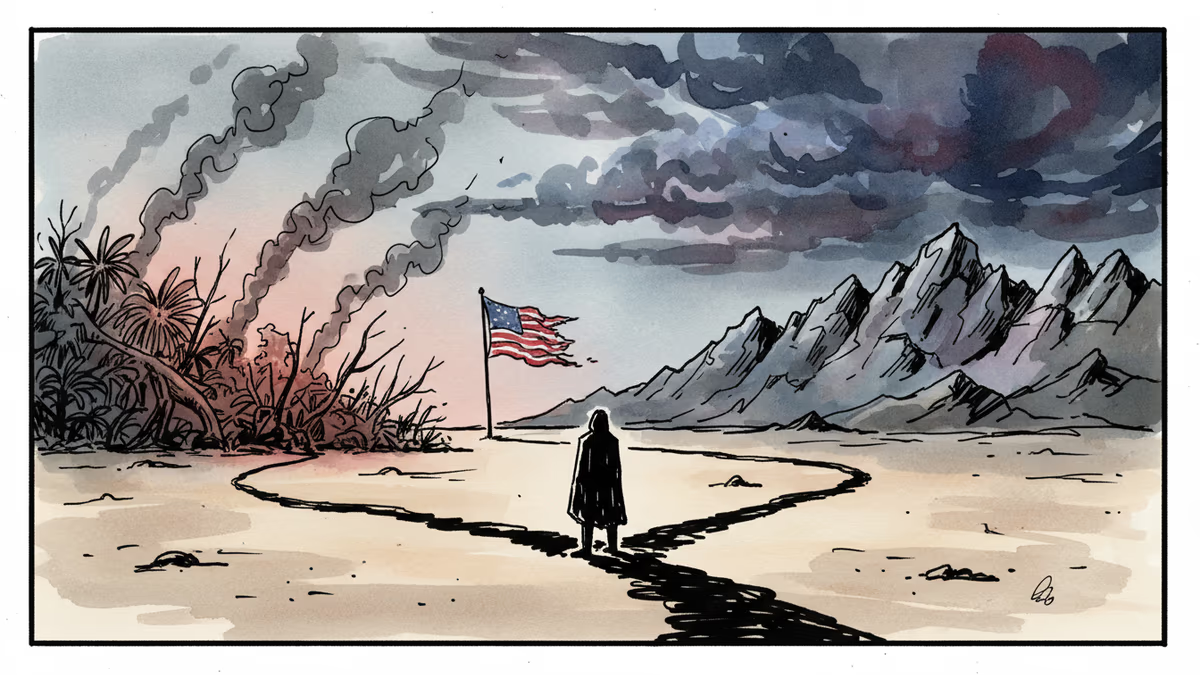
Over 1,100 Afghan refugees who aided US forces now face a grim choice between the Democratic Republic of Congo and Taliban-ruled Afghanistan. What does this reveal about America's commitments?
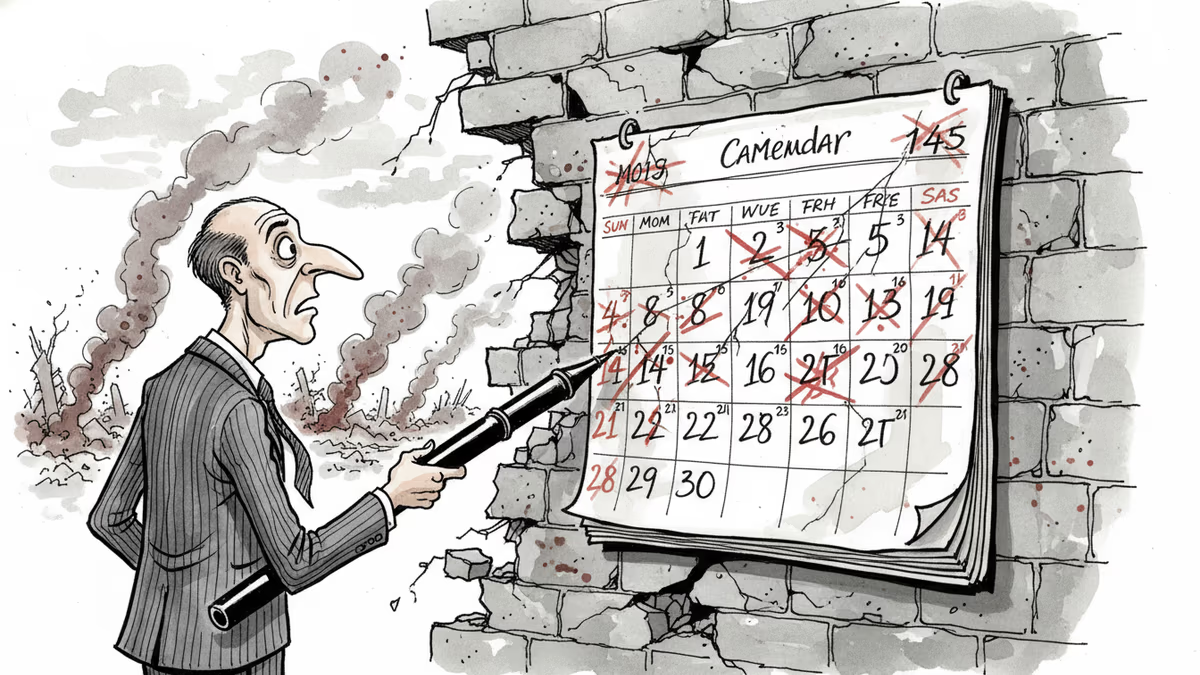
Lebanon's parliament just postponed its May 2026 elections by two years, citing war. But this is the country's fourth delay since 2013. Is crisis suspending democracy, or is democracy being managed through crisis?
Trump's Attorney General Pam Bondi leaves after 15 months of high-profile blunders. The troubling question: was her incompetence the only thing protecting his opponents?
Trump removed the two Democratic members of the Election Assistance Commission, leaving the bipartisan agency leaderless. A Supreme Court ruling made it legal. Here's why a non-crisis can still be a warning sign.
Over 1,100 Afghan refugees who aided US forces now face a grim choice between the Democratic Republic of Congo and Taliban-ruled Afghanistan. What does this reveal about America's commitments?
Lebanon's parliament just postponed its May 2026 elections by two years, citing war. But this is the country's fourth delay since 2013. Is crisis suspending democracy, or is democracy being managed through crisis?
Trump's Attorney General Pam Bondi leaves after 15 months of high-profile blunders. The troubling question: was her incompetence the only thing protecting his opponents?
Thoughts
Share your thoughts on this article
Sign in to join the conversation