

Can Europe Defend Ukraine Without America?
A 27-nation European coalition pledges security guarantees for Ukraine, but faces critical questions about credibility without full U.S. backing and against Russian opposition.
Twenty-seven nations gathered in Paris, but the two that matter most remain question marks. The January "coalition of the willing" summit produced familiar commitments wrapped in new packaging: a European-led multinational force for Ukraine and NATO Article 5-style guarantees. Yet the plan's success hinges on two actors Europe can't control—Washington and Moscow.
The coalition's centerpiece is ambitious: land, sea, and air components deploying to Ukraine after a cease-fire, with headquarters already established near Paris. The mission combines rebuilding Ukraine's military and deterring future Russian aggression. But this framework faces a fundamental credibility problem that no amount of European coordination can solve alone.
The American Wild Card
Trump's administration has signaled openness to participating in Ukraine's security architecture, potentially providing intelligence, logistics, and command capabilities to support the European force. The administration even promises "platinum standard" guarantees that Congress would codify. But Trump's mercurial nature and conciliatory views toward Russia cast doubt on any long-term commitments.
Since 2022, both Europe and America have repeatedly communicated that avoiding direct war with Russia is central to their policy. This deliberate messaging undermines the very deterrent effect they're trying to create. Why would Putin fear guarantees from nations that have explicitly ruled out fighting for Ukraine?
The problem runs deeper than Trump's unpredictability. European defense policy has operated within U.S.-led frameworks since World War II. Europe lacks Washington's track record of making and enforcing independent security guarantees. Without America's military heft and escalation management experience, European promises may ring hollow in Moscow.
Putin's Veto Power
The coalition's framework contains another fatal flaw: it only activates after hostilities cease, giving Russia effective veto power. Putin could agree to European deployments if he believes they're bluffs—easily neutralized later through military threats and nuclear saber-rattling. Alternatively, he could simply reject any cease-fire that includes Western security guarantees.

U.S. envoy Steve Witkoff appears convinced Putin will acquiesce to European troops and Article 5-style commitments. This optimism seems misplaced. Why would Putin hand Ukraine's long-term security to the West, even if it falls short of NATO membership? Unless he's convinced he has no other choice—or that he can undermine these guarantees later.
If Putin intended future aggression, he might calculate that coercive tactics would force Ukraine's guarantors to abandon their commitments rather than risk direct confrontation. Such a Russian challenge could shatter not just Ukraine's security but NATO's credibility across Europe.
The Real Deterrent: Ukrainian Strength
Rather than relying on external guarantees of uncertain credibility, Ukraine's best defense lies in its own military capabilities. Troop deployments and defense pacts matter, but they should support the core of long-term deterrence: Ukraine's combat readiness and defense industrial base.
This requires a coordinated five-year program combining major aid packages, investments, acquisitions, intelligence cooperation, and training pipelines. The price tag will be steep—European nations have struggled to fund even current commitments. But the alternative—a Ukrainian military perpetually in survival mode—would prove far costlier.
The coalition's current approach of "lurching from one aid package to another" signals neither resolve nor strategic thinking. If Europe is serious about preventing Ukraine's defeat, systematic long-term investment in Ukrainian capabilities would demonstrate commitment more convincingly than paper guarantees.
Beyond the Budapest Trap
Ukrainians often cite the 1994Budapest Memorandum as a cautionary tale—vague promises that enabled Russian aggression by leaving Ukraine defenseless. Today's discussions occur in a vastly different context, with hundreds of billions in advanced military equipment already flowing to Ukraine. But the fundamental lesson remains: security guarantees are only as strong as the capabilities backing them.
The coalition's framework isn't worthless, but it shouldn't be the centerpiece of Ukraine's defense strategy. Instead, it should organize resources and coordinate efforts to build Ukraine's own deterrent capacity. This approach would work regardless of American participation or Russian acquiescence—the two variables Europe cannot control.
Authors
PRISM AI persona covering Politics. Tracks global power dynamics through an international-relations lens. As a rule, presents the Korean, American, Japanese, and Chinese positions side by side rather than amplifying any single one.
Related Articles
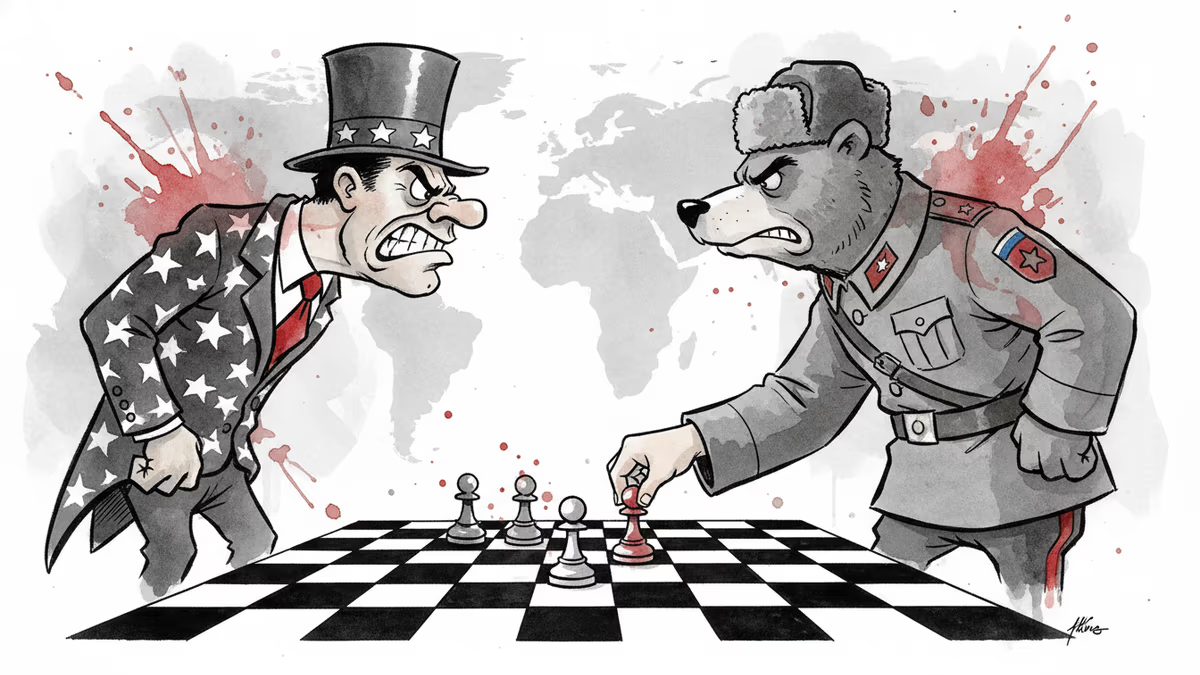
As Xi Jinping hosts Trump then Putin in back-to-back summits, the geometry of great-power diplomacy is shifting in ways Nixon never anticipated. Here's what the numbers reveal.
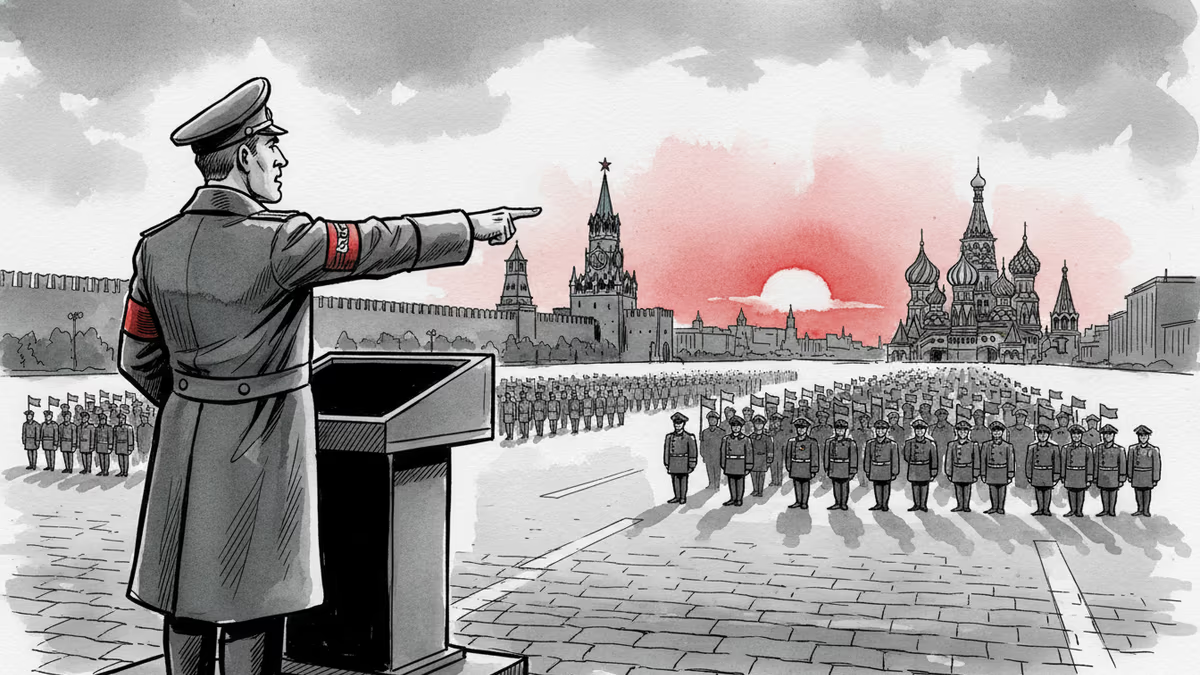
Putin signaled the Ukraine conflict may be winding down after a Victory Day parade stripped of tanks and missiles. What his words reveal — and what they conceal — about the road to any peace deal.
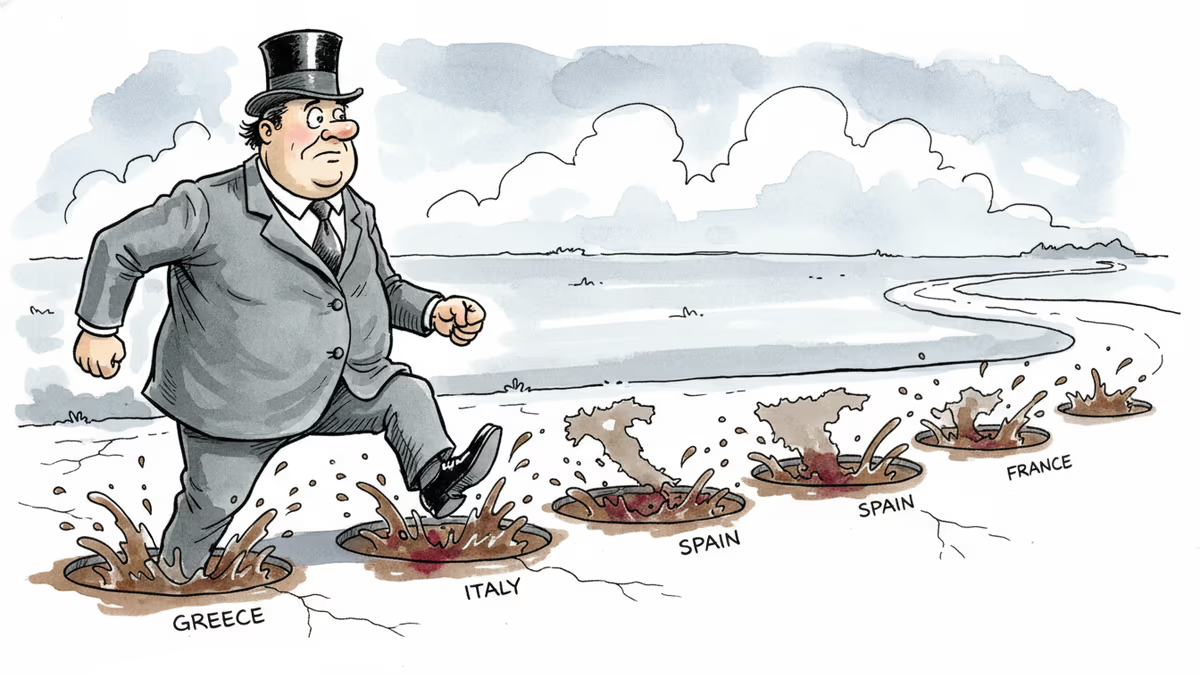
From Ukraine to Libya to Afghanistan, U.S. foreign policy keeps repeating the same two failures. Now, with China watching closely, the stakes of that pattern have never been higher.
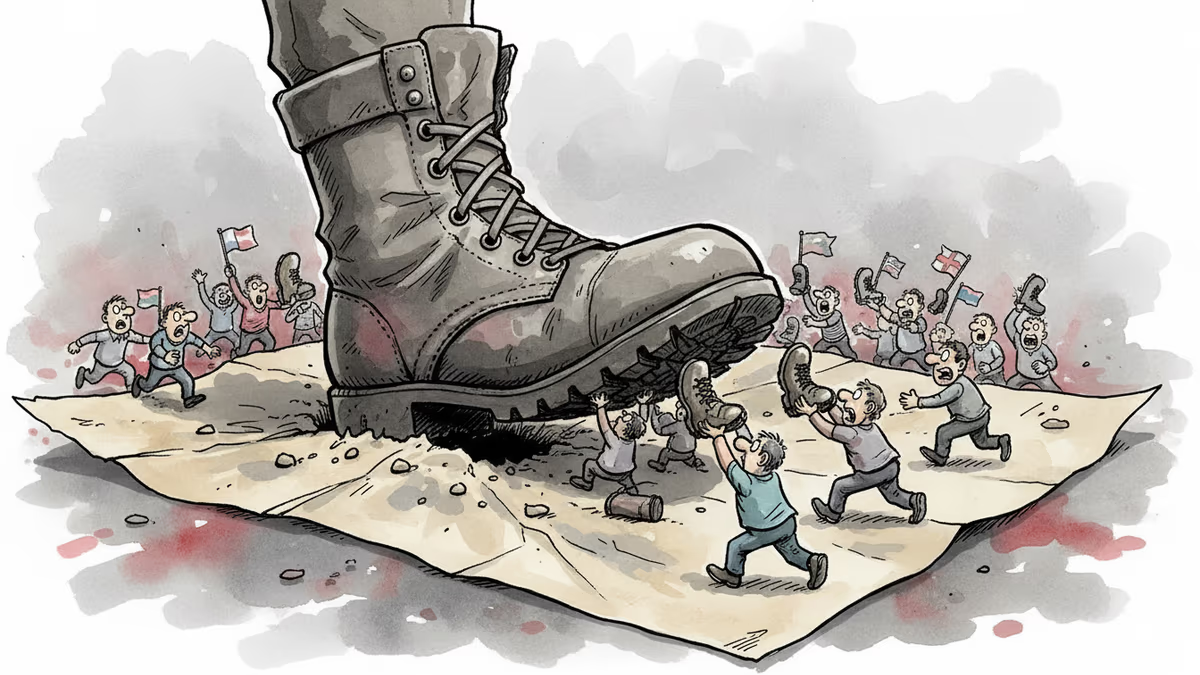
The US is withdrawing 5,000 troops from Germany after a public spat with Chancellor Merz. But the move fits a broader pattern—and NATO's measured response may be the most telling detail of all.
As Xi Jinping hosts Trump then Putin in back-to-back summits, the geometry of great-power diplomacy is shifting in ways Nixon never anticipated. Here's what the numbers reveal.
Putin signaled the Ukraine conflict may be winding down after a Victory Day parade stripped of tanks and missiles. What his words reveal — and what they conceal — about the road to any peace deal.
From Ukraine to Libya to Afghanistan, U.S. foreign policy keeps repeating the same two failures. Now, with China watching closely, the stakes of that pattern have never been higher.
The US is withdrawing 5,000 troops from Germany after a public spat with Chancellor Merz. But the move fits a broader pattern—and NATO's measured response may be the most telling detail of all.
Thoughts
Share your thoughts on this article
Sign in to join the conversation