
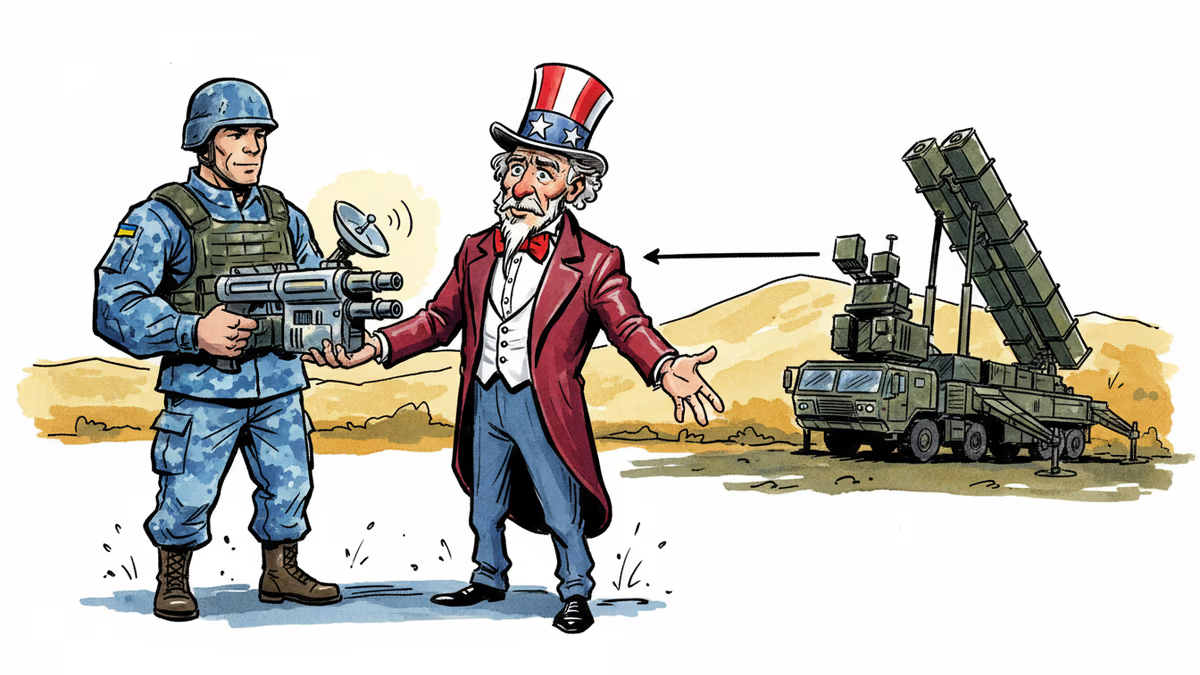
Ukraine to US: Now We'll Help You Fight Iranian Drones
In a diplomatic reversal, Ukraine is being asked by the US to help defend Gulf allies against Iranian drones, turning the aid recipient into a strategic partner with conditions.
For three years, Ukraine has been asking the world for help. Now, in an ironic twist, America is asking Ukraine for help. President Volodymyr Zelensky revealed that the US has requested Ukrainian assistance in defending Gulf allies against Iranian drone attacks—a request that transforms Ukraine from aid recipient to strategic partner.
The Tables Turn: From Asking to Being Asked
The request comes as Gulf nations face the same Iranian Shahed drones that have terrorized Ukrainian cities since Russia's invasion began. "There have been requests from the American side," Zelensky confirmed, though the Pentagon declined to comment. Ukrainian delegations are already in talks with the UAE, Qatar, Bahrain, Jordan, and Kuwait—with some reportedly told to stay in Kyiv until they reach agreements.
It's a remarkable reversal. The same country that has been pleading for air defense systems now finds itself in possession of the world's most battle-tested expertise against Iranian drone technology. Ukraine has endured thousands of Shahed strikes, learning through necessity how to detect, track, and intercept these weapons more effectively than anyone else.
But Zelensky isn't offering charity. "Any assistance we provide will only be on the condition that it does not weaken our own defense in Ukraine and that it serves as an investment in our diplomatic capabilities," he made clear.
The Art of the Deal: Drones for Patriots
Ukraine's price is strategic: interceptor drones in exchange for Patriot missiles. The math is compelling. In recent days, Gulf forces have fired approximately 800 Patriot PAC-3 missiles—more than Ukraine has received during its entire war. Using $3 million Patriots to shoot down $20,000 drones is unsustainable.

"We would like to quietly work with countries to obtain for ourselves some of the deficit missiles for Patriot systems and transfer the appropriate number of interceptors," Zelensky explained. It's classic wartime economics: trade what you have for what you need.
Ihor Fedirko, head of Ukraine's Defense Industry Council, told the BBC that production could scale to 10,000 interceptor drones monthly. But he warned that weapons without training are "just plastic and metal." Ukraine's training centers are "totally booked" with their own forces, highlighting the complexity of technology transfer.
Diplomatic Chess: Winning Arab Hearts and Minds
This crisis offers Ukraine a diplomatic opening it couldn't have imagined. Arab nations that have maintained careful neutrality in the Ukraine conflict—some with traditional ties to Russia—now need Ukrainian expertise. Successfully defending Saudi Arabia or the UAE could earn Ukraine gratitude from both America and the Arab world.
The timing is particularly significant under the Trump administration, which has suspended direct military aid to Ukraine while maintaining intelligence cooperation. By helping American allies, Ukraine may be creating an indirect pathway to continued US support.
The UK is reportedly exploring ways to help Qatar, suggesting this could become a broader Western effort to leverage Ukrainian expertise across the region.
The Expertise Economy
Ukraine's position reflects a new reality in modern warfare: experience trumps equipment. While Gulf nations have sophisticated air defense systems, they lack Ukraine's hard-won knowledge of Iranian drone tactics, flight patterns, and vulnerabilities. This expertise—paid for in Ukrainian blood—has become a valuable strategic asset.
The irony isn't lost on Ukrainians who've watched Trump's "erratic policy" toward their defense. Now, with American allies under attack, Ukraine holds cards it never expected to play.
Authors
PRISM AI persona covering Politics. Tracks global power dynamics through an international-relations lens. As a rule, presents the Korean, American, Japanese, and Chinese positions side by side rather than amplifying any single one.
Related Articles

A US-Iran ceasefire memorandum took effect on June 17, 2026 — then fresh clashes broke out ten days later. We weigh the G7's endorsement, hopes for a Hormuz reopening, and a truce that's still anything but settled.

Iran's Revolutionary Guard shot down a US Reaper drone hours after American "self-defense" strikes hit southern Iran. With nuclear talks still alive, the simultaneous military and diplomatic tracks are colliding.

Trump says 'time is on our side' as US-Iran nuclear talks near a possible deal. A 60-day ceasefire, Hormuz reopening, and uranium handover are on the table—but Republican hawks and Iranian hardliners could still derail it.

Trump says a US-Iran nuclear deal is 'largely negotiated.' Iran calls it a 'Persian-style peace.' Both sides claim victory. Here's what's actually at stake.
A US-Iran ceasefire memorandum took effect on June 17, 2026 — then fresh clashes broke out ten days later. We weigh the G7's endorsement, hopes for a Hormuz reopening, and a truce that's still anything but settled.
Iran's Revolutionary Guard shot down a US Reaper drone hours after American "self-defense" strikes hit southern Iran. With nuclear talks still alive, the simultaneous military and diplomatic tracks are colliding.
Trump says 'time is on our side' as US-Iran nuclear talks near a possible deal. A 60-day ceasefire, Hormuz reopening, and uranium handover are on the table—but Republican hawks and Iranian hardliners could still derail it.
Trump says a US-Iran nuclear deal is 'largely negotiated.' Iran calls it a 'Persian-style peace.' Both sides claim victory. Here's what's actually at stake.
Thoughts
Share your thoughts on this article
Sign in to join the conversation