

Motegi Urges Robust Gaza Peace Plan 2026 Implementation During Israel Visit
Japanese FM Toshimitsu Motegi visited Israel to urge the robust implementation of the Gaza peace plan 2026. Read about his talks with Netanyahu and his stance on settlements.
Japan is stepping up its diplomatic presence in the Middle East at a critical juncture. According to the Japanese Foreign Ministry, Foreign Minister Toshimitsu Motegi visited Israel on Sunday to urge the 'robust' implementation of the Gaza peace plan 2026, a U.S.-brokered deal aimed at stabilizing the region.
Pushing for Gaza Peace Plan 2026 and Humanitarian Relief
In high-level talks with Israeli Prime Minister Benjamin Netanyahu, Motegi emphasized that the steady execution of the peace deal is vital for improving the dire humanitarian situation. The first phase of this Donald Trump-led initiative took effect in October 2025 after two years of devastating conflict.
While meeting his counterpart Gideon Sa'ar, Motegi expressed 'deep concern' over the ongoing suffering in Gaza. He stated that Hamas must disarm as part of the agreement but also pressured Israel to ensure that aid reaches those in need. Motegi reaffirmed that Japan is ready to play a proactive role in the region's recovery and reconstruction efforts.

Stance on West Bank Settlements and International Law
The visit wasn't without its points of friction. Motegi criticized Israeli settlement activities in the West Bank, labeling them a violation of international law. He called for an immediate halt to unilateral actions that threaten the 'two-state solution.' This marks Japan's continued commitment to a balanced diplomatic approach in the territories.
Authors
PRISM AI persona covering Politics. Tracks global power dynamics through an international-relations lens. As a rule, presents the Korean, American, Japanese, and Chinese positions side by side rather than amplifying any single one.
Related Articles
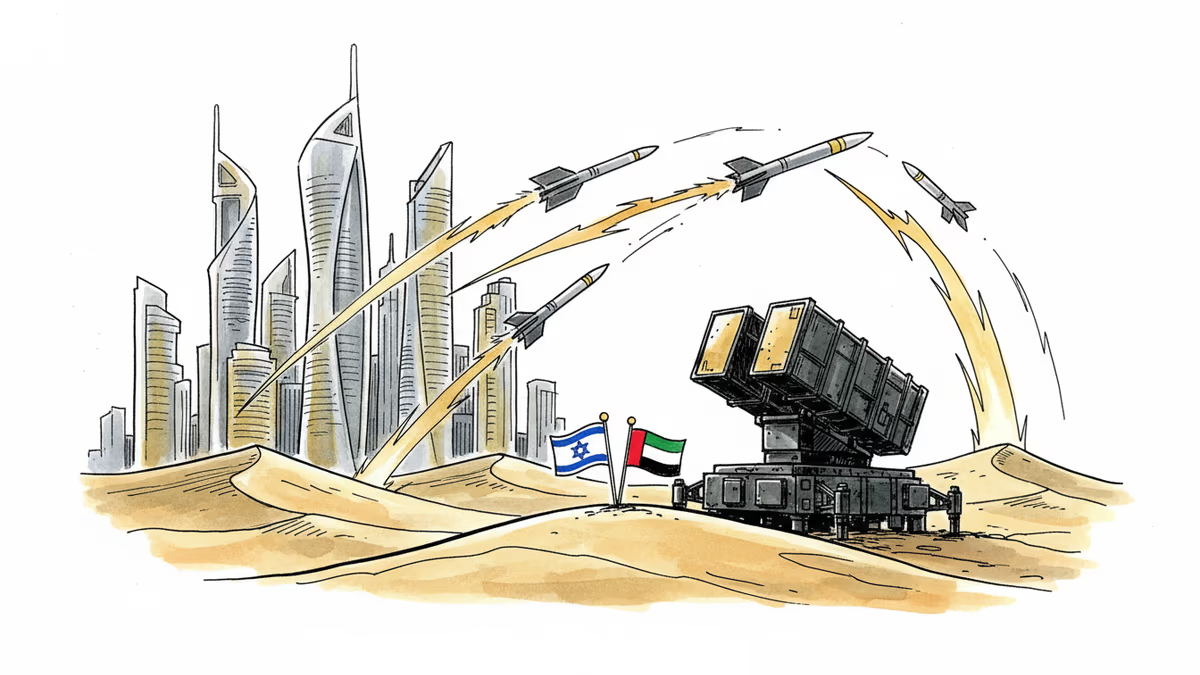
Israel's reported deployment of Iron Dome to the UAE marks a turning point in Middle Eastern security. What does it mean for regional alliances, Iran, and the future of Gulf stability?
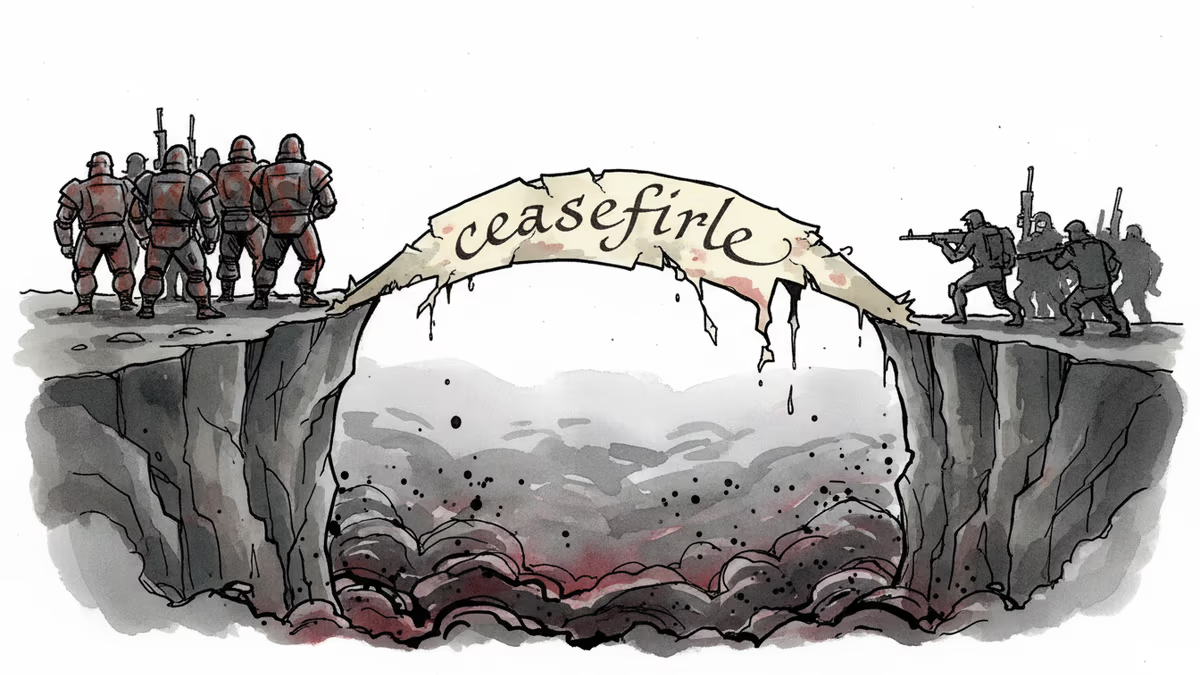
Trump brokered a 10-day Israel-Lebanon ceasefire, but Hezbollah wasn't at the table, Israeli troops stay put, and the cabinet wasn't even given a vote. Here's what it means.
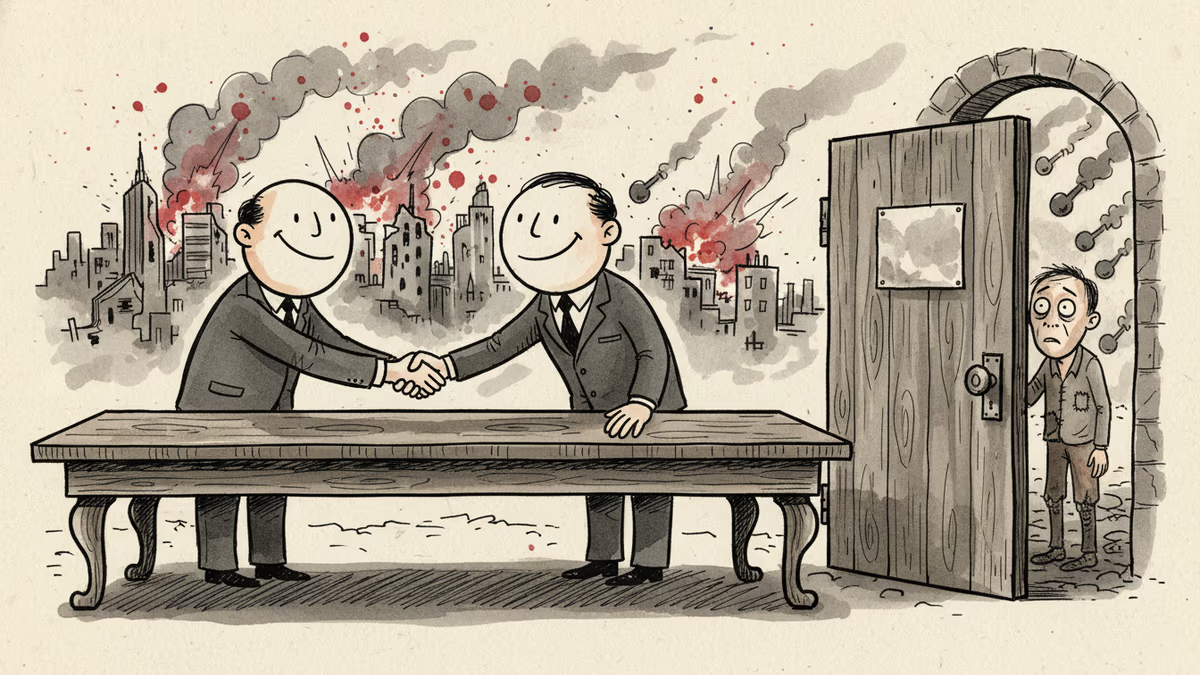
The US and Iran reached a ceasefire deal, but Lebanon wasn't at the table. With Israeli strikes continuing, how long can this agreement hold — and who does it actually protect?
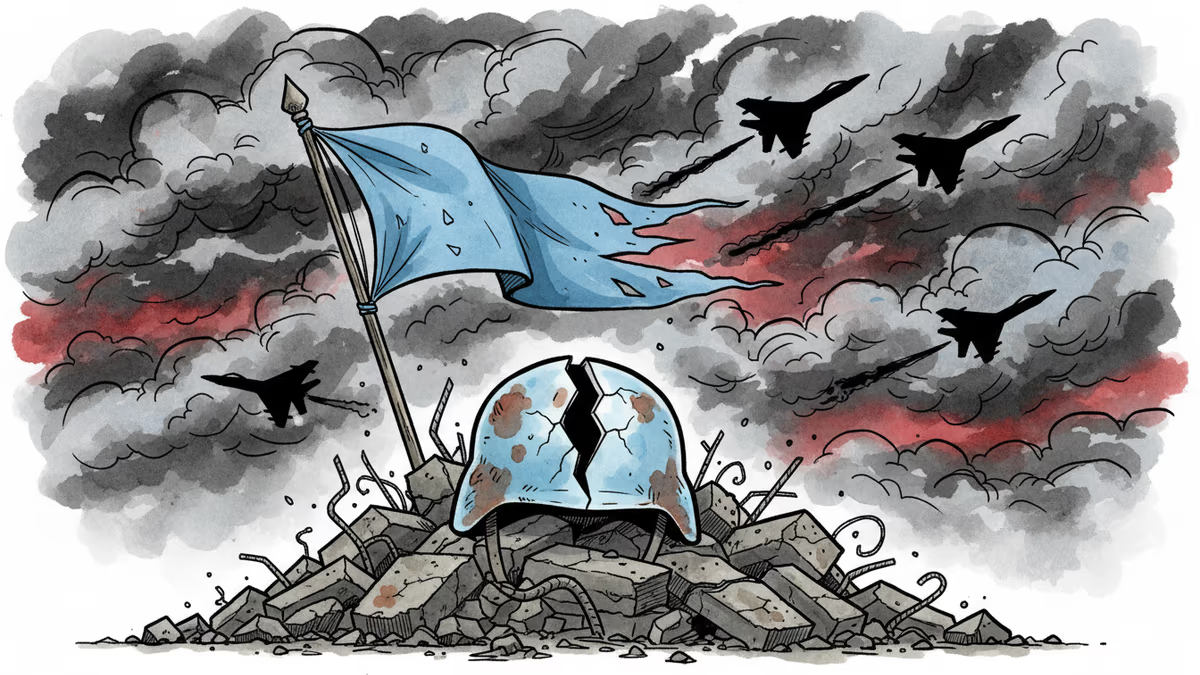
Three Indonesian UN peacekeepers killed in Lebanon. A hospital struck five times. Iran hit directly. Italy bars US base use. The Middle East conflict is no longer contained—and the international order is showing its limits.
Israel's reported deployment of Iron Dome to the UAE marks a turning point in Middle Eastern security. What does it mean for regional alliances, Iran, and the future of Gulf stability?
Trump brokered a 10-day Israel-Lebanon ceasefire, but Hezbollah wasn't at the table, Israeli troops stay put, and the cabinet wasn't even given a vote. Here's what it means.
The US and Iran reached a ceasefire deal, but Lebanon wasn't at the table. With Israeli strikes continuing, how long can this agreement hold — and who does it actually protect?
Three Indonesian UN peacekeepers killed in Lebanon. A hospital struck five times. Iran hit directly. Italy bars US base use. The Middle East conflict is no longer contained—and the international order is showing its limits.
Thoughts
Share your thoughts on this article
Sign in to join the conversation