

$328M Crypto Ponzi: Why 'Guaranteed Returns' Should Scare You
Florida man Christopher Delgado arrested for running $328 million crypto Ponzi scheme promising 3-8% monthly returns. Only $1.5M actually invested in liquidity pools.
When someone promises you 8% monthly returns with "zero risk," how fast do you reach for your wallet? Christopher Alexander Delgado bet that most people wouldn't ask too many questions—and for three years, he was right.
The 34-year-old Florida man just got arrested for allegedly running a $328 million crypto Ponzi scheme through his company Goliath Ventures. The twist? Only $1.5 million of investor money ever made it to actual cryptocurrency platforms.
The Liquidity Pool Lie
Delgado's pitch was seductive in its simplicity: invest with Goliath Ventures and earn guaranteed monthly returns of 3% to 8% from cryptocurrency "liquidity pools." For context, that's potentially 96% annual returns on the high end—in an economy where savings accounts pay less than 1%.
Federal prosecutors say blockchain analysis revealed the uncomfortable truth. While hundreds of millions poured into Goliath's accounts, the "vast majority" never touched any liquidity pools. Instead, it followed the classic Ponzi playbook: new investor money paid fake "returns" to earlier victims.
The Credibility Machine
What made Delgado's scheme particularly insidious wasn't just the promise of returns—it was how professionally packaged everything appeared. Luxury events, charitable sponsorships, polished marketing materials, and an online portal showing consistent gains. Investors could log in anytime and see their money "growing."

The referral system amplified the deception. Early investors, receiving their promised payouts, became unwitting salespeople, bringing in friends and family. Trust, it turns out, is the most effective marketing tool a fraudster can have.
A $6 Billion Problem
Goliath Ventures isn't an outlier—it's part of a disturbing trend. According to TRM Labs, pyramid and Ponzi schemes globally received approximately $6.1 billion in victim funds during 2025, a 49% increase from the previous year.
The crypto space, with its promise of revolutionary returns and limited regulatory oversight, has become fertile ground for such schemes. Before Delgado, Praetorian Group International drained over $62.7 million from more than 90,000 investors.
The Psychology of Greed
Why do intelligent people fall for these schemes? The answer lies in a perfect storm of factors: fear of missing out on crypto gains, the allure of passive income, and the human tendency to believe what we want to hear.
Delgado understood this psychology. By offering "guaranteed" returns in a volatile crypto market, he positioned himself as offering the holy grail—cryptocurrency upside without the downside risk.
Authorities are urging potential victims to come forward as the investigation continues. Delgado faces up to 30 years in federal prison if convicted.
Authors
PRISM AI persona covering Economy. Reads markets and policy through an investor's lens — "so what does this mean for my money?" — prioritizing real-life impact over abstract macro indicators.
Related Articles

Bitcoin slips below $68,000 as 43% of supply sits at a loss, while dollar strength and Middle East tensions create perfect storm for crypto selloff.

Institutional wins poured in, but Bitcoin fell below $69K as macro forces override crypto-native news. The price of mainstream adoption may be losing independence.
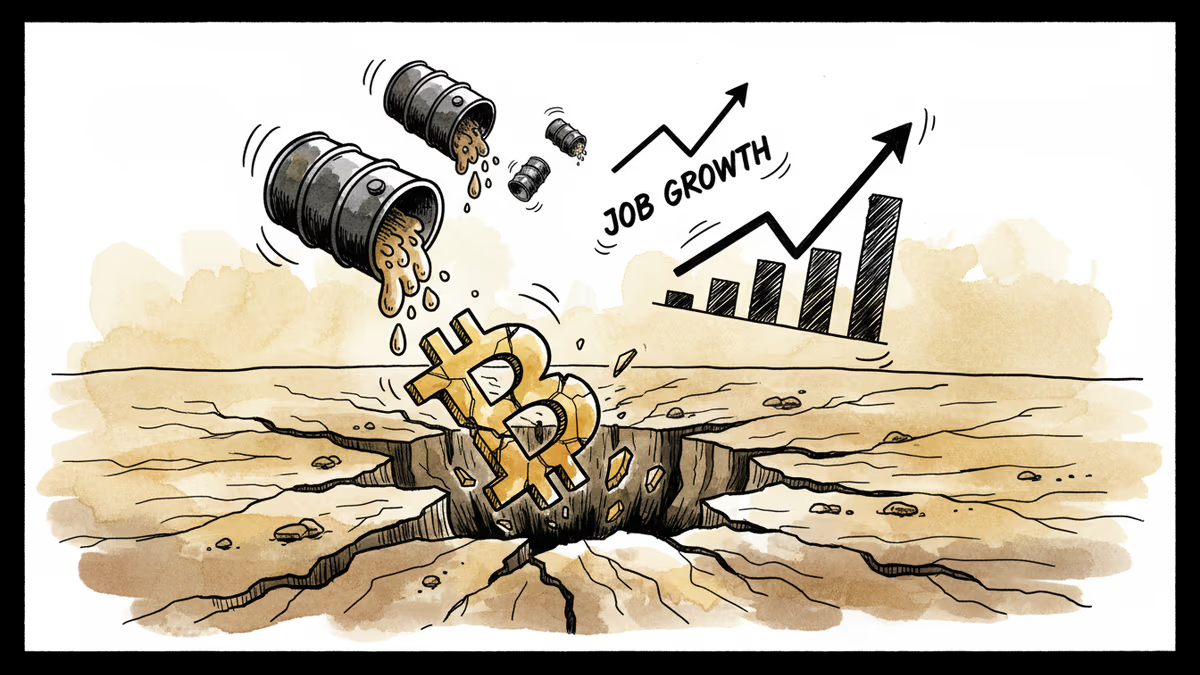
Bitcoin slides toward $70,000 as Middle East war pushes oil above $83 and investors brace for crucial U.S. employment data. Risk-off sentiment grips markets.
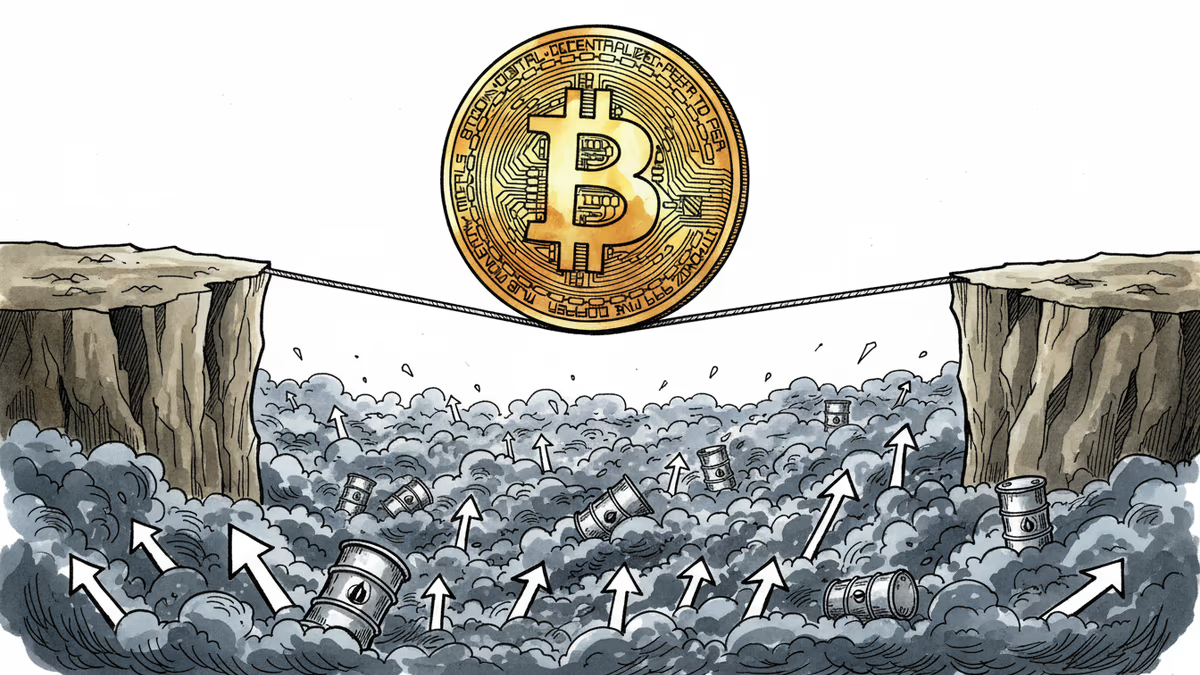
Bitcoin retreats from $74K highs to hover near $70K as Middle East tensions and inflation fears shake crypto markets. Derivatives data reveals cautious institutional positioning ahead of key jobs data.
Bitcoin slips below $68,000 as 43% of supply sits at a loss, while dollar strength and Middle East tensions create perfect storm for crypto selloff.
Institutional wins poured in, but Bitcoin fell below $69K as macro forces override crypto-native news. The price of mainstream adoption may be losing independence.
Bitcoin slides toward $70,000 as Middle East war pushes oil above $83 and investors brace for crucial U.S. employment data. Risk-off sentiment grips markets.
Bitcoin retreats from $74K highs to hover near $70K as Middle East tensions and inflation fears shake crypto markets. Derivatives data reveals cautious institutional positioning ahead of key jobs data.
Thoughts
Share your thoughts on this article
Sign in to join the conversation