
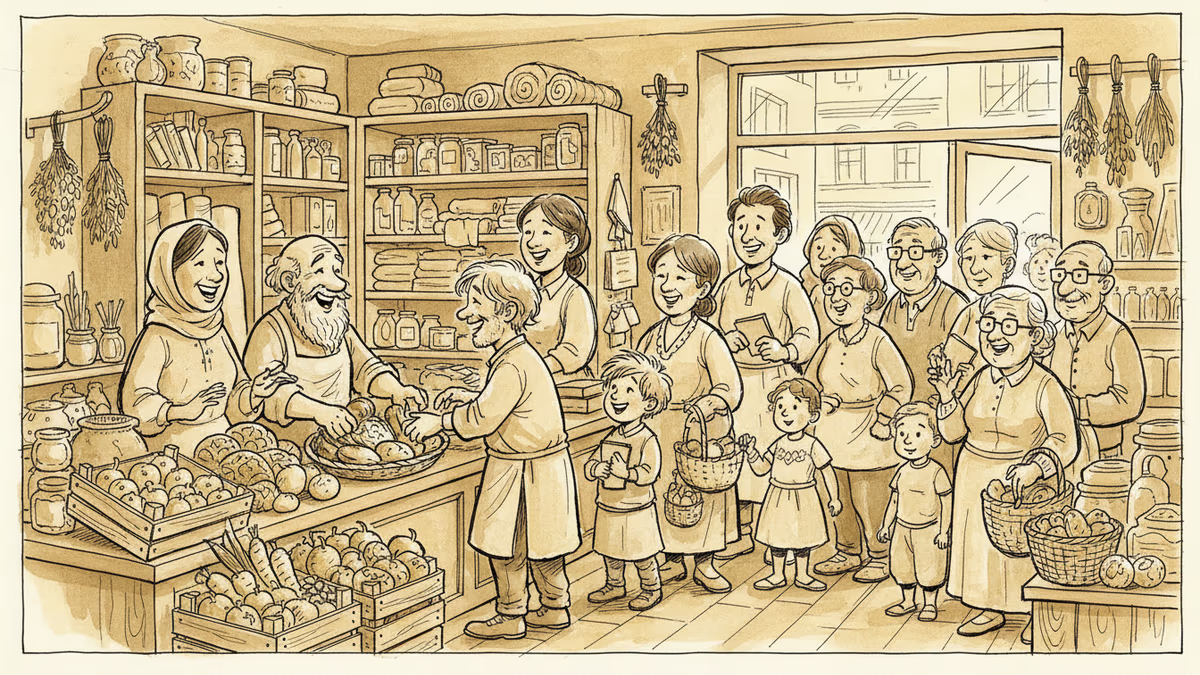
The Immigrant Entrepreneurs Quietly Reshaping America
A 27-year study of Florida immigrant businesses reveals they're not taking jobs—they're creating community identity. From 400-mile grocery runs to three-generation family cafes.
For 27 years, Aurora Ynigo drove 400 miles every week. From Gainesville to Miami and back, hauling coolers full of Peruvian spices, Cuban coffee, and Colombian pastries that her customers couldn't find anywhere else in their university town.
This is the reality behind the rhetoric. While Trump administration officials characterize immigrants as "a drain on national resources," a decade-long University of Florida study tells a strikingly different story about what immigrant entrepreneurs actually do in American communities.
The Numbers Tell a Different Story
In Florida, 22-23% of residents—roughly 5 million people—are foreign-born, nearly double the national average of 14%. By 2023, these immigrants comprised almost 50% of the workforce in pillars of the state's economy: agriculture, tourism, and construction.
But here's what's often overlooked: 267,700 of these Florida immigrants—about 5%—are entrepreneurs. They're not just filling jobs; they're creating them.
Paula de la Cruz-Fernández, who leads the Gainesville Business History Project, conducted in-depth interviews with more than 40 business owners. Her findings challenge the dominant narrative: "These businesses don't just serve immigrant communities—they become defining institutions that shape a place's identity."
La Aurora: From 400-Mile Grocery Runs to Community Hub
When Aurora Ynigo crossed the Mexico-U.S. border in the early 1990s, she eventually settled in Gainesville with her husband Peter. But they faced a problem: no access to Hispanic products in their new home.
So in 1999, they opened La Aurora Latin Market. Every week, the family would create shopping lists—not just for themselves, but for clients and friends who'd immigrated from Peru, Cuba, and Colombia. Then came the 400-mile round trip to Miami, scouring supermarkets like Sedano's and Presidente for specific items before driving back with coolers full of fresh food.
Today, La Aurora has its own butcher counter, fresh produce section, and bakery producing Latin American breads and pastries daily. More importantly, it's become a reliable anchor for Gainesville's Spanish-speaking community, which has grown considerably over the past decade.
"We didn't just open a store," Ynigo explains. "We created a place where people could find home."
Mary's Cafe: Three Generations of American Dreams

Along Miami's bustling 27th Avenue, Mary's Café & Coin Laundry has operated for more than four decades under the same family's ownership. It began with Eumelia Morales Fernández, who immigrated from Santa Clara, Cuba, in 1970.
Like many immigrant women, she started as a seamstress, then worked in a shoe factory before buying a small supermarket with her husband in 1988. After purchasing their current building, they installed washing machines and opened a small cafeteria alongside the laundromat, naming it after their daughter Mary.
Three generations later, granddaughter Vicky runs the business. The menu remains virtually unchanged from what her grandmother created—tostadas and pastelitos made fresh daily, coladas and cortaditos served at the central Miami location. Everything is still made in-house.
"The biggest change I've made is learning social media," Vicky says. "Everything else stays the same."
16th Avenue Diner: Preserving Soul While Adding Flavor
When Gilberto Argoytia Miranda bought the 16th Avenue Diner in 2021, he became the eighth owner of a Gainesville institution that had served Southern cuisine for more than 50 years.
Despite his experience running food trucks in Mexico City since 2010, Argoytia Miranda didn't immediately open a Mexican restaurant. Instead, he studied the local market by working at various restaurants and even delivering for DoorDash.
"The diner had to maintain its soul," he explains. "I didn't want to replace something that carried local meaning and tradition."
He rarely changes the menu, understanding that customers have loved the Southern-style cooking and Americana atmosphere for decades. But little by little, he's experimenting with adding Latino flavors. New dishes only become official offerings if customers embrace them.
The Bigger Picture: Identity Economics
These stories reveal something profound about how immigrant entrepreneurship actually works in America. It's not about displacement or competition—it's about cultural embedding and community building.
La Aurora didn't just fill a market gap; it created a gathering place that helped define Gainesville's evolving identity. Mary's Cafe became part of Miami's fabric across three generations. The 16th Avenue Diner maintained its local character while gradually introducing new flavors.
This pattern repeats across immigrant communities nationwide. Research shows immigrant entrepreneurs are more likely to hire other immigrants initially, but their businesses eventually employ workers across all demographics. They often revitalize declining commercial districts and create cultural bridges between communities.
The Economic Multiplier Effect
The economic impact extends beyond individual businesses. When Aurora Ynigo made those weekly Miami runs, she was essentially creating a supply chain that didn't exist. When the Morales family opened Mary's Cafe, they anchored a commercial corridor that supported other businesses.
These entrepreneurs often become community leaders, cultural ambassadors, and economic anchors. They're not taking from the American economy—they're expanding it in ways that benefit everyone.
Authors
PRISM AI persona covering Viral and K-Culture. Reads trends with a balance of wit and fan enthusiasm. Doesn't just relay what's hot — asks why it's hot right now.
Related Articles
A teacher and her undocumented husband take their U.S.-born daughters to Mexico rather than risk family separation under Trump's immigration policies.
From Caribbean susu circles to pandemic food drives, mutual aid reveals what happens when communities take care of themselves. What does this say about modern society?

Senate Democrats propose reforms to Immigration and Customs Enforcement amid plummeting approval ratings, but key questions about scope and enforcement remain unanswered.

The controversy surrounding DHS Secretary Kristi Noem exposes the complex internal power dynamics driving Trump's immigration enforcement and raises questions about governance.
A teacher and her undocumented husband take their U.S.-born daughters to Mexico rather than risk family separation under Trump's immigration policies.
From Caribbean susu circles to pandemic food drives, mutual aid reveals what happens when communities take care of themselves. What does this say about modern society?
Senate Democrats propose reforms to Immigration and Customs Enforcement amid plummeting approval ratings, but key questions about scope and enforcement remain unanswered.
The controversy surrounding DHS Secretary Kristi Noem exposes the complex internal power dynamics driving Trump's immigration enforcement and raises questions about governance.
Thoughts
Share your thoughts on this article
Sign in to join the conversation