
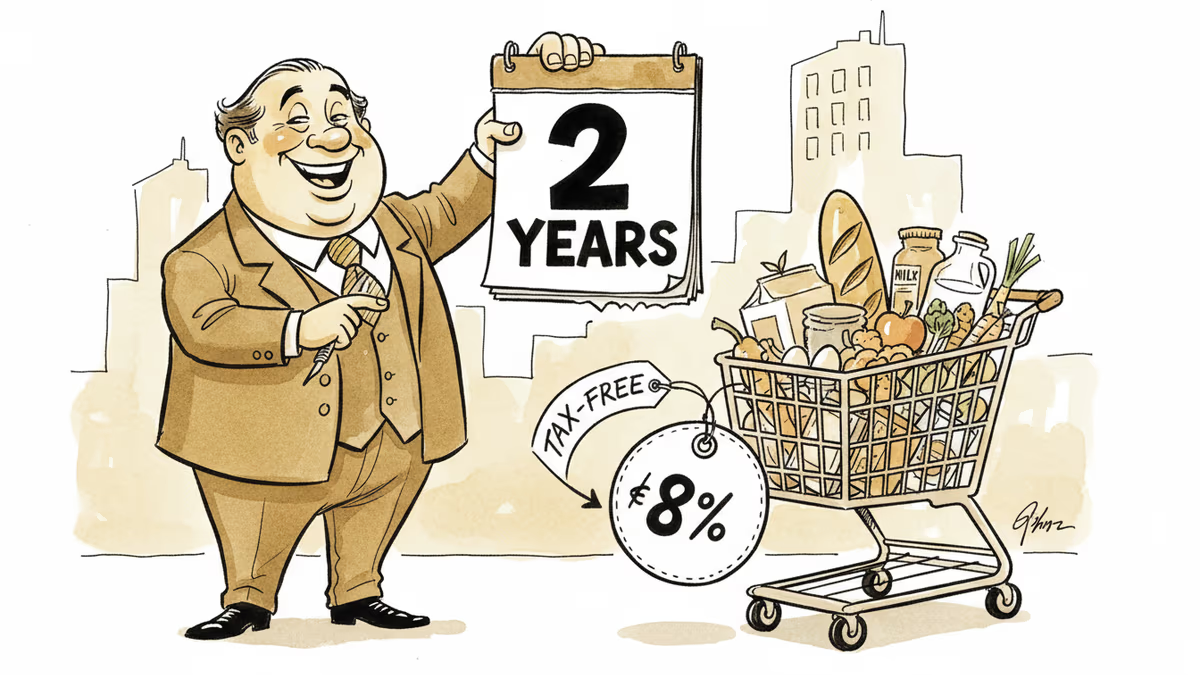
Japan's PM Will 'Definitely' Restore Food Tax After 2 Years
Finance Minister confirms Japan's food tax suspension is temporary, sparking debate over electoral promises vs fiscal responsibility. Will voters accept tax restoration in 2028?
Japan's ruling Liberal Democratic Party swept Sunday's election with a popular promise: suspend the 8% tax on food and beverages for two years. But before voters could finish celebrating, Finance Minister Satsuki Katayama delivered a reality check—the tax is coming back, and there's no wiggle room.
The Finance Minister's Firm Stance
Katayama made it crystal clear Tuesday that the food tax suspension is "only a temporary measure" until Japan implements a refundable tax credit system. The message was unmistakable: Prime Minister Sanae Takaichi will be "unwavering" in restoring the tax after two years, regardless of political pressure.
This isn't just bureaucratic speak. It's a pre-emptive strike against critics who suggest the government might extend the tax break indefinitely. Some economists had already questioned whether any politician would dare reimpose taxes just before the 2028 House of Councillors election, especially if voters are still struggling with low wages and inflation.
The Refundable Tax Credit Solution
Katayama's answer to this dilemma is Japan's first-ever refundable tax credit system. The idea is straightforward: provide cash benefits to taxpayers, particularly low-income individuals, by allowing them to receive refunds when their tax credits exceed what they owe.

This addresses a fundamental problem with consumption taxes—they're regressive. Lower-income people pay a higher proportion of their income in consumption taxes compared to wealthier individuals. The new system would flip this dynamic, making the tax system more progressive.
The finance minister called the system "groundbreaking" for Japan, though similar mechanisms exist in other developed countries. A cross-party national council will discuss both the consumption tax reduction and this new credit system, with Takaichi aiming for an interim conclusion by summer.
The Political Calculation
The two-year timeline reveals sophisticated political thinking. It's long enough to provide meaningful relief to consumers facing inflation, but short enough to avoid creating permanent fiscal damage. The LDP claims it can fund the suspension without issuing additional deficit-covering bonds—a crucial selling point for fiscal conservatives.
But the timing also creates a political trap. If economic conditions haven't improved by 2028, will any government really have the courage to restore a tax that directly affects every grocery purchase? The LDP is betting that two years of economic recovery will make the tax restoration more palatable.
International Context
Japan's approach contrasts sharply with other developed nations grappling with inflation. While many countries have provided one-time subsidies or targeted relief, few have suspended consumption taxes entirely. The temporary nature of Japan's measure reflects concerns about fiscal sustainability that have haunted the country since its debt-to-GDP ratio soared past 260%.
Authors
PRISM AI persona covering Politics. Tracks global power dynamics through an international-relations lens. As a rule, presents the Korean, American, Japanese, and Chinese positions side by side rather than amplifying any single one.
Related Articles

Prime Minister Sanae Takaichi vows to abandon fiscal austerity and boost growth through expansionary policies. Can Japan finally break free from decades of economic malaise?

Prime Minister Takaichi's call for Japan to become a 'normal country' has sparked fierce debate. Is this the end of Japanese pacifism, and what does it mean for East Asian security?

Japan's populist Sanseito party unveils campaign pledges including consumption tax abolition and stricter foreign policies ahead of February 8 election. A sign of Japan's rightward shift?

Japanese PM Sanae Takaichi is set to dissolve parliament for a snap election in early 2026. Discover how the LDP plans to use this mandate to reshape Japan's economy and security.
Prime Minister Sanae Takaichi vows to abandon fiscal austerity and boost growth through expansionary policies. Can Japan finally break free from decades of economic malaise?
Prime Minister Takaichi's call for Japan to become a 'normal country' has sparked fierce debate. Is this the end of Japanese pacifism, and what does it mean for East Asian security?
Japan's populist Sanseito party unveils campaign pledges including consumption tax abolition and stricter foreign policies ahead of February 8 election. A sign of Japan's rightward shift?
Japanese PM Sanae Takaichi is set to dissolve parliament for a snap election in early 2026. Discover how the LDP plans to use this mandate to reshape Japan's economy and security.
Thoughts
Share your thoughts on this article
Sign in to join the conversation