

America's Student Loan System Faces a Reckoning in 2026 as Trump-Era Overhaul Ends Biden's SAVE Plan
In 2026, the US student loan system is set for a massive overhaul. The Biden-era SAVE plan is ending, replaced by Trump administration-backed plans with new rules and borrowing limits. Here's what it means for millions of borrowers.
As 2026 approaches, the U.S. federal student loan system is undergoing a seismic shift. The popular SAVE plan-era 2026 repayment plan is being dismantled following legal challenges, making way for a sweeping overhaul spearheaded by the Trump administration and Congress. Starting July 2026, millions of borrowers will face new repayment rules and stricter borrowing limits, a change expected to create significant financial uncertainty.
The Fall of the SAVE Plan
In early Biden administration, the U.S. Department of Education announced a proposed settlement to end the SAVE plan. Hailed by advocates like Persis Yu of Protect Borrowers as the "most affordable, generous and flexible plan," it offered some low-income borrowers monthly payments as low as $0 and a faster track to loan forgiveness.
The plan's generosity, however, prompted Republican state attorneys general to sue the Biden administration for exceeding its authority. The resulting legal battle has now culminated in the plan's termination. "The law is clear: if you take out a loan, you must pay it back," said Under Secretary of Education Nicholas Kent. Now, the 7 million borrowers enrolled in SAVE must transition to other repayment plans, which will likely mean higher monthly payments. "People that made other financial decisions based on what they thought their payment was gonna be... they're in trouble," warned Betsy Mayotte of The Institute of Student Loan Advisors (TISLA).
A New Repayment Landscape and PSLF Hurdles
Beyond SAVE, other popular income-driven plans like PAYE and ICR are being phased out by mid-2028. Under the Trump, two new plans will become the primary options for new borrowers from July 2026:
The rules for PSLF are also tightening. The Trump administration has introduced a rule allowing the department to deny forgiveness to employees of public or nonprofit entities that engage in activities with a "substantial illegal purpose." Critics argue this vague language could be politicized to punish governments that defy federal policies, such as those on immigration.
New Caps on Graduate Borrowing and a Looming "Default Cliff"
The changes aren't just about repayment; they also affect how much students can borrow. The Grad PLUS program, which allowed graduate students to borrow up to the full cost of attendance, will be eliminated after July 2026. New annual borrowing limits will be capped at $20,500 for most graduate students and $50,000 for professional degrees. While supporters hope this will pressure schools to lower costs, critics fear it will push students toward the private loan market.
Amid these policy shifts, borrower distress is at a crisis level. An analysis by the American Enterprise Institute (AEI) shows that ICR people—more than one in four federal student loan borrowers—are delinquent or in default. This has led experts like Persis Yu to warn that America is at "the precipice of a default cliff."
The pendulum swing in student loan policy between the Biden and Trump administrations highlights a deeper instability in American governance. This policy whiplash creates profound uncertainty for individuals making long-term financial plans and erodes trust in federal programs. The shift away from broad forgiveness to stricter repayment marks a significant ideological pivot, likely to reshape the landscape of higher education access and affordability for years to come.
This content is AI-generated based on source articles. While we strive for accuracy, errors may occur. We recommend verifying with the original source.
Related Articles
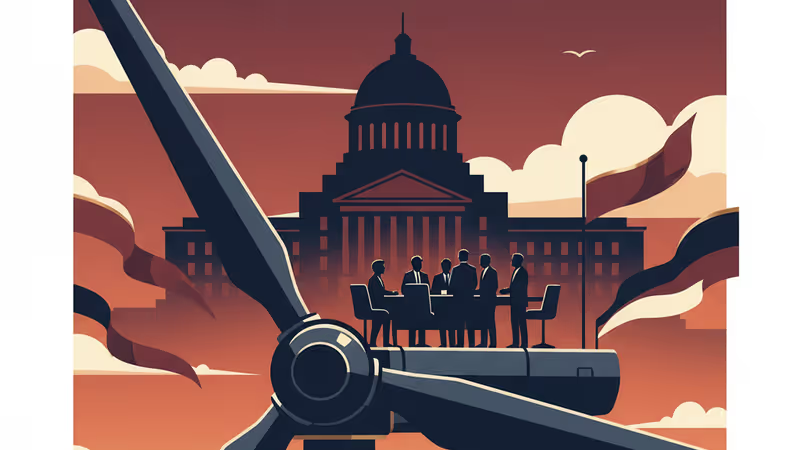
The Trump administration has paused five major offshore wind projects, citing unspecified national security risks from the Pentagon and drawing sharp criticism from industry leaders.
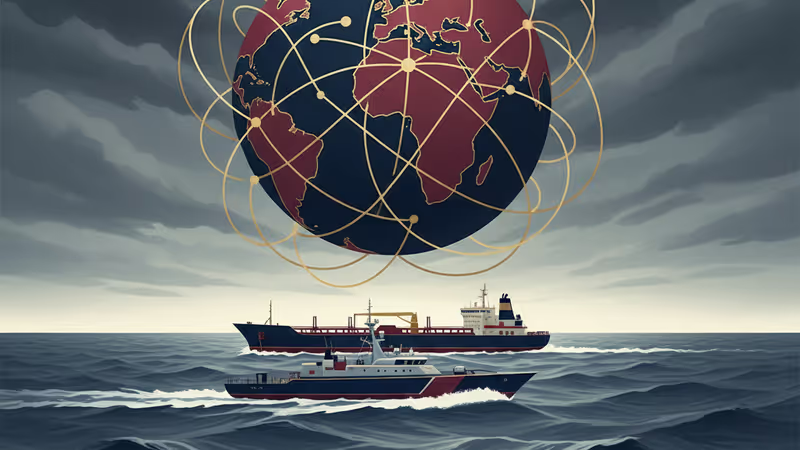
The Trump administration says the World Coast Guard is pursuing an oil tanker for violating its blockade on Venezuela, escalating a pressure campaign and raising tensions over maritime law.
The release of Epstein records is not just a scandal. It's a pivotal moment in information warfare, with huge implications for global politics and corporate risk.
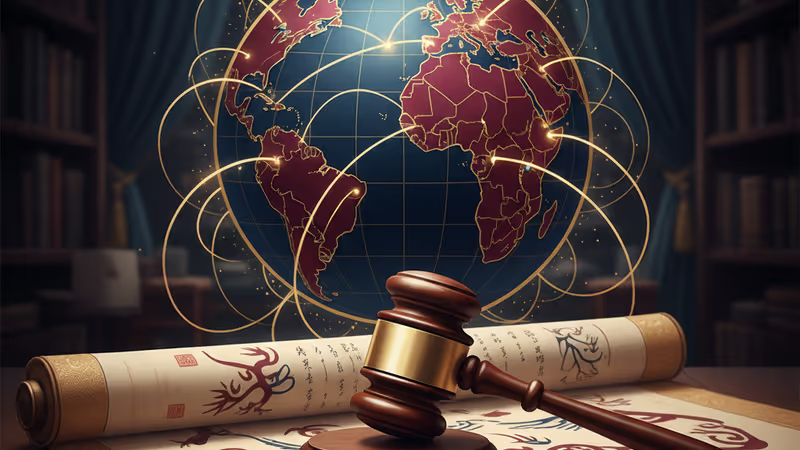
Chinese authorities are investigating a major scandal at a state-run museum where staff allegedly sold cultural treasures. The case, involving a 16th-century painting, raises questions about institutional corruption and governance in China.