
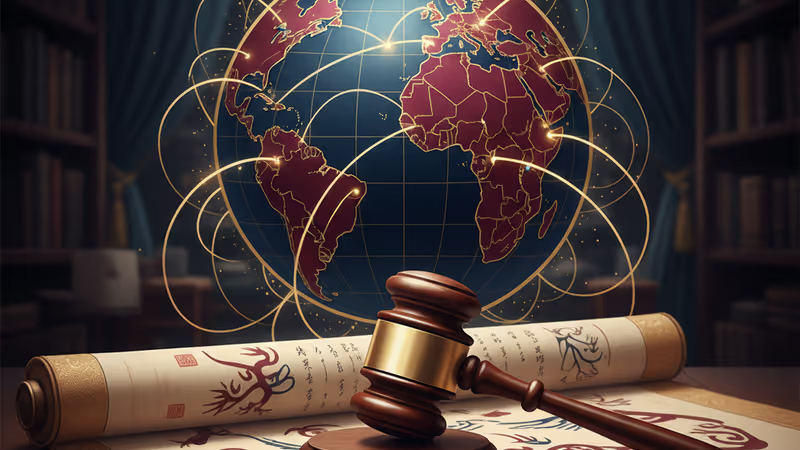
China Probes 'Audacious' Art Heist at State Museum Allegedly Run by Insiders
Chinese authorities are investigating a major scandal at a state-run museum where staff allegedly sold cultural treasures. The case, involving a 16th-century painting, raises questions about institutional corruption and governance in China.
Chinese authorities have launched an investigation into a leading state-run museum following allegations that staff were secretly selling cultural treasures on the open market. The scandal, described in one report as an alleged scam that would make the Louvre thieves look “dumb,” came to light after a Song dynasty painting donated to the museum surfaced at an auction earlier this year.
A Donated Painting Unravels the Plot
The investigation was triggered when the family of an art collector, who had donated the historic painting, spotted it listed for public sale. Their inquiry set off alarms about a potentially systemic and brazen operation to siphon priceless artifacts from within the museum's own walls. According to initial reports, a special team is now scrutinizing the museum's collection management protocols and the activities of key personnel.
Focus Turns to Former Director
The probe has reportedly intensified its focus on a former director of the institution. A former underling has allegedly come forward, claiming that the ex-director was involved in the illicit sale of collection items during his tenure. This whistleblower's testimony is believed to be a critical piece of evidence driving the official inquiry.
Beyond the potential loss of priceless artifacts, this scandal strikes at the heart of institutional trust in China. For a government that heavily promotes cultural nationalism, the alleged betrayal by the very guardians of that heritage could erode domestic and international confidence in its governance systems.
This content is AI-generated based on source articles. While we strive for accuracy, errors may occur. We recommend verifying with the original source.
Related Articles

China's military mouthpiece, the PLA Daily, has detailed a new doctrine of 'unmanned attrition warfare,' which focuses on using large drone swarms in 'saturation attacks' to overwhelm and exhaust adversaries.

China is set to grant local governments more autonomy to regulate real estate in 2026, a major policy shift aimed at clearing the housing glut and stabilizing its struggling property market.
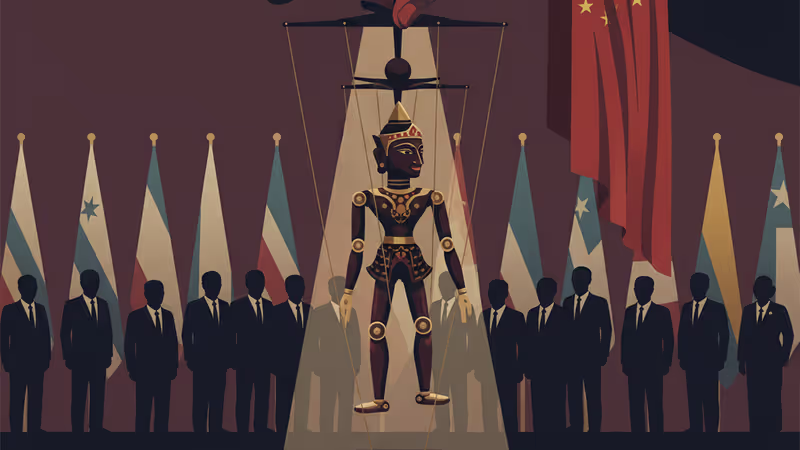
Nearly five years after its coup, Myanmar's military is holding an election. Driven by Chinese pressure and a battlefield turnaround, the vote is designed not to restore democracy but to consolidate military rule under a civilian guise.
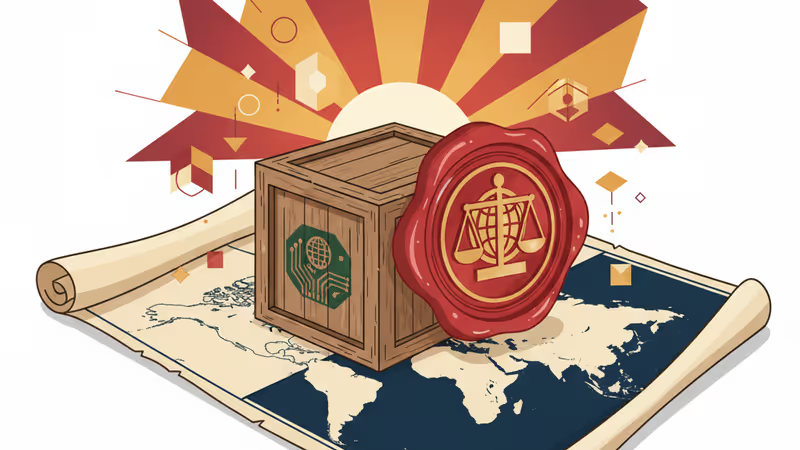
Nvidia aims to start shipping its H200 AI chips to China by mid-February 2026, according to Reuters. The plan, however, is entirely contingent on securing approval from the Beijing government.