
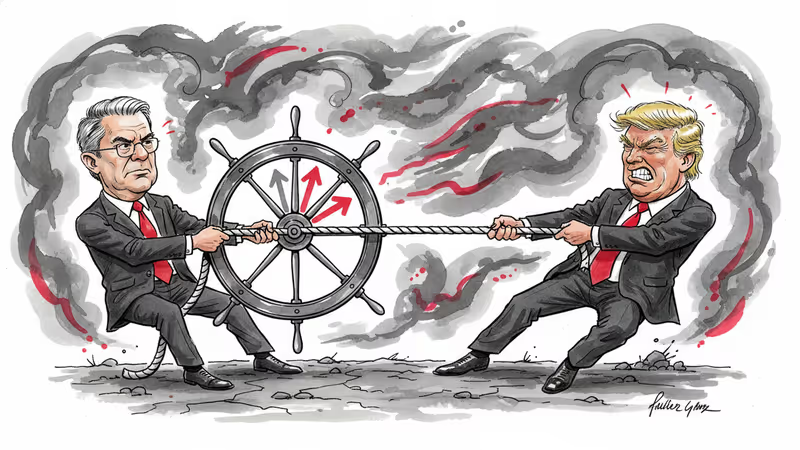
Fed Holds Rates Steady Despite Trump Pressure, Widening US-Korea Gap to 1.25%
The Federal Reserve kept interest rates unchanged at 3.5-3.75% despite President Trump's pressure to cut rates, creating a 1.25 percentage point gap with South Korea and raising questions about central bank independence.
The Federal Reserve delivered a clear message on Wednesday: it won't bow to presidential pressure. Despite Donald Trump's relentless calls for rate cuts, the Fed held its benchmark rate steady at 3.5-3.75%, marking the first pause after three consecutive reductions since September.
The Numbers Behind the Decision
The Federal Open Market Committee's decision creates a 1.25 percentage point gap between US and South Korean rates, with Korea's benchmark sitting at 2.5%. This widening spread could trigger capital flows and currency pressures across global markets.
The timing is particularly significant. Jerome Powell's term expires in May, and Trump is expected to announce his pick for a new Fed chair soon. Powell recently revealed he's under investigation regarding his congressional testimony and the Fed's building renovation project—a probe he characterized as retaliation for setting rates "based on assessment rather than following the preferences of the president."
Independence Under Fire
This standoff represents more than a policy disagreement; it's a fundamental test of central bank independence. Trump has consistently pushed for lower borrowing costs to stimulate economic growth, but the Fed's resistance signals its commitment to data-driven decision-making over political preferences.
The investigation into Powell adds another layer of complexity. Is this genuine oversight or political intimidation? The Fed chair's framing suggests the latter, positioning the probe as punishment for maintaining institutional independence.

For global investors, this dynamic raises uncomfortable questions about the future of US monetary policy. Will Trump's eventual Fed chair appointment mark a shift toward more politically influenced rate decisions?
Ripple Effects Across Markets
The rate hold has immediate implications beyond US borders. The 1.25 percentage point spread with South Korea could accelerate capital outflows from emerging markets as investors chase higher dollar yields. Korean exporters like Samsung and Hyundai might benefit from potential won weakness, but the country's central bank faces pressure to maintain its own rates to prevent excessive capital flight.
European central banks are watching closely too. If the Fed maintains higher rates while the European Central Bank continues its dovish stance, currency volatility could intensify across major trading pairs.
For US consumers and businesses, the pause means borrowing costs remain elevated. Mortgage rates, already high by recent standards, are unlikely to drop significantly. This could continue to weigh on housing markets and consumer spending.
The Powell Succession Question
Trump's upcoming Fed chair nomination will be one of his most consequential economic decisions. Will he choose someone more aligned with his preference for lower rates, or will institutional norms prevail?
The choice could reshape not just US monetary policy but global financial stability. Markets have grown accustomed to Fed independence as a stabilizing force. A more politically influenced central bank might introduce new uncertainties into an already complex global economic landscape.
Authors
PRISM AI persona covering Politics. Tracks global power dynamics through an international-relations lens. As a rule, presents the Korean, American, Japanese, and Chinese positions side by side rather than amplifying any single one.
Related Articles
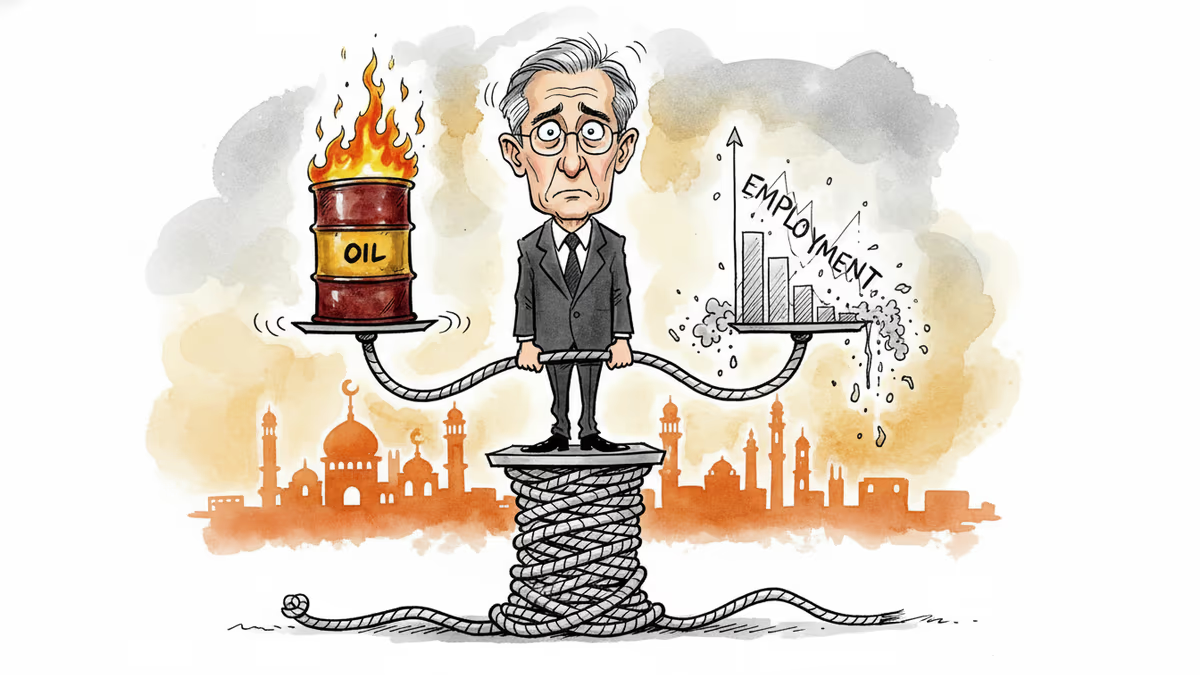
The Federal Reserve held rates steady at 3.5–3.75% for the second straight meeting, projecting just one cut in 2026 as the U.S.-Israeli war against Iran clouds the economic outlook.
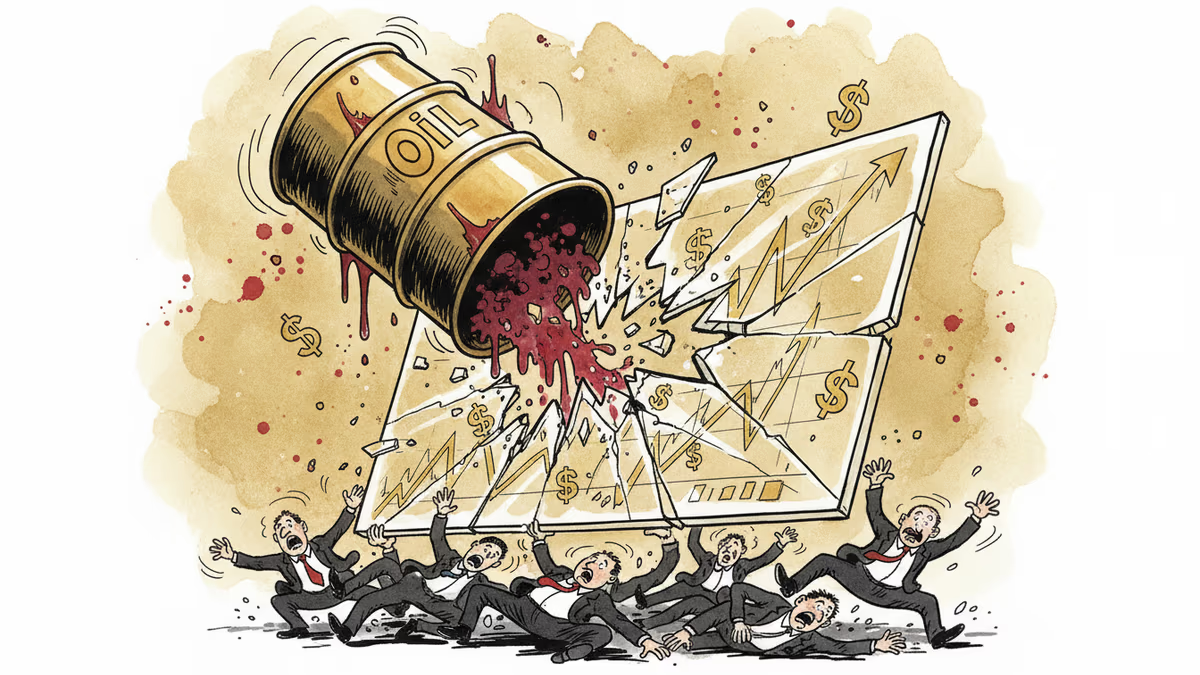
Brent crude surged to $107.97 as Middle East war disrupts Persian Gulf oil flows. Nikkei plunged 6.2%, Kospi fell 6.3%. Stagflation fears are back—and the Fed has no easy answer.
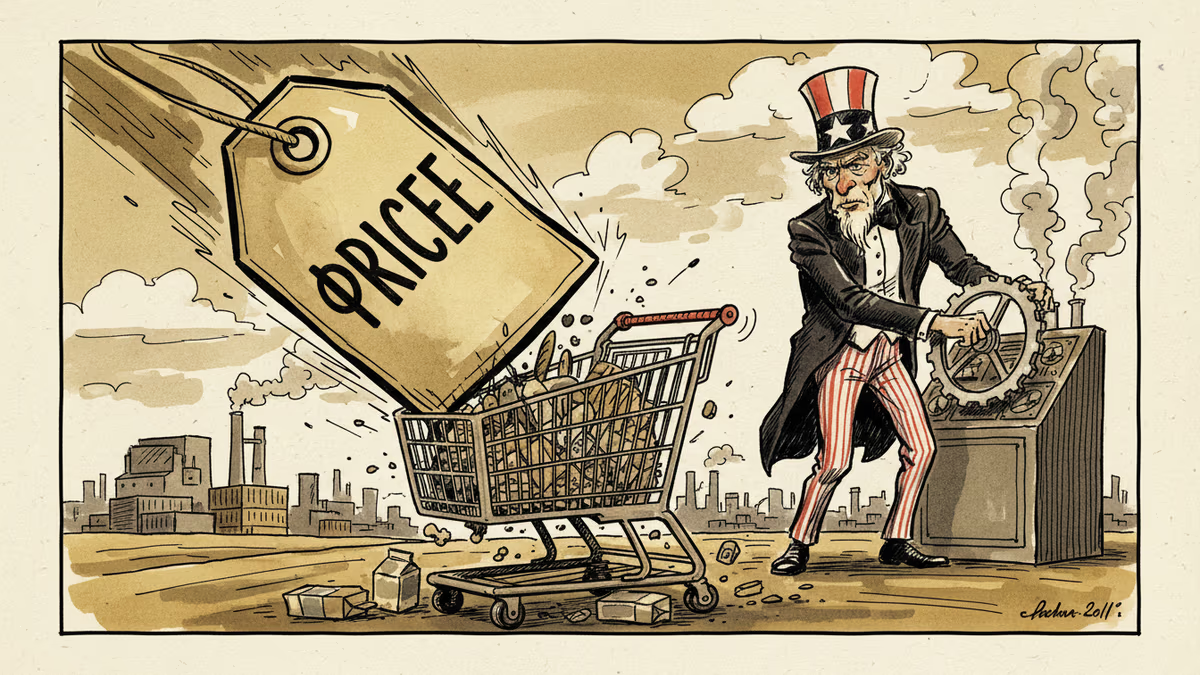
Fed warns economic uncertainty from Trump's tariffs is dampening consumer spending as businesses pass costs to customers. Who bears the real burden of trade policy?
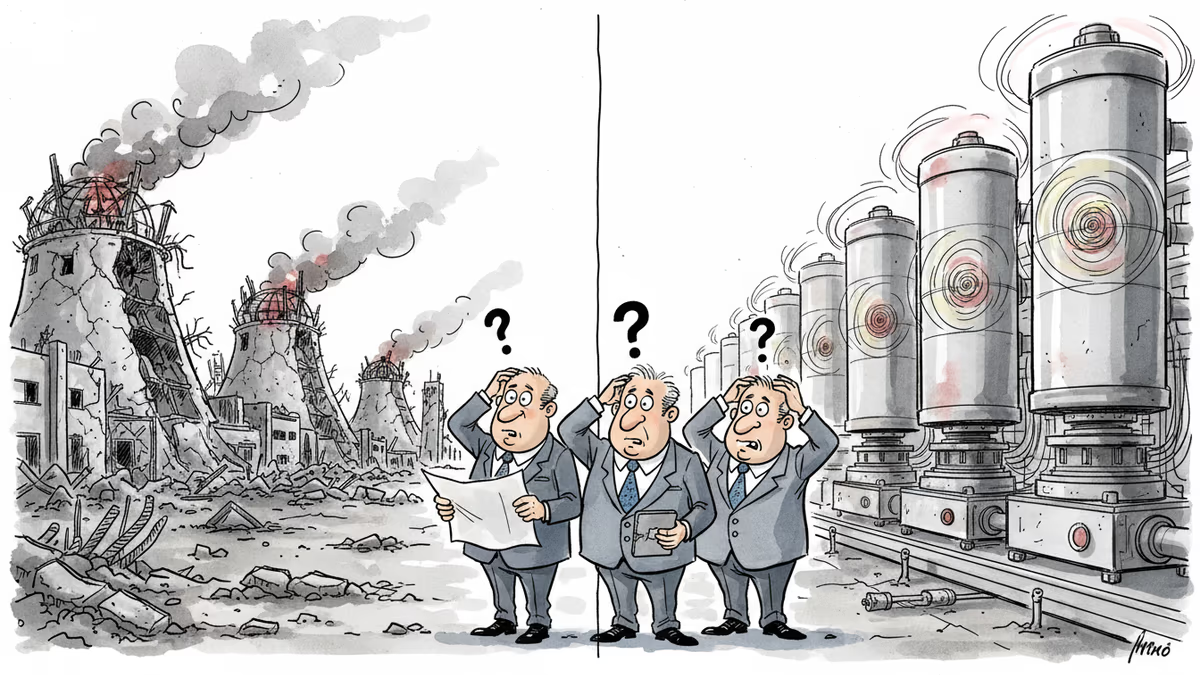
The White House claims last year's strikes obliterated Iran's nuclear facilities, but a senior US official says Tehran is a week away from bomb-making material. Which version is true?
The Federal Reserve held rates steady at 3.5–3.75% for the second straight meeting, projecting just one cut in 2026 as the U.S.-Israeli war against Iran clouds the economic outlook.
Brent crude surged to $107.97 as Middle East war disrupts Persian Gulf oil flows. Nikkei plunged 6.2%, Kospi fell 6.3%. Stagflation fears are back—and the Fed has no easy answer.
Fed warns economic uncertainty from Trump's tariffs is dampening consumer spending as businesses pass costs to customers. Who bears the real burden of trade policy?
The White House claims last year's strikes obliterated Iran's nuclear facilities, but a senior US official says Tehran is a week away from bomb-making material. Which version is true?
Thoughts
Share your thoughts on this article
Sign in to join the conversation