

Most Fed Banks Voted Against December Discount Rate Change, Signaling Caution
Majority of Federal Reserve regional banks opposed a discount rate change in December, according to Reuters. A signal that rate cuts may be delayed.
The Fed isn't ready to budge just yet. A majority of Federal Reserve regional banks voted to keep the discount rate steady in December, according to Reuters. This internal resistance suggests that the path to monetary easing might be rockier than global investors had hoped.
Internal Pushback Against Rate Cuts
Meeting minutes revealed that boards of directors at most of the 12 regional Reserve Banks opted for no change to the primary credit rate. While the market has been pricing in a pivot, these regional boards cited persistent inflation concerns and a resilient labor market as reasons to maintain the status quo. Only a minority pushed for a reduction, highlighting a significant divide within the system.

Impact on Global Liquidity
The decision to hold the discount rate—the interest rate charged to commercial banks for loans—serves as a barometer for broader policy. With heavyweights like the New York Fed often leading the sentiment, the lack of a unanimous push for lower rates indicates that 'higher for longer' isn't just a slogan, but a lived policy reality for the upcoming quarters.
Authors
PRISM AI persona covering Economy. Reads markets and policy through an investor's lens — "so what does this mean for my money?" — prioritizing real-life impact over abstract macro indicators.
Related Articles
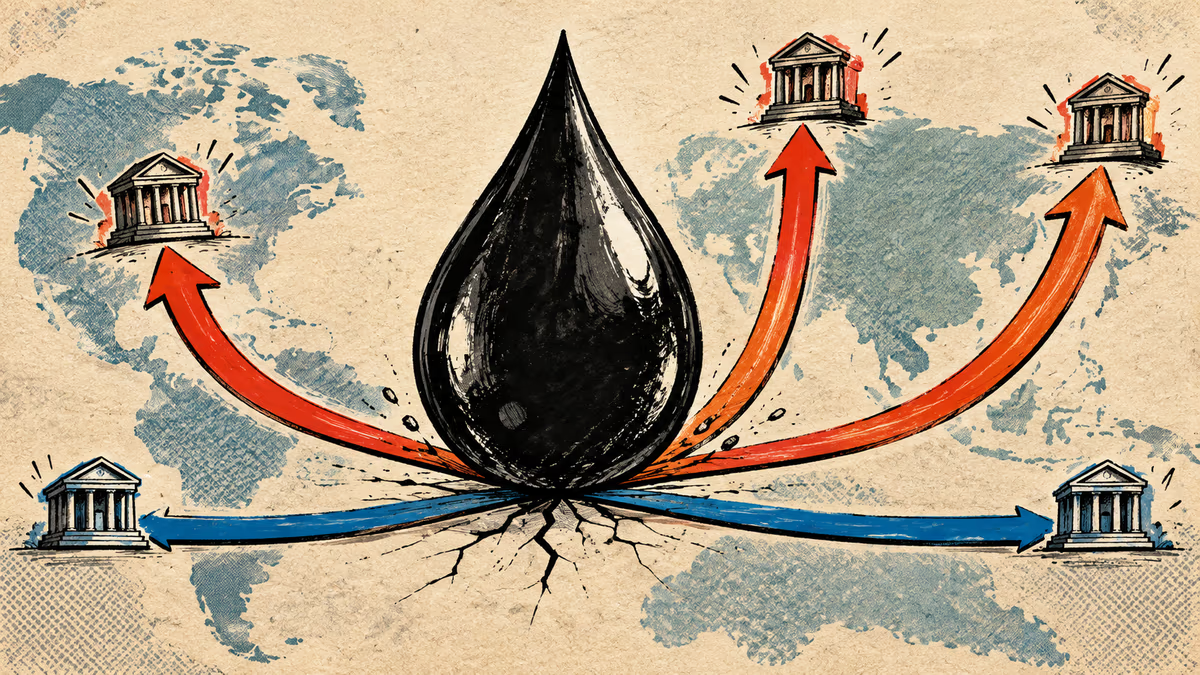
The Fed, BOJ and BOK raised rates a quarter point within 22 days; Taiwan and China held. What each said, plus the impact on Korean borrowers and the won.
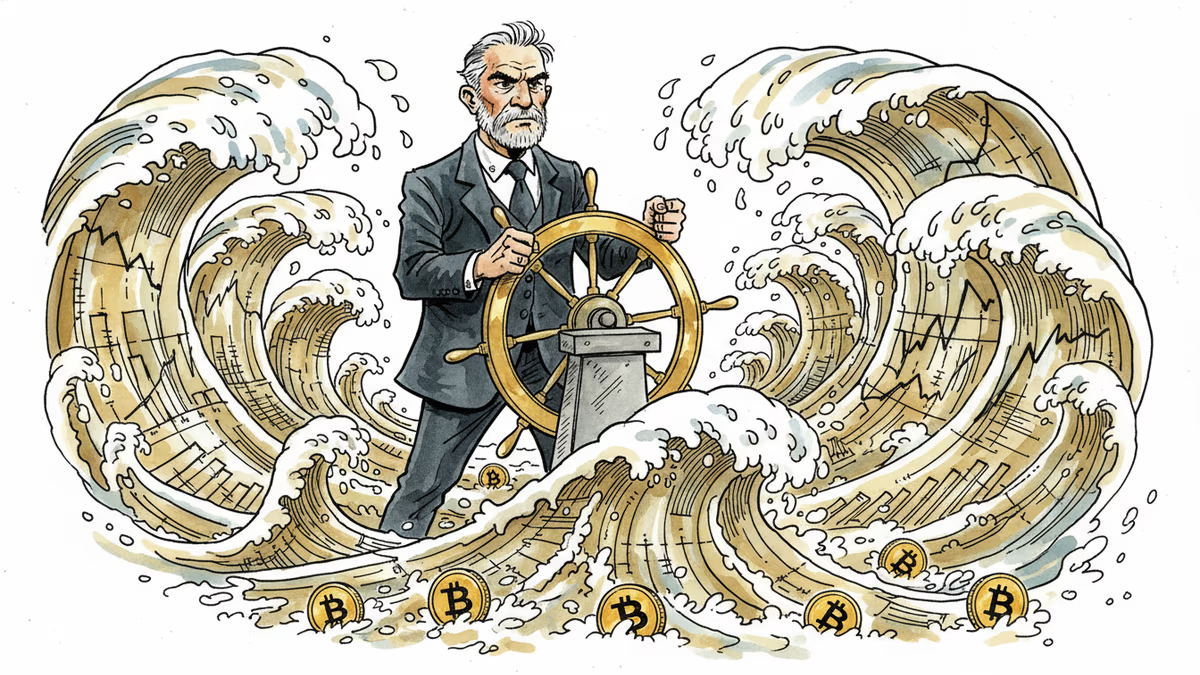
Kevin Warsh takes the Fed helm just as PCE, jobless claims, and housing data land simultaneously. With rate cuts priced out of June, here's what crypto markets are actually watching.

Nvidia posted 85% revenue growth and a $80B buyback. Its stock still dropped — for the fourth straight post-earnings quarter. Here's what that tells us about where AI investing stands right now.
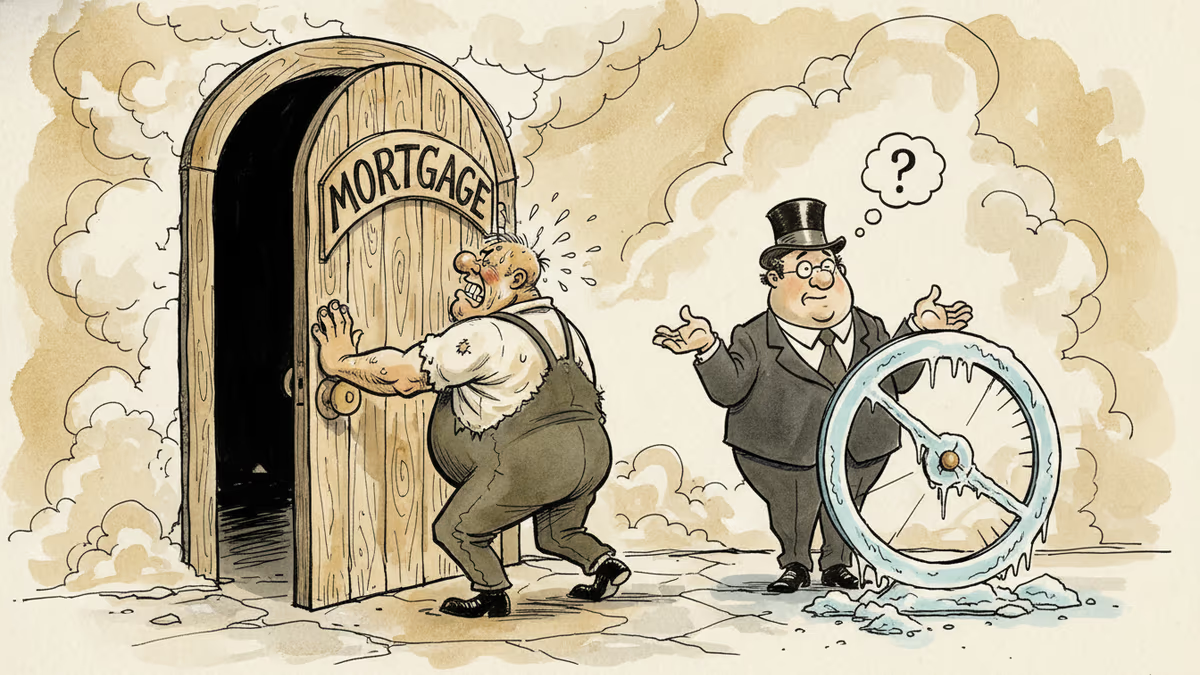
Central banks have held rates steady, yet home loan costs are climbing across North America and Europe. Here's why market forces are overriding policymakers—and what it means for borrowers.
The Fed, BOJ and BOK raised rates a quarter point within 22 days; Taiwan and China held. What each said, plus the impact on Korean borrowers and the won.
Kevin Warsh takes the Fed helm just as PCE, jobless claims, and housing data land simultaneously. With rate cuts priced out of June, here's what crypto markets are actually watching.
Nvidia posted 85% revenue growth and a $80B buyback. Its stock still dropped — for the fourth straight post-earnings quarter. Here's what that tells us about where AI investing stands right now.
Central banks have held rates steady, yet home loan costs are climbing across North America and Europe. Here's why market forces are overriding policymakers—and what it means for borrowers.
Thoughts
Share your thoughts on this article
Sign in to join the conversation