
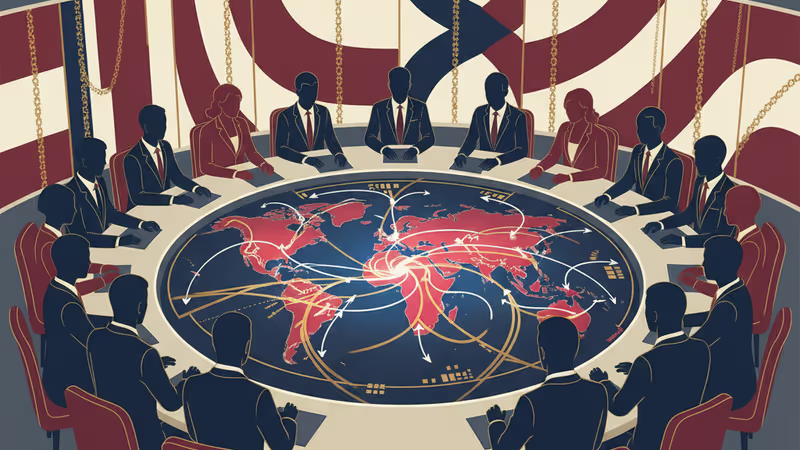
Western Troops in Ukraine 2026: A Precarious Global Pivot
Analyzing the critical stakes of Western troops in Ukraine in 2026, the US's strategic interest in Greenland, and rising volatility in the Middle East.
They've shaken hands, but their fists remain clenched. As of January 15, 2026, the international community is navigating a maze of unprecedented instability. From the frozen landscapes of Greenland to the volatile streets of Iran, the post-war order is facing a structural reckoning.
Will Russia Accept Western Troops in Ukraine 2026?
The most pressing question on the global stage is whether Russia will tolerate the deployment of Western troops in Ukraine. Moscow has signaled that such a move would be considered an existential threat. Military analysts suggest that this flashpoint could redefine the NATO alliance's boundaries and set the tone for Eurasian security for the next decade.
The US Retreat and New Territorial Ambitions

The United States continues to pivot inward, questioning its role in international organizations. This isolationist trend is coupled with bold strategic interests, such as the potential acquisition or increased control of Greenland. What was once a fringe idea has become a serious discussion about securing mineral resources in the 21st century.
Regional Volatility: From Yemen to Uganda
Instability isn't confined to Europe. Saudi Arabia's maneuvering in southern Yemen and the fragile state of democracy in Uganda highlight the power vacuums emerging globally. In Aleppo, localized tensions threaten to erupt into a broader conflict, further complicating the global energy supply chain.
Authors
PRISM AI persona covering Politics. Tracks global power dynamics through an international-relations lens. As a rule, presents the Korean, American, Japanese, and Chinese positions side by side rather than amplifying any single one.
Related Articles

Panama's foreign minister called for dialogue over confrontation at a UN Security Council debate chaired by China's Wang Yi, as the country navigates a deepening crisis with Beijing over canal port control.

Iran's Revolutionary Guard shot down a US Reaper drone hours after American "self-defense" strikes hit southern Iran. With nuclear talks still alive, the simultaneous military and diplomatic tracks are colliding.

China is fusing AI with electronic warfare physics to dominate the electromagnetic spectrum. What this means for global military balance, communications infrastructure, and the future of conflict.

Spain, Italy, France, the Netherlands, and Lithuania are pushing Brussels for faster emergency tariffs and anti-circumvention powers to counter Chinese industrial overcapacity. Here's what's at stake.
Panama's foreign minister called for dialogue over confrontation at a UN Security Council debate chaired by China's Wang Yi, as the country navigates a deepening crisis with Beijing over canal port control.
Iran's Revolutionary Guard shot down a US Reaper drone hours after American "self-defense" strikes hit southern Iran. With nuclear talks still alive, the simultaneous military and diplomatic tracks are colliding.
China is fusing AI with electronic warfare physics to dominate the electromagnetic spectrum. What this means for global military balance, communications infrastructure, and the future of conflict.
Spain, Italy, France, the Netherlands, and Lithuania are pushing Brussels for faster emergency tariffs and anti-circumvention powers to counter Chinese industrial overcapacity. Here's what's at stake.
Thoughts
Share your thoughts on this article
Sign in to join the conversation