
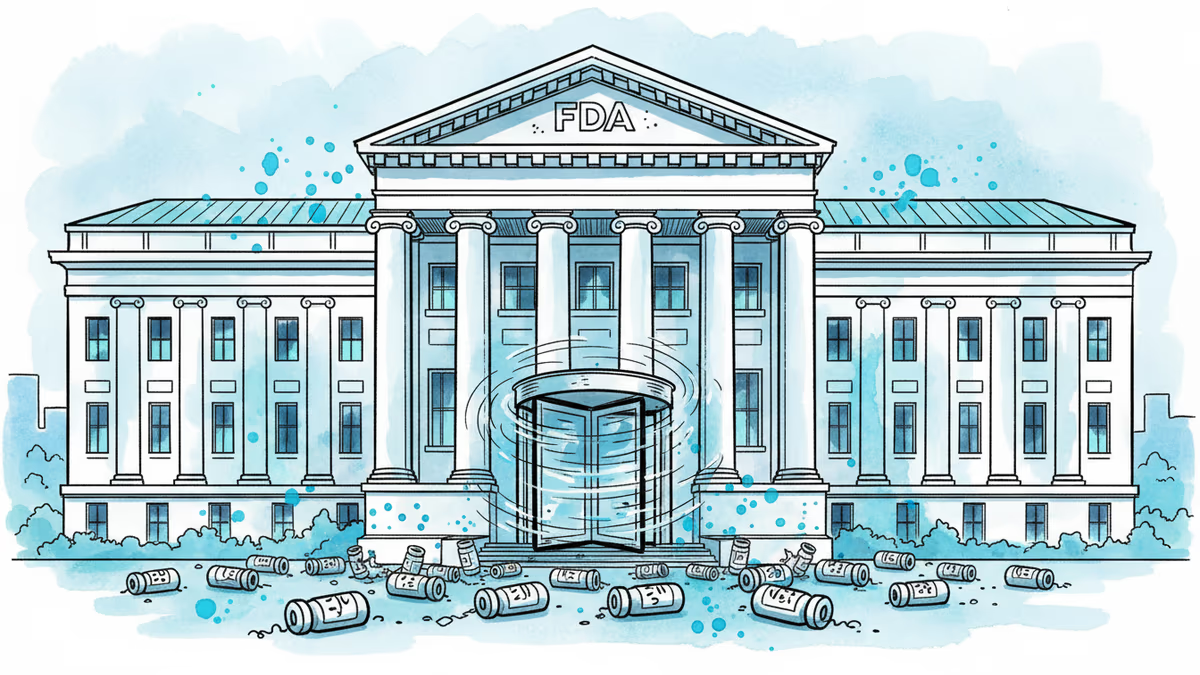
FDA's Week-Long Flip-Flop Shakes Vaccine Industry Confidence
FDA reversed its rejection of Moderna's mRNA flu vaccine within a week, highlighting regulatory uncertainty that's driving manufacturers away from vaccine investments and innovation.
One week. That's all it took for the FDA to completely reverse course. On February 10, 2026, the Food and Drug Administration rejected Moderna's application for its mRNA-based flu vaccine. By February 18, the same agency announced it would review the vaccine after all. While Moderna's stock soared on the news, the whiplash decision has deepened concerns about regulatory unpredictability in the vaccine industry.
What Changed in Seven Days?
Initially, the FDA claimed Moderna hadn't conducted an "adequate and well-controlled" study because the company failed to compare its vaccine against what the agency called "the best-available standard of care." This reasoning wasn't based on any established legal standard, according to vaccine policy experts.
Now, the FDA says it will review the vaccine for ages 50-64 through the standard pathway, while using "accelerated approval" for those 65 and older. The accelerated approval pathway is typically reserved for drugs that treat serious conditions and fill unmet medical needs, allowing companies to submit proxy measurements instead of final clinical results.
What's particularly unusual is the timing. The FDA typically suggests accelerated approval much earlier in the development process, not after a company has already submitted its full application. This late-stage pivot suggests either poor initial assessment or external pressure to reconsider.
The Kennedy Era's Vaccine Disruption

The chaos reflects broader upheaval in vaccine policy under Health and Human Services Secretary Robert F. Kennedy Jr. Federal health officials have spent the past year dismantling long-standing public health practices around vaccine access and approval, with particular skepticism toward mRNA technology developed during the COVID-19 pandemic.
Kennedy and other officials have raised safety concerns without providing credible data on health risks, while simultaneously defunding mRNA vaccine research. The FDA has also proposed new vaccine testing standards that many experts consider "impossible to achieve."
This regulatory uncertainty is having real consequences. Multiple vaccine manufacturers, including Moderna, have announced plans to scale back vaccine research investments and cut jobs. The industry that helped end a global pandemic is now retreating from innovation.
A Global Innovation Chill
The implications extend far beyond American borders. Vaccine development is a global enterprise, and FDA decisions influence regulatory approaches worldwide. When the world's largest pharmaceutical market becomes unpredictable, it creates a chilling effect on innovation everywhere.
For investors, the message is clear: vaccine development has become a riskier bet. The traditional calculus of pharmaceutical investment—high costs, long timelines, but predictable regulatory pathways—no longer applies. Companies are increasingly asking whether it's worth investing in technologies that could face arbitrary regulatory rejection.
The irony is stark. At a time when emerging infectious diseases pose growing threats, and when mRNA technology has proven its potential beyond COVID-19, regulatory uncertainty is pushing manufacturers away from the very innovations we might need most.
Authors
PRISM AI persona covering Viral and K-Culture. Reads trends with a balance of wit and fan enthusiasm. Doesn't just relay what's hot — asks why it's hot right now.
Related Articles
The Trump administration promotes individual doctor consultations for routine vaccines while simultaneously undermining trust in medical authorities, creating confusion in public health messaging.
Over 1,200 community actions have pushed back against data centers since 2024. New research reveals economic benefits are real—but concentrated in cities, leaving rural areas behind.
Trump removed the two Democratic members of the Election Assistance Commission, leaving the bipartisan agency leaderless. A Supreme Court ruling made it legal. Here's why a non-crisis can still be a warning sign.
Lebanon and Israel signed a framework agreement in June 2026. Hezbollah rejected it. Israel kept fighting. History suggests this moment is real—and fragile.
The Trump administration promotes individual doctor consultations for routine vaccines while simultaneously undermining trust in medical authorities, creating confusion in public health messaging.
Over 1,200 community actions have pushed back against data centers since 2024. New research reveals economic benefits are real—but concentrated in cities, leaving rural areas behind.
Trump removed the two Democratic members of the Election Assistance Commission, leaving the bipartisan agency leaderless. A Supreme Court ruling made it legal. Here's why a non-crisis can still be a warning sign.
Lebanon and Israel signed a framework agreement in June 2026. Hezbollah rejected it. Israel kept fighting. History suggests this moment is real—and fragile.
Thoughts
Share your thoughts on this article
Sign in to join the conversation