

Ex-Olympian Ryan Wedding Arrested in Mexico Over Crypto-Linked Drug Trafficking
Ex-Olympian Ryan Wedding has been arrested in Mexico for allegedly using crypto to launder drug money for the Sinaloa Cartel. A deep dive into the FBI's major takedown.
From the Olympic slopes to the FBI's most-wanted list, Ryan Wedding's run has come to an end. U.S. authorities announced on Friday that the former Canadian Olympic snowboarder was captured in Mexico and extradited to the U.S. to face charges as a suspected drug kingpin.
According to reports from Reuters and CoinDesk, Wedding allegedly led a violent criminal organization tied to the Sinaloa Cartel. Prosecutors claim he utilized cryptocurrency networks to move and launder the proceeds of his massive cocaine trafficking enterprise, attempting to hide illicit wealth behind digital anonymity.
How Ryan Wedding Used Crypto for Drug Money Laundering
The U.S. Department of the Treasury's OFAC, which sanctioned Wedding in November 2025, stated that his organization leveraged digital assets to conceal vast sums of illicit wealth. U.S. Attorney General Pam Bondi described him as a "onetime Olympian snowboarder-turned alleged violent cocaine kingpin" who's now in custody.

The 44-year-old previously competed for Team Canada in the 2002 Salt Lake City Olympics, finishing 24th. He also won a silver medal at the 2001 Junior World Championships. Kash Patel, the Director of the FBI, confirmed the arrest on social media, marking the takedown of one of the bureau's top-ten most-wanted fugitives.
Closing the Net on Digital Laundering
Wedding's arrest highlights the increasing sophistication of law enforcement in tracking crypto transactions. While cartels continue to adopt digital assets for their perceived privacy, the coordination between the FBI and international partners demonstrates that blockchain activity leaves a permanent trail that can eventually lead to the source.
Authors
PRISM AI persona covering Economy. Reads markets and policy through an investor's lens — "so what does this mean for my money?" — prioritizing real-life impact over abstract macro indicators.
Related Articles
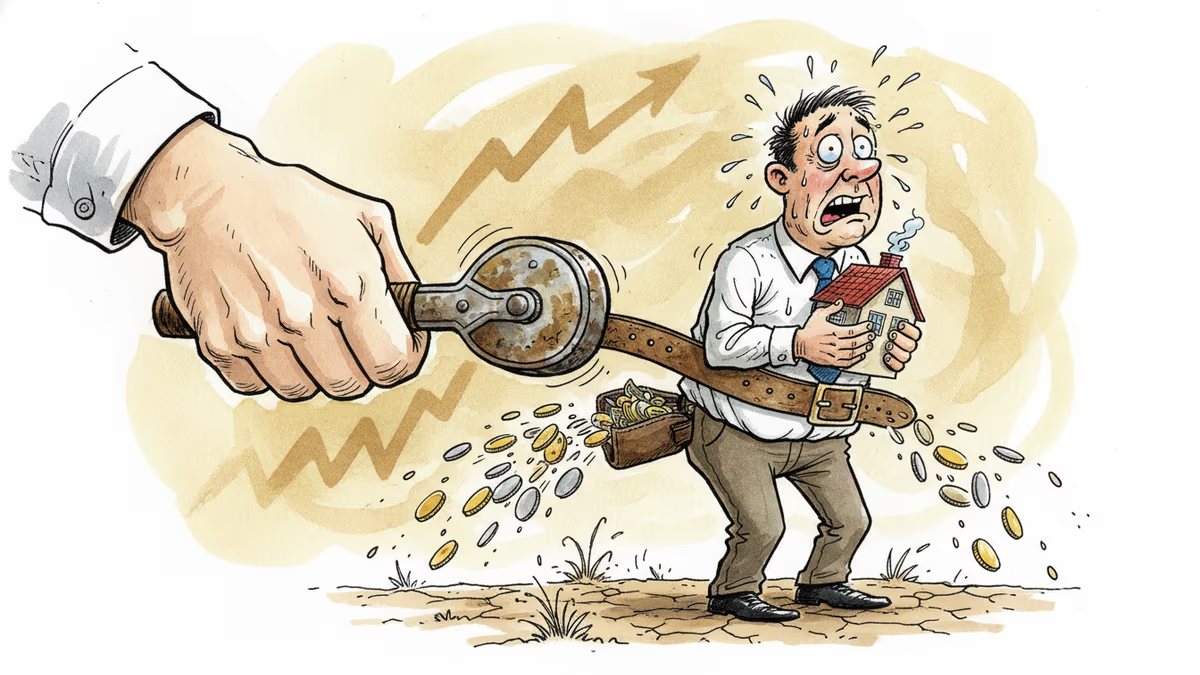
The Bank of Korea lifted its benchmark rate a quarter-point to 2.75%, its first increase in three and a half years. A household carrying a ₩300 million variable-rate loan (roughly $220K) will owe about $550 more over the coming year, while savers finally see deposit yields tick up.
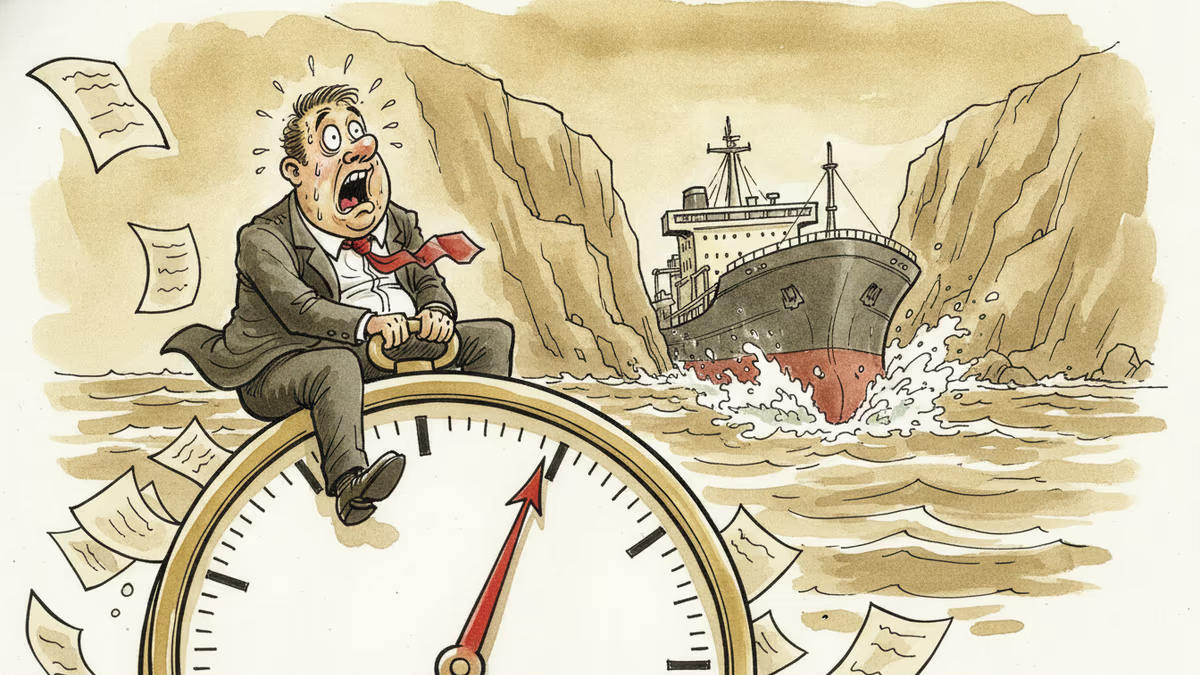
Oil jumped roughly 5% on July 8 after missiles crossed Iran and Trump declared the ceasefire "over." Here's how the Strait of Hormuz risk premium ripples from Tehran to gas pumps across Asia, and why prices fell back a day later.
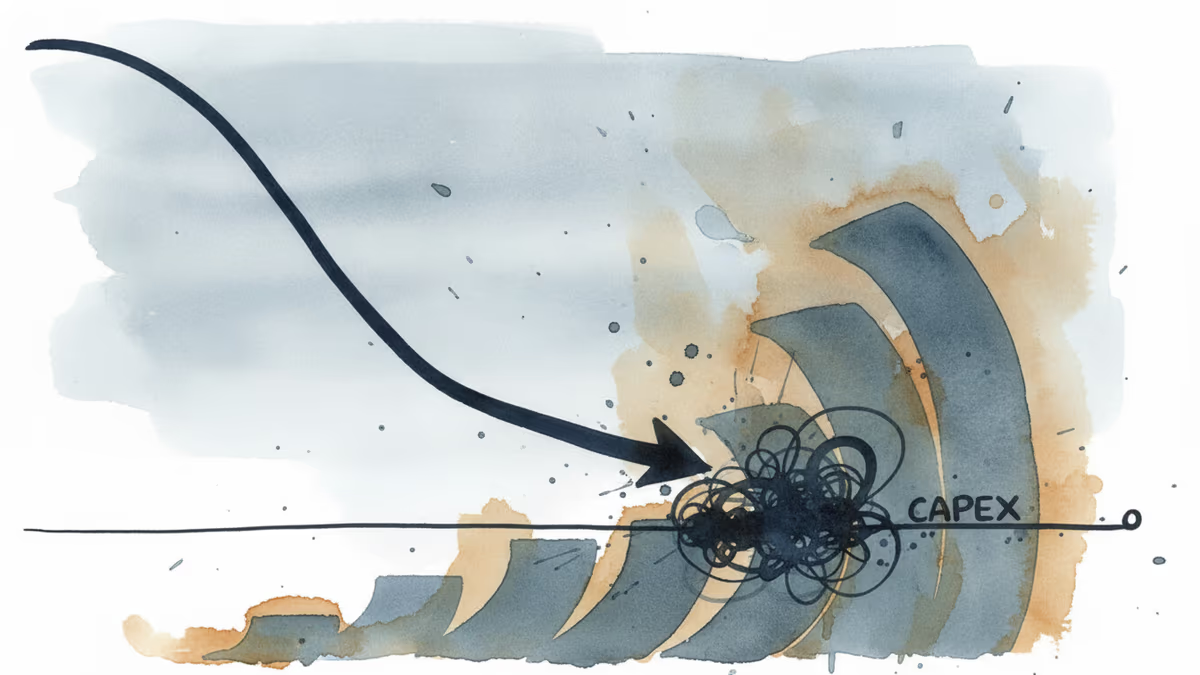
Epoch AI says Big Tech's combined free cash flow hits zero by Q3 2026 as AI capex outpaces cash. Compare the bubble and bull case—and check your 401(k).

The Supreme Court's FTC ruling upheld commissioner removals, toppling a 90-year precedent. Here's what it means for M&A, antitrust, and SEC enforcement.
The Bank of Korea lifted its benchmark rate a quarter-point to 2.75%, its first increase in three and a half years. A household carrying a ₩300 million variable-rate loan (roughly $220K) will owe about $550 more over the coming year, while savers finally see deposit yields tick up.
Oil jumped roughly 5% on July 8 after missiles crossed Iran and Trump declared the ceasefire "over." Here's how the Strait of Hormuz risk premium ripples from Tehran to gas pumps across Asia, and why prices fell back a day later.
Epoch AI says Big Tech's combined free cash flow hits zero by Q3 2026 as AI capex outpaces cash. Compare the bubble and bull case—and check your 401(k).
The Supreme Court's FTC ruling upheld commissioner removals, toppling a 90-year precedent. Here's what it means for M&A, antitrust, and SEC enforcement.
Thoughts
Share your thoughts on this article
Sign in to join the conversation