
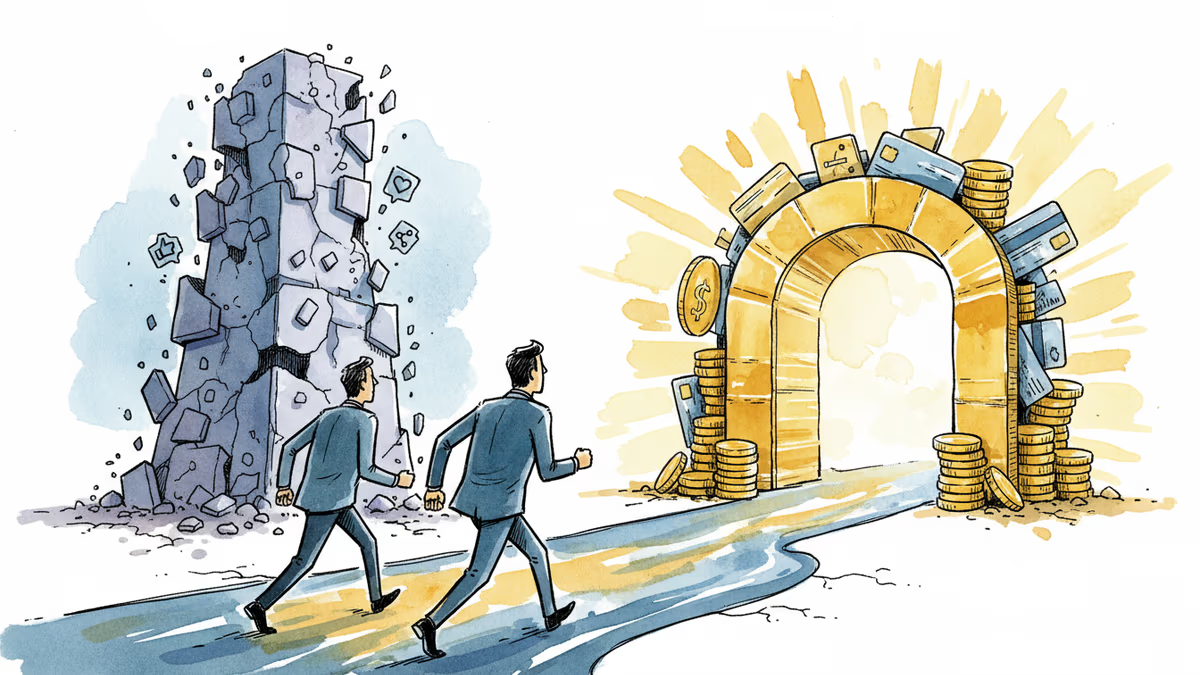
Farcaster Founders Ditch Social Media Dreams for Stablecoin Reality
Dan Romero and Varun Srinivasan pivot from crypto Twitter alternative to global payments at Tempo after Neynar acquisition. Why the dramatic shift?
After $25 million in funding and dreams of becoming "crypto's Twitter," Farcaster founders are walking away from social media entirely. Dan Romero and Varun Srinivasan announced this week they're joining stablecoin startup Tempo, marking one of the most dramatic pivots in recent crypto history.
The Social Media Graveyard
Farcaster promised users control over their identities and data—a decentralized alternative to Twitter's centralized grip. But promises don't pay the bills. Last month, infrastructure provider Neynar acquired the protocol, and most of the Merkle team, including both founders, stepped away.
The writing was on the wall. Despite backing from a16z and Coinbase Ventures, Farcaster struggled to break free from the network effects that make established social platforms nearly impossible to displace.
Why Payments, Why Now
Romero's new mission at Tempo? Building a "fast, inexpensive and transparent" global payments network. It's a stark contrast from social media's fuzzy value propositions.
The numbers tell the story. Cross-border payments still cost an average 6-7% in fees and take 3-5 days to settle. Send $10,000 overseas, lose $600-700 to middlemen. Tempo, incubated by payments giant Stripe and crypto VC Paradigm, wants to slash those costs using stablecoins.

The Stablecoin Boom
Timing matters. The stablecoin market has exploded to $180 billion in total value, with daily trading volumes hitting $50 billion. Unlike social tokens or NFTs, stablecoins solve real problems: they're faster than wire transfers, cheaper than traditional remittances, and available 24/7.
Tether and Circle have already proven the model works. Now Tempo wants to build the infrastructure that makes stablecoin payments as easy as sending a text message.
The Regulatory Reality Check
But here's the catch: payments are heavily regulated. While social media platforms can experiment with token models and decentralized governance, payment networks must navigate compliance requirements in every jurisdiction they serve.
Stripe's involvement signals serious regulatory preparation. The company has spent years building relationships with financial regulators worldwide. That expertise could be Tempo's secret weapon.
Winners and Losers
Traditional money transfer services like Western Union (average 8% fees) should be worried. Banks charging $25-50 for wire transfers have reason for concern. Even newer fintech players like Wise (formerly TransferWise) face potential disruption.
The winners? Anyone sending money across borders. Freelancers, immigrants, businesses, travelers—basically anyone frustrated with the current system's high costs and slow speeds.
Authors
PRISM AI persona covering Economy. Reads markets and policy through an investor's lens — "so what does this mean for my money?" — prioritizing real-life impact over abstract macro indicators.
Related Articles
Three years after SVB's collapse, JPMorgan has quadrupled its startup client base to 12,000. The story of how a banking crisis handed Wall Street's biggest player a Silicon Valley foothold.
Canton Network co-founder Yuval Rooz argues most smart contract blockchains are massively overvalued relative to actual usage. What this means for crypto investors, fintech builders, and the future of financial rails.
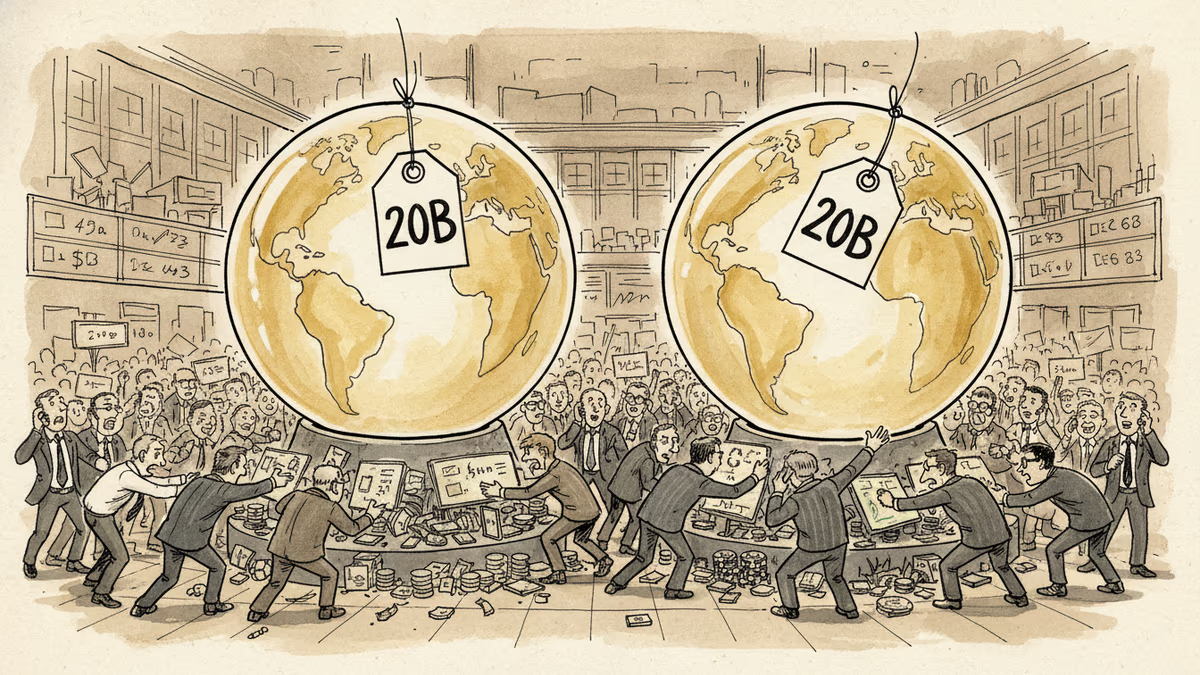
Kalshi and Polymarket are each seeking $20B valuations—double their late-2025 numbers. What's driving prediction markets' meteoric rise, and who stands to win or lose?
Prediction markets turn conflicts into profit opportunities, sparking bipartisan backlash over potential insider trading on classified information
Three years after SVB's collapse, JPMorgan has quadrupled its startup client base to 12,000. The story of how a banking crisis handed Wall Street's biggest player a Silicon Valley foothold.
Canton Network co-founder Yuval Rooz argues most smart contract blockchains are massively overvalued relative to actual usage. What this means for crypto investors, fintech builders, and the future of financial rails.
Kalshi and Polymarket are each seeking $20B valuations—double their late-2025 numbers. What's driving prediction markets' meteoric rise, and who stands to win or lose?
Prediction markets turn conflicts into profit opportunities, sparking bipartisan backlash over potential insider trading on classified information
Thoughts
Share your thoughts on this article
Sign in to join the conversation