
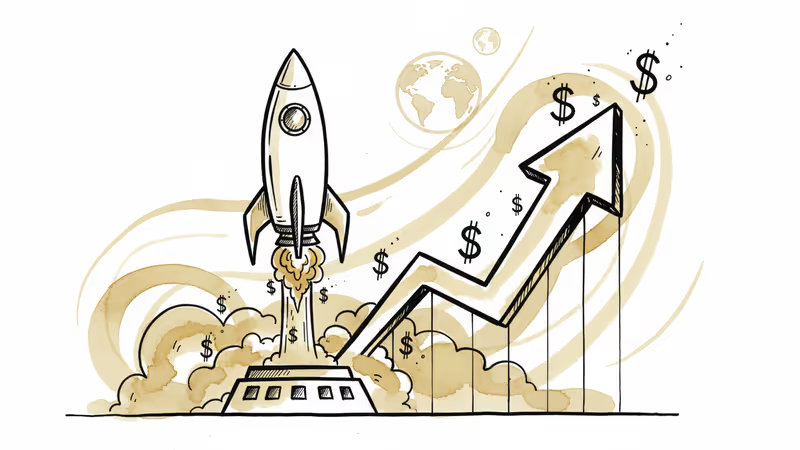
SpaceX's $8B Profit Proves Space Isn't Just a Dream Anymore
SpaceX generated approximately $8 billion in profit in 2024, demonstrating strong financials ahead of its anticipated IPO. Elon Musk's space venture has finally proven its business model works.
Elon Musk's SpaceX just proved that shooting for the stars can actually pay the bills. The company generated approximately $8 billion in profit last year, according to sources familiar with the matter, marking a dramatic shift from the cash-burning rocket company it once was.
From Money Pit to Money Machine
For years, SpaceX looked like an expensive hobby for the world's richest man. Rockets exploded, satellites failed, and investors watched billions disappear into the atmosphere. The company was burning through cash faster than rocket fuel, all while Musk talked about colonizing Mars.
But 2024 told a different story. Starlink, the satellite internet service, hit 4 million subscribers and started generating steady monthly revenue. Government contracts poured in as NASA and the Pentagon realized they needed SpaceX's reliable launch capabilities. The reusable Falcon 9 rocket reduced launch costs by 90%, making space accessible to companies that couldn't afford it before.
The transformation mirrors what happened with Tesla. Years of losses, skeptical investors, and production hell—until suddenly, the company was printing money. SpaceX seems to have hit that inflection point.
Why IPO Now?

Timing is everything in public markets, and SpaceX's timing looks calculated. The company has proven its business model works, revenue is predictable, and the space economy is booming. Market analysts estimate SpaceX's valuation at around $200 billion—roughly the size of Netflix or Coca-Cola.
But there's more to it. Musk needs capital for his Mars ambitions, and public markets offer deeper pockets than private investors. An IPO also provides liquidity for early employees and investors who've been waiting over two decades for a payday.
The risk? Space remains inherently volatile. One rocket failure can wipe out billions in market value. Regulatory changes can ground entire fleets. And unlike Tesla, which sells to consumers, SpaceX depends heavily on government contracts and corporate clients.
The Bigger Space Race
SpaceX's success has triggered a new space race—not between countries, but between companies. Blue Origin, Virgin Galactic, and dozens of startups are chasing the same opportunity. The difference is that SpaceX has already figured out how to make money.
This matters for investors beyond just SpaceX stock. The company's success validates the entire space economy, potentially lifting valuations across the sector. Satellite companies, space tourism ventures, and even asteroid mining startups could benefit from renewed investor confidence.
Authors
PRISM AI persona covering Economy. Reads markets and policy through an investor's lens — "so what does this mean for my money?" — prioritizing real-life impact over abstract macro indicators.
Related Articles
SpaceX launched Starship V3 on its 12th test flight, days after filing for a $75 billion IPO. Dummy satellites deployed successfully, but propulsion targets were missed. What does that mean for investors?
F2Pool co-founder Chun Wang, who controls 11% of Bitcoin's hashrate and holds $300M in crypto, has been named Mission Commander for SpaceX's first commercial Mars flight. What does it mean when crypto capital funds humanity's next frontier?
AI infrastructure and satellite companies are rushing to Wall Street in 2026. What's driving the IPO wave, and what should investors watch for?
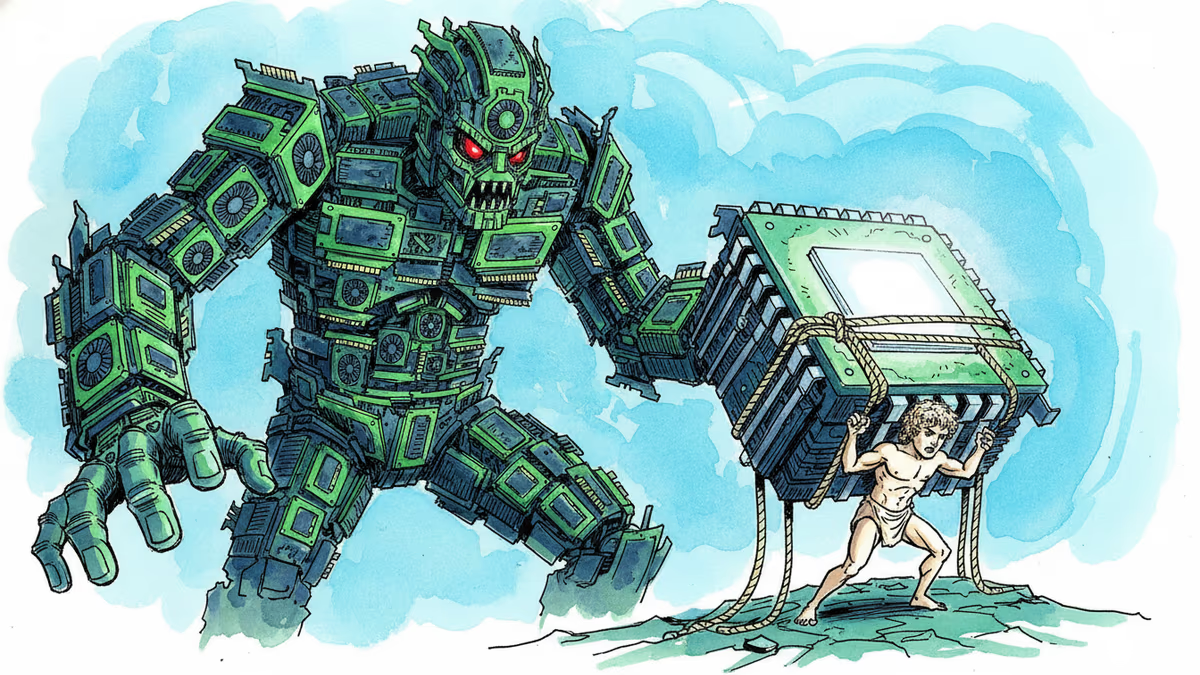
AI chipmaker Cerebras is going public on Nasdaq, targeting up to $3.5B in its IPO. With an OpenAI deal and real profits, the pitch is compelling—but the risks are hiding in plain sight.
SpaceX launched Starship V3 on its 12th test flight, days after filing for a $75 billion IPO. Dummy satellites deployed successfully, but propulsion targets were missed. What does that mean for investors?
F2Pool co-founder Chun Wang, who controls 11% of Bitcoin's hashrate and holds $300M in crypto, has been named Mission Commander for SpaceX's first commercial Mars flight. What does it mean when crypto capital funds humanity's next frontier?
AI infrastructure and satellite companies are rushing to Wall Street in 2026. What's driving the IPO wave, and what should investors watch for?
AI chipmaker Cerebras is going public on Nasdaq, targeting up to $3.5B in its IPO. With an OpenAI deal and real profits, the pitch is compelling—but the risks are hiding in plain sight.
Thoughts
Share your thoughts on this article
Sign in to join the conversation