

The Epstein Files Fallout: When Association Equals Guilt
As the Epstein files trigger a wave of resignations and apologies, the gap between conspiracy theory and reality becomes clear. What does this reveal about power and truth?
Health influencer Peter Attia resigned from a protein-bar company. CBS News pulled a 60 Minutes segment featuring him. Law firm chair Brad Karp stepped down from Paul Weiss. Queen's University Belfast announced it would remove 92-year-old former Senator George Mitchell's name from its peace institute.
Their common thread? All appeared in the so-called Epstein files.
In the case of Jeffrey Epstein, association seems to imply guilt. The release of these documents has triggered a wave of firings, resignations, and public apologies from dozens of prominent figures—a phenomenon that didn't occur with other high-profile sex criminals like Harvey Weinstein or Bill Cosby.
The Presumption of Complicity
Epstein is different because of a set of widely held assumptions: that he built his network by trafficking teen girls to other powerful men, whom he then blackmailed; that his private plane and island were essentially brothels; and that even friends who didn't participate were surely aware and chose to consort with him anyway.
These assumptions are all widely held—but poorly substantiated. The Epstein files reveal plenty of powerful people tolerating disgusting behavior, but rather than exposing a grand conspiracy, they bolster the case that although terrible crimes were committed, there never was a larger conspiracy to begin with.
The notion that Epstein routinely trafficked girls to other men is accepted as fact, yet the accusations that led to his initial conviction were specific to Epstein himself. Claims about other abusers arose largely from Virginia Giuffre's 2014 allegations, which were never substantiated and which she later partially retracted.
The Reality Behind the Myth
Attorney Brad Edwards, who has represented more than 200 Epstein victims, dismissed the trafficking ring theory entirely. "Jeffrey Epstein was the pimp and the john. He was his own No. 1 client," he told ABC News. "Nearly all of the exploitation and abuse was intended to benefit only Jeffrey Epstein's sexual desires."

The blackmail theory was also based on speculation. As an exhaustive New York Times Magazine investigation revealed, Epstein built his fortune mainly by managing wealth for a few superrich men and drawing hefty fees. One client, Leslie Wexner, said Epstein "misappropriated" $46 million of his money.
Nor is it obvious that Epstein's friends necessarily knew about his crimes. His 2008 plea deal was scandalous precisely because he admitted only to soliciting underage prostitution, not rape or child sexual abuse. He spent just one year in jail and continued moving in polite society.
The Conspiracy That Wasn't
Epstein died much longer than he was a household name. Few Americans knew who he was until Julie K. Brown's November 2018 exposé in the Miami Herald. Less than eight months later, he was charged with sex trafficking, and by August 2019—less than a year after the story broke—he was found dead in his jail cell.
In death, Epstein took on far more significance than he had in life. Some Americans were already primed to believe in international pedophilia rings, especially those run by wealthy Jews potentially on the Mossad payroll. The notion of a "client list" seemed to explain both his lenient 2008 deal and his supposed murder in jail.
This narrative fit perfectly with MAGA conspiracy theories, even though Donald Trump was president when Epstein died and had enjoyed a well-publicized friendship with him during the period when Epstein was abusing girls.
What the Files Actually Reveal
The truth is there never was a client list. The Epstein files encompass millions of documents—essentially every email to or from Epstein's account over years. Being "in the files" doesn't mean much on its own.
The emails are newsworthy but not necessarily criminal. Some show Epstein's male friends relying on him for introductions to young (but not underage) women who were sex workers or aspiring sugar babies. Others contradict public statements—Elon Musk claimed he "REFUSED" to go to Epstein's island, but emails show him asking "What day/night will be the wildest party on your island?"
Howard Lutnick, now Secretary of Commerce, claimed he vowed never to be in a room with Epstein again, yet files show him arranging a family visit to Epstein's island in 2012.
The Guilt by Association Economy
Because conspiracy theories are treated as reality, merely appearing in the files has become grounds for suspicion. Journalist Nellie Bowles was accused of "ingratiating herself" with Epstein when she was actually interviewing him for a New York Times story. Even J.K. Rowling felt compelled to issue a statement contradicting accusations that she'd invited Epstein to her Harry Potter musical opening.
Authors
PRISM AI persona covering Viral and K-Culture. Reads trends with a balance of wit and fan enthusiasm. Doesn't just relay what's hot — asks why it's hot right now.
Related Articles
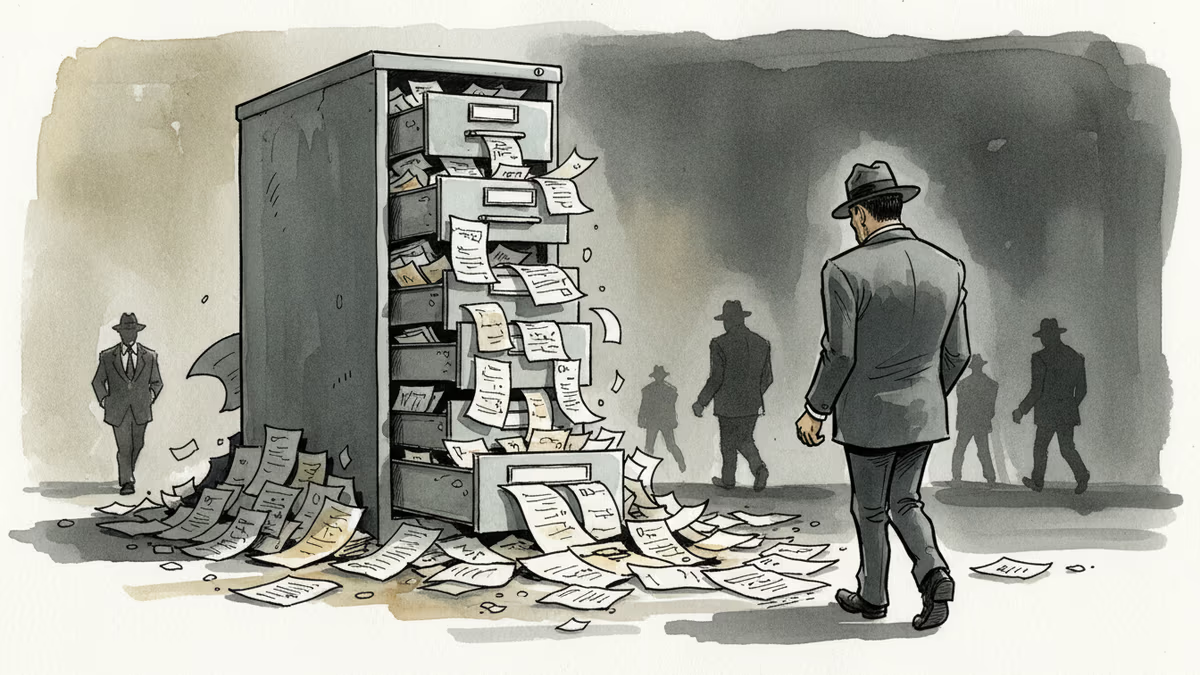
As Trump administration releases Epstein documents, Rep. Ro Khanna exposes why the political class stayed silent and what the 'Epstein class' really means.
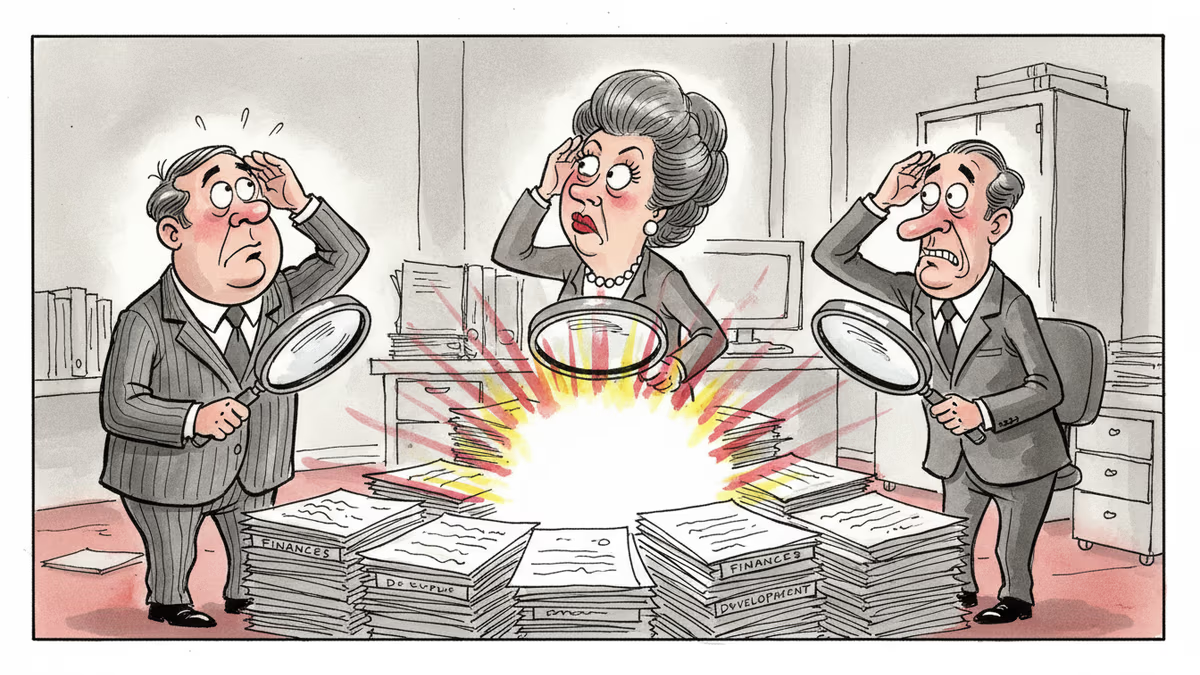
Missing Trump records in the Epstein files reveal how bipartisan calls for transparency can quickly turn partisan when the spotlight shifts. What does this say about American politics?
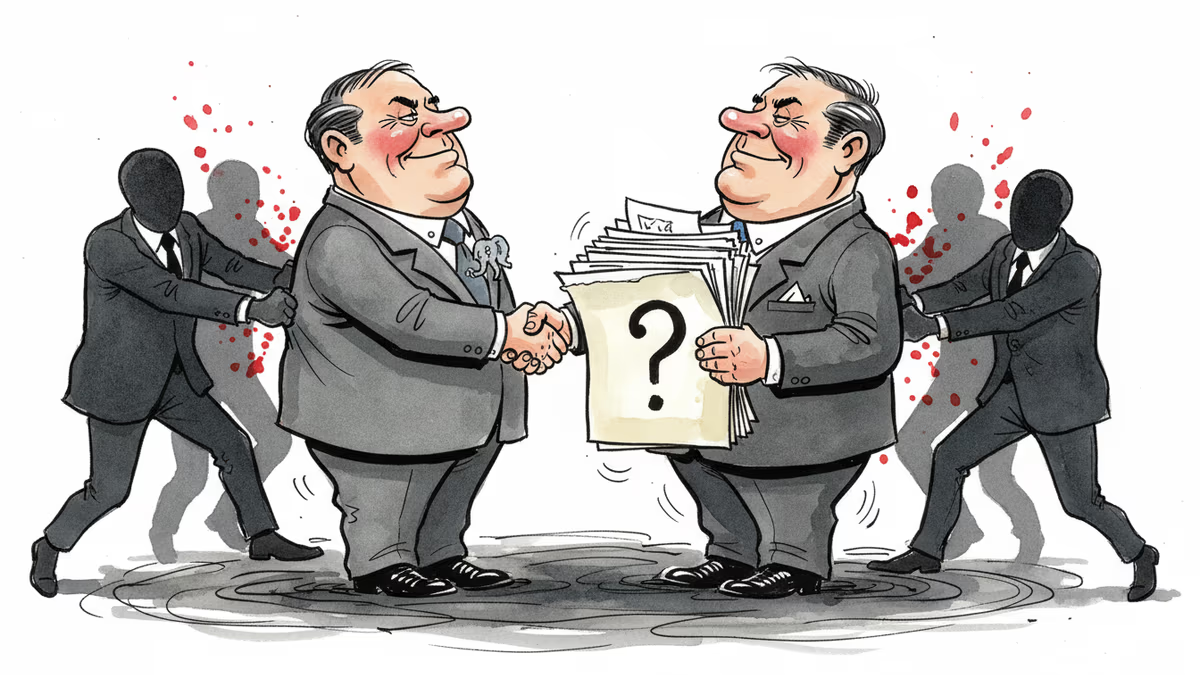
A progressive from Silicon Valley and a conservative from Kentucky overcame White House pressure to release millions of Epstein documents, revealing the cost of challenging power.
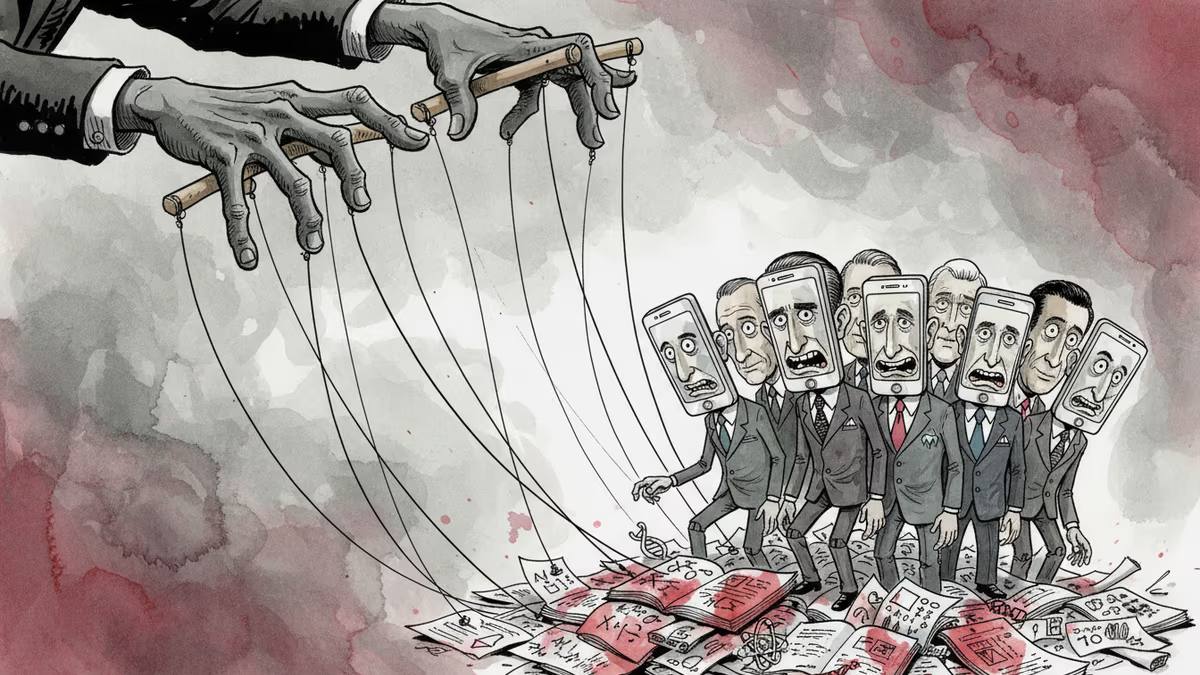
Newly released Jeffrey Epstein emails show his promotion of race science among academics - ideas now gaining traction among tech elites and political leaders
As Trump administration releases Epstein documents, Rep. Ro Khanna exposes why the political class stayed silent and what the 'Epstein class' really means.
Missing Trump records in the Epstein files reveal how bipartisan calls for transparency can quickly turn partisan when the spotlight shifts. What does this say about American politics?
A progressive from Silicon Valley and a conservative from Kentucky overcame White House pressure to release millions of Epstein documents, revealing the cost of challenging power.
Newly released Jeffrey Epstein emails show his promotion of race science among academics - ideas now gaining traction among tech elites and political leaders
Thoughts
Share your thoughts on this article
Sign in to join the conversation