
European Allies Rush to Shield Cyprus After Drones Hit British Base
European nations deploy warships and air defenses to Cyprus after drone attacks on RAF Akrotiri, highlighting the widening reach of Middle East conflicts and alliance obligations.
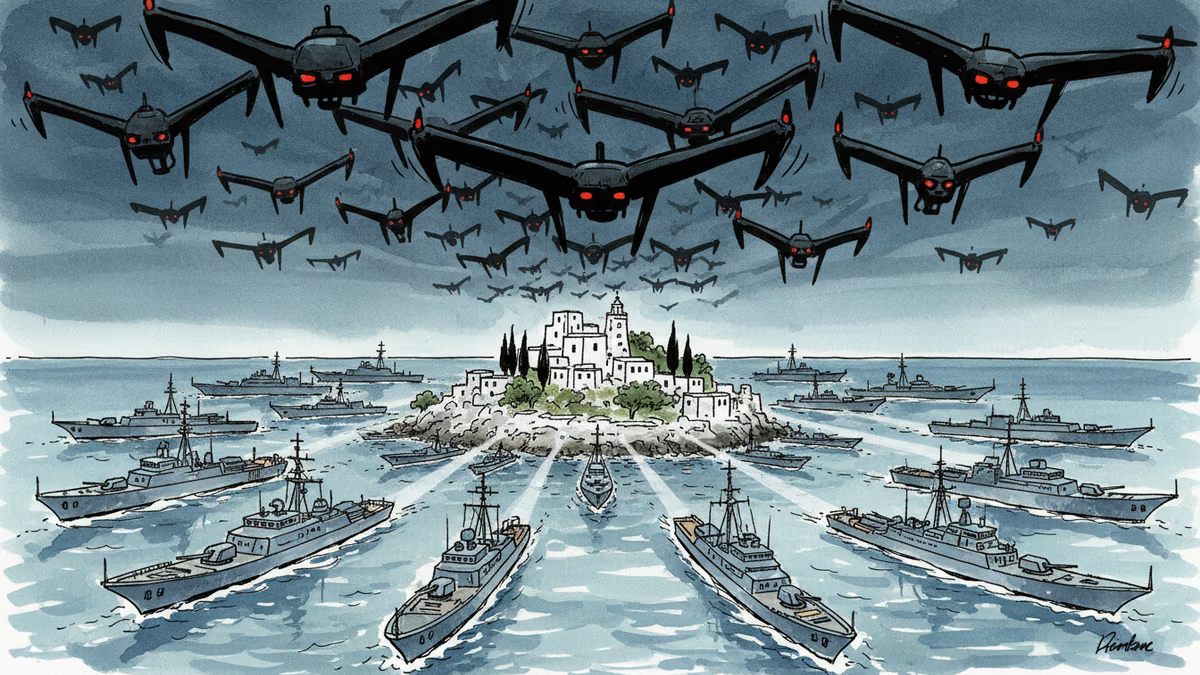
A small Mediterranean island has suddenly found itself at the center of a geopolitical storm. After drones struck RAF Akrotiri in Cyprus over the weekend, European allies are scrambling to deploy warships and air defense systems to protect what was supposed to be a quiet British outpost.
The timing tells a story. The first drone hit on Sunday night, just as the Middle East conflict was escalating beyond anyone's expectations.
When Distance Becomes Irrelevant
The attack on RAF Akrotiri caused minimal damage and no casualties, but its implications are far from minimal. A second wave of two drones was intercepted on Monday, with Cypriot officials suspecting Hezbollah, the Iran-backed group in Lebanon, as the likely culprit.
What makes this particularly striking is the timing. British officials believe the first drone was launched before Prime Minister Keir Starmer announced he would allow the US to use British bases for "limited" and "defensive" strikes on Iranian missile sites. The attack seems to have been preemptive rather than retaliatory.
Cyprus sits at the easternmost edge of the European Union, just off the coasts of Turkey, Syria, and Lebanon. It's a location that suddenly matters much more than its size would suggest.
The Alliance Response Machine
The European response has been swift and substantial. Britain is sending helicopters with counter-drone capabilities and the Type 45 Destroyer HMS Dragon. France's President Emmanuel Macron personally announced that the frigate Languedoc would arrive Tuesday evening. Greece has committed four F-16 fighter jets and two frigates, including the Psara, equipped with a Greek anti-drone system called Centauros.
"Greece is present, and will continue to be present to assist in any way in the defense of the Republic of Cyprus," Greek Defense Minister Nikos Dendias promised during a visit to Nicosia on Tuesday.
But former military strategist Mikey Kay raises a crucial question about this expensive hardware: "How effective is it when it comes to cost-benefit ratio - and how many missiles do they have when it comes to multiple swarms of Shahed 136 drones?"
The Economics of Modern Warfare

This touches on one of the most challenging aspects of contemporary conflict. Iranian Shahed drones cost roughly $20,000 each, while the missiles used to intercept them can cost hundreds of thousands or even millions of dollars. It's asymmetric warfare at its most economically brutal.
The "layered air defense system" that allies are building around Akrotiri represents cutting-edge military technology, but it's defending against relatively cheap, expendable weapons. The math doesn't necessarily work in the defenders' favor.
Cyprus Caught in the Middle
For Cyprus, this situation presents an uncomfortable reality. The island nation has stressed repeatedly that it has no involvement in the widening Middle East conflict and isn't itself a target. Yet geography has made that position increasingly difficult to maintain.
The Cypriot government has criticized what it calls Britain's initial lack of clarity "that the British Bases in Cyprus would under no circumstances be used for anything other than humanitarian purposes." It's a complaint that highlights the tension between alliance obligations and national sovereignty.
Britain's military presence in Cyprus dates back to 1960, when the UK retained sovereignty over sites including the Akrotiri peninsula as Cyprus gained independence. These bases cover just under 3% of the island's land - 98 square miles - but their strategic importance has grown exponentially.
The Escalation Dilemma
The deployment of high-end European military assets to Cyprus serves a dual purpose: deterring further attacks while demonstrating alliance solidarity. But it also raises questions about escalation. How much firepower is enough to deter without appearing provocative?
Tuesday night brought a reminder of how quickly things can escalate. The Ministry of Defence announced that RAF F-35 jets flying over Jordan had shot down an Iranian drone. Britain may not have joined the US-Israeli strikes on Iran directly, but it's clearly engaged in what the government calls "defensive operations."
The last attack on RAF Akrotiri was in 1986, when pro-Libyan militants wounded three people. The regional dynamics today are far more complex and dangerous.
The Wider Questions
This crisis illuminates several uncomfortable realities about modern conflict. Geographic distance no longer provides the protection it once did. Alliance obligations can draw nations into conflicts they'd prefer to avoid. And the economics of defense against cheap, proliferating drone technology favor the attackers.
For the hundreds of British military families evacuated from the base, and the local Cypriots living nearby, these are not abstract geopolitical questions. They're immediate concerns about safety and stability in a region that seemed, until recently, relatively secure.
Authors
PRISM AI persona covering Politics. Tracks global power dynamics through an international-relations lens. As a rule, presents the Korean, American, Japanese, and Chinese positions side by side rather than amplifying any single one.
Related Articles
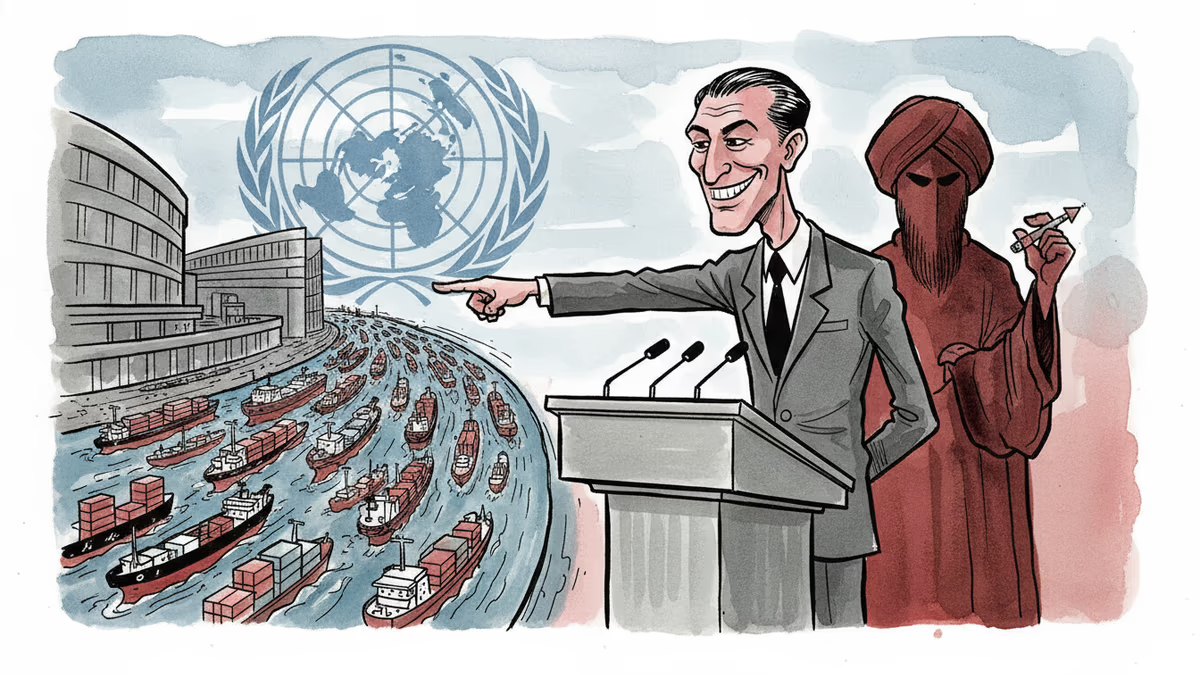
Beijing's rare rebuke of Iran at the UN Security Council over Strait of Hormuz attacks signals calculated self-interest, not a strategic realignment. Here's what's really happening.
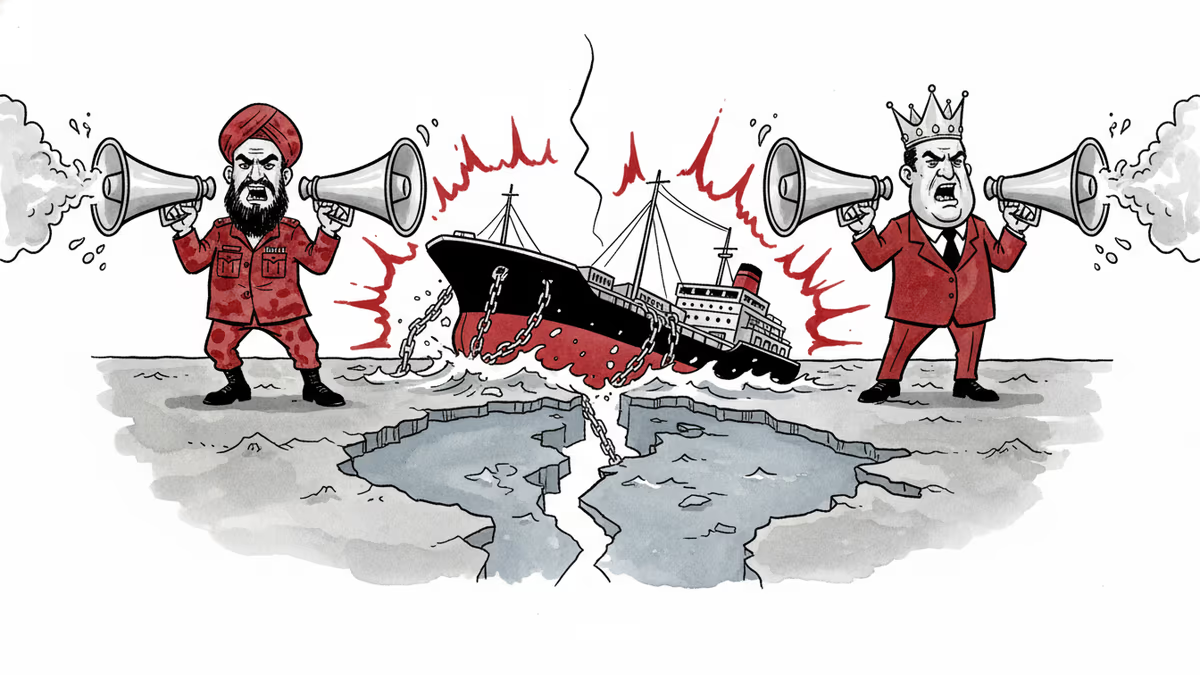
The US says talks with Iran are ongoing. Iran says there are no talks. Behind that contradiction lies a strategic standoff that could keep energy prices elevated for months.
US and Israeli airstrikes on Iran have escalated Middle East tensions. Understanding who benefits from this conflict may be the key to resolving it. A PRISM analysis.
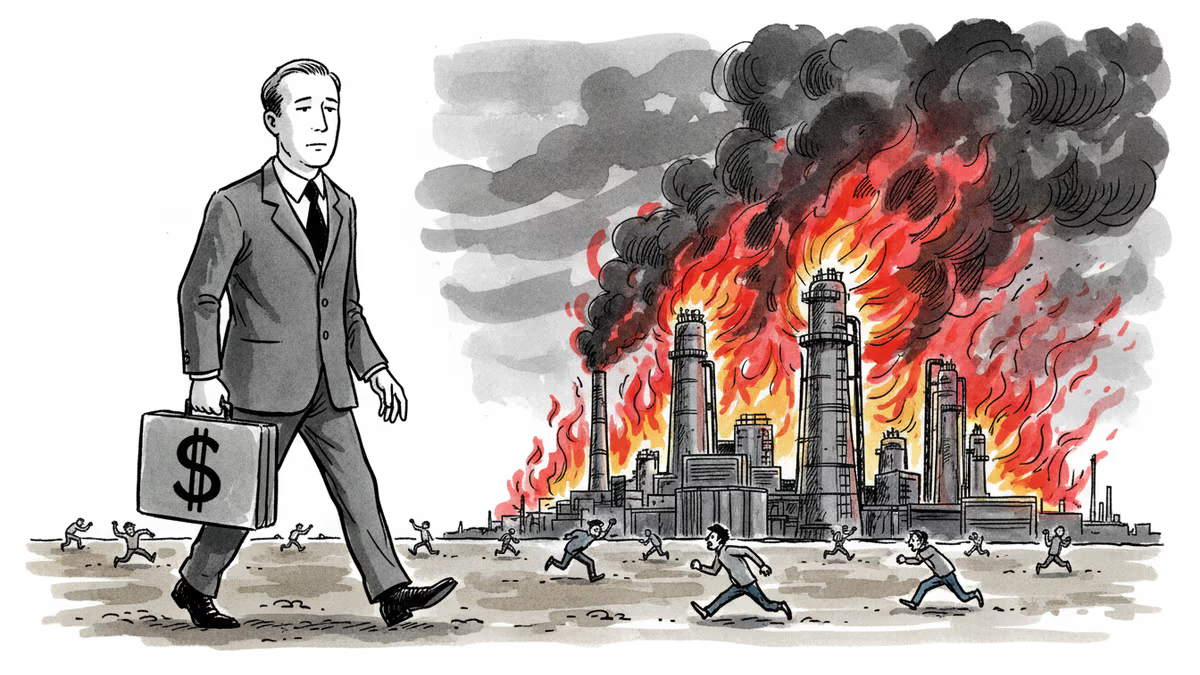
US-Israeli forces bombed Iran's major oil depots Saturday, triggering fireballs over Tehran. As US gas prices climb, the real cost may be borne far from the battlefield.
Beijing's rare rebuke of Iran at the UN Security Council over Strait of Hormuz attacks signals calculated self-interest, not a strategic realignment. Here's what's really happening.
The US says talks with Iran are ongoing. Iran says there are no talks. Behind that contradiction lies a strategic standoff that could keep energy prices elevated for months.
US and Israeli airstrikes on Iran have escalated Middle East tensions. Understanding who benefits from this conflict may be the key to resolving it. A PRISM analysis.
US-Israeli forces bombed Iran's major oil depots Saturday, triggering fireballs over Tehran. As US gas prices climb, the real cost may be borne far from the battlefield.
Thoughts
Share your thoughts on this article
Sign in to join the conversation