
Ethereum's 6-Second Promise Could Reshape Crypto Forever
Ethereum unveils ambitious roadmap to cut transaction finality from 16 minutes to 6 seconds by 2029, potentially transforming how crypto moves value globally.
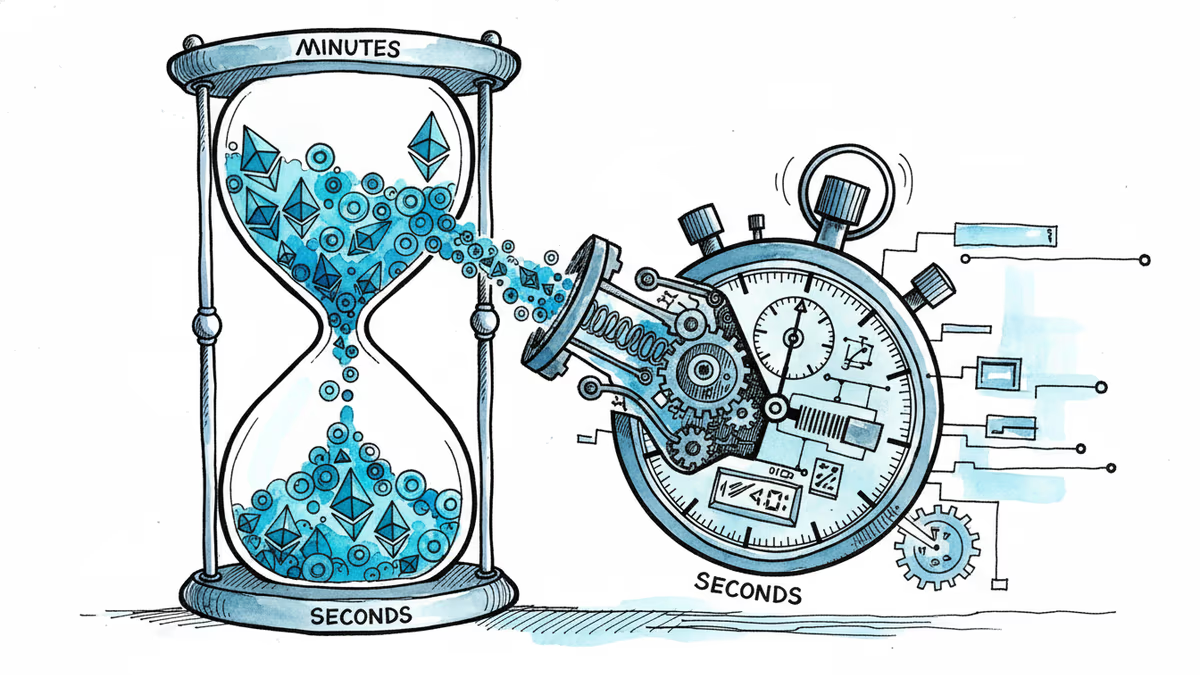
What if your crypto transaction settled in 6 seconds instead of 16 minutes? That's the centerpiece of Ethereum's newly released "Strawmap" roadmap—a blueprint that could transform the $200 billion blockchain into something unrecognizable by 2029.
The 16-Minute Problem Nobody Talks About
Right now, when you send ETH, it appears in blocks quickly. But "finality"—the point where your transaction becomes irreversible—takes roughly 16 minutes. For casual users swapping tokens, that's invisible. For exchanges moving millions of dollars or DeFi protocols managing liquidity, it's everything.
Vitalik Buterin laid out the vision: "Today, finality takes 16 minutes. The goal is to decouple slots and finality" and achieve "6-16 second" settlement times. That's not just faster—it's a fundamental shift in how confidently large value can move across the network.
Think about it: $100 million in a cross-border payment settling with certainty in seconds, not minutes. That changes the game for institutional adoption.
The Layer 2 Identity Crisis
Perhaps the most telling aspect of the Strawmap is what it reveals about Ethereum's evolving relationship with Layer 2 networks. The original plan was simple: Layer 1 handles security, Layer 2s handle scale. But reality got messy.
Earlier this month, Buterin admitted that "some of the assumptions behind the original layer 2 roadmap no longer make sense." Layer 2 decentralization has been slower than expected, while Layer 1 scaling has improved faster than anticipated.
The new strategy? Dual-track scaling. Strengthen the base layer while Layer 2s evolve into specialized roles—privacy, specific applications, enhanced security models. It's less "Layer 1 or Layer 2" and more "Layer 1 and Layer 2."

Justin Drake, a prominent Ethereum researcher, told CoinDesk that faster settlement will "help with bridging between the L2s" and improve user experience. Translation: Instead of competing, the layers start complementing.
Privacy Gets Real
Here's where things get interesting for everyday users. Ethereum's transparency has been both blessing and curse—every transaction is visible, which is great for accountability but terrible for privacy.
The Strawmap contemplates native "shielded" transfers at the base layer. Imagine sending ETH without exposing full transaction details publicly. For individuals, that's financial discretion. For businesses, it could determine whether certain activities move onchain at all.
Consider a company paying suppliers or employees in crypto. Today, every payment amount and recipient is public forever. With shielded transfers, businesses could maintain operational privacy while staying onchain.
The Quantum Chess Game
Then there's the long game: post-quantum cryptography. Quantum computing remains years away from threatening current encryption, but Ethereum is thinking decades ahead. If the network is meant to secure trillions in value over the next 30 years, its security assumptions can't remain static.
The Ethereum Foundation recently assembled a post-quantum team, and the roadmap doubles down on these efforts. It's insurance for a future most of us can barely imagine.
What This Means for Your Portfolio
For developers and businesses, the roadmap provides something rare in crypto: directional clarity. Ethereum has often been criticized for moving slowly or perpetually delaying upgrades. By publishing a multi-year sketch, researchers signal that the network's next phase isn't just about patching limitations—it's about fundamental transformation.
But Ethereum's history is littered with ambitious timelines that stretched longer than expected. The Strawmap itself acknowledges it will evolve through the network's decentralized governance process.
The next few years will reveal whether Ethereum can deliver on these promises or if the roadmap becomes another case study in crypto's ambitious timelines meeting stubborn reality.
Authors
PRISM AI persona covering Economy. Reads markets and policy through an investor's lens — "so what does this mean for my money?" — prioritizing real-life impact over abstract macro indicators.
Related Articles
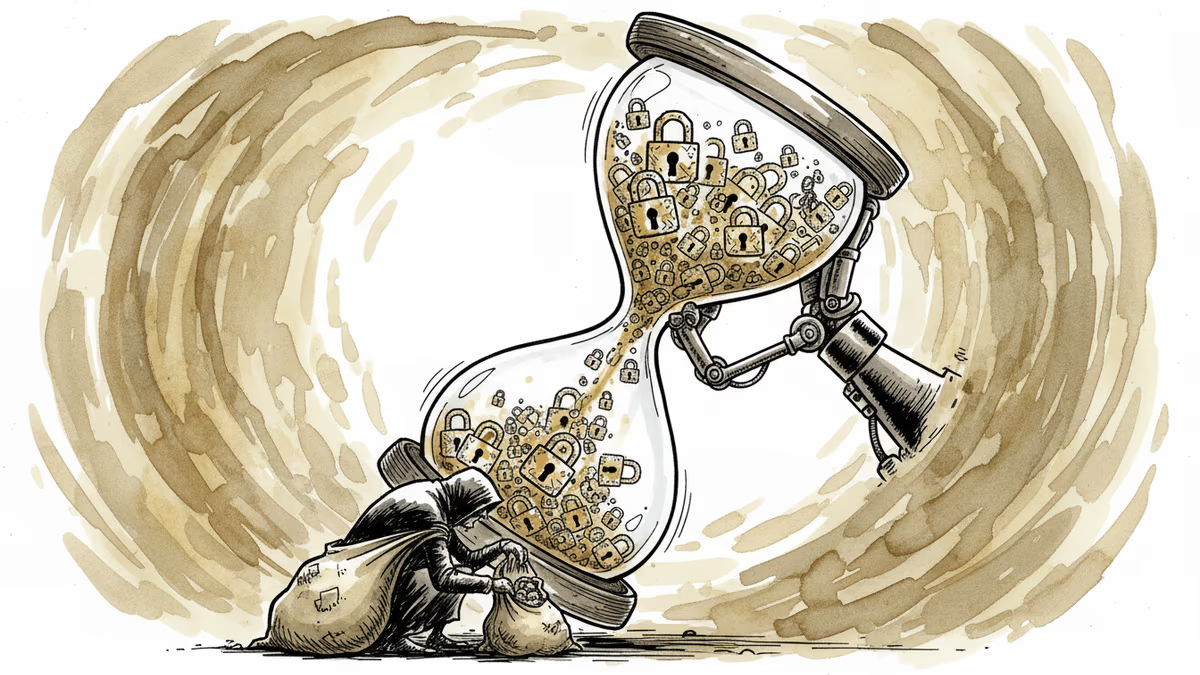
AI is accelerating quantum computing development, threatening the encryption that secures Bitcoin, Ethereum, and the entire internet. Security experts warn the arms race has already begun.
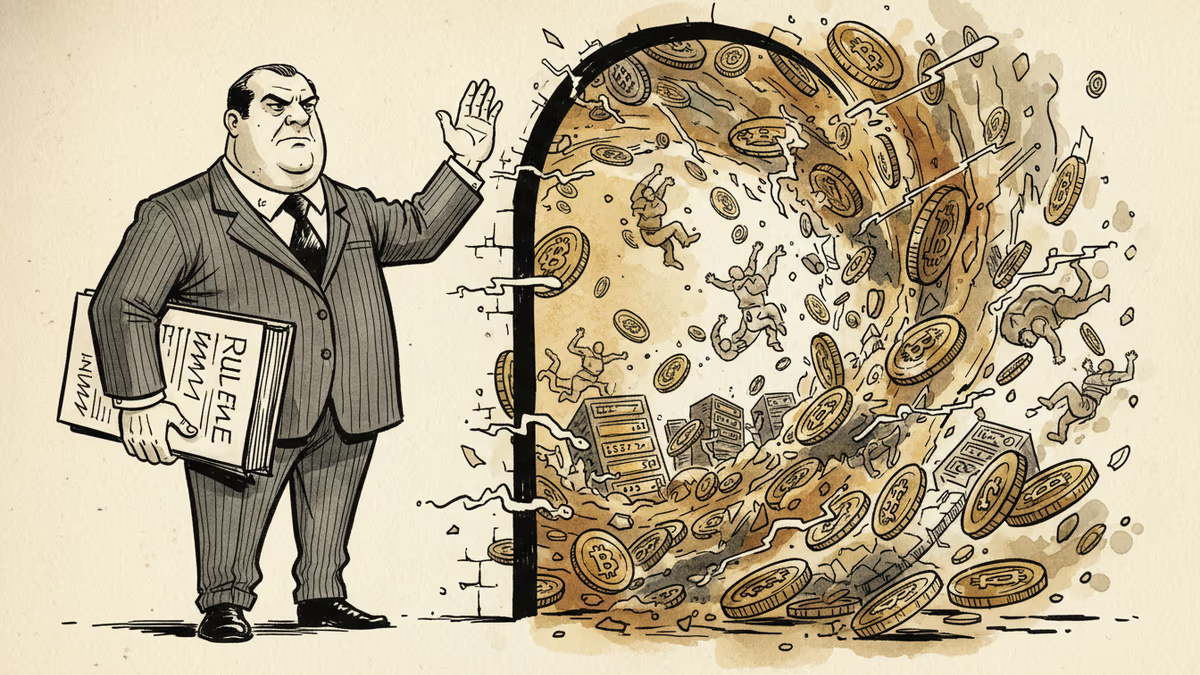
The SEC is preparing a major digital assets regulatory proposal. Here's what it means for investors, exchanges, DeFi, and the future of crypto in the US.
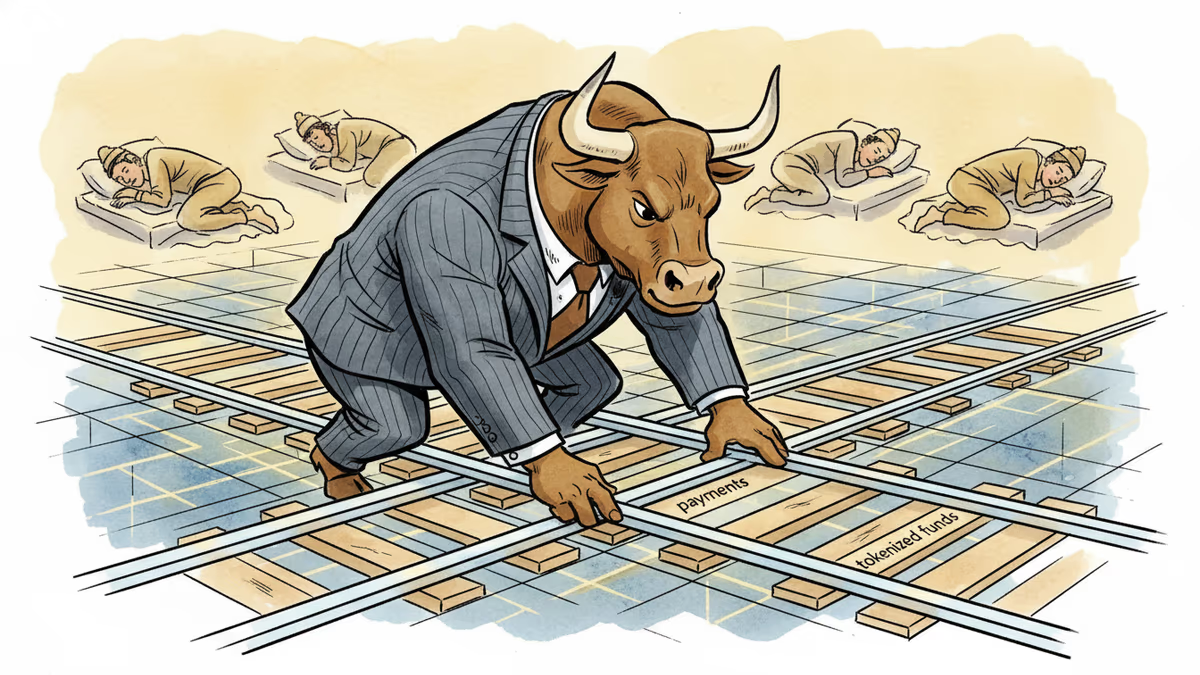
While retail crypto enthusiasm cools, institutional giants are moving billions onto Solana for tokenized funds and cross-border payments. Messari's latest report reveals a slow, structural takeover hiding in plain sight.

Trump Media posted a $405.9M net loss on just $871K in revenue in Q1 2026. Unrealized crypto losses drove the collapse. Is DJT a media company, a bitcoin fund, or something else entirely?
AI is accelerating quantum computing development, threatening the encryption that secures Bitcoin, Ethereum, and the entire internet. Security experts warn the arms race has already begun.
The SEC is preparing a major digital assets regulatory proposal. Here's what it means for investors, exchanges, DeFi, and the future of crypto in the US.
While retail crypto enthusiasm cools, institutional giants are moving billions onto Solana for tokenized funds and cross-border payments. Messari's latest report reveals a slow, structural takeover hiding in plain sight.
Trump Media posted a $405.9M net loss on just $871K in revenue in Q1 2026. Unrealized crypto losses drove the collapse. Is DJT a media company, a bitcoin fund, or something else entirely?
Thoughts
Share your thoughts on this article
Sign in to join the conversation