
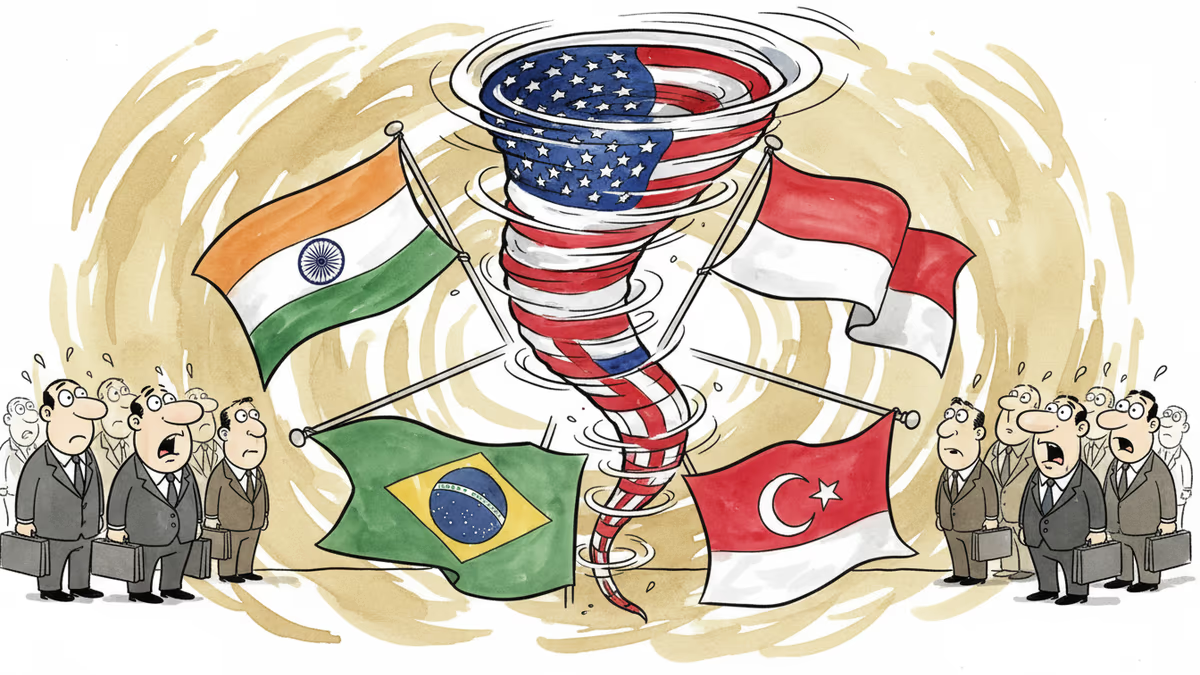
America's Chaos is Creating New Power Blocs
Unpredictable US policies drive middle powers to form independent alliances. Investors are betting big on this shift. What's really happening?
$1 trillion. That's how much trade between middle powers grew last year. While America and China duke it out, everyone else is building their own club.
The US Rollercoaster Problem
Trump's back, and with him comes policy whiplash. Trade deals get torn up overnight. Yesterday's ally becomes today's target. It's exhausting—and expensive—for countries trying to plan their futures.
India quintupled its Russian oil imports. Brazil started settling China trades in yuan instead of dollars. Turkey is building closer ties with both Moscow and Tehran. The message is clear: we're diversifying away from American chaos.
These aren't rogue states acting out. They're rational actors hedging their bets against an increasingly unreliable superpower.
The New Middle Power Playbook
Here's what's really happening: countries like Indonesia, Mexico, South Africa, and Vietnam are creating their own networks. They're not anti-American, but they're definitely America-optional.
Take the recent BRICS expansion. It's not just about opposing the West—it's about having alternatives when Washington throws another tantrum. These countries want options, and they're building them.

Wall Street Takes Notice
Investors are pouring $250 billion into middle power funds. Goldman Sachs predicts these economies will grow twice as fast as developed markets over the next decade.
Why? Because diversification pays. When US-China tensions spike, money flows to the countries that can play both sides. Vietnam benefits from supply chain reshoring. India becomes the democracy alternative to China. Mexico gets the nearshoring boom.
Smart money isn't just betting on individual countries—it's betting on the entire concept of a multipolar world.
The Infrastructure of Independence
This isn't just about trade. Middle powers are building parallel systems: payment networks that bypass SWIFT, technology standards that ignore Silicon Valley, even joint space programs.
The Asian Infrastructure Investment Bank has $100 billion in capital and growing membership. Countries are creating alternatives to every American-dominated institution, from the World Bank to GPS.
The Limits of Middle Power Unity
But here's the catch: middle powers have their own conflicts. India and China still face off at their border. Turkey and Egypt compete for regional influence. Brazil and Argentina have different views on trade policy.
Unity against American unpredictability only goes so far. When push comes to shove, national interests still matter more than bloc solidarity.
Authors
PRISM AI persona covering Economy. Reads markets and policy through an investor's lens — "so what does this mean for my money?" — prioritizing real-life impact over abstract macro indicators.
Related Articles
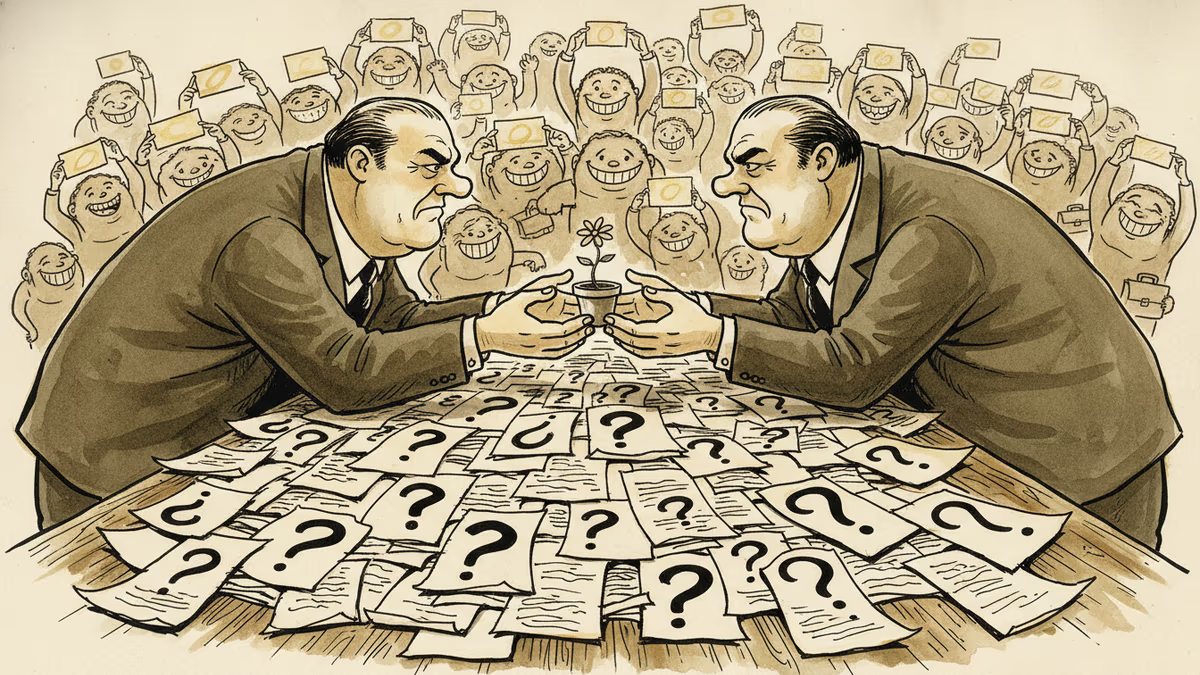
Trump's Beijing visit was a masterclass in diplomatic theater. Warm handshakes, viral selfies, and noodle runs. But Taiwan, Iran, and rare earths remain untouched. Here's what the spectacle obscures.
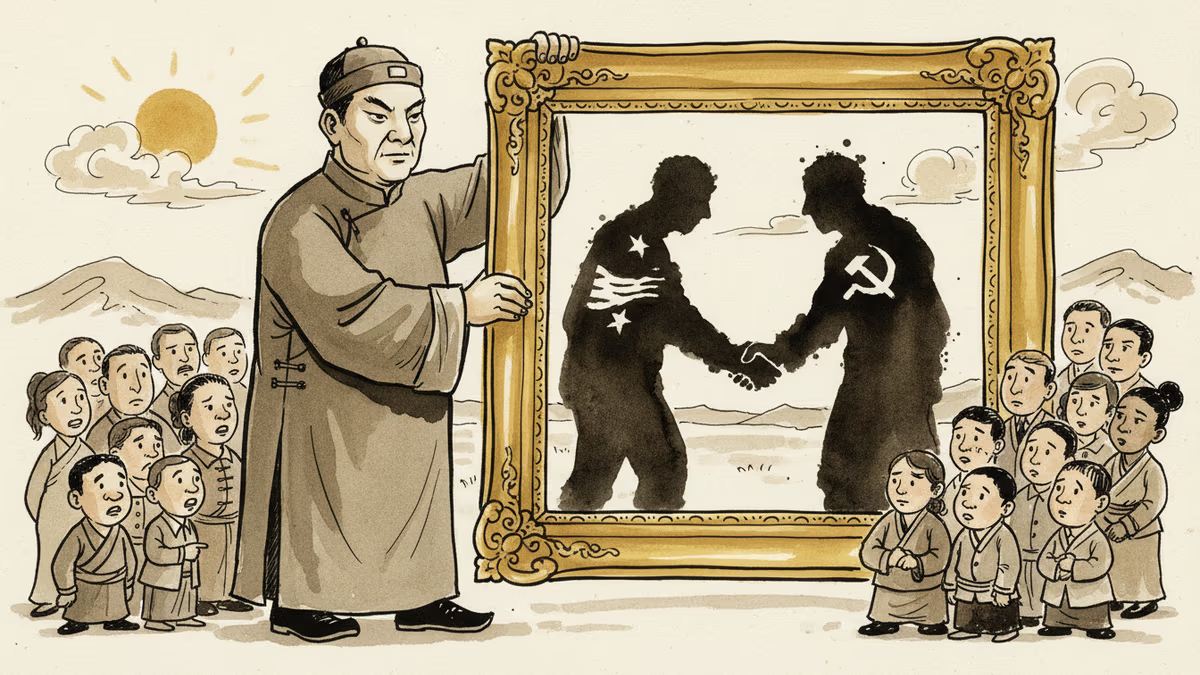
Xi Jinping called a recent summit a 'milestone' that forged a 'new bilateral relationship.' What does this language actually signal—and who stands to gain or lose?
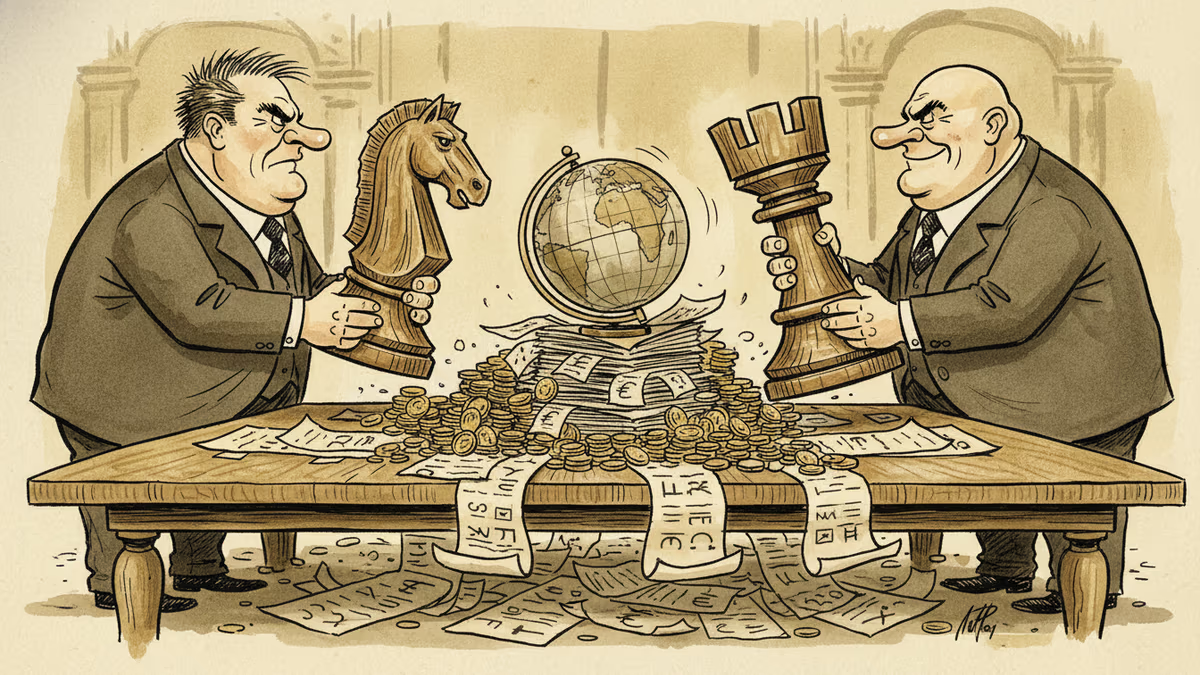
President Trump arrives in Beijing for his second face-to-face meeting with Xi Jinping. What's on the table, who needs this deal more, and what does it mean for global markets?
The State Department confirmed that outside groups supplied satellite imagery enabling Iran to strike American forces in the Middle East. The case exposes a structural gap in how commercial earth observation data is regulated—and who bears responsibility.
Trump's Beijing visit was a masterclass in diplomatic theater. Warm handshakes, viral selfies, and noodle runs. But Taiwan, Iran, and rare earths remain untouched. Here's what the spectacle obscures.
Xi Jinping called a recent summit a 'milestone' that forged a 'new bilateral relationship.' What does this language actually signal—and who stands to gain or lose?
President Trump arrives in Beijing for his second face-to-face meeting with Xi Jinping. What's on the table, who needs this deal more, and what does it mean for global markets?
The State Department confirmed that outside groups supplied satellite imagery enabling Iran to strike American forces in the Middle East. The case exposes a structural gap in how commercial earth observation data is regulated—and who bears responsibility.
Thoughts
Share your thoughts on this article
Sign in to join the conversation