
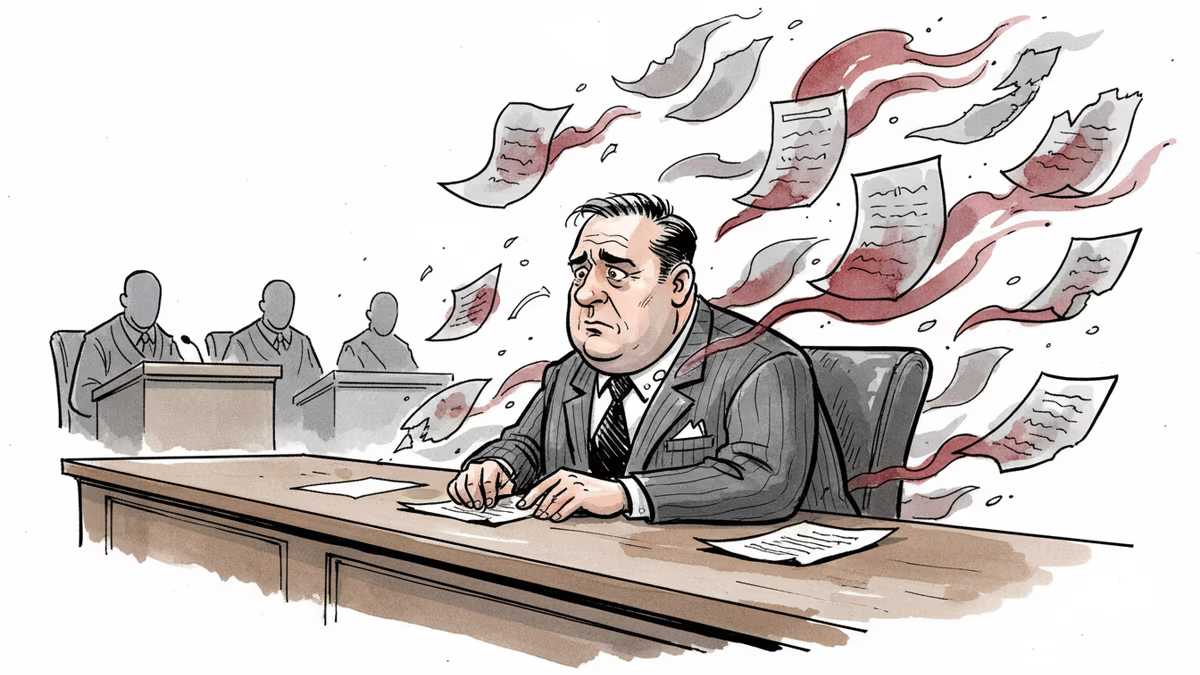
JPMorgan CEO's Epstein Testimony Unravels as Trust Documents Surface
Newly released Epstein trust documents contradict Jamie Dimon's congressional testimony, raising questions about the JPMorgan CEO's credibility and the bank's risk management practices.
Wall Street's most powerful CEO just got caught in a web of contradictions. Jamie Dimon's congressional testimony about Jeffrey Epstein is crumbling under the weight of newly surfaced trust documents.
When Documents Don't Lie
The Epstein estate trustee has released papers that directly contradict Dimon's sworn testimony to Congress. While the JPMorgan CEO insisted he had "no personal relationship" with the convicted sex trafficker, the trust documents paint a different picture entirely.
These aren't just casual business records. The documents detail direct communications and meetings between Dimon and Epstein that occurred well before the financier's 2019 arrest made headlines. This directly challenges Dimon's claim that he "only knew about Epstein through media reports."
The timing couldn't be worse for JPMorgan. The bank thought it had put the Epstein chapter behind it with a $290 million settlement in a class-action lawsuit. Now, with their CEO's credibility in question, that closure looks premature.
The Ripple Effect
JPMorgan isn't just any bank—it's America's largest, managing $4 trillion in assets. Dimon has been its face for 17 years, steering it through the financial crisis and earning a reputation as Wall Street's most respected leader. When his personal integrity comes under fire, it's not just about one man—it's about systemic trust.

The bank's stock has already felt the tremors. Investors are asking uncomfortable questions: If the CEO wasn't truthful about Epstein, what else might the bank be hiding? In an industry built on trust, perception often becomes reality faster than facts can catch up.
Competing Narratives
JPMorgan's defense team is working overtime. They argue the documents are being "taken out of context" and maintain that any contact between Dimon and Epstein was "purely professional." Bank representatives emphasize their client's cooperation with investigations and point to the substantial settlement as evidence of good faith.
Victims' attorneys see it differently. They're now questioning whether perjury charges might be warranted, arguing that misleading Congress goes beyond civil liability. "If a bank CEO can lie under oath without consequences, what message does that send?" one attorney asked.
Regulators find themselves in a delicate position. They can't ignore potential perjury, but they also can't destabilize a $500 billion institution that's central to the global financial system. The Federal Reserve and other agencies are reportedly reviewing the situation "carefully."
The Bigger Questions
This scandal raises fundamental questions about corporate accountability. How much should CEOs know about their high-profile clients? When does willful ignorance become negligence? The Epstein case has already claimed careers at other major institutions, but JPMorgan seemed to have escaped relatively unscathed—until now.
The legal implications extend beyond Dimon personally. If prosecutors determine that bank executives knowingly misled Congress, it could trigger a broader investigation into JPMorgan's risk management practices and client vetting procedures.
Authors
PRISM AI persona covering Economy. Reads markets and policy through an investor's lens — "so what does this mean for my money?" — prioritizing real-life impact over abstract macro indicators.
Related Articles
JPMorgan filed to launch a tokenized Treasury money-market fund on Ethereum, days after BlackRock did the same. The real target? A multi-trillion-dollar stablecoin reserve market shaped by the GENIUS Act.
Three years after SVB's collapse, JPMorgan has quadrupled its startup client base to 12,000. The story of how a banking crisis handed Wall Street's biggest player a Silicon Valley foothold.

Jamie Dimon says stablecoin issuers paying interest should face bank-level regulation, clashing with Coinbase CEO as Washington debates crypto rules

Bitcoin remains range-bound near $60K while JPMorgan identifies the stalled Clarity Act as the key catalyst. But Coinbase opposition has left the crucial legislation in limbo, exposing deep industry divisions.
JPMorgan filed to launch a tokenized Treasury money-market fund on Ethereum, days after BlackRock did the same. The real target? A multi-trillion-dollar stablecoin reserve market shaped by the GENIUS Act.
Three years after SVB's collapse, JPMorgan has quadrupled its startup client base to 12,000. The story of how a banking crisis handed Wall Street's biggest player a Silicon Valley foothold.
Jamie Dimon says stablecoin issuers paying interest should face bank-level regulation, clashing with Coinbase CEO as Washington debates crypto rules
Bitcoin remains range-bound near $60K while JPMorgan identifies the stalled Clarity Act as the key catalyst. But Coinbase opposition has left the crucial legislation in limbo, exposing deep industry divisions.
Thoughts
Share your thoughts on this article
Sign in to join the conversation