
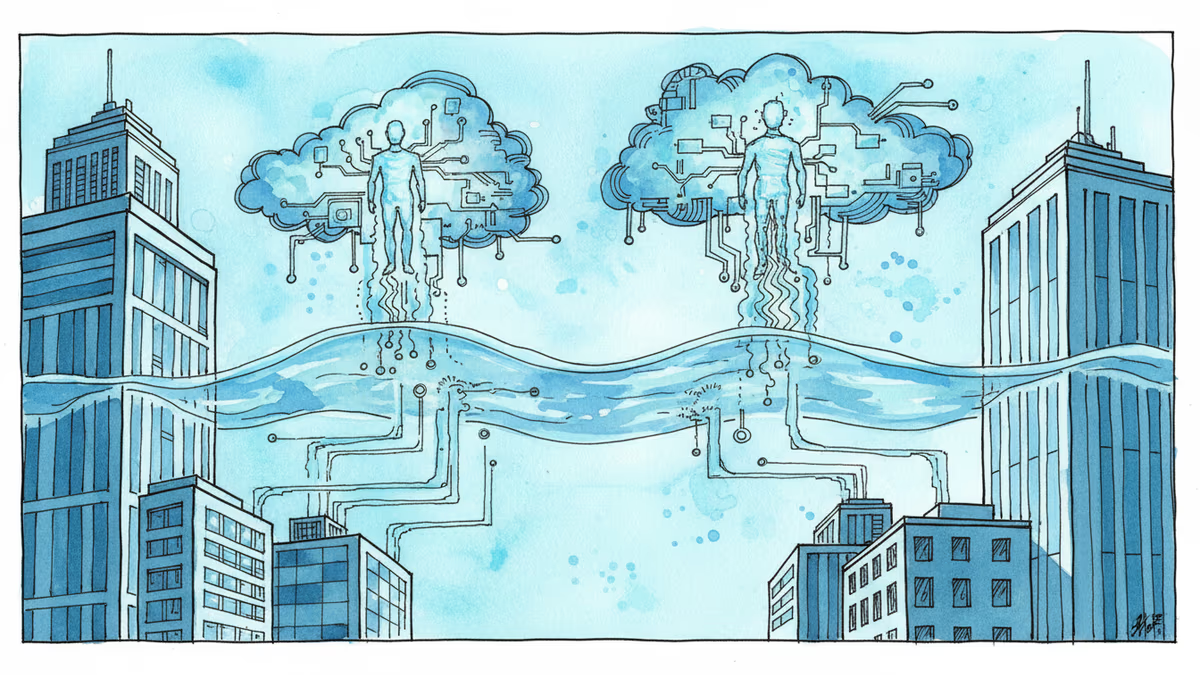
The Invisible AI War: Why a $7.2B Company Bets on the Layer You Never See
While Microsoft and Google battle with AI assistants, Glean is quietly building the intelligence layer between models and enterprise systems. Seven years of mapping enterprise data becomes their secret weapon.
The $7.2 Billion Company You've Never Heard Of
Microsoft is cramming Copilot into Office. Google is pushing Gemini into Workspace. OpenAI and Anthropic are selling directly to enterprises. Every SaaS vendor now ships an AI assistant. In this scramble for the interface, Glean is betting on something far less visible: becoming the intelligence layer beneath it all.
Seven years ago, Glean set out to be "Google for enterprise." Today, it's valued at $7.2 billion and doesn't need the massive compute budgets of frontier AI labs. What's their secret? They're not building better chatbots—they're building the connective tissue between models and enterprise reality.
Models Are Commodities, Context Is King
"The AI models themselves don't really understand anything about your business," CEO Arvind Jain told TechCrunch. "They don't know who the different people are, they don't know what kind of work you do, what kind of products you build."
Here's the insight that transformed Glean's strategy: while large language models are powerful, they're also generic. The real value lies in connecting that reasoning power with the messy, permission-laden, constantly shifting context inside companies.
Glean maps that context. From Slack to Jira, Google Drive to Salesforce, it doesn't just index data—it understands how information flows, who has access to what, and how work actually gets done.
Three Lines of Defense
Glean's "invisible layer" consists of three critical components that platform giants struggle to replicate:

Model Abstraction: Rather than locking companies into a single LLM provider, Glean lets enterprises switch between or combine models as capabilities evolve. That's why Jain sees OpenAI, Anthropic, and Google as partners, not competitors. "Our product gets better because we're able to leverage the innovation that they are making."
Deep Integration: Beyond simple data retrieval, Glean enables AI agents to act inside enterprise tools—sending Slack messages, creating Jira tickets, updating Salesforce records. It's the difference between reading about work and actually doing work.
Permission-Aware Governance: "You need to build a permissions-aware governance layer that brings the right information while knowing who's asking," Jain explains. In large organizations, this layer separates pilot projects from enterprise-wide deployment.
The Platform Giants Strike Back
But here's the trillion-dollar question: does this middle layer survive as Microsoft and Google push deeper into the stack? Both companies already control vast swaths of enterprise workflow and they're hungry for more.
If Copilot or Gemini can access the same internal systems with the same permissions, why pay for a standalone intelligence layer?
Jain's bet: enterprises don't want vendor lock-in. "They would rather opt for a neutral infrastructure layer rather than a vertically integrated assistant." It's a compelling argument, especially as AI capabilities become table stakes and differentiation shifts to integration and governance.
The Developers' Dilemma
Talk to enterprise developers and you'll hear the same refrain: they're drowning in AI options but starving for reliable integration. Every vendor promises seamless connectivity, but the reality is a maze of APIs, authentication protocols, and permission systems that break whenever someone changes their Slack handle.
Glean's value proposition isn't flashy—it's foundational. While competitors chase the latest model capabilities, Glean is solving the unglamorous problem of making AI actually work in enterprise environments.
Authors
Related Articles
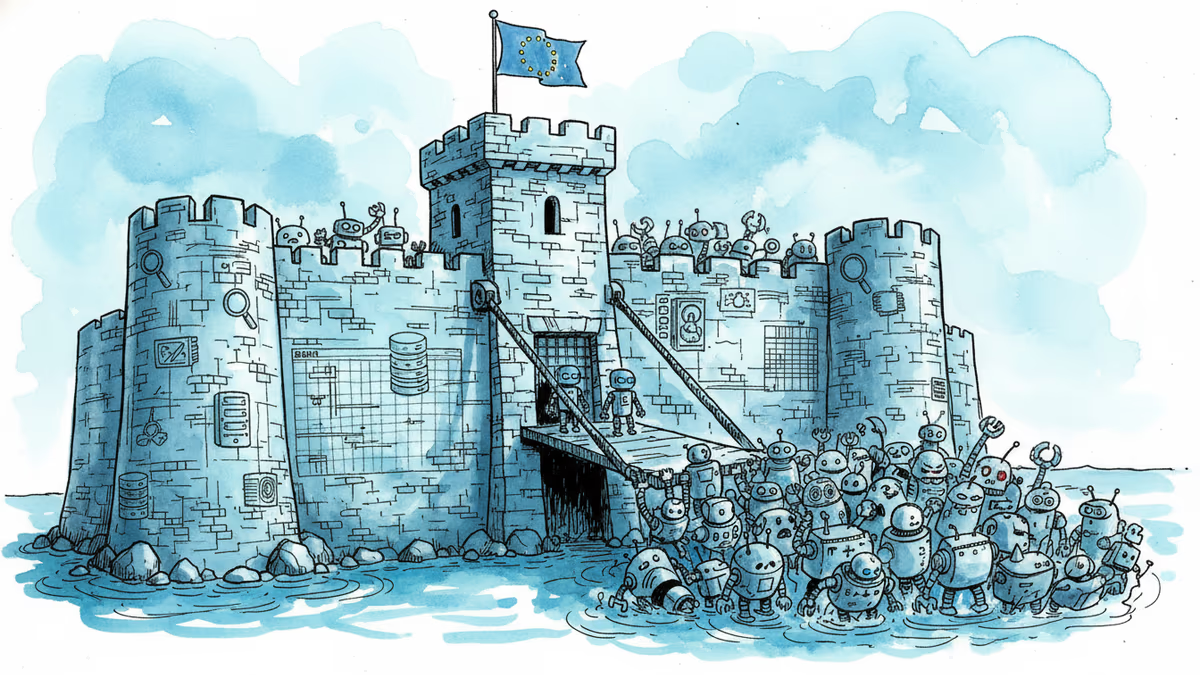
SAP acquires German AI startup Prior Labs and commits €1 billion over four years to build a structured data AI lab. The deal signals a broader fight over who controls the enterprise AI stack — and which agents get through the gate.
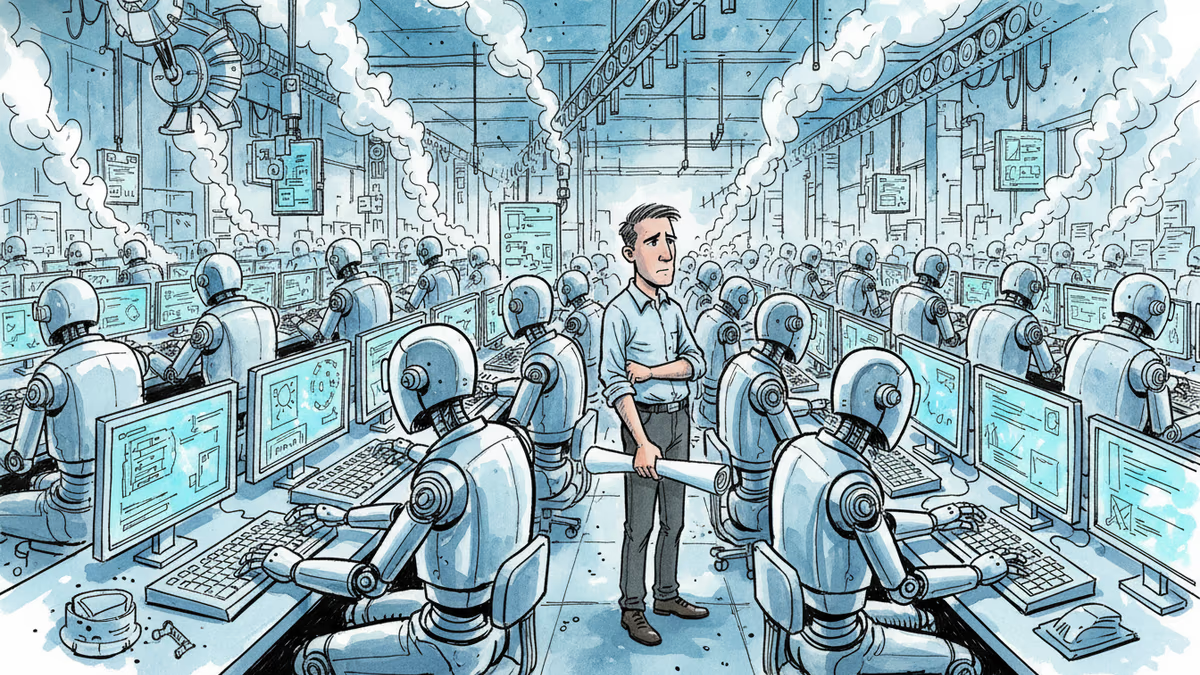
Factory just raised $150M at a $1.5B valuation to build AI coding agents for enterprises. In a market already crowded with Cursor, Claude Code, and Cognition, investors say there's still room. Here's why that bet might make sense — and why it might not.
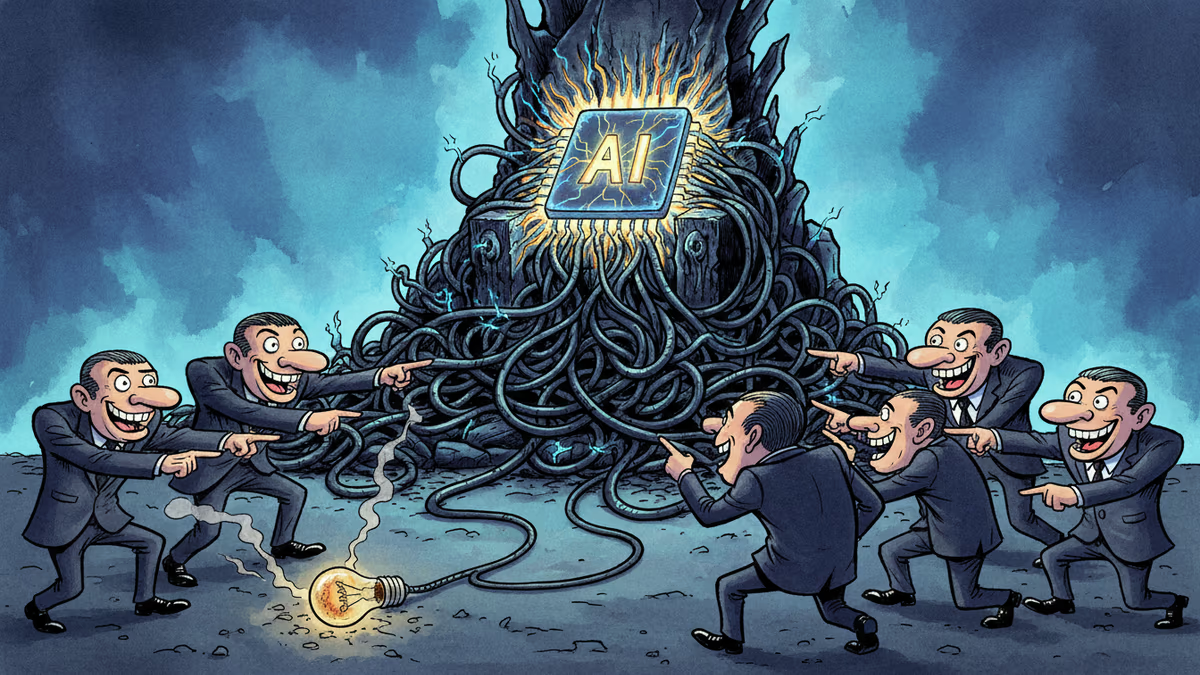
Over $500 billion has poured into AI startups. But with 36% of data center projects slipping timelines due to power shortages, the real opportunity may lie in energy infrastructure — batteries, transformers, and grid software.
Nvidia unveiled NemoClaw at GTC 2026 — an enterprise-grade platform built on viral open-source agent framework OpenClaw. Is this the infrastructure play that defines the agentic AI era?
SAP acquires German AI startup Prior Labs and commits €1 billion over four years to build a structured data AI lab. The deal signals a broader fight over who controls the enterprise AI stack — and which agents get through the gate.
Factory just raised $150M at a $1.5B valuation to build AI coding agents for enterprises. In a market already crowded with Cursor, Claude Code, and Cognition, investors say there's still room. Here's why that bet might make sense — and why it might not.
Over $500 billion has poured into AI startups. But with 36% of data center projects slipping timelines due to power shortages, the real opportunity may lie in energy infrastructure — batteries, transformers, and grid software.
Nvidia unveiled NemoClaw at GTC 2026 — an enterprise-grade platform built on viral open-source agent framework OpenClaw. Is this the infrastructure play that defines the agentic AI era?
Thoughts
Share your thoughts on this article
Sign in to join the conversation