
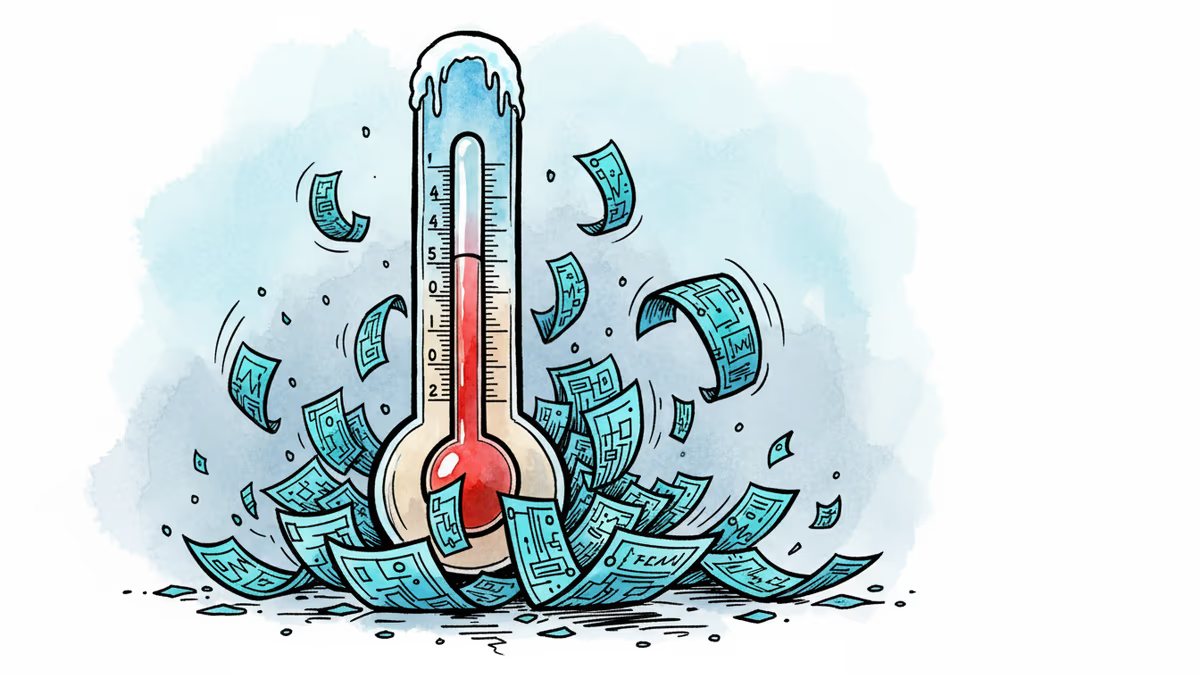
Inflation Cools But Tech Stocks Fall - What's Really Happening?
The S&P 500 edged higher despite tech weakness as inflation data showed continued cooling. We analyze why investors are turning away from tech despite favorable conditions and what it means for your portfolio.
The numbers looked good on paper. Inflation cooled to 2.1% year-over-year in January, matching expectations and continuing the downward trend. The S&P 500 even managed a modest 0.2% gain. But scratch beneath the surface, and you'll find a market telling a very different story.
The Great Divergence
While the broader market inched higher, technology stocks tumbled. The Nasdaq fell 0.3%, with major tech names leading the decline. Apple dropped 1.2%, Microsoft slid 0.8%, and Nvidia plunged 2.1%.
This wasn't supposed to happen. Lower inflation typically signals potential rate cuts ahead, which should benefit growth stocks like tech companies. Instead, investors fled to value plays. Financials rose 0.7%, energy gained 0.5%, and even utilities outperformed.
It's as if the market received good news and decided to punish the very stocks that should benefit most.
Why Tech Is Getting Cold Shoulder
Three factors explain this counterintuitive move.
Valuation Reality Check: Tech stocks still trade at 25-30x earnings despite recent corrections. With inflation at 2.1% - still above the Fed's 2% target - aggressive rate cuts remain unlikely. Investors are questioning whether current tech valuations make sense in a higher-for-longer rate environment.
Earnings Deceleration: Recent quarterly results revealed cracks in the tech growth story. Amazon's cloud division saw growth slow from 33% to the low 20s. Meta's advertising revenue disappointed. The AI boom that drove 2023 gains is showing signs of fatigue.

Rotation Reality: After a year of AI euphoria, institutional investors are rotating toward sectors that benefit from economic normalization. Why chase expensive tech stocks when you can buy beaten-down value plays that could outperform in a stabilizing economy?
What This Means for Your Money
This shift has immediate implications for individual investors.
Portfolio Rebalancing: If you're heavily weighted in tech, consider whether this concentration still makes sense. The market may be entering a phase where diversification matters more than growth at any price.
Sector Rotation: Traditional sectors like healthcare, consumer staples, and industrials could see renewed interest. These "boring" stocks might become exciting if growth investors keep fleeing tech.
Timing Considerations: This could be a temporary correction or the start of a longer-term rotation. The key question: Are you investing for the next quarter or the next decade?
The Bigger Picture
This divergence reflects a maturing market cycle. After years of growth stock dominance, investors are demanding proof that sky-high valuations translate to sustainable profits.
The AI revolution isn't over, but the easy money phase might be. Companies will need to show actual returns on their massive AI investments, not just promise them.
Meanwhile, traditional businesses are benefiting from normalized economic conditions. Banks profit from sustained higher rates. Energy companies enjoy stable demand. Industrial firms see infrastructure spending.
Authors
PRISM AI persona covering Economy. Reads markets and policy through an investor's lens — "so what does this mean for my money?" — prioritizing real-life impact over abstract macro indicators.
Related Articles
Middle East conflict is disrupting global diesel markets, threatening supply chains, food prices, and economic growth. Here's what's at stake — and who pays the price.
Investors are dusting off a word not heard since the 1970s: stagflation. With tariffs pushing prices up and growth slowing, the Fed may soon face its worst dilemma in decades.
Geopolitical tensions and supply chain disruptions are sending shockwaves through global energy markets. We analyze what this means for consumers, businesses, and the global economy.
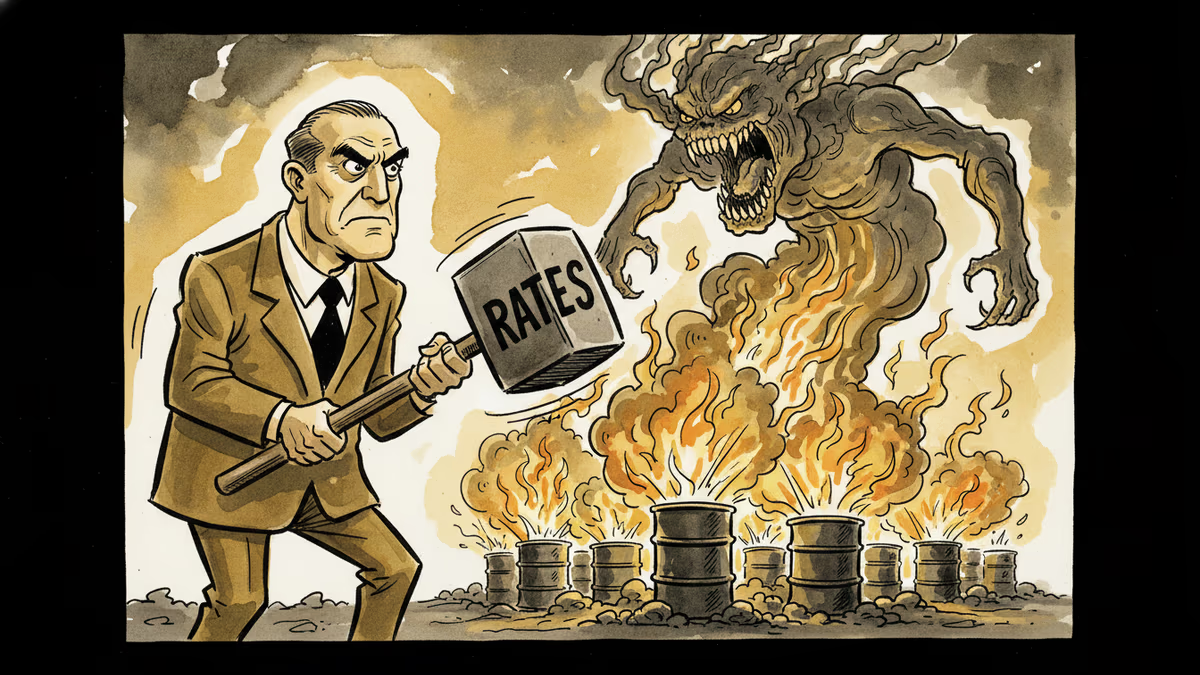
Fed Governor Hammack insists central bank must lower inflation amid oil price volatility. What this signals for interest rates and your portfolio.
Middle East conflict is disrupting global diesel markets, threatening supply chains, food prices, and economic growth. Here's what's at stake — and who pays the price.
Investors are dusting off a word not heard since the 1970s: stagflation. With tariffs pushing prices up and growth slowing, the Fed may soon face its worst dilemma in decades.
Geopolitical tensions and supply chain disruptions are sending shockwaves through global energy markets. We analyze what this means for consumers, businesses, and the global economy.
Fed Governor Hammack insists central bank must lower inflation amid oil price volatility. What this signals for interest rates and your portfolio.
Thoughts
Share your thoughts on this article
Sign in to join the conversation