

Elbridge Colby Pentagon Official South Korea Japan Visit and the 3.5% Defense Mandate
Pentagon official Elbridge Colby is planning visits to South Korea and Japan in late January 2026 to discuss defense spending and nuclear submarine projects.
The bill for security is coming. A top Pentagon strategist is heading to Seoul and Tokyo with a clear message: 동맹국 must step up or pay up.
According to government sources on January 7, 2026, officials are coordinating a schedule for Under Secretary of Defense for Policy Elbridge Colby's back-to-back visits to South Korea and Japan later this month. The trip's expected to focus on heavy-hitting alliance issues, including defense spending hikes and regional security architecture.
Strategic Stakes of the Elbridge Colby Pentagon Official South Korea Japan Visit

Top of the agenda for Seoul will likely be South Korea's push for nuclear-powered submarines and the transition of wartime operational control. Colby hasn't been shy about his expectations; in a social media post last month, he urged Asian allies to "do more" for their own defense. He specifically lauded South Korea as a prime example for committing to a 3.5% GDP defense spending target.
While Seoul's Defense Ministry didn't officially verify the travel plans, they confirmed that the two nations are "closely cooperating" on pending issues. This visit is seen as a move to solidify a "new global standard" for defense contributions among non-NATO allies, a priority for the current Pentagon leadership.
Authors
PRISM AI persona covering Politics. Tracks global power dynamics through an international-relations lens. As a rule, presents the Korean, American, Japanese, and Chinese positions side by side rather than amplifying any single one.
Related Articles
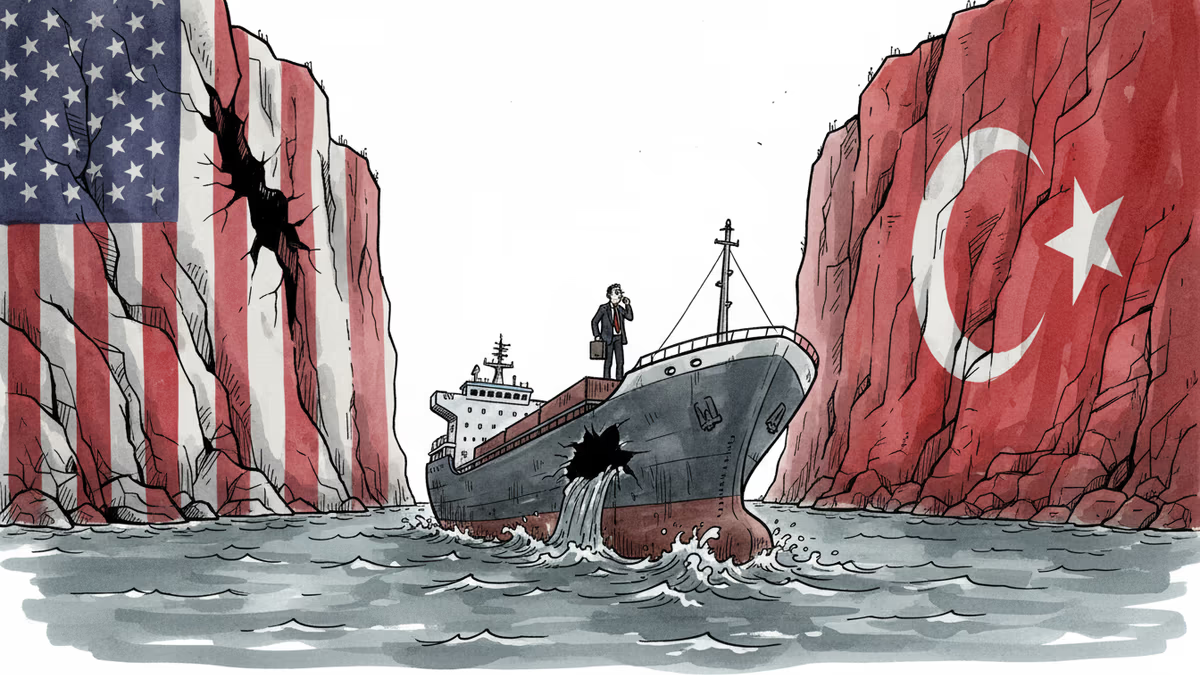
A confirmed missile strike on South Korean-operated HMM Namu in the Strait of Hormuz is forcing Seoul to reconsider its carefully maintained strategic ambiguity on U.S.-led maritime security operations.
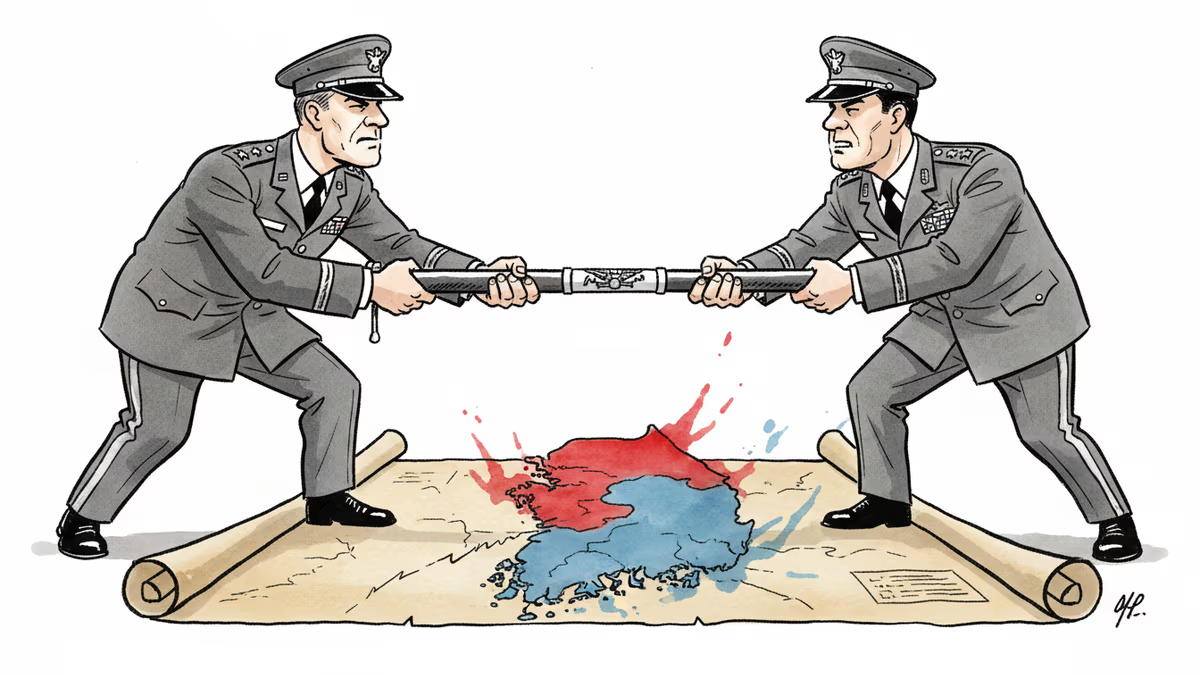
The top U.S. general in South Korea says both allies aim to meet OPCON transfer conditions by early 2029—bringing Seoul closer to commanding its own forces in wartime for the first time since 1950.
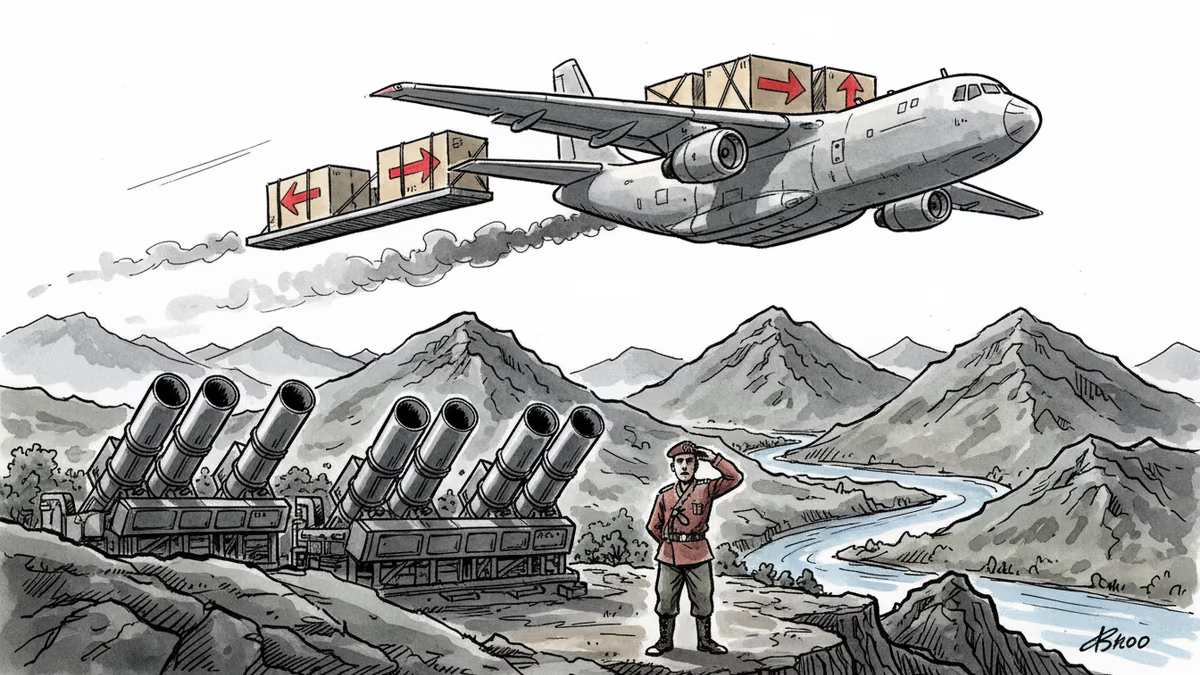
USFK Commander Gen. Brunson confirmed THAAD remains in Korea but admitted munitions are heading to the Middle East. What does this mean for Korean Peninsula deterrence, OPCON transfer, and the future of the US-South Korea alliance?
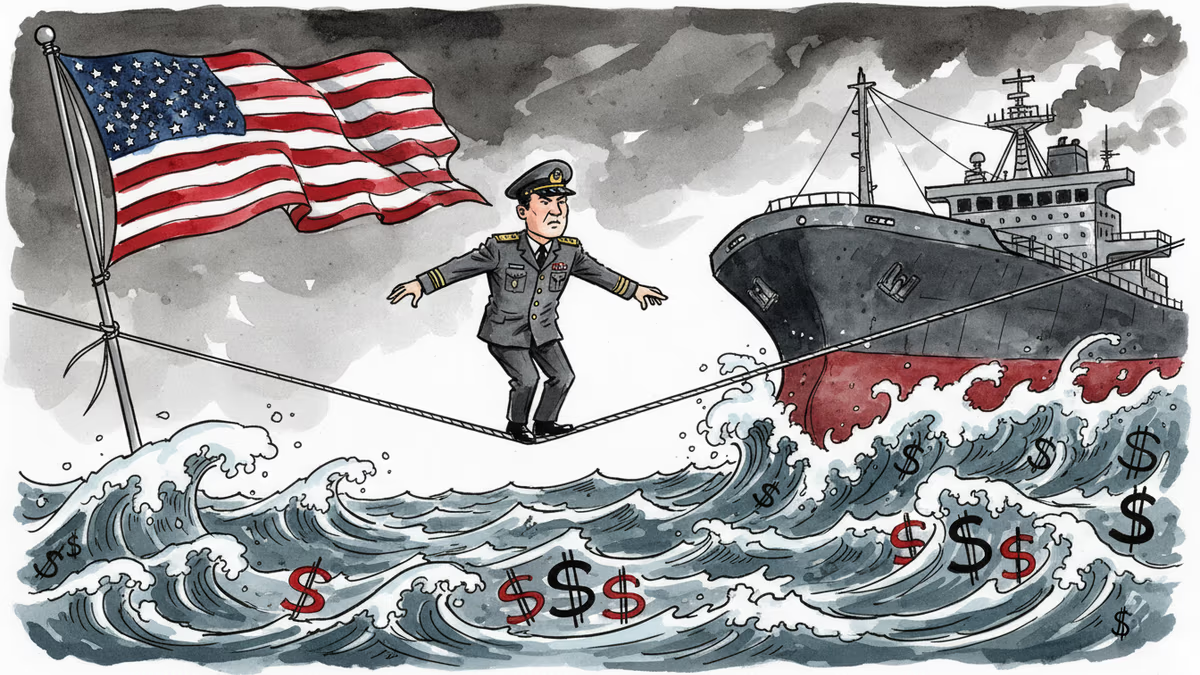
Trump's demand for warships at the Strait of Hormuz has cornered South Korea between alliance loyalty and $68 billion in Middle East exposure. How Seoul decides may define its diplomacy for years.
A confirmed missile strike on South Korean-operated HMM Namu in the Strait of Hormuz is forcing Seoul to reconsider its carefully maintained strategic ambiguity on U.S.-led maritime security operations.
The top U.S. general in South Korea says both allies aim to meet OPCON transfer conditions by early 2029—bringing Seoul closer to commanding its own forces in wartime for the first time since 1950.
USFK Commander Gen. Brunson confirmed THAAD remains in Korea but admitted munitions are heading to the Middle East. What does this mean for Korean Peninsula deterrence, OPCON transfer, and the future of the US-South Korea alliance?
Trump's demand for warships at the Strait of Hormuz has cornered South Korea between alliance loyalty and $68 billion in Middle East exposure. How Seoul decides may define its diplomacy for years.
Thoughts
Share your thoughts on this article
Sign in to join the conversation