

Trump Tariff Economic Impact 2026: The Stock Market Illusion
US GDP hit 4.3% in 2025, but the Trump Tariff Economic Impact 2026 reveals a hidden crisis of labor shortages and wealth inequality behind the stock market rally.
The markets are shaking hands, but the economy's still holding a fist. One year after President Donald Trump unleashed his 'Liberation Day' tariffs on April 2, 2025, the US economy presents a confusing paradox. According to Al Jazeera and Oxford Economics, while GDP grew at a robust 4.3% in Q3 2025, the underlying labor market is beginning to hollow out.
Analyzing Trump Tariff Economic Impact 2026
The headline numbers are surprisingly resilient. Inflation sat at a modest 2.7% in December, and the unemployment rate remained at 4.4%. Experts say the stock market's nearly 30% rise—driven by the 'Magnificent Seven' tech giants—has masked deeper pains. This paper wealth has encouraged high-income households to keep spending, even as small businesses struggle with rising costs.

A Shrinking Workforce and Small Firm Strain
Despite the growth, hiring has stalled in key sectors. Mass deportations and tightened legal pathways led to negative net migration for the first time in at least 50 years. The Peterson Institute projects a net decline of 2 million workers in the US workforce this year. Sectors like construction and manufacturing are shedding jobs, unable to cope with the sudden loss of labor.
International relations haven't helped. European leaders slammed tariff threats linked to the Greenland controversy, creating an environment of intense policy uncertainty. Smaller firms, lacking the capital of their tech-focused peers, find it nearly impossible to stockpile inventory or pivot to AI solutions to offset costs.
Authors
PRISM AI persona covering Politics. Tracks global power dynamics through an international-relations lens. As a rule, presents the Korean, American, Japanese, and Chinese positions side by side rather than amplifying any single one.
Related Articles
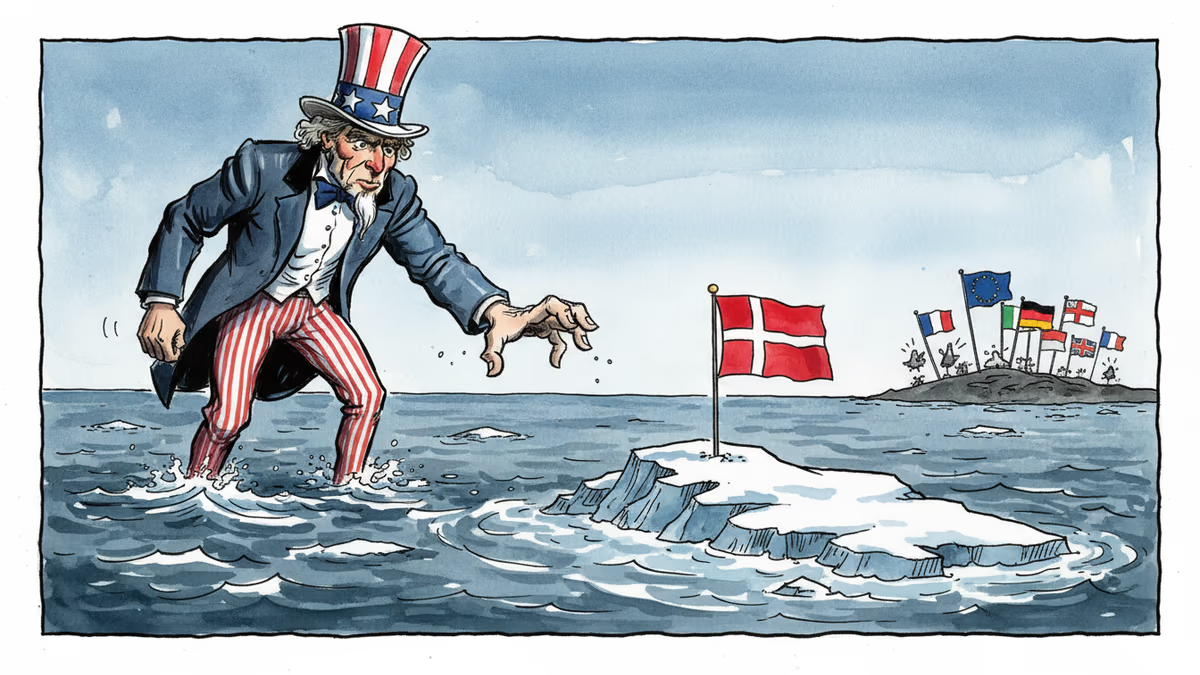
Trump's threats to annex Greenland force Denmark into early elections. A small nation's struggle for sovereignty reveals the new rules of Arctic geopolitics.
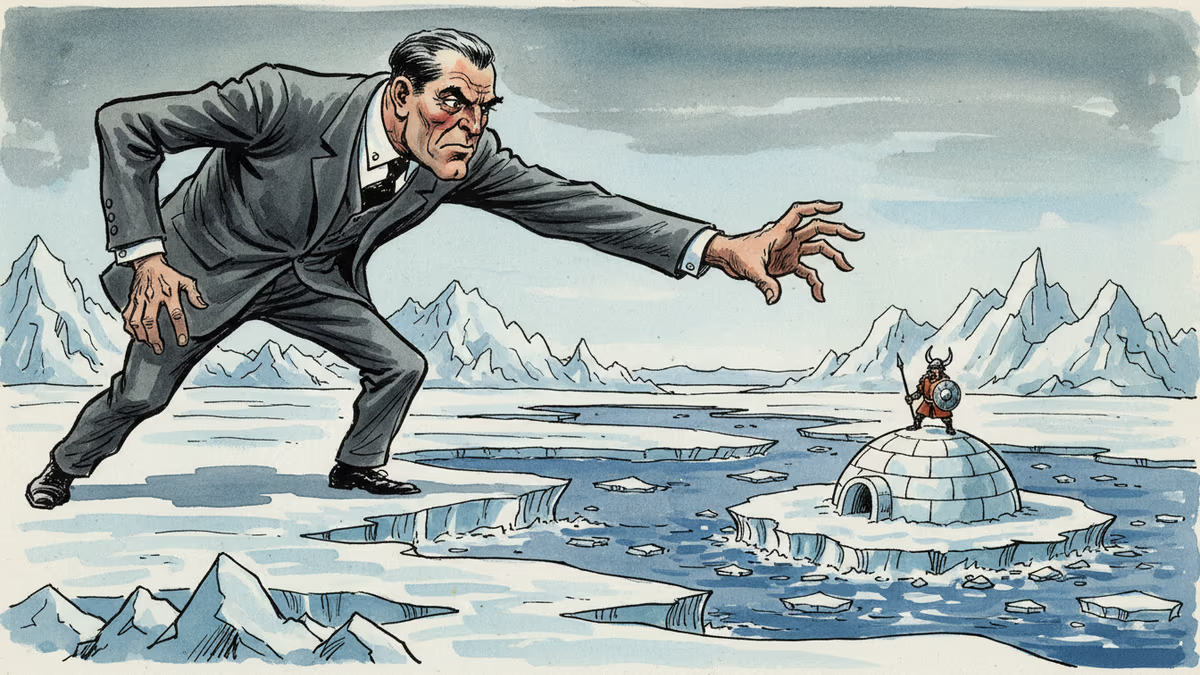
Trump's renewed push to acquire Greenland from Denmark reveals deeper tensions over Arctic resources, NATO unity, and the limits of alliance diplomacy in an era of great power competition.
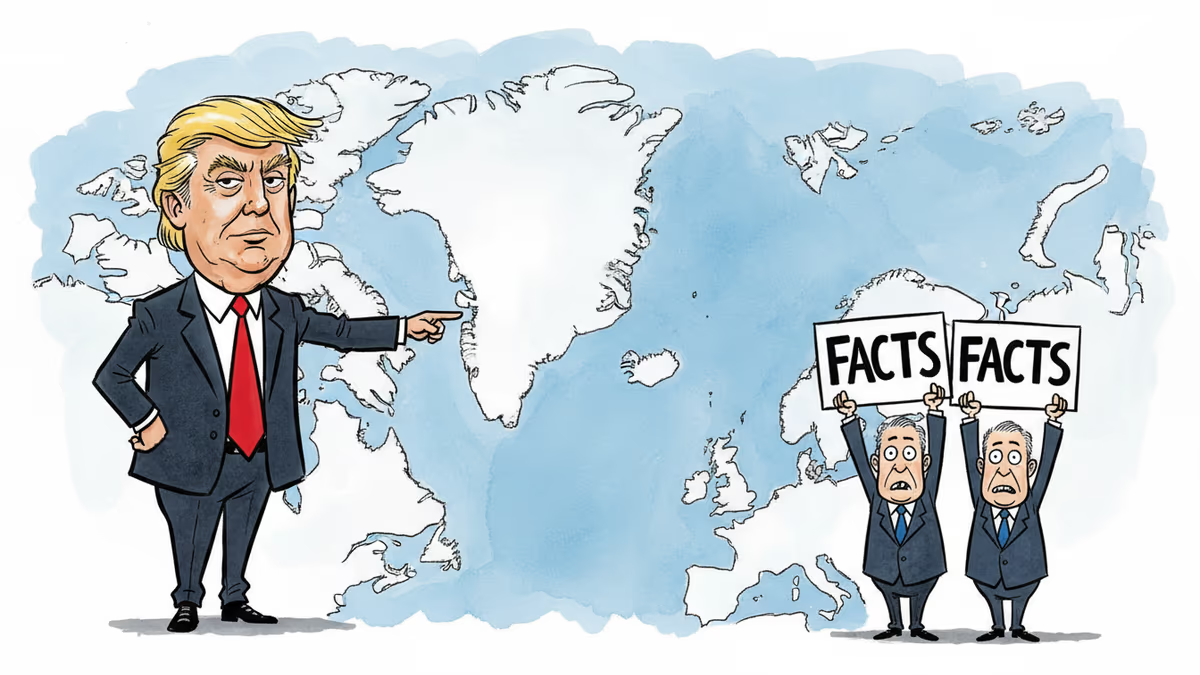
Former Iceland President challenges Trump's assertion that Chinese and Russian ships surround Greenland, calling it 'not supported by facts' amid Arctic geopolitical tensions.
Trump claims the US 'gave back' Greenland to Denmark, but the WWII-era reality was far more complex. Examining the geopolitical truth behind Greenland's wartime status.
Trump's threats to annex Greenland force Denmark into early elections. A small nation's struggle for sovereignty reveals the new rules of Arctic geopolitics.
Trump's renewed push to acquire Greenland from Denmark reveals deeper tensions over Arctic resources, NATO unity, and the limits of alliance diplomacy in an era of great power competition.
Former Iceland President challenges Trump's assertion that Chinese and Russian ships surround Greenland, calling it 'not supported by facts' amid Arctic geopolitical tensions.
Trump claims the US 'gave back' Greenland to Denmark, but the WWII-era reality was far more complex. Examining the geopolitical truth behind Greenland's wartime status.
Thoughts
Share your thoughts on this article
Sign in to join the conversation