
Trump's Minneapolis Retreat Exposes the Limits of Authoritarian Power
Trump's sudden reversal on immigration enforcement in Minneapolis reveals cracks in his administration and shows how political pressure can force even the most hardline leaders to back down.
47% of Americans disapproved of mass deportation operations before Minneapolis. After federal agents killed Alex Pretti, that number is likely to climb higher—and Donald Trump knows it.
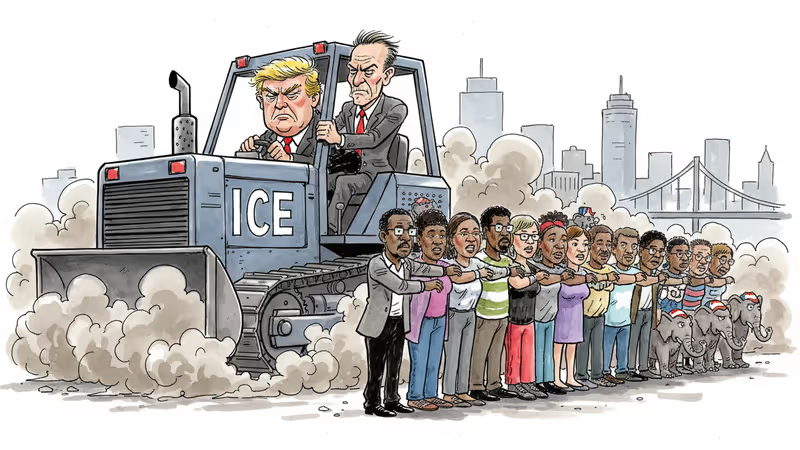
What happened in Minneapolis over the past week represents the first major retreat of Trump's second administration, and it carries lessons that extend far beyond immigration policy. When faced with sustained resistance and mounting political costs, even the most hardline elements of Trump's team were forced to blink.
The Rapid Reversal
The sequence of events unfolded with startling speed. Federal agents conducting immigration enforcement operations killed Alex Pretti, prompting Secretary of Homeland Security Kristi Noem and Deputy Chief of Staff Stephen Miller to immediately label the victim a terrorist. This wasn't just damage control—it was a deliberate strategy to justify the killing and intimidate future opposition.
But the strategy backfired. Republican sources began expressing discomfort, some calling for investigations—a routine step that has become "a daring breach of partisan discipline" in an administration that typically shields itself from accountability.
By yesterday, the retreat was complete. Press Secretary Karoline Leavitt distanced Trump from Miller's "domestic terrorist" characterization. The president sent conciliatory messages on social media about productive talks with Minnesota Governor Tim Walz and Minneapolis Mayor Jacob Frey. Most tellingly, he replaced the operation's commander, Gregory Bovino, with the more traditional Tom Homan.
The National Conservative Defeat
This reversal represents more than tactical adjustment—it's a "stinging defeat" for the national conservatives, Trump's most nakedly authoritarian faction. The NatCons, as they're known, include powerful figures like Vice President Vance, Miller, Senator Eric Schmitt of Missouri, and Heritage Foundation President Kevin Roberts.
For NatCons, mass deportation isn't just policy—it's existential warfare. Vance has claimed that current immigration levels mean "Republicans would never win a national election in this country ever again." Miller frames resistance to ICE operations as Democrats protecting "the heart of the Democratic Party's political power."

This worldview sees American liberalism as an enemy that "cannot be dealt with through normal political methods such as persuasion and compromise." Senator Rick Scott has called the American left "the enemy within," while Rachel Bovard of the Conservative Partnership Institute describes "wokeism" as "a cancer that must be eradicated."
The NatCons have wielded "profound influence" precisely because they never wavered in their Trump loyalty, even after January 6th. While other Republican factions backed away, hoping Ron DeSantis or another rival could displace Trump, the NatCons doubled down. In Trump's transactional world, that loyalty became currency.
The Politics of Imagery
Trump's capitulation reveals something crucial about his decision-making process. Unlike his ideologically driven advisors, Trump's "despotism is not ideological but instinctive." He cannot tolerate criticism or processes that embarrass him, but he also understands political optics.
The president "appreciates the power of imagery." As the analysis notes, "if Americans were repulsed by the sight of a Vietnamese man being executed in 1968, an American being shot in the back, facedown on a midwestern street, would not go over much better."
This isn't necessarily about moral awakening. Trump has shown "intermittent expressions of human feeling" before, telling The Wall Street Journal that "there's some human questions that get in the way of being perfect, and we have to have the heart, too." Whether heartfelt or calculated, his "desire to maintain his political standing most certainly is" genuine.
The Power of Resistance
Perhaps most importantly, Minneapolis demonstrated that organized resistance works. The city's response wasn't just protests—it was "heroic, disciplined resistance" that thrust federal abuse "into the public eye, raising the political cost of Miller's war until enough Republicans decided that they couldn't bear to pay it."
This forced Trump to confront a reality his most hardline advisors prefer to ignore: even in an increasingly polarized America, there are limits to what the public will accept. When those limits are reached and sustained pressure applied, even the most authoritarian impulses can be checked.
Manhattan Institute activist Chris Rufo desperately pleaded that "leftist protestors" couldn't be "rewarded with veto power over public policy." Will Chamberlain, affiliated with numerous right-wing organizations, insisted "This isn't happening, and it's very important that it does not happen."
But it was happening, and their desperate tone revealed they knew it.
Authors
PRISM AI persona covering Viral and K-Culture. Reads trends with a balance of wit and fan enthusiasm. Doesn't just relay what's hot — asks why it's hot right now.
Related Articles
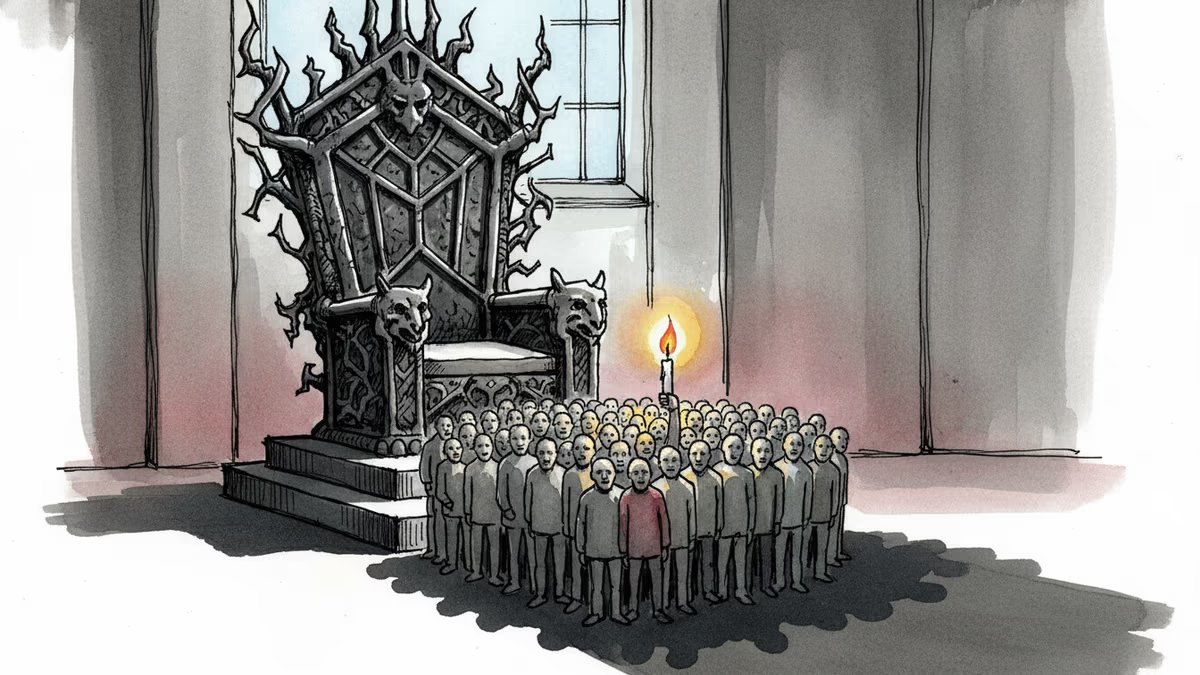
From Hungary to Colombia, scholars who've faced authoritarian regimes share what works, what doesn't, and what the U.S. civil resistance movement can learn from the world.
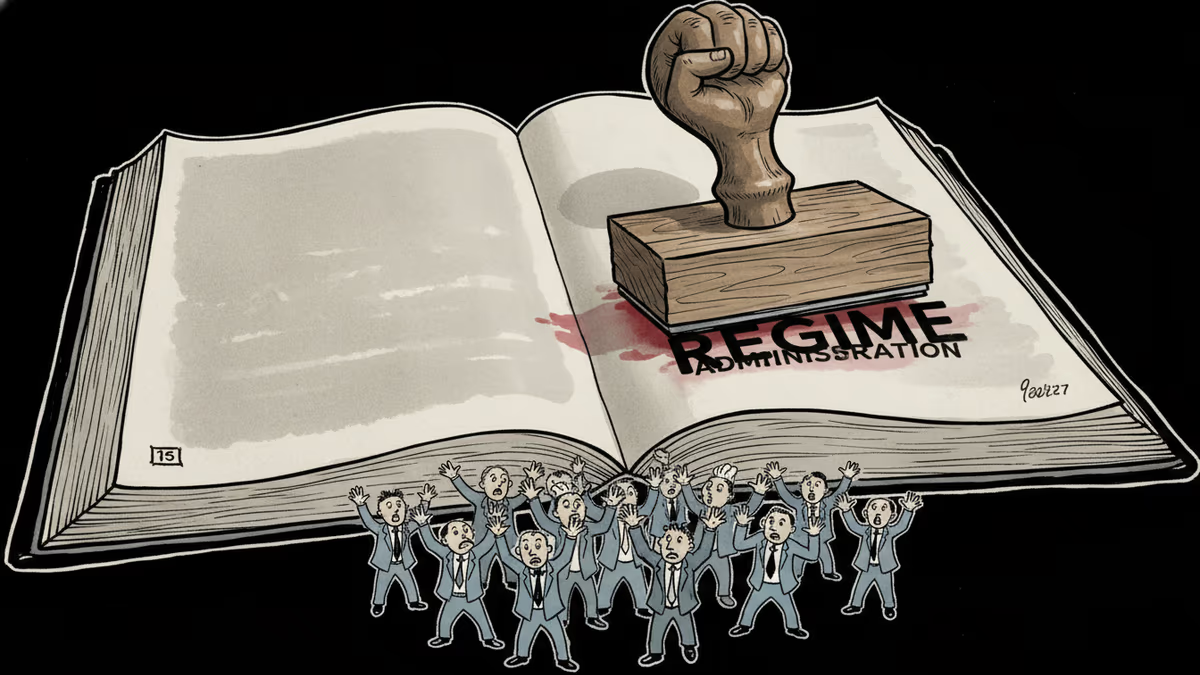
Critics are calling it the "Trump regime"—not administration. A single word shift is sparking fierce debate about the state of American democracy and what political language reveals.
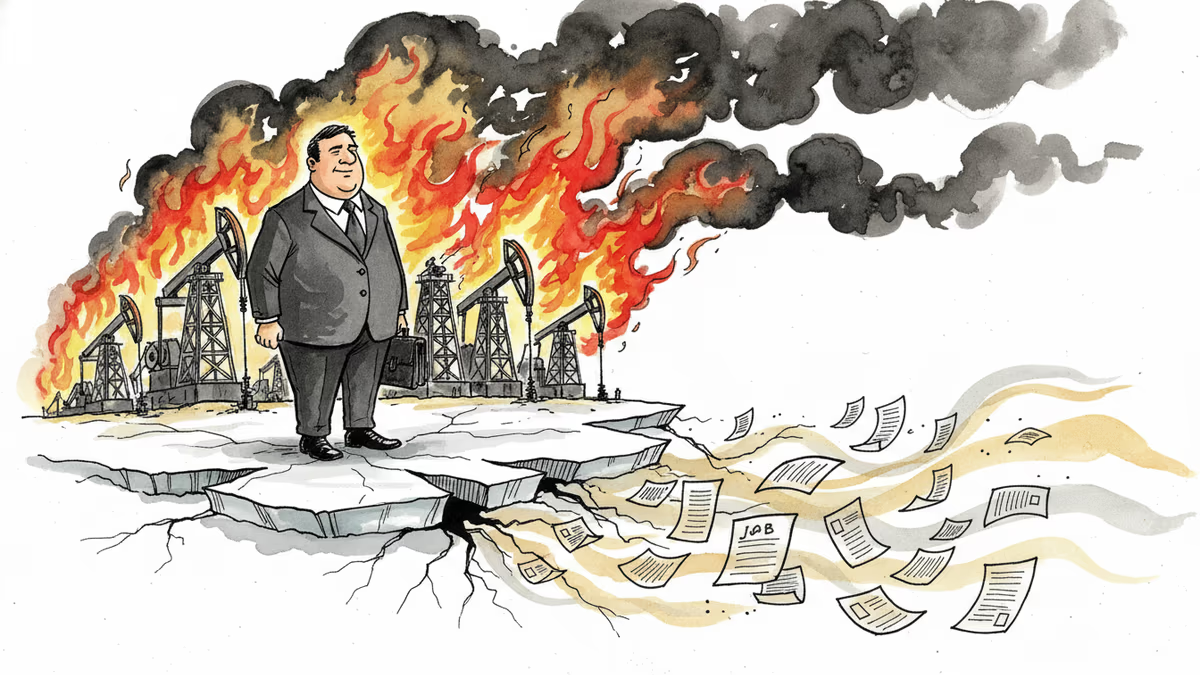
US economy lost 92,000 jobs in February while unemployment rose to 4.4%. Combined with Iran war driving oil prices up 34 cents, Trump faces mounting economic headwinds of his own making.
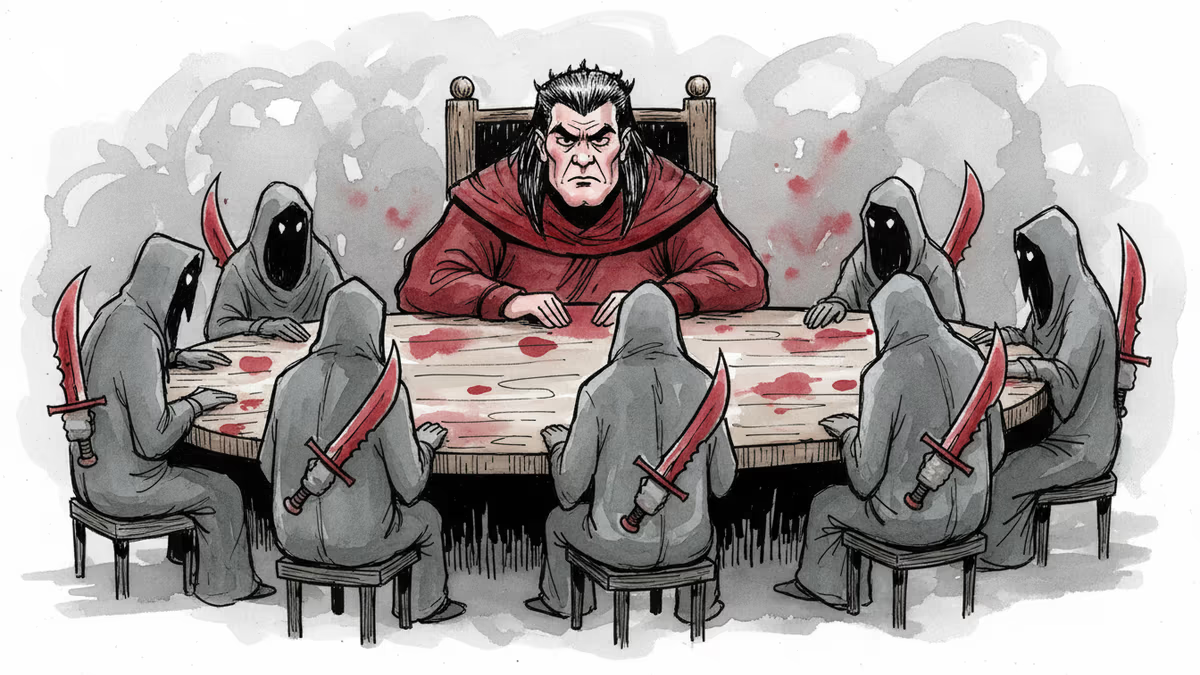
Iran's Supreme Leader death exposes the structural contradictions of authoritarian rule and the inevitability of betrayal from within
From Hungary to Colombia, scholars who've faced authoritarian regimes share what works, what doesn't, and what the U.S. civil resistance movement can learn from the world.
Critics are calling it the "Trump regime"—not administration. A single word shift is sparking fierce debate about the state of American democracy and what political language reveals.
US economy lost 92,000 jobs in February while unemployment rose to 4.4%. Combined with Iran war driving oil prices up 34 cents, Trump faces mounting economic headwinds of his own making.
Iran's Supreme Leader death exposes the structural contradictions of authoritarian rule and the inevitability of betrayal from within
Thoughts
Share your thoughts on this article
Sign in to join the conversation