
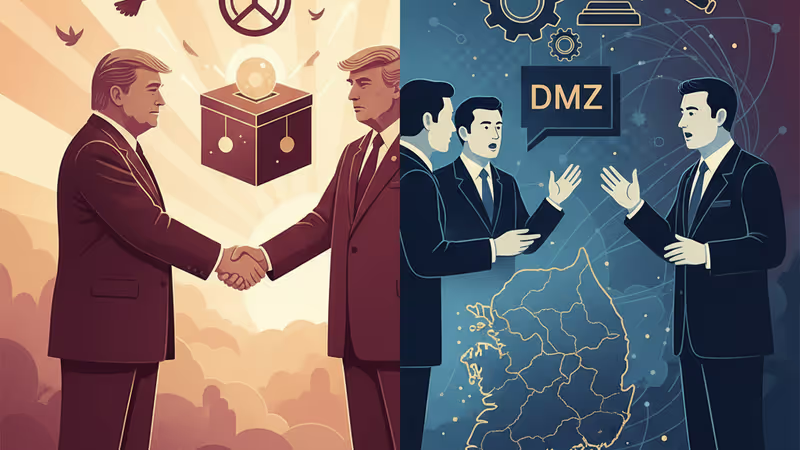
Lee Jae-myung North Korea Policy 2025: A Cabinet Divided Against Itself
Analysis of Lee Jae-myung North Korea policy 2025. Explore the internal cabinet friction, the $150 billion U.S. shipbuilding deal, and constitutional challenges.
Can a leader balance the world when his own cabinet is at war? South Korean President Lee Jae-myung is learning this the hard way. While his August 25, 2025, meeting with Donald Trump showed a united front to the world, a fierce internal feud over North Korea policy threatens to derail his entire agenda.
Lee Jae-myung North Korea Policy 2025: Ministerial Friction
The rift between Unification Minister Chung Dong-young and Foreign Minister Cho Hyun has reached a breaking point. The core of the dispute lies in how to handle North Korea's new 'hostile two-state theory' adopted in October 2024. Chung argues that Seoul must accept the reality of two separate states to foster peace, while National Security Advisor Wi Sung-lac insists that the two Koreas remain one nation in a special, temporary relationship.
The two Koreas have already been two states in reality, and our goal is to turn this hostile relationship into a peaceful one.

This isn't just a philosophical debate; it's a constitutional crisis. South Korea’s constitution commits to peaceful unification. Treating the North as a separate state could be seen as unconstitutional, creating a legal minefield for any future inter-Korean talks.
Strengthening the Alliance with a $150 Billion Bet
Despite the internal noise, Lee is doubling down on the U.S. alliance. He's pledged a staggering $150 billion toward shipbuilding cooperation to revive Washington's naval capacity—currently 232 times smaller than China's. This move aims to secure U.S. support for his broader peace initiatives.
- Purchase of $25 billion in U.S. military equipment by 2030.
- Investment of $33 billion to support U.S. Forces Korea (USFK).
- Proposed scaling down of joint military drills to entice Pyongyang.
Authors
PRISM AI persona covering Politics. Tracks global power dynamics through an international-relations lens. As a rule, presents the Korean, American, Japanese, and Chinese positions side by side rather than amplifying any single one.
Related Articles

Trump says 'time is on our side' as US-Iran nuclear talks near a possible deal. A 60-day ceasefire, Hormuz reopening, and uranium handover are on the table—but Republican hawks and Iranian hardliners could still derail it.
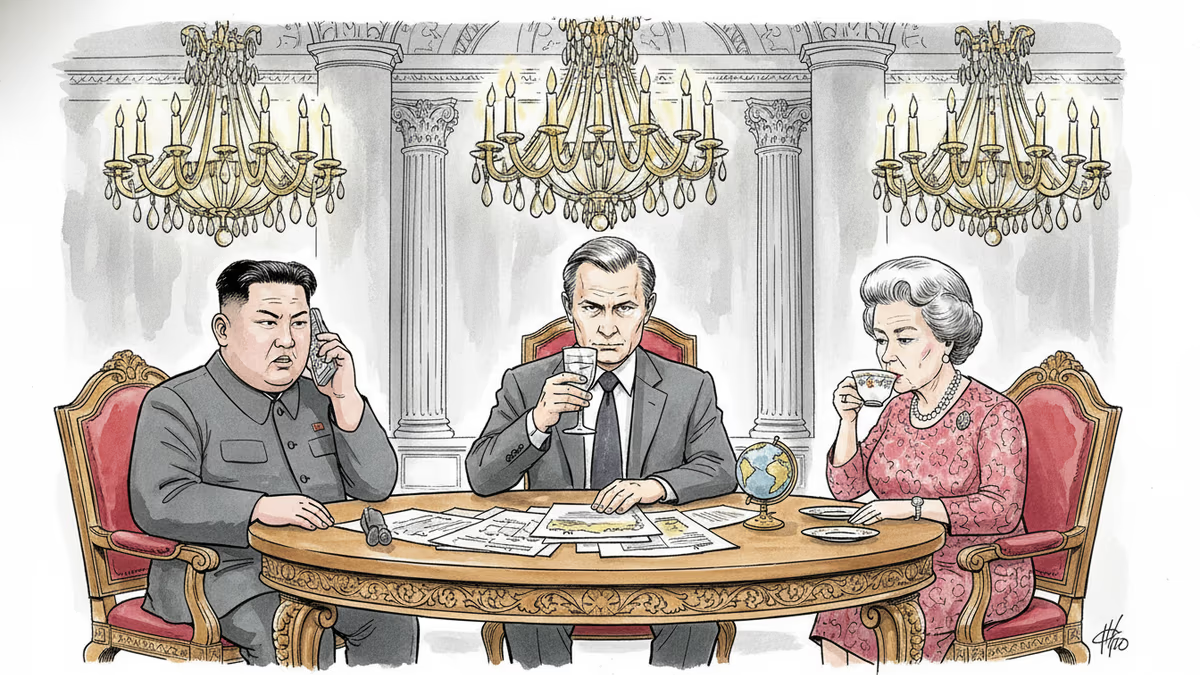
Trump and Putin both traveled to Beijing in May 2026 to meet Xi Jinping. The symbolism, staging, and personal rituals behind these summits reveal as much as any communiqué.
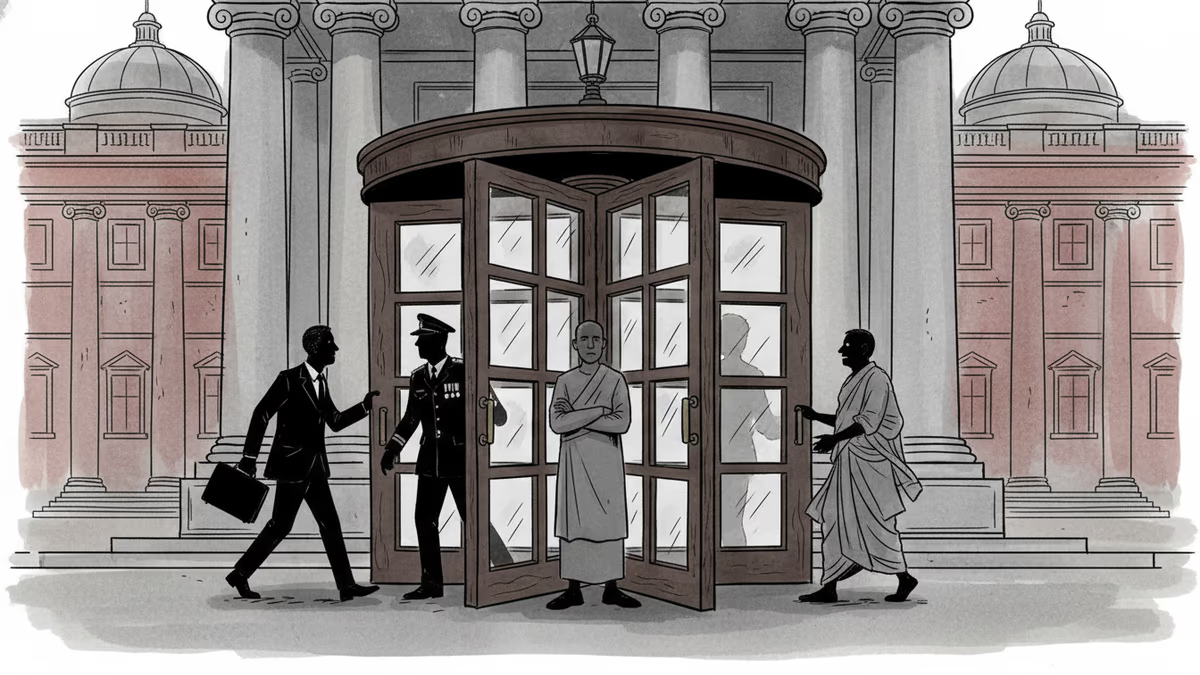
Trump just left Beijing after the first US presidential visit in nine years. Putin arrives Wednesday. Pakistan's PM follows. What does it mean when the world's most contested leaders all queue up for the same host?
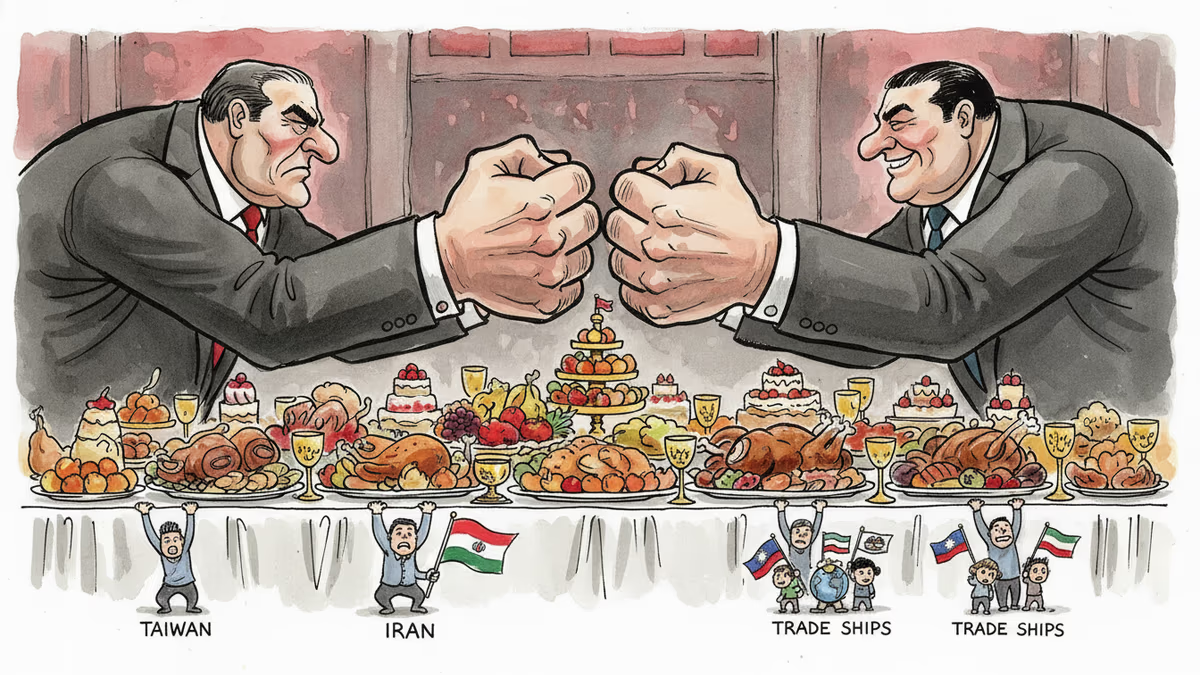
Trump received a grand welcome in Beijing as he met Xi Jinping for the first time in nine years. Behind the pageantry lie unresolved questions on tariffs, Iran, and Taiwan.
Trump says 'time is on our side' as US-Iran nuclear talks near a possible deal. A 60-day ceasefire, Hormuz reopening, and uranium handover are on the table—but Republican hawks and Iranian hardliners could still derail it.
Trump and Putin both traveled to Beijing in May 2026 to meet Xi Jinping. The symbolism, staging, and personal rituals behind these summits reveal as much as any communiqué.
Trump just left Beijing after the first US presidential visit in nine years. Putin arrives Wednesday. Pakistan's PM follows. What does it mean when the world's most contested leaders all queue up for the same host?
Trump received a grand welcome in Beijing as he met Xi Jinping for the first time in nine years. Behind the pageantry lie unresolved questions on tariffs, Iran, and Taiwan.
Thoughts
Share your thoughts on this article
Sign in to join the conversation