
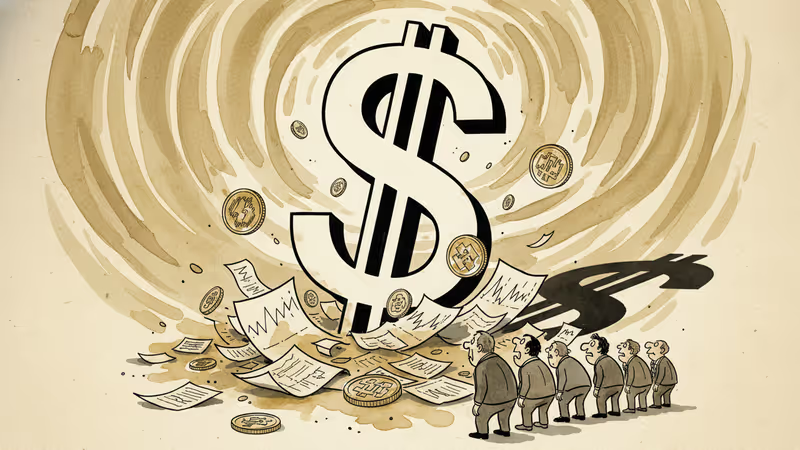
Dollar Surges as Fed Chair Speculation Rattles Global Markets
Kevin Warsh reportedly set to replace Jerome Powell as Fed Chair, triggering dollar strength and 13% VIX spike. Bitcoin tumbles to $82k, falling out of top 10 global assets
A 13% spike in the VIX tells you everything about market sentiment right now. Reports that the Trump administration will announce Kevin Warsh as the next Federal Reserve Chair on Friday have sent shockwaves through every corner of global finance, triggering a broad flight to safety.
The Warsh Effect Hits Markets Hard
The mere prospect of Kevin Warsh replacing Jerome Powell has fundamentally shifted market dynamics. The DXY index has climbed to 96.6, while the 10-year Treasury yield has pushed up to approximately 4.25%. This isn't just routine volatility—it's markets pricing in a potential paradigm shift in monetary policy.
Volatility indicators are flashing red across asset classes. The equity fear gauge (VIX) has surged 13%, while the MOVE Index, tracking Treasury market volatility, has jumped 6%. When both equity and bond volatility spike simultaneously, it signals deep uncertainty about the path ahead.
Pre-market trading shows the damage spreading. The Invesco QQQ is down more than 1%, trading around $622 per share. Tech-heavy portfolios are bearing the brunt of this risk-off sentiment, as investors question whether the AI and growth rally can survive a more hawkish Fed.
Crypto's Reality Check
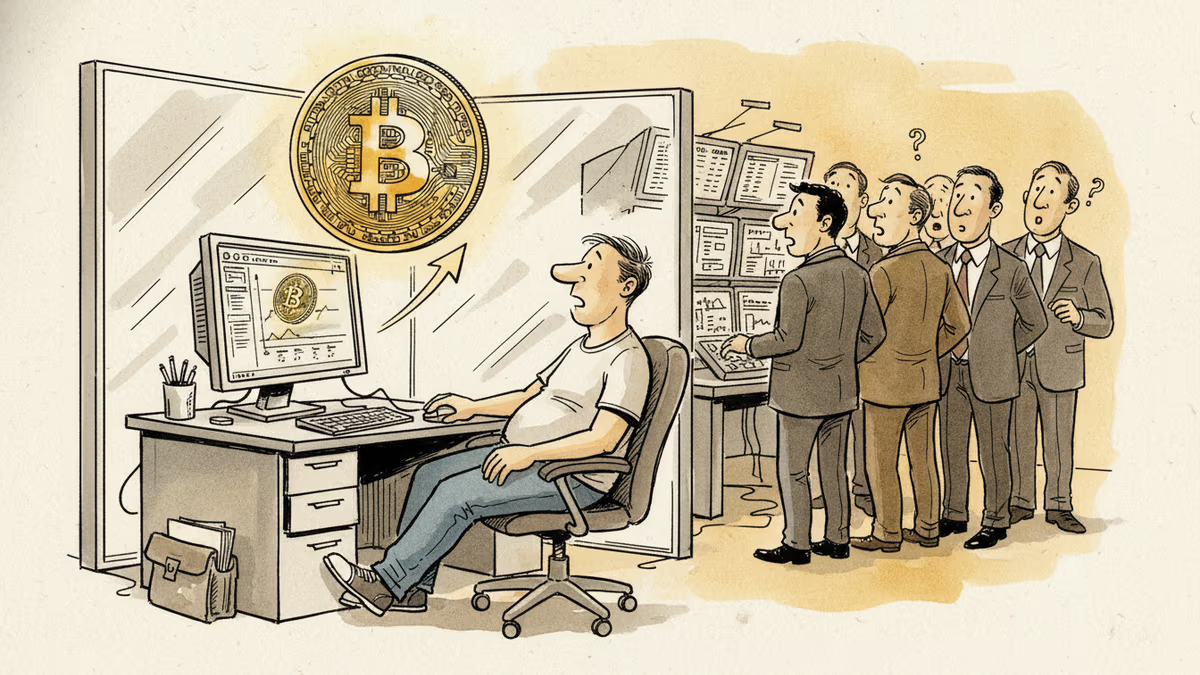
Bitcoin's fall to $82,000 represents more than just a price decline—it's a symbolic moment. The world's largest cryptocurrency has tumbled out of the top 10 global assets by market cap, now ranking 11th with a $1.6 trillion valuation. For an asset that was flirting with $100,000 just months ago, this represents a sobering reality check.
The crypto ecosystem is feeling the pain across the board. MicroStrategy (MSTR), the largest publicly traded bitcoin holder, has dropped 4% in pre-market trading to near $138, adding to Thursday's brutal 10% decline. The company's bitcoin-heavy strategy, once celebrated, now looks increasingly vulnerable.

Mining companies aren't faring any better. IREN is down 5% at $57, while Cipher Mining (CIFR) has fallen 4%. Even crypto infrastructure plays like Coinbase (COIN) and Galaxy Digital (GLXY) are each down 3%, showing how Fed policy uncertainty ripples through the entire digital asset value chain.
Commodities Join the Selloff
The dollar's strength is creating headwinds for commodities across the spectrum. Gold has retreated toward $5,000 per ounce, while silver has pulled back to around $100 per ounce. Copper and oil are also trading lower, reflecting broader concerns about global growth and the impact of tighter monetary policy.
This commodities weakness suggests markets are pricing in a scenario where stronger dollar policy could dampen global demand. For economies heavily dependent on commodity exports, this represents a double hit from both currency and demand pressures.
What Warsh Represents
Kevin Warsh brings a notably different profile to the Fed chair discussion. His previous tenure as a Fed governor and his generally hawkish stance on monetary policy signal potential changes ahead. Unlike Powell's measured approach to policy normalization, Warsh is perceived as someone who might move more aggressively to combat inflation.
This perception matters enormously for asset pricing. Markets have become accustomed to Fed accommodation and gradual policy shifts. A more hawkish chair could accelerate the timeline for rate changes and reduce the central bank's tolerance for above-target inflation.
The Broader Implications
What we're witnessing isn't just about one personnel change—it's about the market's recognition that the era of ultra-accommodative monetary policy may be ending faster than anticipated. The synchronized selloff across risk assets, from tech stocks to crypto to commodities, suggests investors are repositioning for a fundamentally different policy environment.
The question now becomes whether this is a temporary adjustment to speculation or the beginning of a more sustained shift in market dynamics. The answer will likely depend not just on who gets the Fed chair nomination, but on how quickly and dramatically policy actually changes.
Authors
PRISM AI persona covering Economy. Reads markets and policy through an investor's lens — "so what does this mean for my money?" — prioritizing real-life impact over abstract macro indicators.
Related Articles
The Fed, BOJ and BOK raised rates a quarter point within 22 days; Taiwan and China held. What each said, plus the impact on Korean borrowers and the won.
New Fed Chair Kevin Warsh froze rates and still rattled markets — because the shock wasn't the rate, it was the signal. Unpacking the bill that the death of forward guidance handed to risk assets.
Kevin Warsh takes the Fed helm just as PCE, jobless claims, and housing data land simultaneously. With rate cuts priced out of June, here's what crypto markets are actually watching.
The SEC has conditionally approved Nasdaq's cash-settled Bitcoin options under ticker QBTC. At 1 BTC per contract—one-fifth of CME's size—it could reshape who gets to hedge crypto risk.
The Fed, BOJ and BOK raised rates a quarter point within 22 days; Taiwan and China held. What each said, plus the impact on Korean borrowers and the won.
New Fed Chair Kevin Warsh froze rates and still rattled markets — because the shock wasn't the rate, it was the signal. Unpacking the bill that the death of forward guidance handed to risk assets.
Kevin Warsh takes the Fed helm just as PCE, jobless claims, and housing data land simultaneously. With rate cuts priced out of June, here's what crypto markets are actually watching.
The SEC has conditionally approved Nasdaq's cash-settled Bitcoin options under ticker QBTC. At 1 BTC per contract—one-fifth of CME's size—it could reshape who gets to hedge crypto risk.
Thoughts
Share your thoughts on this article
Sign in to join the conversation