

They Said He Had a Gun. It Was a Phone.
DHS claimed Alex Pretti was armed and dangerous after federal agents killed him, but independent analysis reveals he was unarmed, raising questions about government narrative control
Within hours of federal agents killing Alex Pretti on Saturday morning, the Department of Homeland Security began crafting a familiar story. The dead man was armed and dangerous, they said. He had a gun, they claimed. (A Bellingcat analysis of the video concludes Pretti was unarmed when shot.) He approached agents while holding that gun, they insisted. (He was holding a phone, The New York Times reports.) Pretti died on his knees, surrounded by armed Border Patrol agents, as shot after shot was fired in his direction.
The Immediate Spin Cycle
The speed was remarkable. Before the body was cold, before any meaningful investigation could begin, the official narrative was already taking shape. "Armed suspect," "officer safety," "justified use of force" – the familiar phrases that transform a killing into a procedural necessity.
But this wasn't Minnesota, where conservatives celebrate the Second Amendment and open carry is legal with a permit. This wasn't even about gun rights. This was about a man with a phone who became, in the government's telling, a mortal threat requiring lethal force.
Pattern Recognition
Anyone paying attention has seen this movie before. The initial police statement about George Floyd's death described a "medical incident." Breonna Taylor was initially described as standing beside her drug-dealing boyfriend when officers served a warrant. Ahmaud Arbery was a "burglary suspect."
The pattern is predictable: Incident occurs → Official narrative emerges → Media reports the official line → Later, "additional information" surfaces → Quiet corrections follow. But by then, the first story has already shaped public perception.
Information Monopoly
Law enforcement agencies enjoy near-total control over the initial information flow. They secure the scene, interview witnesses, collect evidence, and decide what gets released when. In this environment, what passes for "objective fact" in those first crucial hours is often anything but.

This is why independent analysis from organizations like Bellingcat matters. When official sources claim one thing and citizen journalists, video evidence, and independent investigators tell a different story, we get a glimpse of how narrative construction actually works.
The Democracy Question
Democratic societies depend on institutional credibility. Citizens need to trust that their government tells them the truth, especially about life-and-death matters. But trust built on deception isn't trust at all – it's manufactured consent.
When government agencies consistently get the "facts" wrong in their initial statements about controversial incidents, it raises uncomfortable questions. Are these honest mistakes under pressure? Institutional incompetence? Or something more deliberate?
Beyond This Case
The Pretti killing isn't just about one man with a phone who died surrounded by federal agents. It's about the machinery that immediately transforms such incidents into justified government action. It's about who gets to tell the first version of the story, and why that version so often serves the interests of those doing the telling.
Consider how this dynamic plays out beyond law enforcement. Corporate PR after environmental disasters. Government statements during foreign interventions. Health agency communications during pandemics. The same pattern emerges: those with the most to lose from the truth often get the first chance to define it.
The Verification Imperative
In an age of instant communication and viral narratives, the time between "official statement" and "accepted fact" has collapsed. Social media amplifies whatever story emerges first, regardless of its accuracy. This makes independent verification not just important, but essential for democratic accountability.
Yet verification takes time. Analysis requires resources. Meanwhile, the official story spreads at the speed of a press release.
Authors
Related Articles
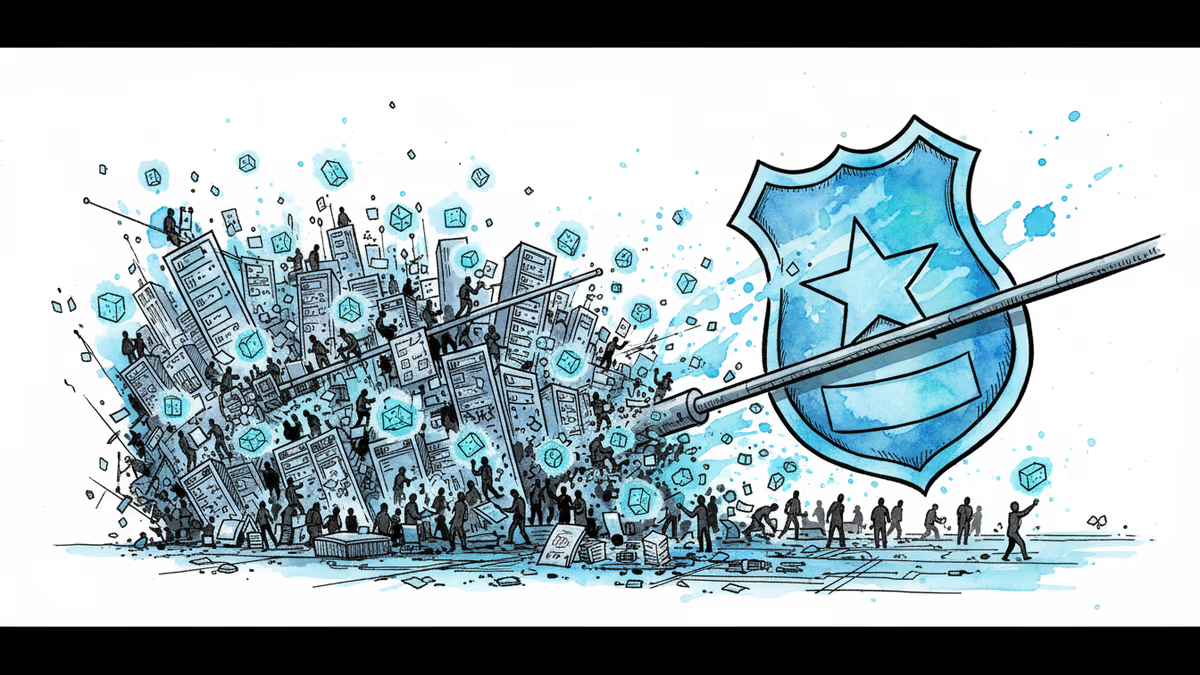
US and EU police shut down LeakBase, a massive hacker forum with 142,000 members trading stolen credentials. What does this takedown reveal about the evolution of cybercrime?

A major security flaw has exposed live feeds from over 60 of Flock's AI-powered surveillance cameras on the open web, no password required. The discovery highlights the growing privacy risks of rapidly expanding AI surveillance networks used by law enforcement.

Europol's report on AI and robotics isn't just about robocops. It's a warning of an imminent algorithmic arms race between law enforcement and criminals.
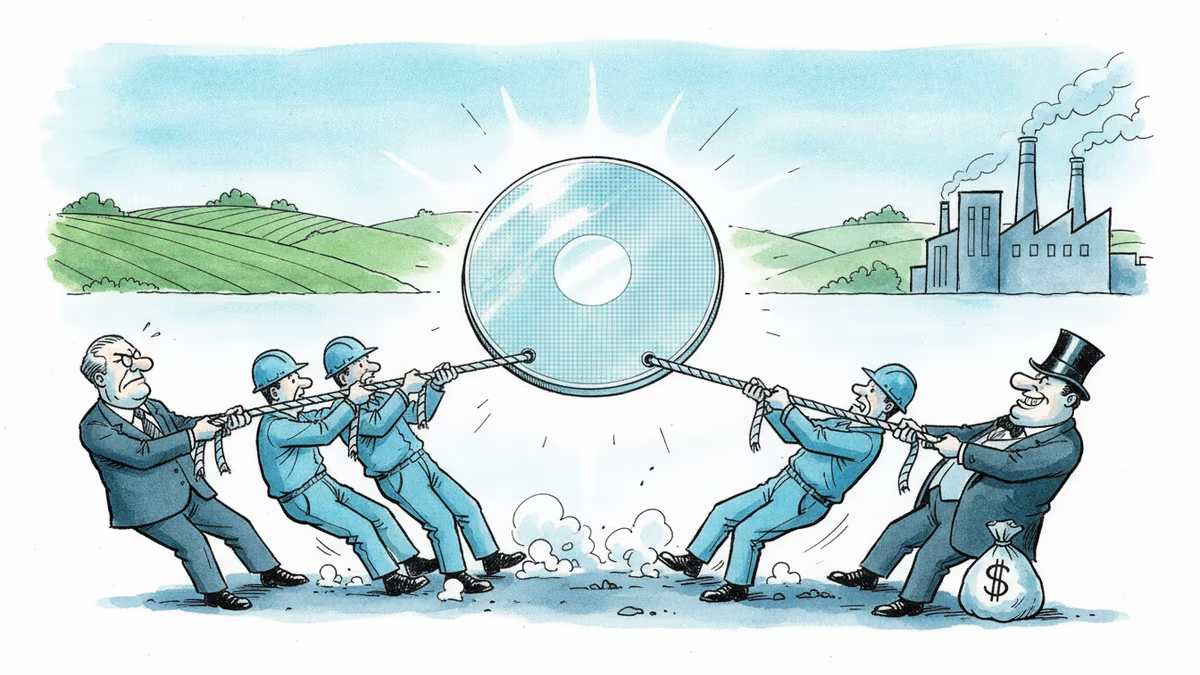
Samsung Electronics' union branch revealed that 84% of survey respondents oppose the government's roughly $290 billion (₩400 trillion) semiconductor megaproject in Gwangju. Government, management, the union and shareholders are all reading the same national project in sharply different ways.
US and EU police shut down LeakBase, a massive hacker forum with 142,000 members trading stolen credentials. What does this takedown reveal about the evolution of cybercrime?
A major security flaw has exposed live feeds from over 60 of Flock's AI-powered surveillance cameras on the open web, no password required. The discovery highlights the growing privacy risks of rapidly expanding AI surveillance networks used by law enforcement.
Europol's report on AI and robotics isn't just about robocops. It's a warning of an imminent algorithmic arms race between law enforcement and criminals.
Samsung Electronics' union branch revealed that 84% of survey respondents oppose the government's roughly $290 billion (₩400 trillion) semiconductor megaproject in Gwangju. Government, management, the union and shareholders are all reading the same national project in sharply different ways.
Thoughts
Share your thoughts on this article
Sign in to join the conversation