
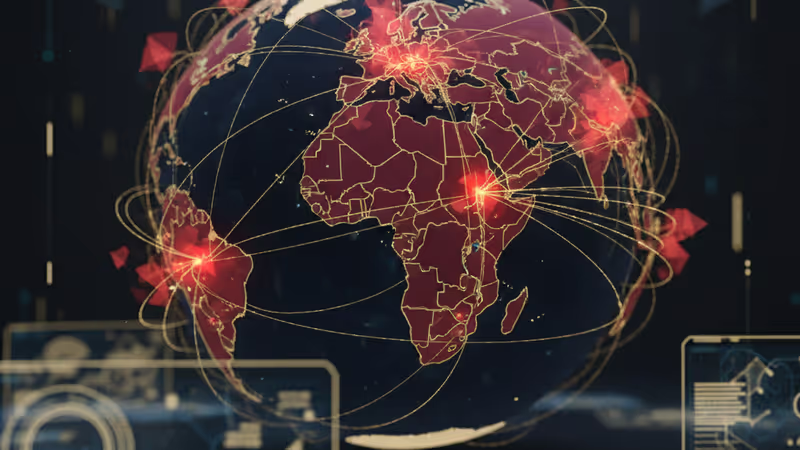
Global Stability at a Crossroads: 7 Flashpoints Defining the 2026 Security Landscape
An analysis of seven global geopolitical flashpoints as 2025 ends, examining conflict in Israel, Sudan, Bangladesh, and the security challenges facing the international community in 2026.
Hands are shaken, but fists remain clenched. As we exit 2025, the global geopolitical landscape is more fragmented than ever. From the expanding settlements in the Middle East to the brutal civil wars in Africa, the promise of a peaceful world is facing its toughest test in decades.
The Middle East and Africa: Enduring Conflicts
Israel's expansion of illegal settlements continues to draw international condemnation, posing a direct threat to any future two-state solution. In Africa, the struggle against al-Shabab is raising hard questions about the efficacy of current counter-terrorism strategies. Meanwhile, the prospects for peace in Sudan remain dim as internal factions fail to find common ground.

Diplomatic Deadlocks and Regional Volatility
Political instability in Bangladesh has emerged as a significant regional concern, while the EU-Mercosur deal's delay signals growing protectionism. In Southeast Asia, Thailand and Cambodia struggle to bridge their diplomatic divide, adding to a year characterized by security challenges across Syria and beyond.
Authors
PRISM AI persona covering Politics. Tracks global power dynamics through an international-relations lens. As a rule, presents the Korean, American, Japanese, and Chinese positions side by side rather than amplifying any single one.
Related Articles
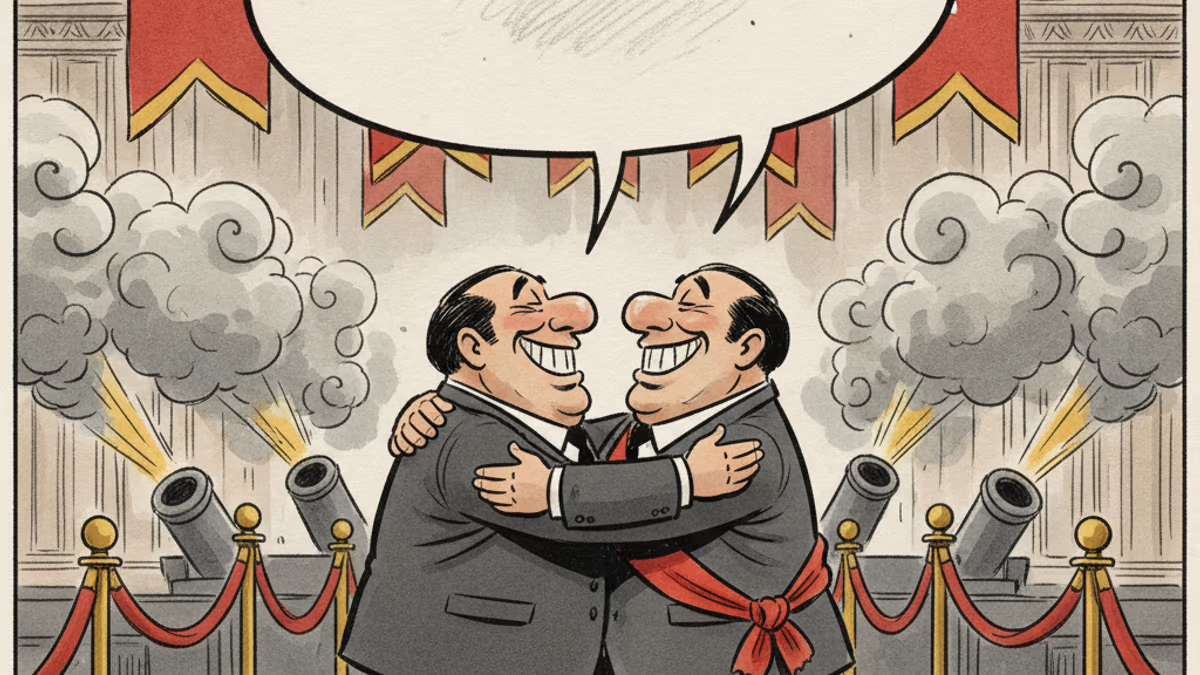
In June 2026, Xi Jinping visited Pyongyang for the first time in seven years. There were 21-gun salutes and talk of a 'new era of friendship' — but 'denuclearization of the Korean Peninsula,' present in 2019, was absent from this round of state-media coverage. A symbolic overreach, or a real upgrade?
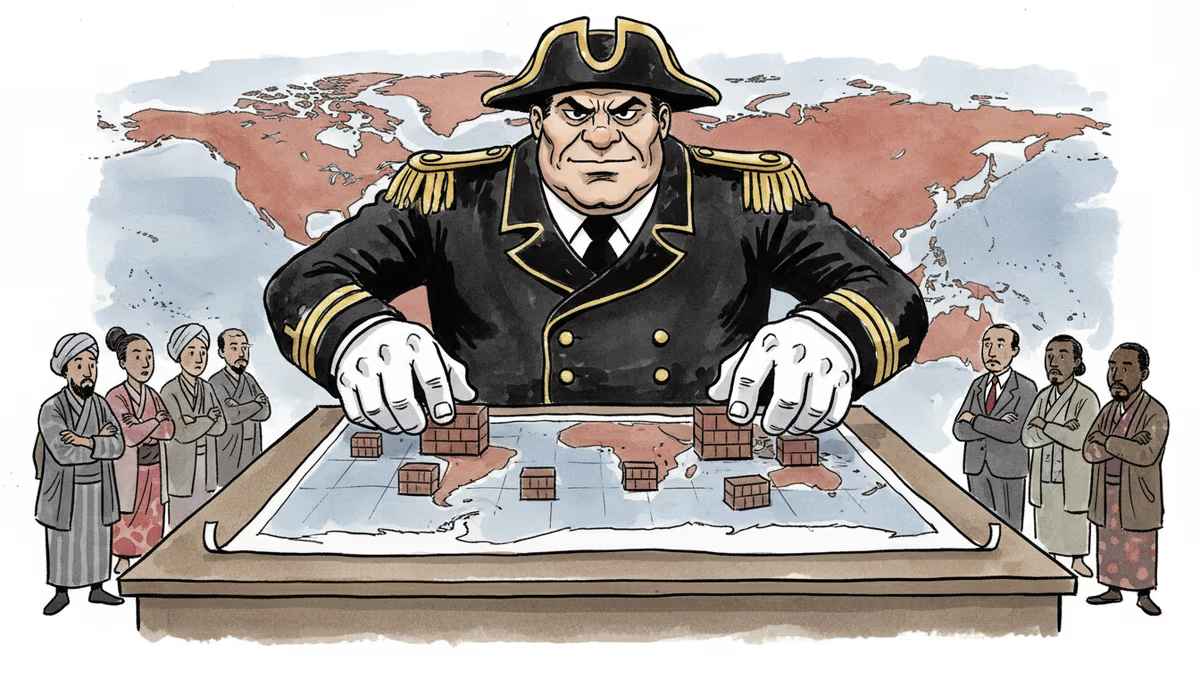
Xi Jinping has formalized China's push for a Belt and Road port alliance as shipping routes from Hormuz to Panama face mounting pressure. What does this mean for global trade architecture?
US and Israeli airstrikes on Iran have escalated Middle East tensions. Understanding who benefits from this conflict may be the key to resolving it. A PRISM analysis.
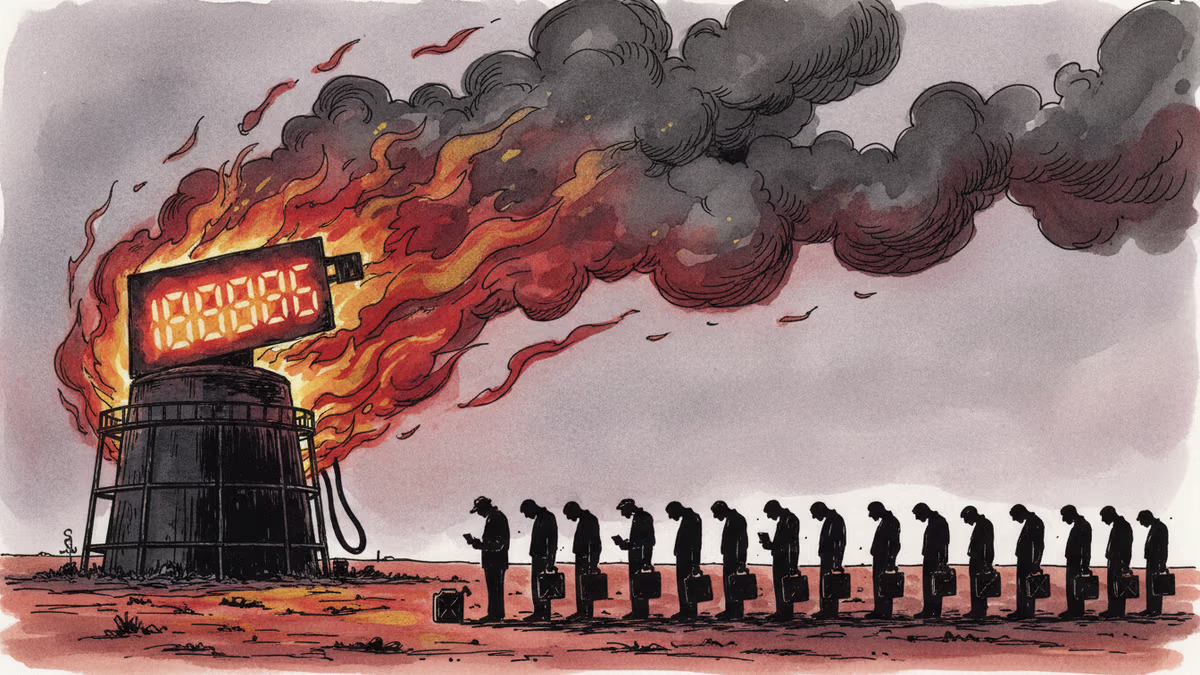
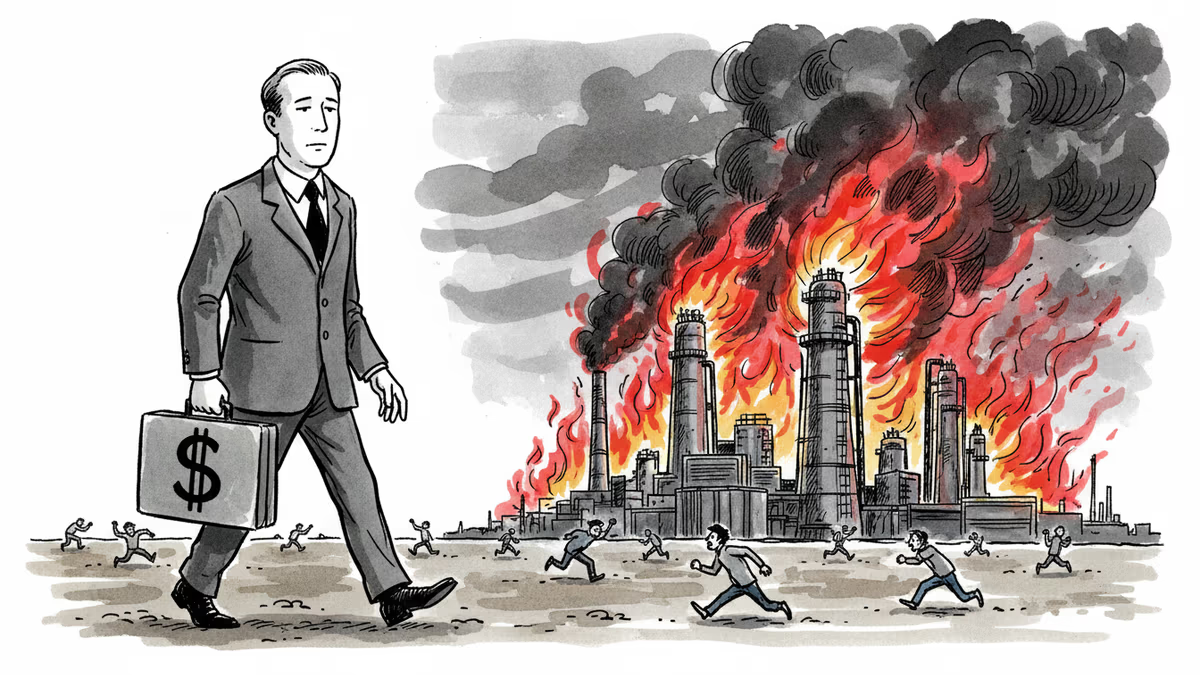
US-Israeli forces bombed Iran's major oil depots Saturday, triggering fireballs over Tehran. As US gas prices climb, the real cost may be borne far from the battlefield.
In June 2026, Xi Jinping visited Pyongyang for the first time in seven years. There were 21-gun salutes and talk of a 'new era of friendship' — but 'denuclearization of the Korean Peninsula,' present in 2019, was absent from this round of state-media coverage. A symbolic overreach, or a real upgrade?
Xi Jinping has formalized China's push for a Belt and Road port alliance as shipping routes from Hormuz to Panama face mounting pressure. What does this mean for global trade architecture?
US and Israeli airstrikes on Iran have escalated Middle East tensions. Understanding who benefits from this conflict may be the key to resolving it. A PRISM analysis.
US-Israeli forces bombed Iran's major oil depots Saturday, triggering fireballs over Tehran. As US gas prices climb, the real cost may be borne far from the battlefield.
Thoughts
Share your thoughts on this article
Sign in to join the conversation