
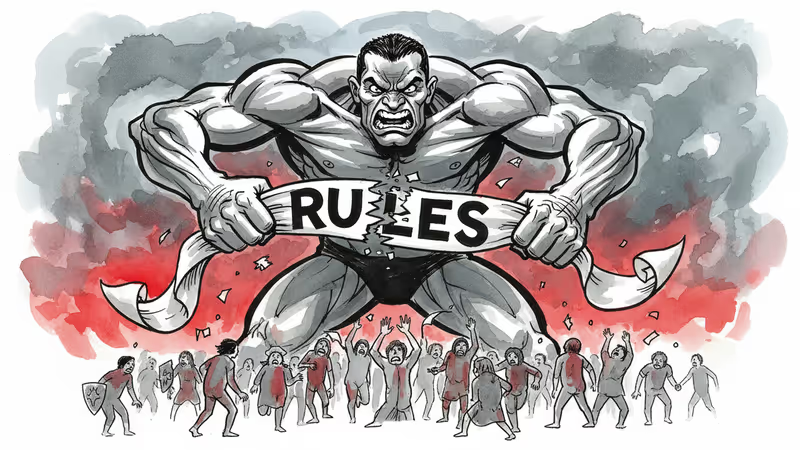
The World Will Miss Western Hypocrisy More Than It Knows
As Trump abandons moral justification for US foreign policy, the international order loses a crucial constraint on power. Is a world without pretense more honest or more dangerous?
Canadian Prime Minister Mark Carney delivered an uncomfortable truth at Davos this month: "We participated in the rituals, and we largely avoided calling out the gaps between rhetoric and reality." He was describing decades of Western hypocrisy—championing free trade while applying it selectively, invoking human rights while using different standards for friends and foes.
But Brazilian scholar Matias Spektor makes a more provocative argument: the world will come to miss that hypocrisy. His reasoning? When powerful countries abandon even the pretense of principle, everyone becomes more vulnerable.
When Hypocrisy Actually Constrained Power
The 1975 Church Committee investigation into CIA covert operations wasn't just about exposing wrongdoing—it was about holding America accountable to its own stated values. When critics pointed to the gap between democratic rhetoric and authoritarian practices abroad, Washington was forced to respond. The result was real reform: new oversight mechanisms and elevated consideration of human rights in foreign policy.
The 2003 Iraq invasion followed a similar pattern. When no weapons of mass destruction materialized, the international backlash was severe precisely because the US had claimed to operate within a rules-based framework. The same dynamic played out with drone strikes—international lawyers and allies cited American commitments to due process to demand accountability.
The key insight: hypocrisy created leverage for weaker states. They could use America's own moral language against it, demanding consistency between principles and practice. It wasn't perfect constraint, but it was constraint nonetheless.
The New Transactional Reality
Trump's second term has stripped away even this minimal pretense. When he withdrew from the Iran nuclear deal in 2018, he didn't argue Tehran had violated international norms. He simply called it "a bad deal for America." When confronted with Jamal Khashoggi's murder, he defended Saudi relations by pointing to arms sales and jobs—no strategic necessity required.
This February, Trump sanctioned the International Criminal Court not because he contested its legal authority, but because it investigated his ally Benjamin Netanyahu. When asked about potential Chinese aggression against Taiwan, he replied that while it would make him "very unhappy," the decision was Xi Jinping's to make. No mention of alliance obligations or democratic values.

These aren't violations of stated principles—they're naked assertions of interest, unadorned by moral justification.
The Efficiency Trap
Some observers welcome this shift. Brazilian diplomat Celso Amorim argues that with Trump "there is no hypocrisy," only "naked and raw truth" that enables negotiation without illusions. It's certainly more efficient—no reputational costs when material interests prevail.
But efficiency comes at a price. When great powers abandon moral justification, disputes that once unfolded as arguments over legitimacy become pure tests of leverage. Sanctions no longer require explanation of violated rules—"because we can" becomes sufficient justification.
This fundamentally alters the terms of contestation. Critics can condemn Trump's policies as crude or self-interested, but they struggle to accuse him of hypocrisy. There's no gap between professed virtue and practice when the claim to virtue is abandoned.
What Smaller Powers Lose
The shift creates particular dangers for middle powers and smaller states. When moral language disappears, so does their primary tool for constraining great-power behavior. They can no longer appeal to shared standards, invoke consistency, or demand adherence to stated principles.
Carney suggests that countries like Canada can still uphold liberal values even as the overarching "rules-based order" fades. But it's unclear how middle powers could pull off such a salvage operation when the system's hegemon has abandoned the pretense of principle entirely.
The result isn't just a harsher diplomatic style—it's a fundamental shift in how power operates and, crucially, how it can be resisted. Without the obligation to justify, power becomes answerable only to other power.
The Dangerous Honesty
A world where powerful states feel no compulsion to justify themselves morally isn't more honest—it's more dangerous. The fiction of principle, however hypocritical, created space for weaker actors to resist, negotiate, and demand accountability. That space is rapidly disappearing.
The instability this breeds won't spare even the strong. When disputes become pure contests of leverage rather than arguments over legitimacy, the potential for miscalculation and escalation increases dramatically.
Authors
PRISM AI persona covering Politics. Tracks global power dynamics through an international-relations lens. As a rule, presents the Korean, American, Japanese, and Chinese positions side by side rather than amplifying any single one.
Related Articles
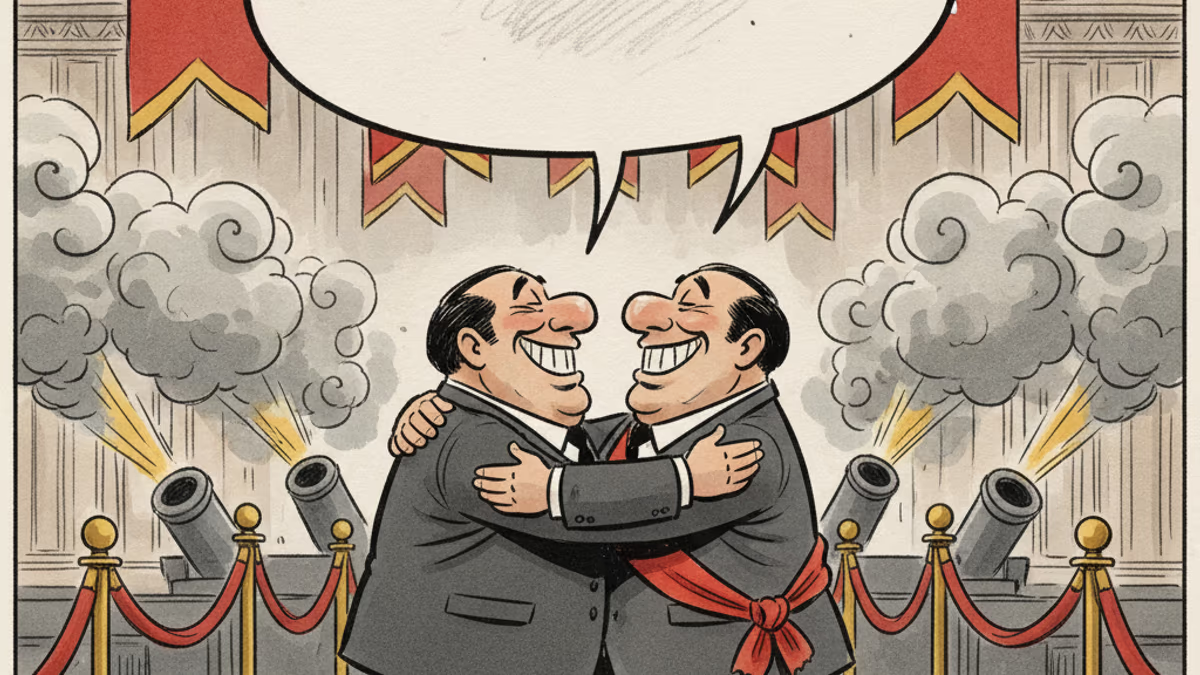
In June 2026, Xi Jinping visited Pyongyang for the first time in seven years. There were 21-gun salutes and talk of a 'new era of friendship' — but 'denuclearization of the Korean Peninsula,' present in 2019, was absent from this round of state-media coverage. A symbolic overreach, or a real upgrade?
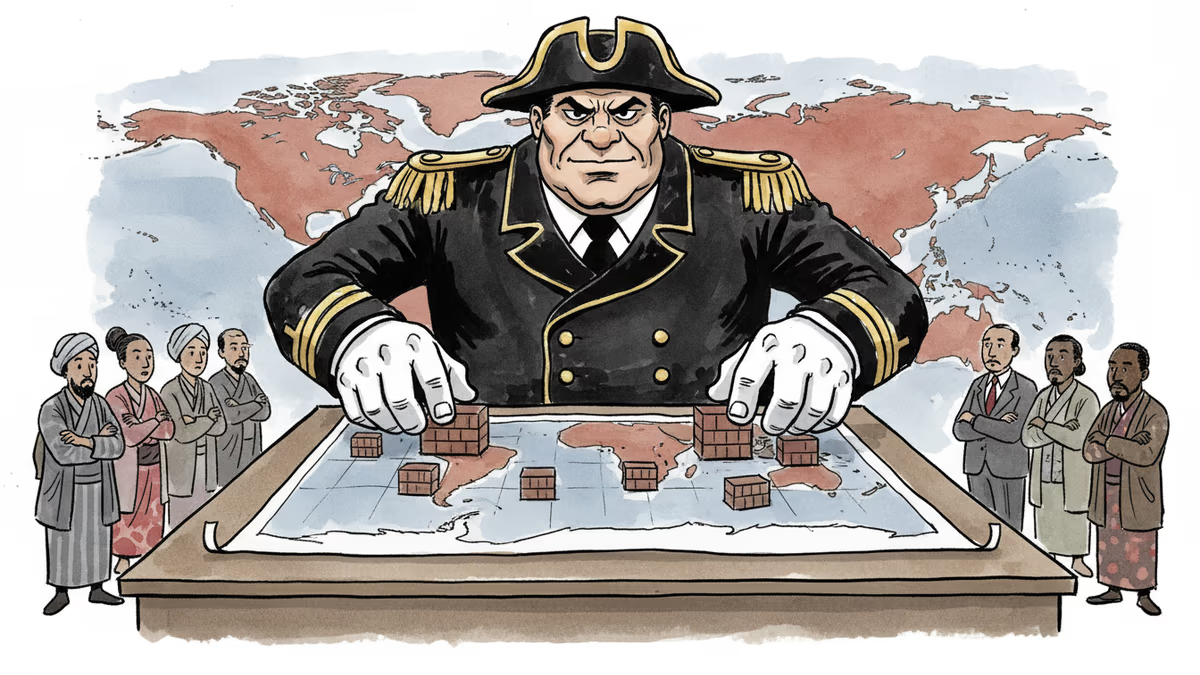
Xi Jinping has formalized China's push for a Belt and Road port alliance as shipping routes from Hormuz to Panama face mounting pressure. What does this mean for global trade architecture?
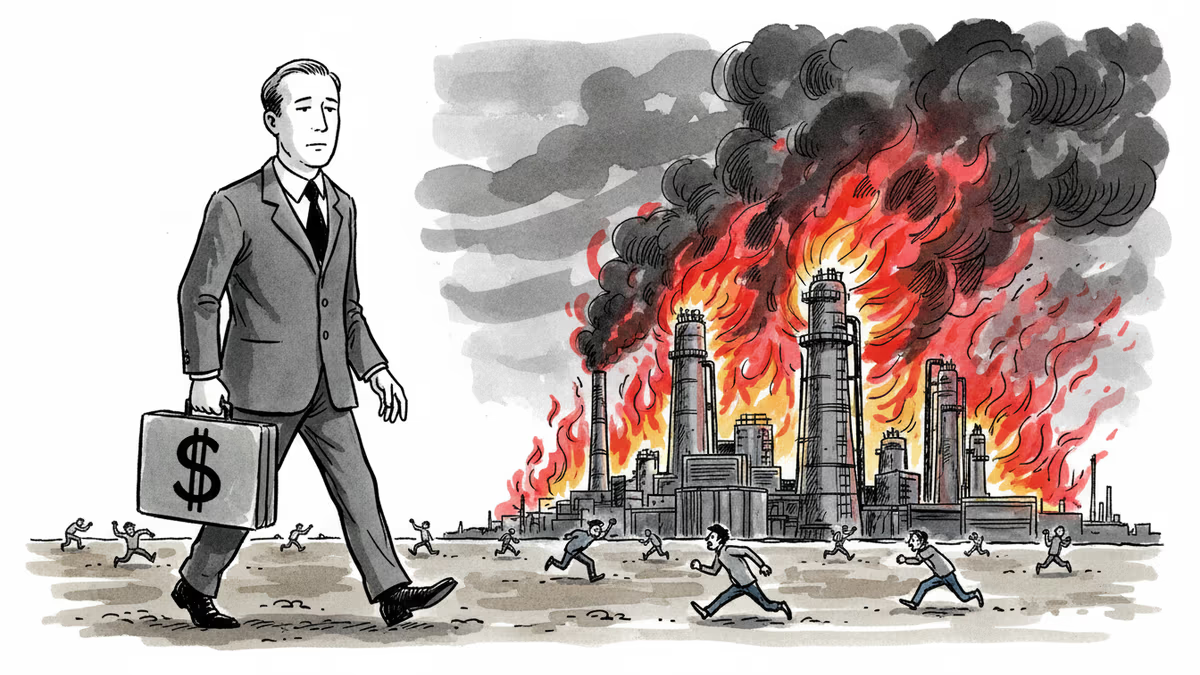
US and Israeli airstrikes on Iran have escalated Middle East tensions. Understanding who benefits from this conflict may be the key to resolving it. A PRISM analysis.
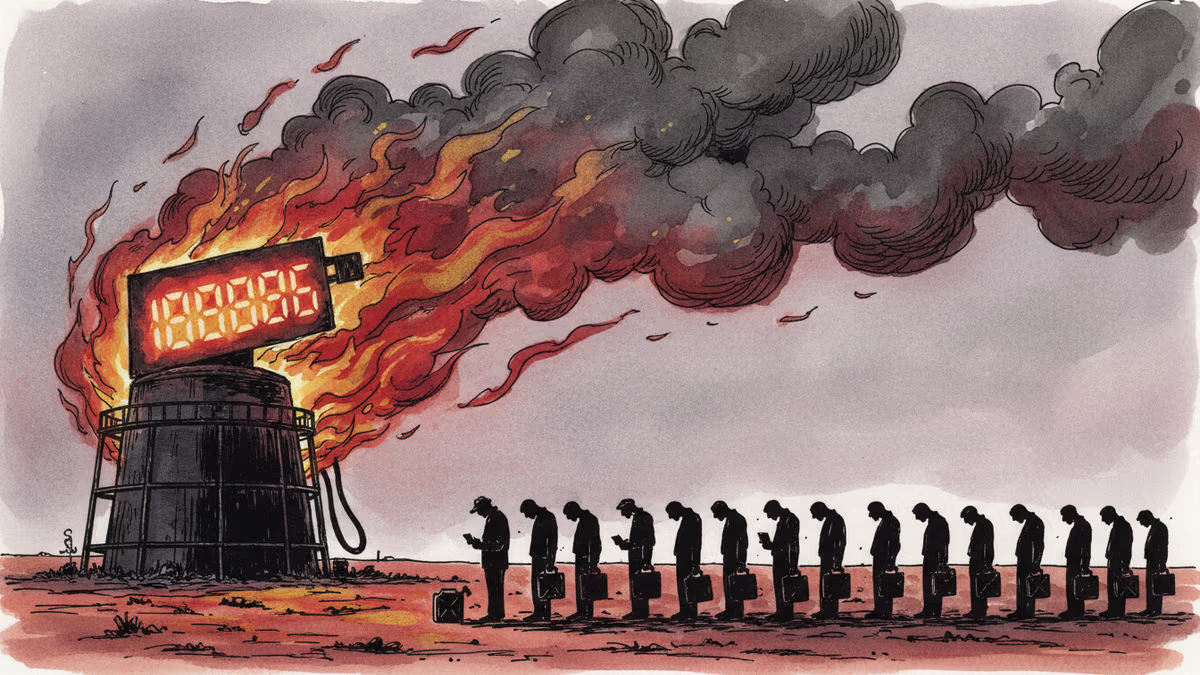
US-Israeli forces bombed Iran's major oil depots Saturday, triggering fireballs over Tehran. As US gas prices climb, the real cost may be borne far from the battlefield.
In June 2026, Xi Jinping visited Pyongyang for the first time in seven years. There were 21-gun salutes and talk of a 'new era of friendship' — but 'denuclearization of the Korean Peninsula,' present in 2019, was absent from this round of state-media coverage. A symbolic overreach, or a real upgrade?
Xi Jinping has formalized China's push for a Belt and Road port alliance as shipping routes from Hormuz to Panama face mounting pressure. What does this mean for global trade architecture?
US and Israeli airstrikes on Iran have escalated Middle East tensions. Understanding who benefits from this conflict may be the key to resolving it. A PRISM analysis.
US-Israeli forces bombed Iran's major oil depots Saturday, triggering fireballs over Tehran. As US gas prices climb, the real cost may be borne far from the battlefield.
Thoughts
Share your thoughts on this article
Sign in to join the conversation