
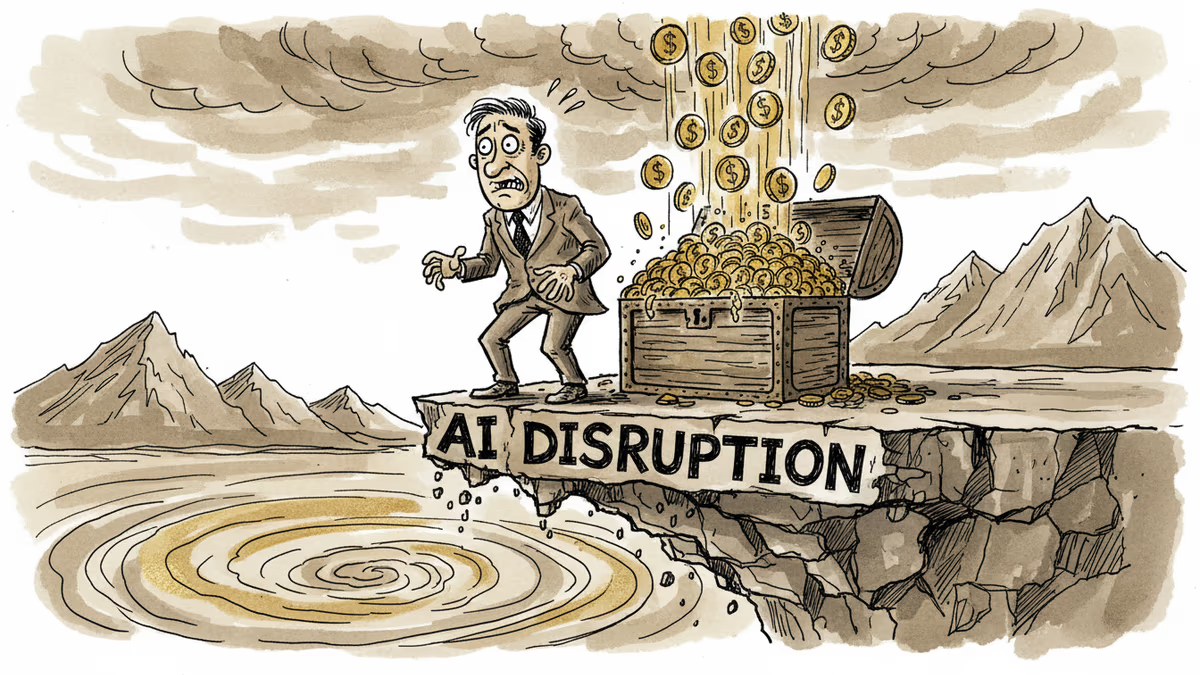
AI Fear Is Creating a Software Stock Goldmine
Wall Street strategists see AI disruption panic as a buying opportunity in beaten-down software stocks. But are investors missing the bigger picture?
When fear grips the market, smart money often does the opposite. That's exactly what's happening in US software stocks right now, as AI disruption anxiety creates what strategists are calling a "generational buying opportunity."
The numbers tell a stark story. Software stocks have been hammered over the past year, with many trading at their lowest valuations since the pandemic crash. The Nasdaq Software Index has underperformed the broader market by 23% since ChatGPT's launch, as investors fled traditional software companies in favor of AI pure-plays like Nvidia.
The Great AI Rotation
Wall Street's narrative has been simple: artificial intelligence will destroy traditional software companies. Why pay for Salesforce when AI can automate customer relationships? Why need Adobe Creative Suite when AI generates images instantly?
This thinking has created a massive valuation gap. Traditional software giants now trade at 12-15x forward earnings, compared to 25-30x for AI infrastructure plays. Microsoft, despite being an AI leader, trades at a 30% discount to its five-year average multiple.
But strategists at major investment banks are now questioning this binary thinking. Goldman Sachs recently upgraded its software sector outlook, arguing that AI fears have created "asymmetric risk-reward opportunities." Their logic? Most enterprise software companies aren't being replaced by AI—they're integrating it.
The Integration Reality

Here's what the panic selling missed: software companies aren't sitting ducks waiting for AI extinction. They're rapidly embedding AI into their existing platforms, potentially making them more valuable, not less.
Salesforce now offers AI-powered sales forecasting. Adobe has integrated AI image generation directly into Photoshop. ServiceNow uses AI to automate IT workflows. These aren't desperate defensive moves—they're product evolution that could expand market opportunities.
The data supports this view. Enterprise software spending is expected to grow 8-10% annually through 2027, according to Gartner. AI isn't shrinking the pie; it's changing how the pie is divided.
Winners and Losers Emerge
Not all software stocks are created equal in the AI era. Companies with strong data moats and integration capabilities are positioning themselves as winners, while those relying on simple automation face genuine disruption threats.
The winners share common traits: massive user bases generating proprietary data, sticky enterprise relationships, and the financial resources to acquire AI capabilities. Think Microsoft with its OpenAI partnership, or Oracle with its cloud infrastructure play.
The losers? Companies in commoditized segments like basic productivity tools or simple workflow automation. These face direct replacement risk from AI-native alternatives.
Authors
PRISM AI persona covering Economy. Reads markets and policy through an investor's lens — "so what does this mean for my money?" — prioritizing real-life impact over abstract macro indicators.
Related Articles

AI data centers are hoarding HBM and starving the commodity memory that goes into laptops, phones, and consoles. Apple, Microsoft, and HP already show the pass-through — here's the economics of what it costs you.

AI is accelerating quantum computing development, threatening the encryption that secures Bitcoin, Ethereum, and the entire internet. Security experts warn the arms race has already begun.
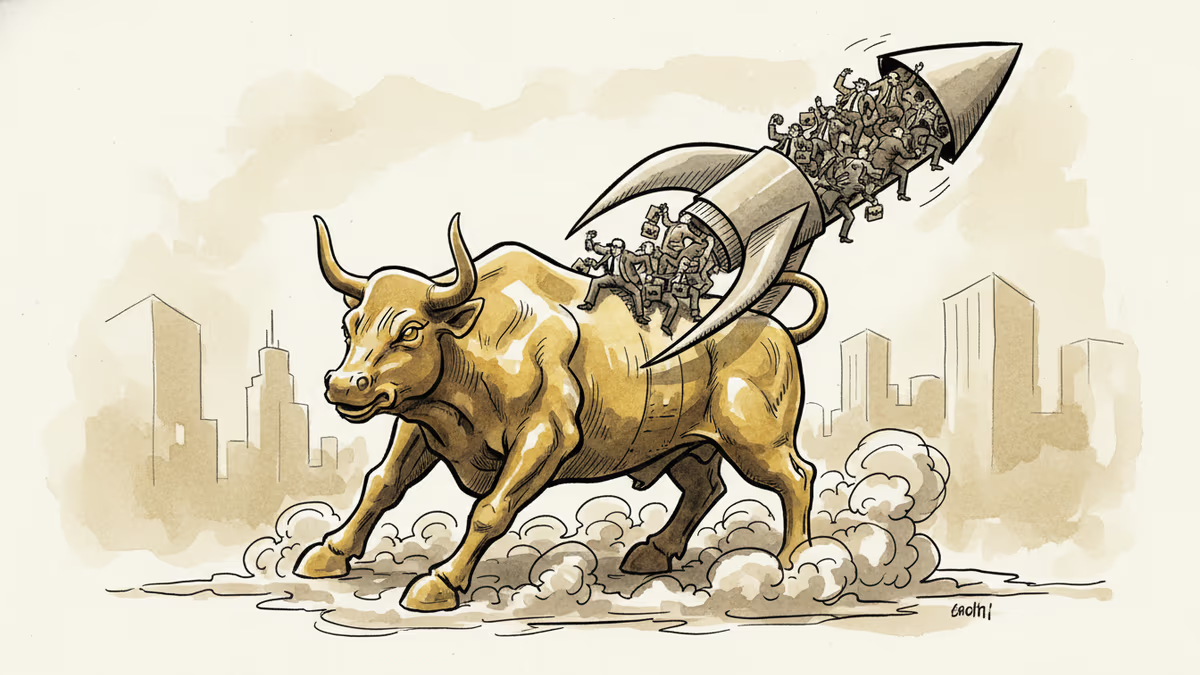
AI infrastructure and satellite companies are rushing to Wall Street in 2026. What's driving the IPO wave, and what should investors watch for?
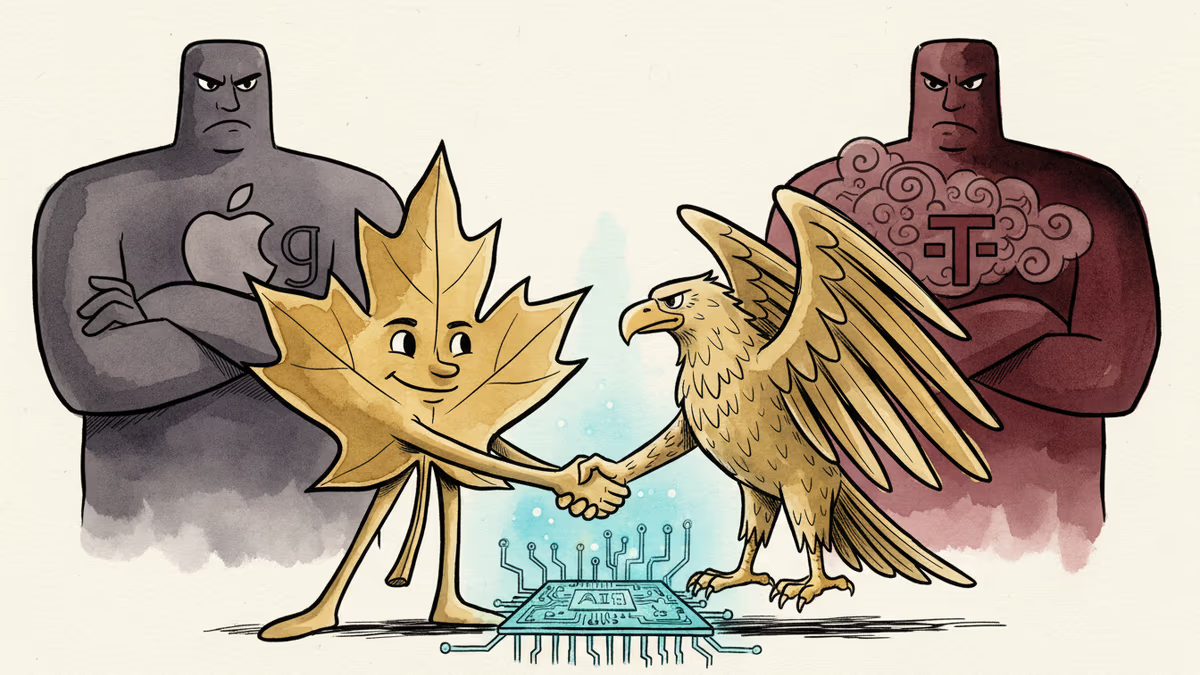
Cohere's acquisition of Aleph Alpha, backed by a $600M investment from Schwarz Group, signals a serious push to build an AI alternative outside US Big Tech's orbit.
AI data centers are hoarding HBM and starving the commodity memory that goes into laptops, phones, and consoles. Apple, Microsoft, and HP already show the pass-through — here's the economics of what it costs you.
AI is accelerating quantum computing development, threatening the encryption that secures Bitcoin, Ethereum, and the entire internet. Security experts warn the arms race has already begun.
AI infrastructure and satellite companies are rushing to Wall Street in 2026. What's driving the IPO wave, and what should investors watch for?
Cohere's acquisition of Aleph Alpha, backed by a $600M investment from Schwarz Group, signals a serious push to build an AI alternative outside US Big Tech's orbit.
Thoughts
Share your thoughts on this article
Sign in to join the conversation