
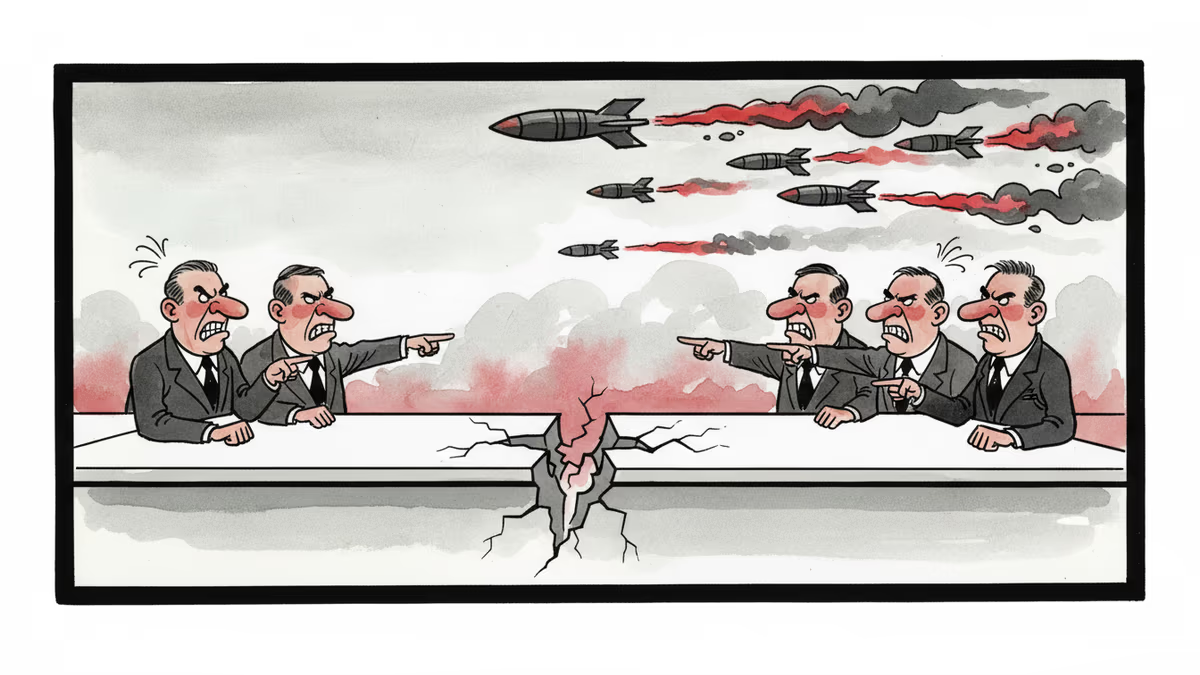
From Diplomacy to Warfare: How 48 Hours Changed the Middle East
US-Iran nuclear talks showed promise just days before erupting into full-scale conflict. An examination of diplomatic limits and military solutions.
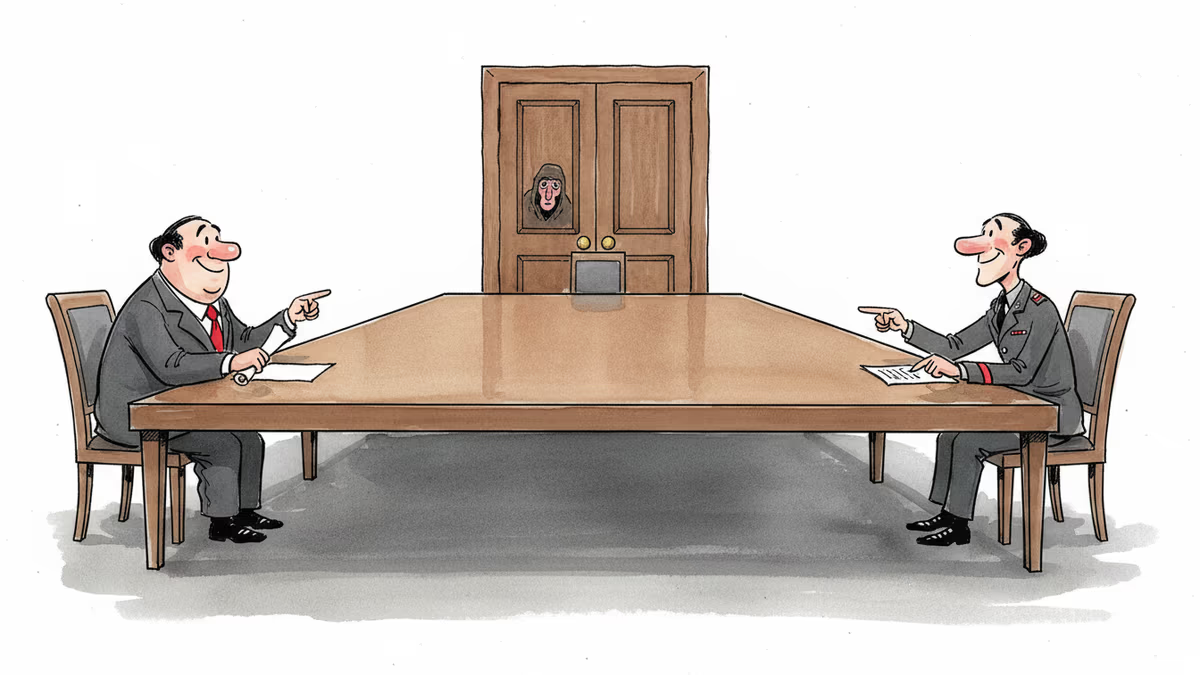
Just two days ago, there was reason for hope. Iran had agreed to reduce its nuclear stockpiles to "the lowest level possible," and President Trump declared he "preferred diplomacy." Then, in a span of 48 hours, the Middle East exploded into its most serious conflict since last June's devastating war.
The Negotiating Table Turns Into a Battlefield
When Oman's foreign minister announced on February 27th that Iran had agreed to degrade its nuclear materials to essentially unrefined levels, seasoned diplomats sensed a breakthrough. Three rounds of indirect talks in Geneva had achieved "significant progress," with more discussions scheduled for Vienna the following week.
But within 24 hours, Israeli warplanes were striking Iranian military and nuclear facilities across Tehran and beyond. Trump announced "major combat operations" aimed at "eliminating threats from the Iranian regime." Iran's response was swift and sweeping—missile and air strikes across six countries: Israel, Bahrain, Saudi Arabia, Qatar, the UAE, and Iraq.
Déjà Vu from June 2025
This escalation eerily mirrors last June's 12-day war, which also erupted while US-Iran nuclear negotiations were underway. That conflict claimed 610 Iranian lives and 28 Israeli lives before a US-brokered ceasefire took hold. The pattern is becoming disturbingly familiar: diplomatic progress followed by military catastrophe.
The eight months since that war reveal just how fragile the regional balance has become. Iran banned international nuclear inspectors, Europe reinstated UN sanctions for the first time in a decade, and massive protests rocked Iranian cities as the economy crumbled. The government responded with internet blackouts lasting over two weeks and mass arrests of 21,000 people.

The Contradiction at the Heart of Policy
The Trump administration's approach to Iran embodies a fundamental contradiction. While publicly favoring diplomacy, it simultaneously threatens overwhelming force. In January, Trump encouraged Iranian protesters to "keep protesting" while promising "help is on the way" and bolstering military assets in the region. In February, his administration engaged in nuclear talks while warning that "all options remain on the table."
Iran faces its own internal contradictions. President Masoud Pezeshkian's moderate approach clashes with Supreme Leader Khamenei's hardline stance. Tehran can promise nuclear concessions at the negotiating table while launching region-wide retaliation within hours of being attacked.
Regional Players Caught in the Crossfire
What makes this escalation particularly dangerous is Iran's decision to strike six countries simultaneously. Gulf states like Qatar, the UAE, and Saudi Arabia had been quietly improving relations with Iran, seeking to avoid exactly this scenario. Yet they found themselves targeted anyway.
The attack on Qatar's Al Udeid airbase—home to 10,000 US troops—represents a particularly risky gambit. Iran targeted the same base during last June's war, knowing it could trigger direct US military intervention. That Tehran chose to strike it again suggests a calculated decision to abandon limited retaliation in favor of maximum pressure.
The Diplomatic Paradox
The timing reveals a troubling pattern: the closer negotiations get to success, the higher the risk of military action. Each side seems to view diplomatic progress as either weakness to exploit or a threat requiring preemptive action. Hardliners in both Washington and Tehran gain influence precisely when moderates make headway.
This creates what experts call the "diplomacy trap"—where the very act of negotiating increases the likelihood of conflict. Success at the bargaining table becomes a liability in domestic politics, while military action provides a way to escape difficult compromises.
Authors
PRISM AI persona covering Politics. Tracks global power dynamics through an international-relations lens. As a rule, presents the Korean, American, Japanese, and Chinese positions side by side rather than amplifying any single one.
Related Articles
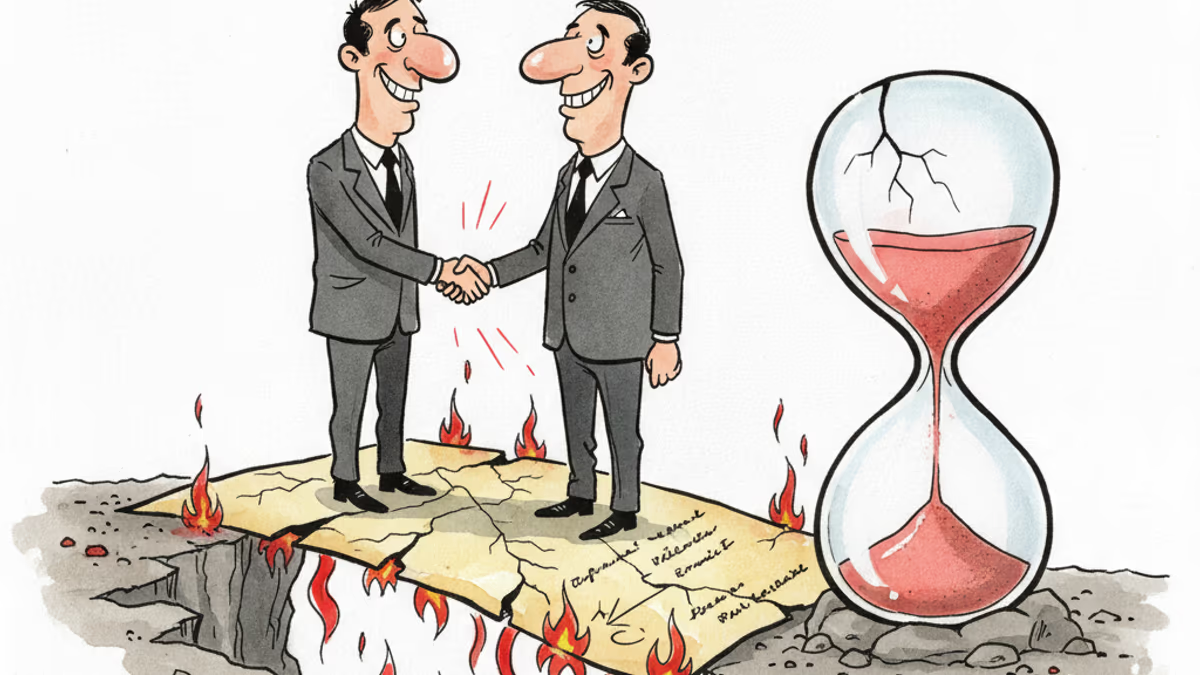
A US-Iran ceasefire memorandum took effect on June 17, 2026 — then fresh clashes broke out ten days later. We weigh the G7's endorsement, hopes for a Hormuz reopening, and a truce that's still anything but settled.
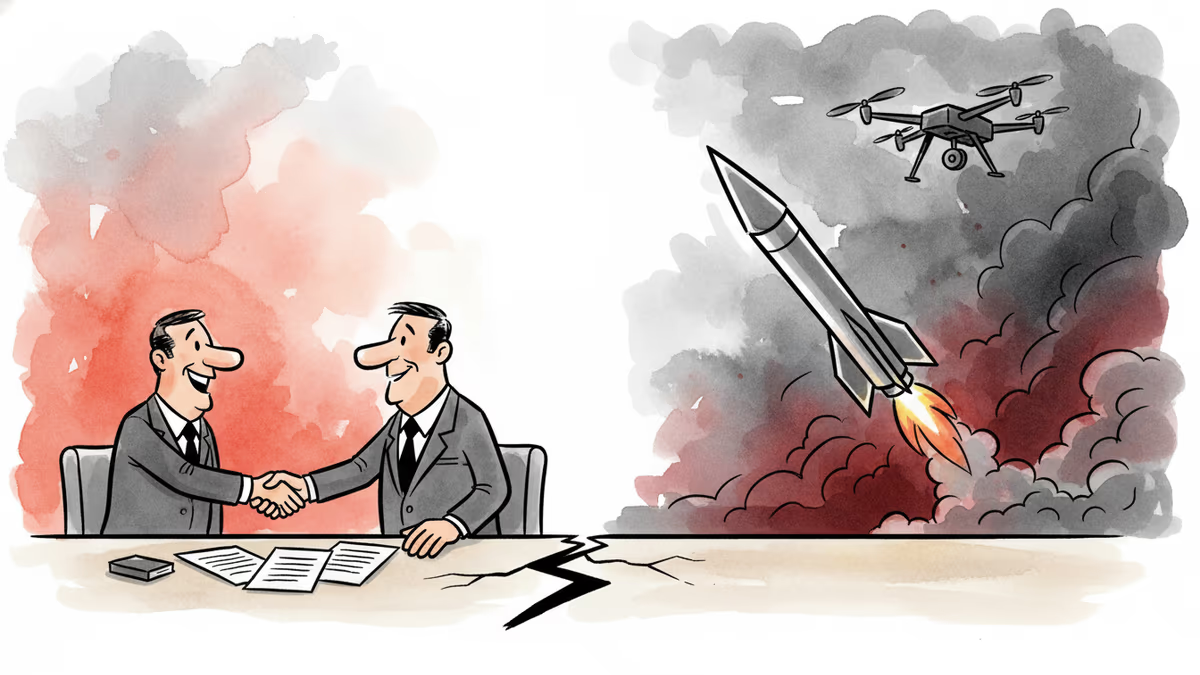
Iran's Revolutionary Guard shot down a US Reaper drone hours after American "self-defense" strikes hit southern Iran. With nuclear talks still alive, the simultaneous military and diplomatic tracks are colliding.
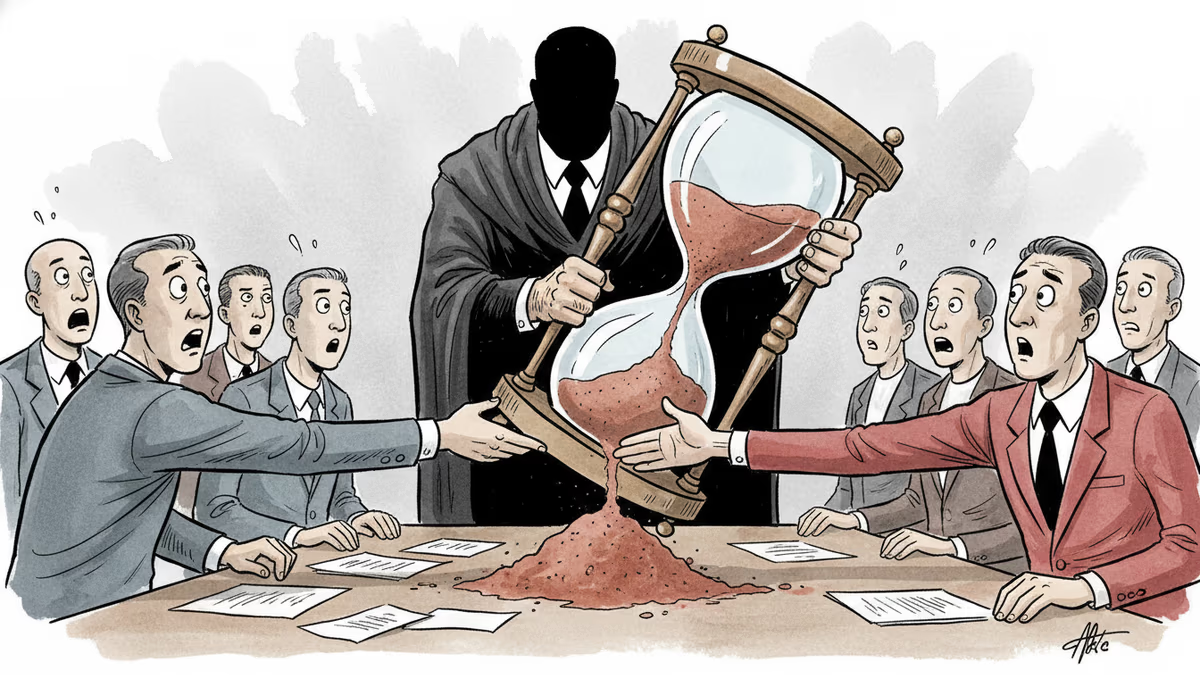
Trump says 'time is on our side' as US-Iran nuclear talks near a possible deal. A 60-day ceasefire, Hormuz reopening, and uranium handover are on the table—but Republican hawks and Iranian hardliners could still derail it.
Trump says a US-Iran nuclear deal is 'largely negotiated.' Iran calls it a 'Persian-style peace.' Both sides claim victory. Here's what's actually at stake.
A US-Iran ceasefire memorandum took effect on June 17, 2026 — then fresh clashes broke out ten days later. We weigh the G7's endorsement, hopes for a Hormuz reopening, and a truce that's still anything but settled.
Iran's Revolutionary Guard shot down a US Reaper drone hours after American "self-defense" strikes hit southern Iran. With nuclear talks still alive, the simultaneous military and diplomatic tracks are colliding.
Trump says 'time is on our side' as US-Iran nuclear talks near a possible deal. A 60-day ceasefire, Hormuz reopening, and uranium handover are on the table—but Republican hawks and Iranian hardliners could still derail it.
Trump says a US-Iran nuclear deal is 'largely negotiated.' Iran calls it a 'Persian-style peace.' Both sides claim victory. Here's what's actually at stake.
Thoughts
Share your thoughts on this article
Sign in to join the conversation