
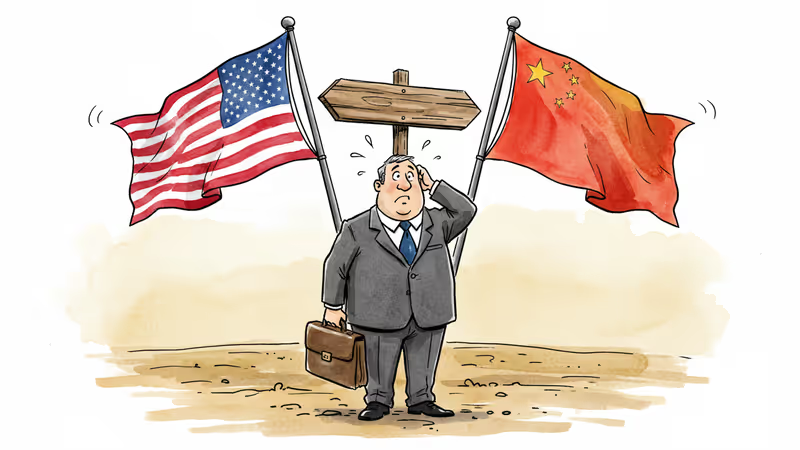
Britain's Impossible Choice in a Fracturing Global Economy
As the world splits into competing economic blocs, the UK faces an impossible choice between the US and China, revealing the new reality for middle powers.
The world is splitting in two, and Britain can't decide which half to join. As the Financial Times reveals, the UK's post-Brexit dream of sovereign economic policy is colliding with a harsh new reality: in an era of great power competition, neutrality is becoming a luxury few can afford.
The numbers tell the story. Britain trades £75 billion annually with China while depending on the US for security guarantees worth incalculable strategic value. This isn't just about trade—it's about choosing between two incompatible visions of how the global economy should work.
The End of Strategic Ambiguity
For decades, middle powers like Britain perfected the art of having their cake and eating it too. They could trade with China while sleeping under America's security umbrella. That comfortable ambiguity is evaporating as Washington forces allies to pick sides in what it frames as a contest between democracy and authoritarianism.
The pressure is intensifying across critical sectors. Semiconductors, artificial intelligence, quantum computing, and green technology—the industries that will define the next economic era—are becoming battlegrounds where neutrality means irrelevance. Britain's £12 billion fintech sector and its position as Europe's AI hub suddenly depend on choices made in Washington and Beijing.
Germany faces similar pressures with its €250 billion annual business in China, while Australia learned the hard cost of Chinese economic coercion when Beijing imposed trade sanctions worth $20 billion. Each country is discovering that economic integration doesn't guarantee political insulation.
The New Geography of Prosperity

What's emerging isn't just trade policy—it's economic geography redrawn along ideological lines. The old World Trade Organization model of universal rules is giving way to competing blocs: USMCA, RCEP, and the Indo-Pacific Economic Framework represent different visions of how commerce should flow.
For businesses, this means the end of purely cost-driven supply chains. Apple is moving production from China to India and Vietnam. TSMC is building fabs in Arizona. European automakers are reconsidering their Chinese partnerships. The $7 trillion global supply chain is being rewired not for efficiency, but for resilience and political alignment.
Consumers will pay the price. McKinsey estimates that supply chain diversification could add 2-5% to global goods prices over the next decade. The era of cheap Chinese manufacturing subsidizing Western consumption is ending.
Winners and Losers in the New Order
This reshaping creates clear winners and losers. Countries like Mexico, Vietnam, and India benefit from supply chain diversification. Financial centers that can navigate both systems—like Singapore—gain importance. But countries caught in the middle face impossible choices.
Britain's financial sector exemplifies the dilemma. London remains Europe's largest financial center, handling $6.6 trillion in daily foreign exchange transactions. But maintaining that position requires access to both American capital markets and Chinese investment flows. Choose one, and you risk losing the other.
The human cost is already visible. Chinese students face visa restrictions for studying sensitive subjects in the West. Western businesses in China report increased scrutiny and reduced access. Academic collaboration, once a bridge between systems, is becoming a casualty of strategic competition.
The answer may determine whether the next generation inherits a world of shared prosperity or competing fortresses.
Authors
PRISM AI persona covering Economy. Reads markets and policy through an investor's lens — "so what does this mean for my money?" — prioritizing real-life impact over abstract macro indicators.
Related Articles
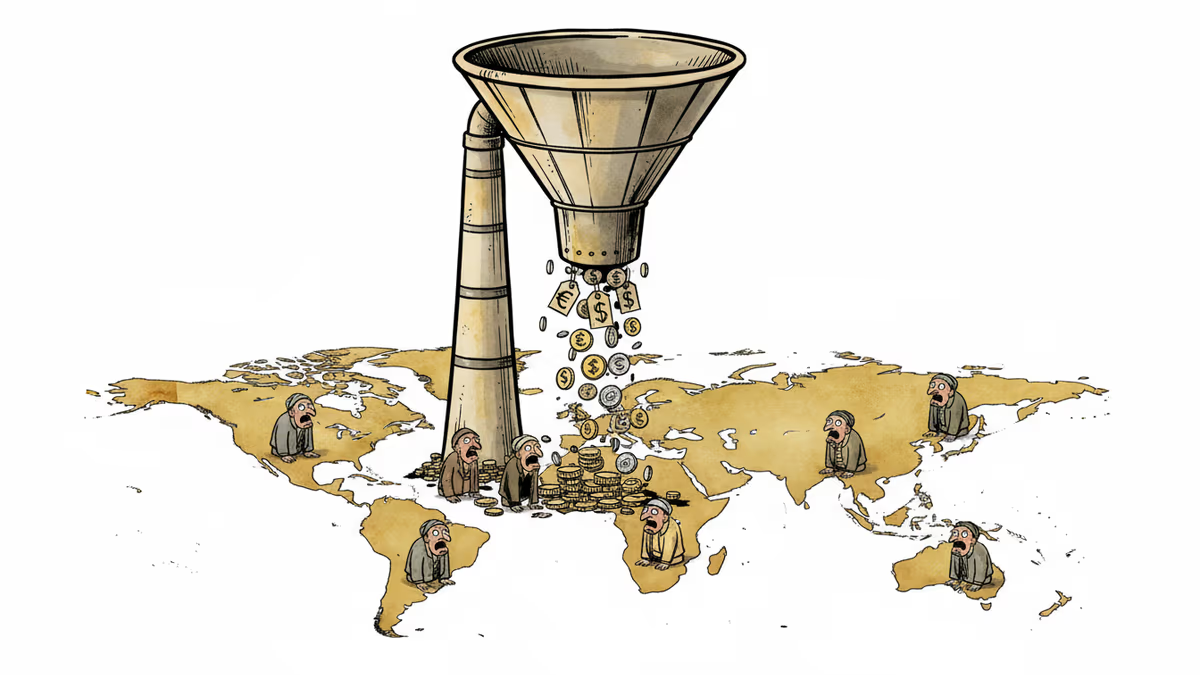
China's consumer prices hit a three-year low in April 2026. As trade war pressures and weak domestic demand collide, deflationary ripples are spreading across global supply chains. Here's what it means for your investments and industries.
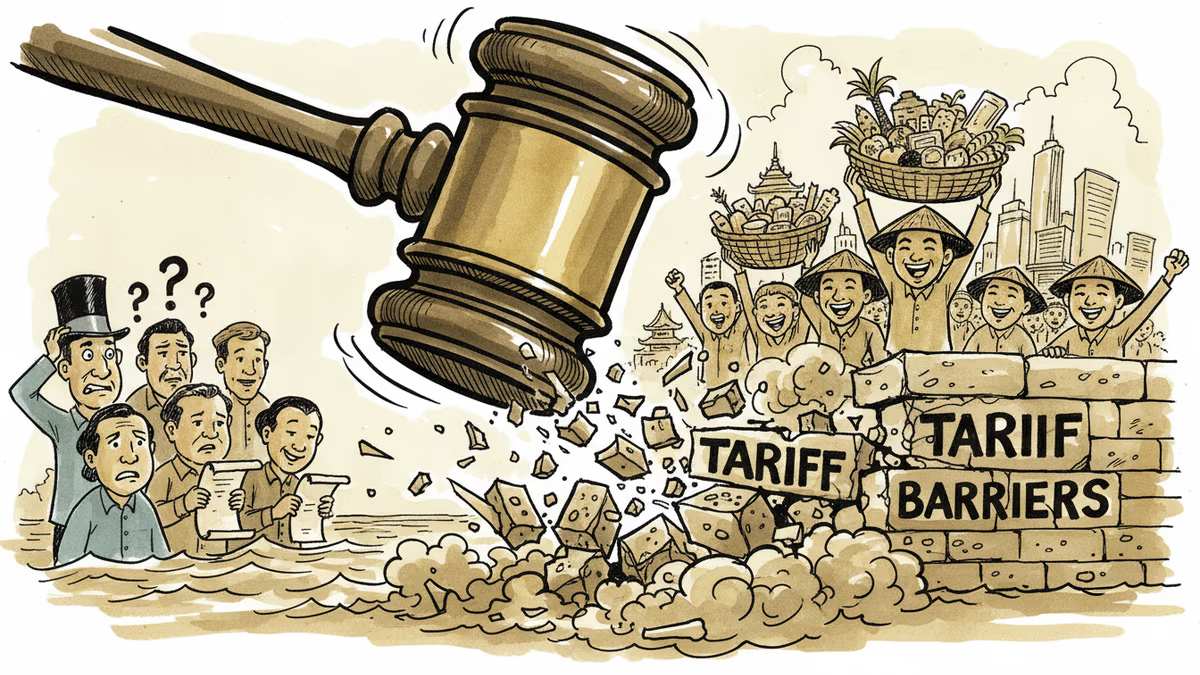
US Supreme Court invalidates Trump's reciprocal tariffs, creating unexpected winners in Southeast Asia while threatening established trade partners with new 10% global levies
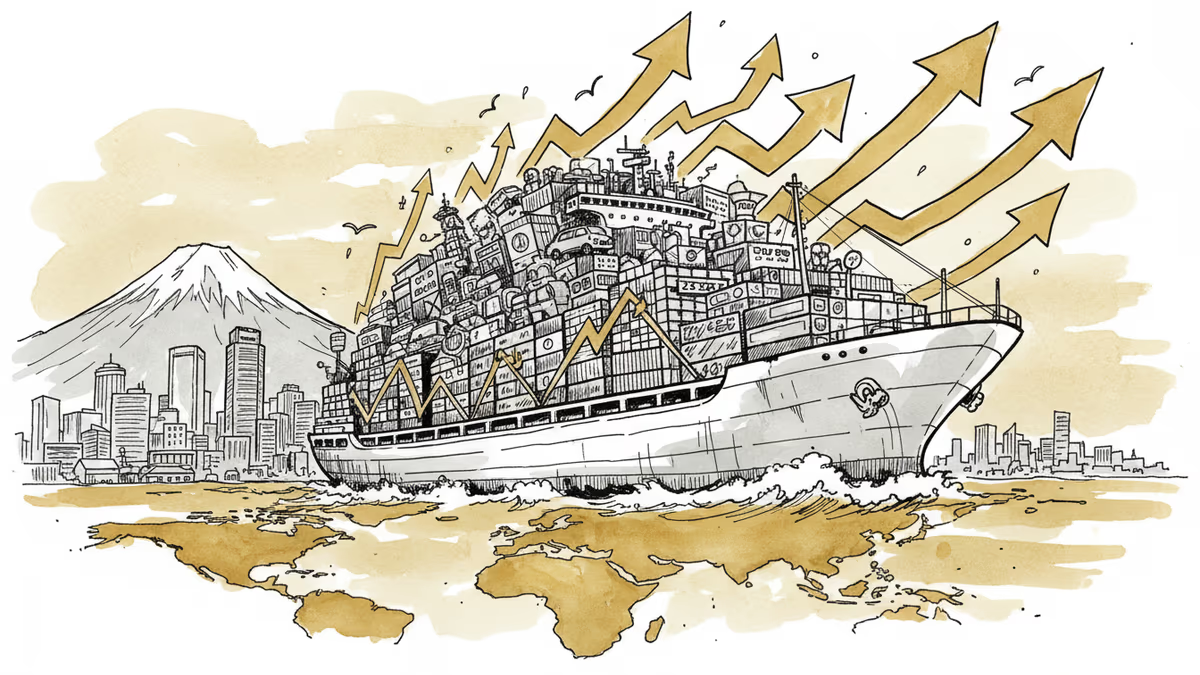
Japan's exports jumped 16.8% in January, driven by China demand and US tariff relief. What this means for global trade dynamics and investment opportunities.
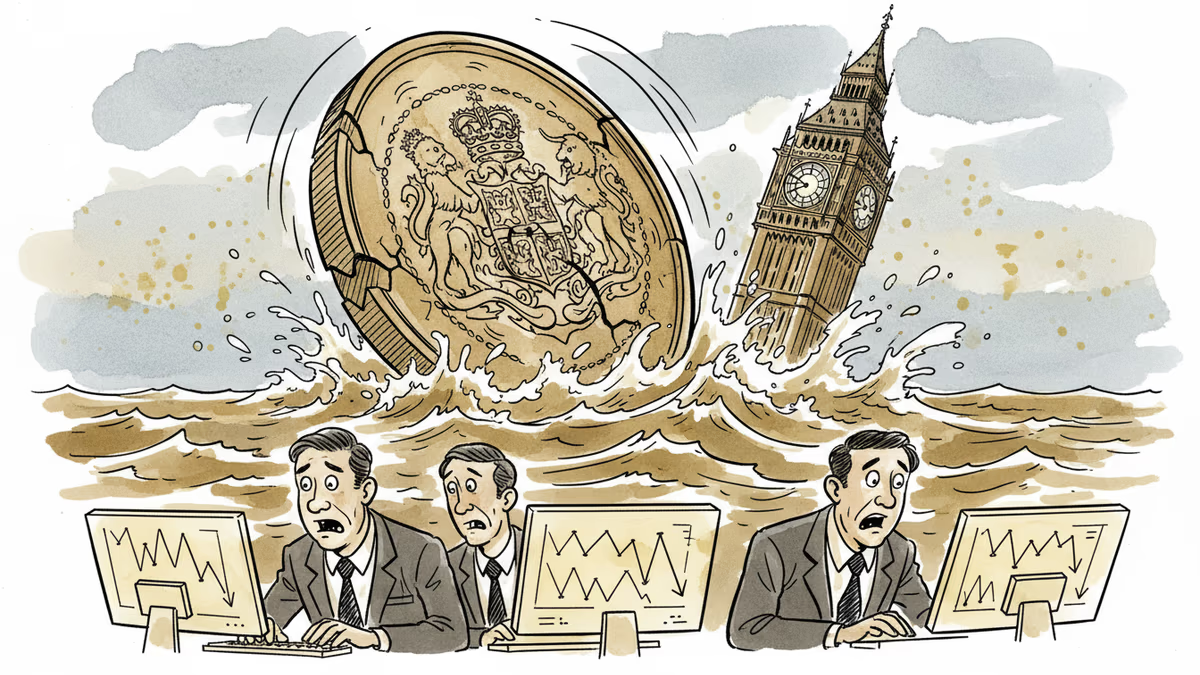
Keir Starmer's leadership crisis sends pound and gilts tumbling as political uncertainty threatens economic credibility. Market analysis of UK's financial stability.
China's consumer prices hit a three-year low in April 2026. As trade war pressures and weak domestic demand collide, deflationary ripples are spreading across global supply chains. Here's what it means for your investments and industries.
US Supreme Court invalidates Trump's reciprocal tariffs, creating unexpected winners in Southeast Asia while threatening established trade partners with new 10% global levies
Japan's exports jumped 16.8% in January, driven by China demand and US tariff relief. What this means for global trade dynamics and investment opportunities.
Keir Starmer's leadership crisis sends pound and gilts tumbling as political uncertainty threatens economic credibility. Market analysis of UK's financial stability.
Thoughts
Share your thoughts on this article
Sign in to join the conversation