
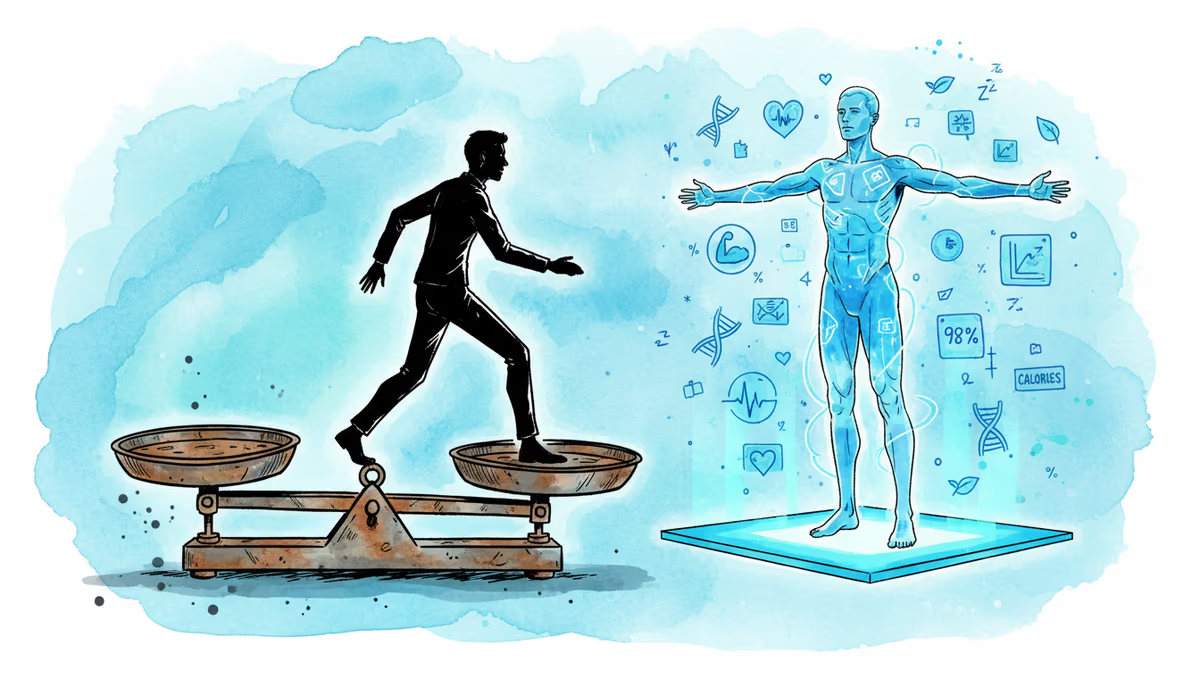
The Man Who Lost 100 Pounds Without Ozempic
How digital twin technology is helping people manage diabetes and obesity without expensive GLP-1 drugs, and what it means for the future of healthcare.
376 pounds to 275 pounds in less than a year. Rodney Buckley, the 55-year-old mayor of Third Lake, Illinois, achieved what many consider impossible: massive weight loss without the help of Ozempic or other GLP-1 drugs. His secret weapon? A digital replica of his own metabolism.
While Americans spend $1,000 to $1,500 monthly on weight-loss medications, Buckley chose a different path through Twin Health—a startup that creates virtual copies of users' metabolic systems using AI and wearable devices.
The $18,000 Annual Problem
Employers are feeling the pinch. With GLP-1 drugs costing up to $18,000 per employee annually, companies like asset manager Blackstone are exploring alternatives. Twin Health's approach seems almost mundane by comparison: send users a kit with glucose monitors, blood pressure cuffs, smart scales, and fitness trackers. But the magic happens in the AI analysis.
The app doesn't just track—it predicts. It tells Buckley that swapping his frozen breakfast sandwich for a low-carb wrap will keep his blood sugar stable for three hours longer. It suggests a 10-minute walk after lunch will prevent an afternoon glucose spike. "When I started, I could barely walk a mile. Now I'm doing 6.5 miles every morning," Buckley says.
Cleveland Clinic's Shocking Results
Dr. Kevin Pantalone was skeptical when Twin Health approached Cleveland Clinic. "We've struggled to implement lifestyle changes effectively," he admits. His 12-month study of 150 diabetic patients revealed something remarkable:

71% of Twin users achieved target blood sugar levels with fewer medications, compared to just 2% in the control group. Even more striking: Twin users reduced their GLP-1 dependency from 41% to 6%, while the control group's usage actually increased from 52% to 63%.
"One participant lost 25 pounds, went off all diabetes medications, and went hiking for the first time in 10 years," Pantalone notes.
The Privacy Trade-Off
But success comes with strings attached. Users must log every meal, accept constant monitoring, and trust an AI system with intimate health data. While companies receive only anonymized reports, the granular personal data raises questions about long-term privacy implications.
Some patients who've found success with GLP-1 drugs resist switching, especially given past failures with lifestyle changes. The psychological burden of constant self-monitoring—daily weigh-ins, meal logging, glucose tracking—can be overwhelming.
Beyond Weight Loss: A Systemic Shift
Dr. Bernard Zinman from the University of Toronto sees bigger implications: "If more people had access to this technology early in diabetes development, they could potentially reverse their condition or prevent it entirely."
The timing matters. As GLP-1 shortages persist and insurance coverage varies, digital alternatives are gaining traction. Twin Health operates on a pay-for-outcomes model—they only get paid when users achieve specific health improvements.
Yet questions remain about scalability and equity. Will this technology be accessible to lower-income populations who need it most? Can it work without the intensive coaching and support that Twin provides?
Authors
Related Articles
TriZetto confirms massive health data breach affecting 3.4 million people went undetected for nearly a year, exposing critical vulnerabilities in healthcare IT infrastructure.
DavaIndia's security flaw exposed customer prescription data and drug control functions, highlighting critical vulnerabilities in online healthcare platforms.
A groundbreaking JAMA study reveals that high-deductible health insurance plans significantly reduce cancer survival rates, exposing the deadly cost of trying to save money on healthcare.

The US FDA has approved the first-ever pill form of Novo Nordisk's blockbuster weight-loss drug, Wegovy. Showing comparable results to the injection in trials, the daily pill is set to launch in January 2026.
TriZetto confirms massive health data breach affecting 3.4 million people went undetected for nearly a year, exposing critical vulnerabilities in healthcare IT infrastructure.
DavaIndia's security flaw exposed customer prescription data and drug control functions, highlighting critical vulnerabilities in online healthcare platforms.
A groundbreaking JAMA study reveals that high-deductible health insurance plans significantly reduce cancer survival rates, exposing the deadly cost of trying to save money on healthcare.
The US FDA has approved the first-ever pill form of Novo Nordisk's blockbuster weight-loss drug, Wegovy. Showing comparable results to the injection in trials, the daily pill is set to launch in January 2026.
Thoughts
Share your thoughts on this article
Sign in to join the conversation