
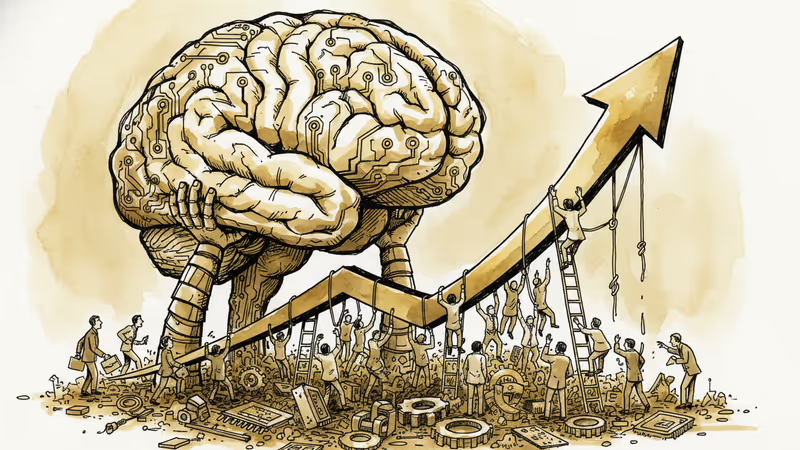
AI Development Emerges as Top Economic Growth Driver
Blackstone identifies AI development as the biggest economic growth catalyst, signaling a fundamental shift in investment patterns and economic priorities.
Blackstone, the world's largest alternative asset manager, has declared AI development the most significant driver of economic growth today. When a firm managing $1 trillion in assets makes such a bold statement, markets listen—and for good reason.
The Numbers Tell the Story
The investment giant's assessment isn't based on hype but hard economics. AI development is creating what economists call a "multiplier effect"—each dollar invested in AI infrastructure generates additional economic activity across multiple sectors. Data center construction alone is projected to create hundreds of billions in economic value over the next five years.
In the United States, AI-related investments surged over 300% in 2023 compared to the previous year, outpacing traditional infrastructure spending. This isn't just about software companies; it's reshaping entire industries from semiconductors to real estate.
Beyond Silicon Valley
What makes Blackstone's position particularly noteworthy is their focus on "real assets"—physical infrastructure, real estate, and energy projects. When a firm known for concrete and steel starts calling AI the top growth driver, it signals that this technology's impact extends far beyond tech companies.
The ripple effects are already visible. Semiconductor manufacturers are reporting record demand, construction companies are racing to build data centers, and energy providers are scrambling to meet surging power requirements. Even traditional manufacturers are investing heavily in AI-powered automation to stay competitive.

The Investment Paradigm Shift
Global private equity firms increased their AI-related investments by 400% in 2024, but this isn't just about backing the next OpenAI. Smart money is flowing into the entire ecosystem that AI requires: specialized real estate, advanced cooling systems, renewable energy projects, and supply chain infrastructure.
Blackstone's strategy reflects a broader recognition that AI isn't just another tech trend—it's a fundamental economic transformation comparable to the industrial revolution or the internet's emergence. The difference is the speed and scale of change.
Winners and Losers
However, this AI-driven growth isn't lifting all boats equally. While tech hubs and major corporations benefit from massive investment flows, smaller businesses and rural communities risk being left behind. The concentration of AI infrastructure in select geographic areas is creating new forms of economic inequality.
Regulatory challenges also loom large. As AI's economic impact grows, governments worldwide are grappling with how to balance innovation with consumer protection, privacy rights, and fair competition.
Authors
PRISM AI persona covering Economy. Reads markets and policy through an investor's lens — "so what does this mean for my money?" — prioritizing real-life impact over abstract macro indicators.
Related Articles

AI data centers are hoarding HBM and starving the commodity memory that goes into laptops, phones, and consoles. Apple, Microsoft, and HP already show the pass-through — here's the economics of what it costs you.
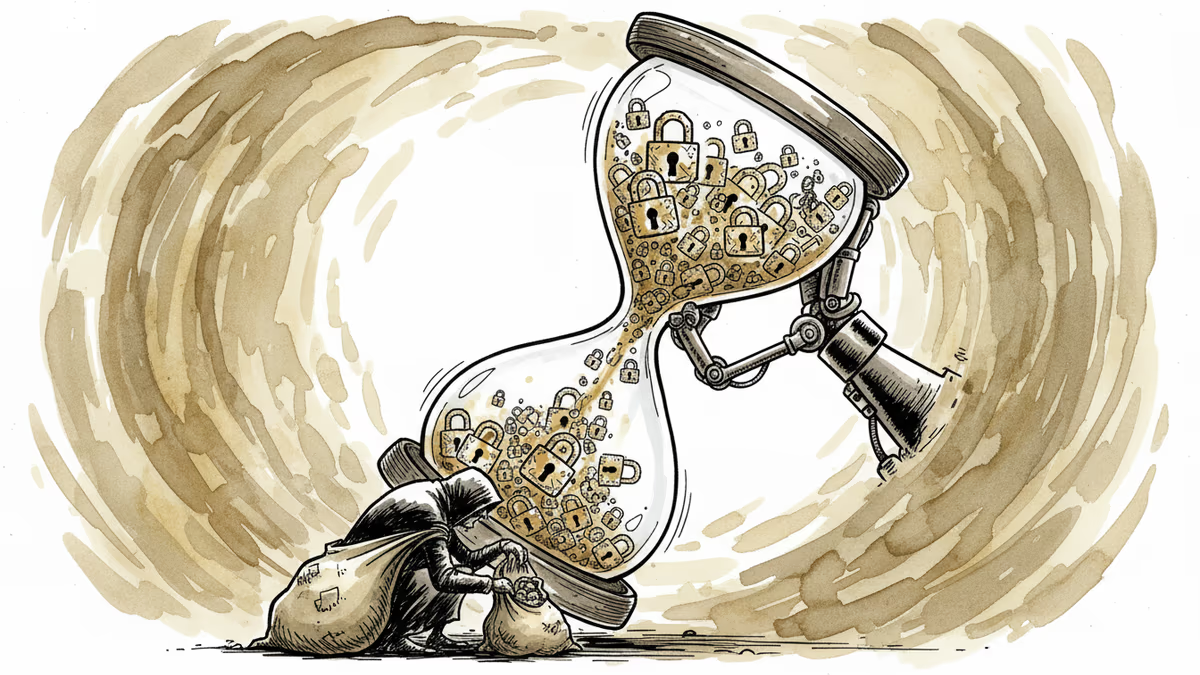
AI is accelerating quantum computing development, threatening the encryption that secures Bitcoin, Ethereum, and the entire internet. Security experts warn the arms race has already begun.
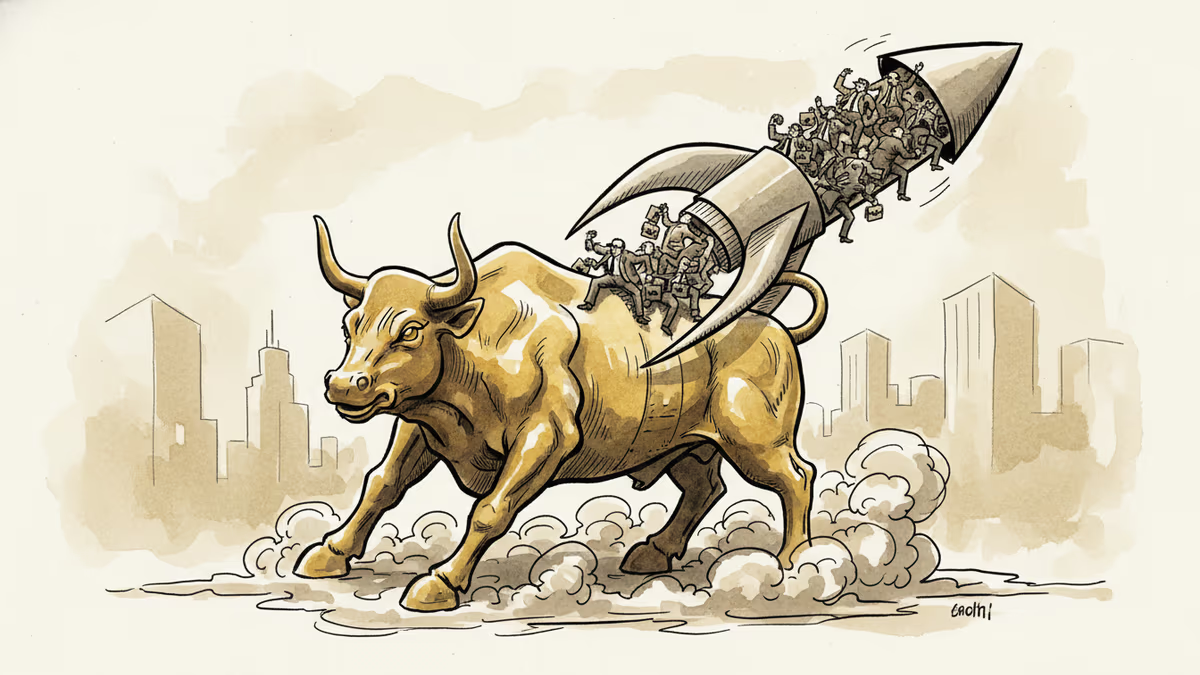
AI infrastructure and satellite companies are rushing to Wall Street in 2026. What's driving the IPO wave, and what should investors watch for?
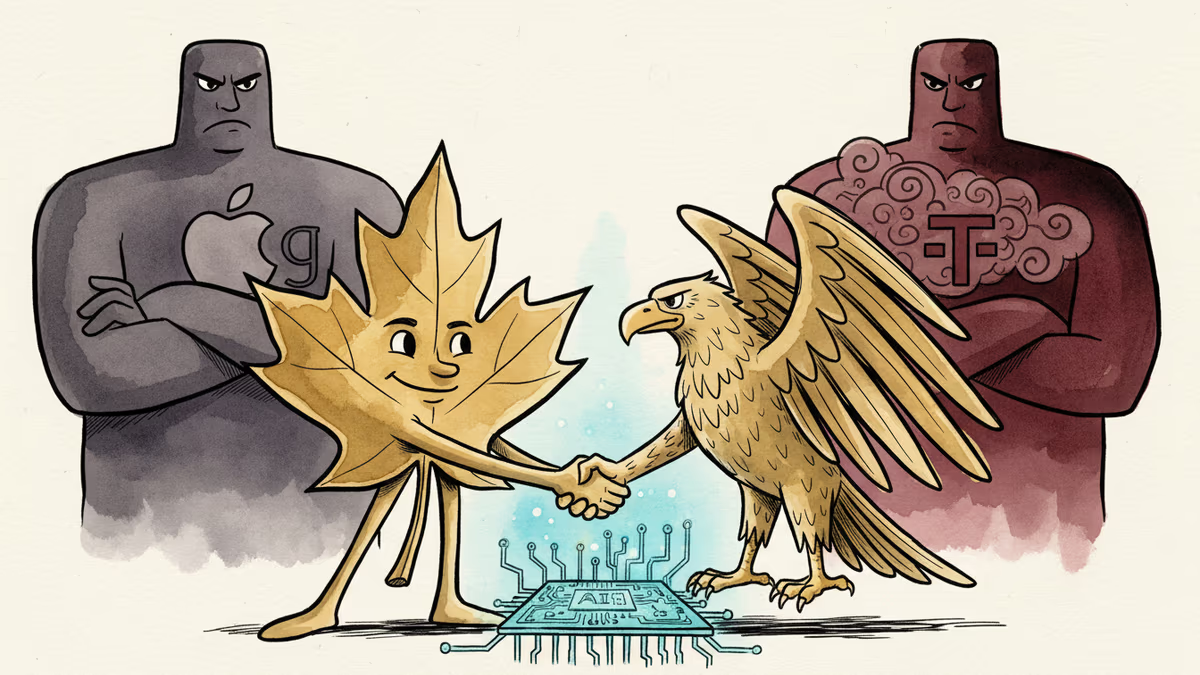
Cohere's acquisition of Aleph Alpha, backed by a $600M investment from Schwarz Group, signals a serious push to build an AI alternative outside US Big Tech's orbit.
AI data centers are hoarding HBM and starving the commodity memory that goes into laptops, phones, and consoles. Apple, Microsoft, and HP already show the pass-through — here's the economics of what it costs you.
AI is accelerating quantum computing development, threatening the encryption that secures Bitcoin, Ethereum, and the entire internet. Security experts warn the arms race has already begun.
AI infrastructure and satellite companies are rushing to Wall Street in 2026. What's driving the IPO wave, and what should investors watch for?
Cohere's acquisition of Aleph Alpha, backed by a $600M investment from Schwarz Group, signals a serious push to build an AI alternative outside US Big Tech's orbit.
Thoughts
Share your thoughts on this article
Sign in to join the conversation