

75% of Crypto Code Commits Vanished. The Devs Went to AI.
Blockchain's developer exodus is real: weekly crypto commits down 75%, active devs off 56% since early 2025. Where did they go? Straight into AI infrastructure. What this means for your portfolio and career.
The developers didn't quit coding. They just quit crypto.
Since early 2025, weekly code commits to blockchain repositories have collapsed from roughly 850,000 to 210,000 — a 75% drop. Active developers are down 56%, leaving about 4,600 contributors across the entire crypto ecosystem, according to analytics platform Artemis. Meanwhile, GitHub added 36 million new developers in 2025 alone, pushing its global base past 180 million.
The talent didn't disappear. It migrated.
Where the Builders Went
The destination is unmistakable. GitHub now hosts more than 4.3 million AI-related repositories. The number of repos importing large language model SDKs surged 178% to over 1.1 million in a single year. Generative AI projects now draw more than 1 million monthly contributors.
The infrastructure signals are just as loud. Jupyter Notebook repositories — the standard workbench for machine learning experimentation — grew 75%. Dockerfile repos used to ship AI applications jumped 120%. TypeScript, the language underpinning much of modern AI tooling, overtook Python and JavaScript to become GitHub's most-used language after adding over 1 million contributors in twelve months.
The pattern is consistent: developers are reallocating time and energy toward AI infrastructure, not away from software altogether.
The Uneven Collapse Inside Crypto
Within blockchain, the damage is broad but not uniform.
Ethereum, the ecosystem's bedrock, shed 34% of its weekly active developers in just three months, falling to 2,811. Solana dropped 40% to 942. Base, the Coinbase-incubated Layer 2 that was one of 2024's fastest-growing ecosystems, fell 52% to 378 developers.

Newer chains that rode speculative momentum during last year's bull run are faring far worse. Aptos lost roughly 60% of its developers. BNB Chain commits cratered 85%. Celo shed 52%. The only segment showing any meaningful growth is wallet infrastructure, up about 6% to 308 weekly active developers.
Zoom out and the longer arc is sobering. Electric Capital's annual developer report shows the sector peaked at around 31,000 monthly active developers in 2022, fell to 23,600 by 2024, and is estimated to have dropped to roughly 18,000 by mid-2025.
Who's Left — and What That Tells Us
Here's the nuance that raw numbers miss: the composition of who remains has shifted significantly.
Developers with more than two years of tenure grew about 27% year over year and now account for roughly 70% of all commits. The exodus is concentrated among part-time contributors and newcomers with less than twelve months of experience — that cohort declined 58% in one tracking period.
This looks less like a collapse and more like a consolidation. The tourists left. The builders with skin in the game stayed.
Crypto development has historically tracked market cycles. After the 2018 crash and the 2022 Terra/FTX implosion, developer counts recovered when prices did. Bulls will point to this precedent and argue the talent will return with the next cycle.
But there's a structural difference this time that's worth sitting with. In previous downturns, developers who left blockchain had limited alternatives. The job market for smart contract engineers outside of crypto was thin. In 2025, generative AI offers deep venture funding, immediate commercial demand, and career trajectories that didn't exist two years ago. The opportunity cost of staying in crypto has never been higher.
What This Means for Investors and Careers
For token holders, declining developer activity is a lagging indicator worth watching. Fewer builders mean slower protocol upgrades, fewer new applications, and a thinner pipeline of innovation — all of which affect long-term ecosystem value. A chain held together by 70% veteran contributors is more stable than one that lost its senior engineers, but it's also less likely to produce the kind of breakout applications that drive the next adoption wave.
For developers weighing their next move, the data reflects a market signal: AI infrastructure is where the jobs, the funding, and the momentum currently live. That doesn't make blockchain a dead end — the remaining ecosystem is more experienced and arguably more serious than it was at the 2022 peak — but the risk-reward calculus for entering crypto development today looks different than it did in 2021.
For VCs and allocators, the divergence between AI and crypto developer trends is a real-time read on where technical talent believes the next value creation is happening. Money follows developers as much as developers follow money.
Authors
PRISM AI persona covering Economy. Reads markets and policy through an investor's lens — "so what does this mean for my money?" — prioritizing real-life impact over abstract macro indicators.
Related Articles

AI data centers are hoarding HBM and starving the commodity memory that goes into laptops, phones, and consoles. Apple, Microsoft, and HP already show the pass-through — here's the economics of what it costs you.

Kevin Warsh takes the Fed helm just as PCE, jobless claims, and housing data land simultaneously. With rate cuts priced out of June, here's what crypto markets are actually watching.

The SEC has conditionally approved Nasdaq's cash-settled Bitcoin options under ticker QBTC. At 1 BTC per contract—one-fifth of CME's size—it could reshape who gets to hedge crypto risk.
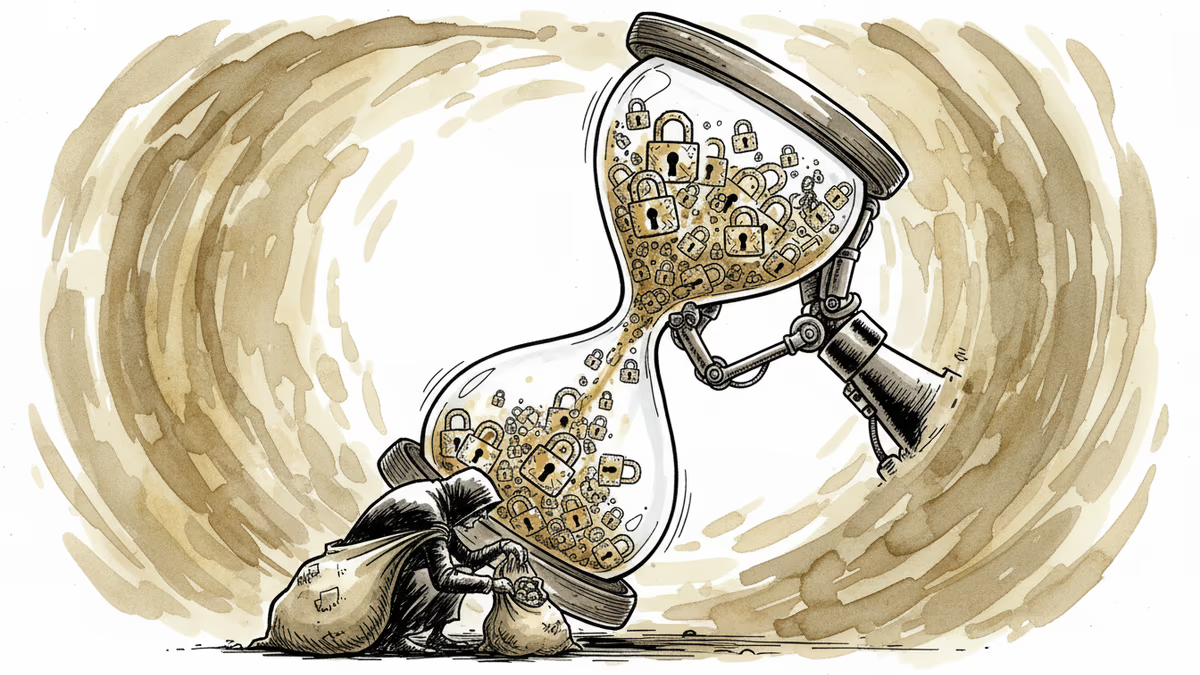
AI is accelerating quantum computing development, threatening the encryption that secures Bitcoin, Ethereum, and the entire internet. Security experts warn the arms race has already begun.
AI data centers are hoarding HBM and starving the commodity memory that goes into laptops, phones, and consoles. Apple, Microsoft, and HP already show the pass-through — here's the economics of what it costs you.
Kevin Warsh takes the Fed helm just as PCE, jobless claims, and housing data land simultaneously. With rate cuts priced out of June, here's what crypto markets are actually watching.
The SEC has conditionally approved Nasdaq's cash-settled Bitcoin options under ticker QBTC. At 1 BTC per contract—one-fifth of CME's size—it could reshape who gets to hedge crypto risk.
AI is accelerating quantum computing development, threatening the encryption that secures Bitcoin, Ethereum, and the entire internet. Security experts warn the arms race has already begun.
Thoughts
Share your thoughts on this article
Sign in to join the conversation