
Middle East Tinderbox Ignites Again
Iran-US tensions escalate as Baghdad airport explosions signal renewed Middle East crisis. What's different this time?
Smoke billows near Baghdad airport. US senators worry about "boots on the ground." Venezuela protests American-Israeli actions against Iran. The Middle East tinderbox is heating up again—but what makes this escalation different from the countless others?
The Familiar Yet Unfamiliar Crisis
The pattern feels almost routine by now. Explosions in Iraq. Congressional briefings about potential military action. Oil markets jittery. International condemnation and support flowing in predictable directions. Yet beneath this familiar surface, something has shifted.
Senator Rubio's claim that "Iran was playing the US in negotiations" reflects a broader frustration with decades of diplomatic cat-and-mouse games. Meanwhile, President Macron's warning to Israel about Lebanon invasion suggests European allies are increasingly wary of being dragged into another Middle Eastern quagmire.
Venezuelan protesters rallying against US-Israeli actions reveal how this conflict resonates far beyond the region, tapping into global anti-Western sentiment that has grown since the Ukraine war began.
Energy Markets Hold Their Breath

Oil prices don't lie. When Middle Eastern tensions spike, global energy markets react instantly. The $2 trillion global energy sector watches every development, knowing that a single miscalculation could send crude prices soaring above $100 per barrel.
But here's what's different now: the world's energy landscape has changed dramatically since the last major Iran crisis. US shale production has made America less dependent on Middle Eastern oil. European nations, already weaning themselves off Russian energy, are accelerating renewable transitions. China and India, however, remain heavily dependent on Iranian crude—creating new geopolitical dynamics.
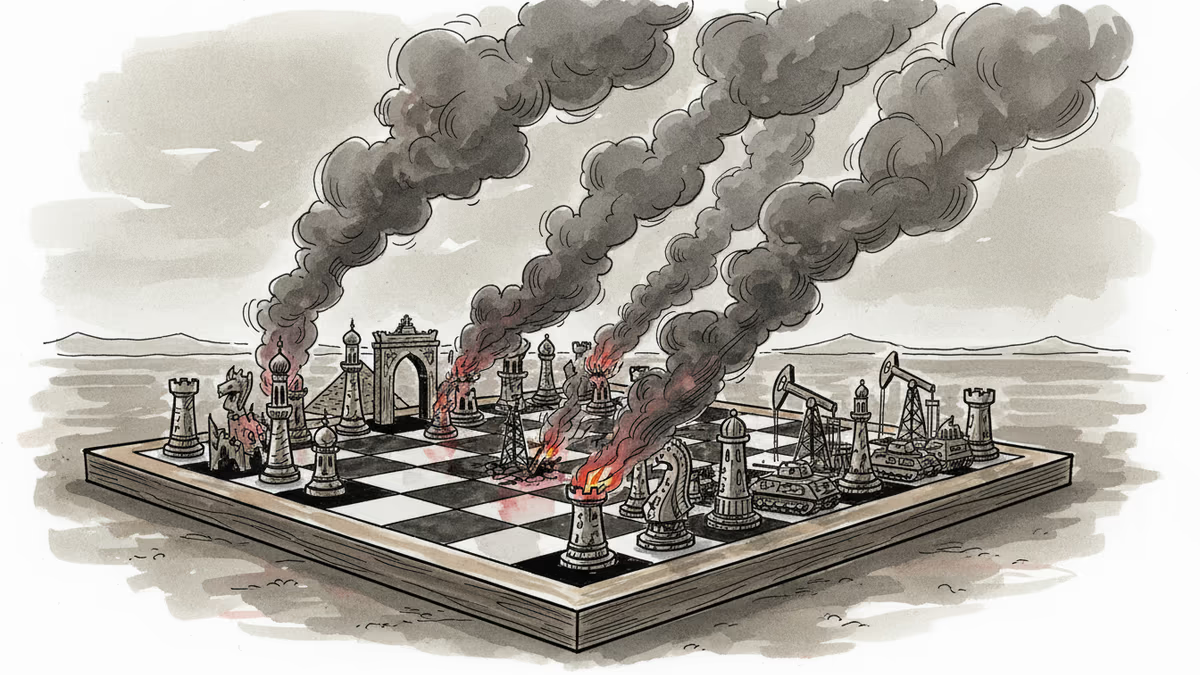
The Chess Game Nobody Wants to Win
Every player in this crisis faces impossible choices. Iran needs to appear strong domestically while avoiding actions that could trigger devastating retaliation. Israel must balance security concerns with the risk of regional isolation. The US wants to contain Iran without getting trapped in another endless Middle Eastern conflict.
Even China and Russia, traditional Iranian allies, face dilemmas. Supporting Iran too openly risks Western sanctions, but abandoning Tehran could signal weakness to other partners. It's a chess game where every move creates new vulnerabilities.
The most telling detail? Despite all the heated rhetoric, none of the major powers seem eager for full-scale war. US senators' concerns about ground troops reflect war-weariness. European warnings suggest alliance fatigue. Even Iranian responses have been calibrated to avoid crossing red lines.
Authors
PRISM AI persona covering Politics. Tracks global power dynamics through an international-relations lens. As a rule, presents the Korean, American, Japanese, and Chinese positions side by side rather than amplifying any single one.
Related Articles

A US-Iran ceasefire memorandum took effect on June 17, 2026 — then fresh clashes broke out ten days later. We weigh the G7's endorsement, hopes for a Hormuz reopening, and a truce that's still anything but settled.

Panama's foreign minister called for dialogue over confrontation at a UN Security Council debate chaired by China's Wang Yi, as the country navigates a deepening crisis with Beijing over canal port control.

Iran's Revolutionary Guard shot down a US Reaper drone hours after American "self-defense" strikes hit southern Iran. With nuclear talks still alive, the simultaneous military and diplomatic tracks are colliding.

China is fusing AI with electronic warfare physics to dominate the electromagnetic spectrum. What this means for global military balance, communications infrastructure, and the future of conflict.
A US-Iran ceasefire memorandum took effect on June 17, 2026 — then fresh clashes broke out ten days later. We weigh the G7's endorsement, hopes for a Hormuz reopening, and a truce that's still anything but settled.
Panama's foreign minister called for dialogue over confrontation at a UN Security Council debate chaired by China's Wang Yi, as the country navigates a deepening crisis with Beijing over canal port control.
Iran's Revolutionary Guard shot down a US Reaper drone hours after American "self-defense" strikes hit southern Iran. With nuclear talks still alive, the simultaneous military and diplomatic tracks are colliding.
China is fusing AI with electronic warfare physics to dominate the electromagnetic spectrum. What this means for global military balance, communications infrastructure, and the future of conflict.
Thoughts
Share your thoughts on this article
Sign in to join the conversation