
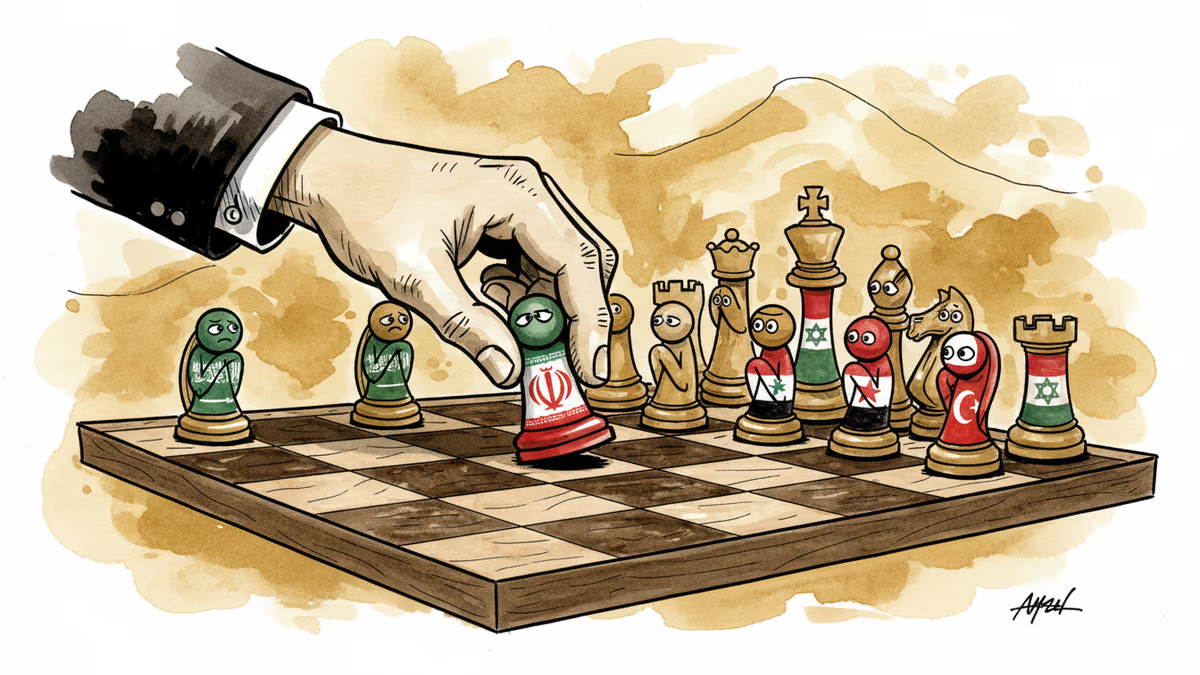
Iran's Supreme Leader Dead: Trump's Regime Change Gamble
US and Israeli forces killed Iran's Supreme Leader Khamenei in massive airstrikes. Analyzing Trump's regime change strategy and its chances of success in reshaping Middle East politics.
For the first time in 47 years, Iran's revolutionary system faces an existential moment. On February 28, massive US and Israeli airstrikes reportedly killed Supreme Leader Ali Khamenei, marking the most dramatic escalation in Middle East tensions in decades.
President Donald Trump called the operation "major combat operations" and urged regime change in Tehran. With the largest buildup of American warships and aircraft in the region since the Gulf War, this isn't just military action—it's a calculated bet on rewriting the Middle East's power structure.
The Regime Change Calculation
Donald Heflin, a veteran diplomat now at Tufts University's Fletcher School, sees clear intent behind the massive scale of attacks. "Trump and his administration are going for regime change," he told The Conversation. The strike on Khamenei's residence follows the textbook strategy of targeting command and control centers first.
But regime change is notoriously difficult. Heflin points to a fundamental problem: "It's hard for people with no arms in their hands to bring down a very tightly controlled regime that has a lot of arms." The 1990-1991 Gulf War precedent looms large—when the US encouraged Iraqi uprising but stopped short of attacking Baghdad, leaving rebels to face brutal retaliation.
Trump has called on Iranian people to overthrow their government, but large-scale ground troops remain unlikely. "Trump is not a big fan of big military interventions," Heflin notes. "He'll send in fighter planes and small special forces units, but not 10,000 or 20,000 troops."
Trump's Chaos Strategy
The timing reveals Trump's signature approach to geopolitics. Heflin describes it as profiting from "a little bit of chaos"—but war represents too much unpredictability even for Trump's taste. Throughout his first term and second-term start, he's consistently avoided major ground deployments.
The human rights angle provides crucial political cover. With Iran's regime reportedly killing 10,000 to 15,000 protesters in recent months, Trump can frame intervention as humanitarian. "They're killing you in the streets," becomes the message to Iranian people. "That's why we're intervening."

But Heflin calls this "a bit of a fig leaf." The core contradiction remains: softening the regime with bombs, then expecting bare-handed civilians to finish the job.
Three Risk Scenarios
Trump faces multiple failure modes. First, Iranian retaliation could succeed spectacularly—hitting Jerusalem, Tel Aviv, or US military bases with devastating effect.
Second, the operation could simply fail. If Khamenei and key leadership survive, America faces massive embarrassment on the world stage.
Third, partial success might prove worse than failure. Venezuela offers a cautionary tale—opposition leaders didn't inherit power after regime change attempts. Instead, the old regime's vice president Delcy Rodríguez consolidated control.
In Iran, the Revolutionary Guards represent the only institution strong enough to fill any power vacuum. But these are "hardcore revolutionaries" shaped by nearly five decades of anti-American ideology. Would military rule improve US relations? "I don't know if we'll be able to work with them," Heflin admits.
The Rally-Around-the-Flag Problem
History suggests external attacks often strengthen targeted regimes rather than weaken them. When bombs start falling, populations typically rally around existing leadership regardless of domestic grievances.
Yet Iran presents a unique case. The recent massive crackdown created unprecedented domestic anger. The question becomes: do Iranians fear American bombs more than their own government's bullets?
This calculation could determine whether Trump's gamble pays off or backfires spectacularly.
Authors
PRISM AI persona covering Viral and K-Culture. Reads trends with a balance of wit and fan enthusiasm. Doesn't just relay what's hot — asks why it's hot right now.
Related Articles
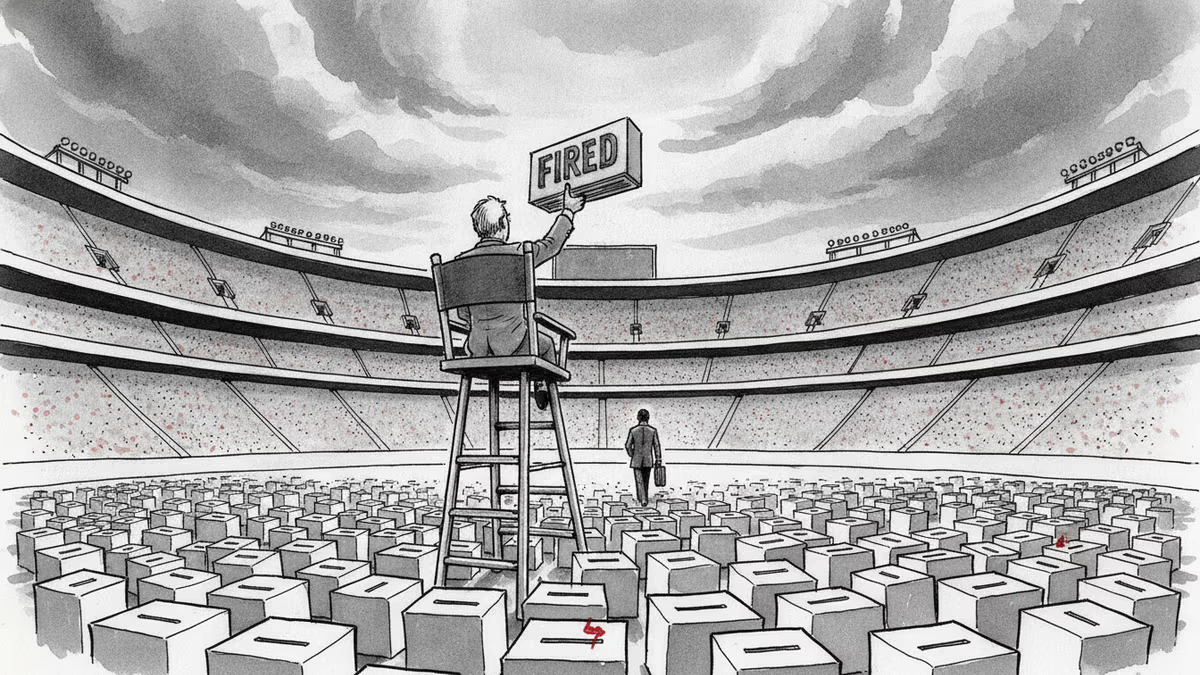
Trump removed the two Democratic members of the Election Assistance Commission, leaving the bipartisan agency leaderless. A Supreme Court ruling made it legal. Here's why a non-crisis can still be a warning sign.
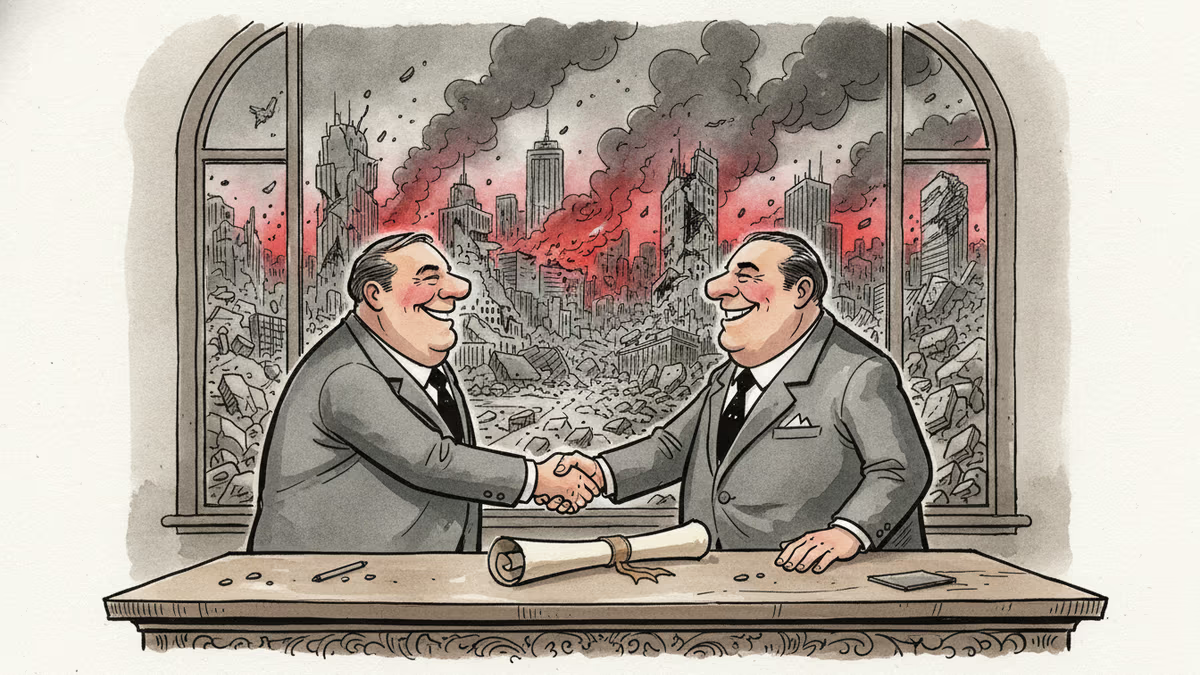
Lebanon and Israel signed a framework agreement in June 2026. Hezbollah rejected it. Israel kept fighting. History suggests this moment is real—and fragile.
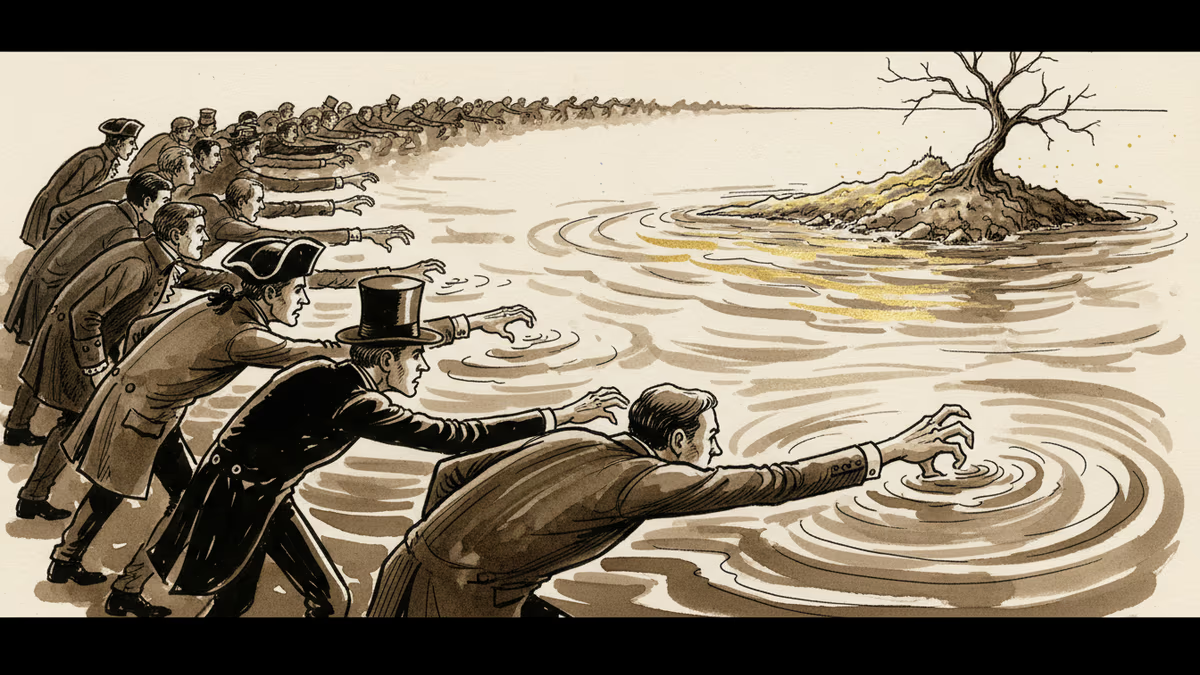
Trump says he wants to 'take' Cuba. But this desire isn't new—it stretches back to Thomas Jefferson. Why this centuries-old obsession is coming to a head right now.
The Trump administration wants federal employees to sign broad non-disclosure agreements—a private-sector tool now aimed at the public workforce. What happens when government runs like a corporation?
Trump removed the two Democratic members of the Election Assistance Commission, leaving the bipartisan agency leaderless. A Supreme Court ruling made it legal. Here's why a non-crisis can still be a warning sign.
Lebanon and Israel signed a framework agreement in June 2026. Hezbollah rejected it. Israel kept fighting. History suggests this moment is real—and fragile.
Trump says he wants to 'take' Cuba. But this desire isn't new—it stretches back to Thomas Jefferson. Why this centuries-old obsession is coming to a head right now.
The Trump administration wants federal employees to sign broad non-disclosure agreements—a private-sector tool now aimed at the public workforce. What happens when government runs like a corporation?
Thoughts
Share your thoughts on this article
Sign in to join the conversation