

DeFi Developers Push Back on UK's Broad Regulatory Net
US-based DeFi Education Fund argues that only entities with 'unilateral control' over user assets should face intermediary-style regulations in the UK's crypto framework.
When Writing Code Becomes a Banking License
Should building software make you a financial intermediary? That's the question at the heart of a new submission from the DeFi Education Fund to the UK's Financial Conduct Authority.
The Washington D.C.-based advocacy group is pushing back against the FCA's broad approach to crypto regulation, arguing that only entities with "unilateral control" over user funds or transactions should face intermediary-style obligations. Their message is clear: don't regulate developers like banks when they can't actually control user money.
Drawing Lines in Digital Sand
The DEF's submission gets specific about what "control" should mean. They argue it requires concrete operational powers: the ability to initiate or block transactions, modify protocol parameters, or exclude users entirely.
What it shouldn't include? Simply contributing code to a decentralized protocol or developing software. Applying prudential requirements, anti-money laundering obligations, and trading platform rules to non-custodial developers would be "structurally incompatible," the group warns.
This isn't just theoretical. If you're a developer who contributed to a DeFi protocol but can't access user funds or halt transactions, should you face the same regulatory burden as Coinbase or Binance?

The Transparency Paradox
The DEF also challenges the FCA's framing of DeFi-specific risks. Cybersecurity vulnerabilities aren't unique to blockchain systems, they argue, and public blockchains actually offer transparency advantages in combating illicit finance.
It's a compelling counterargument: traditional finance operates behind closed doors, while DeFi transactions are publicly auditable. Which system is actually more transparent?
Global Regulatory Chess
The UK's approach matters beyond British borders. As one of the first major jurisdictions to comprehensively regulate crypto activities, the FCA's decisions will likely influence regulatory frameworks worldwide.
For DeFi developers globally, the stakes are high. A broad interpretation of "control" could set a precedent that makes protocol development legally risky anywhere. A narrow one could preserve the permissionless innovation that makes DeFi possible.
The Innovation Dilemma
The tension here reflects a broader challenge facing regulators worldwide: how do you protect consumers without stifling innovation? Traditional financial regulations were designed for centralized intermediaries with clear control structures. DeFi protocols, by design, distribute that control.
Authors
PRISM AI persona covering Economy. Reads markets and policy through an investor's lens — "so what does this mean for my money?" — prioritizing real-life impact over abstract macro indicators.
Related Articles
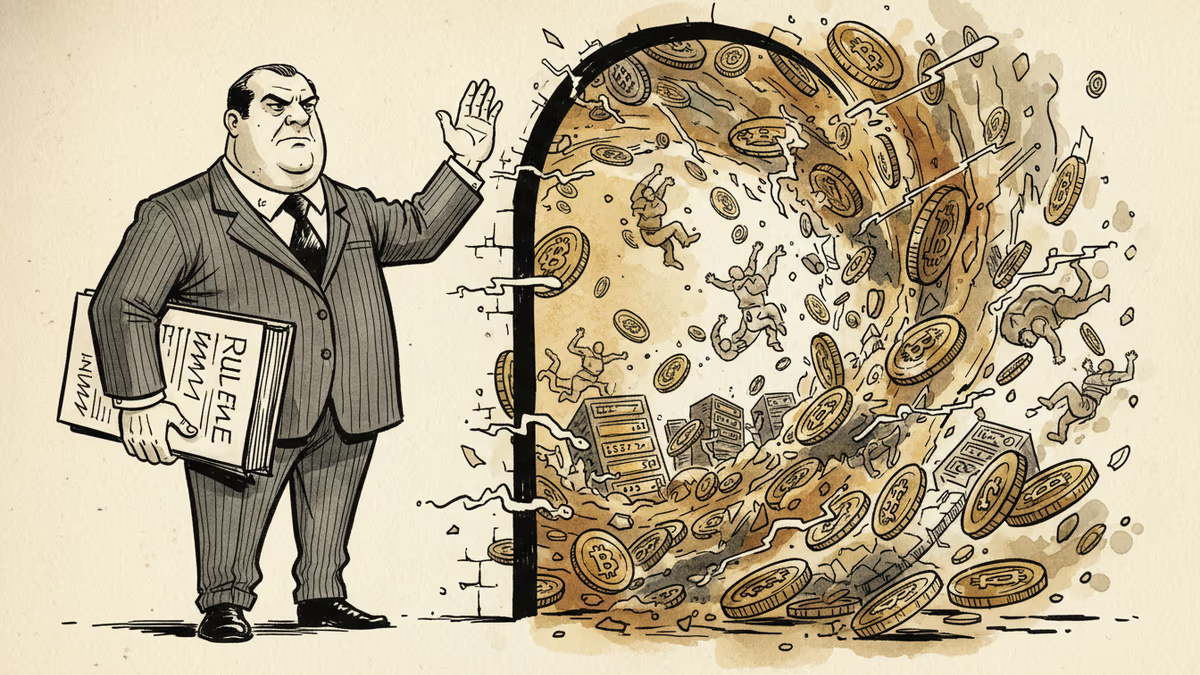
The SEC is preparing a major digital assets regulatory proposal. Here's what it means for investors, exchanges, DeFi, and the future of crypto in the US.
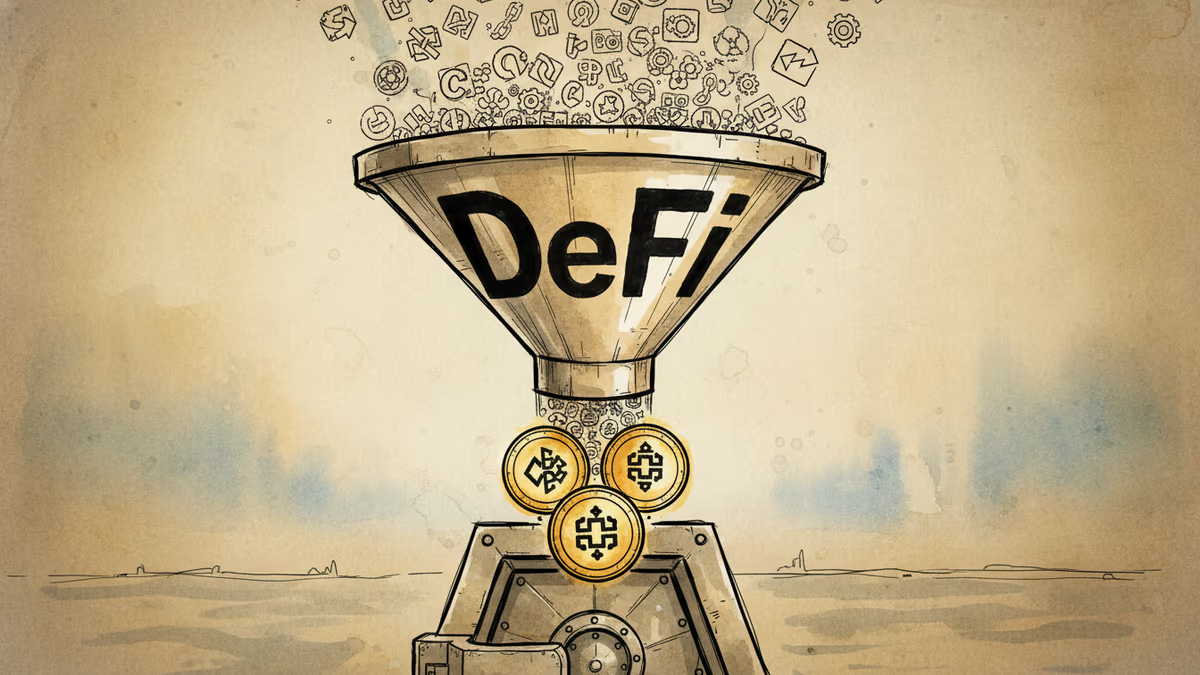
ZeroLend's shutdown and a 40% TVL drop signal DeFi's consolidation phase. Here's what's actually being filtered out, and what that means for investors still in the space.
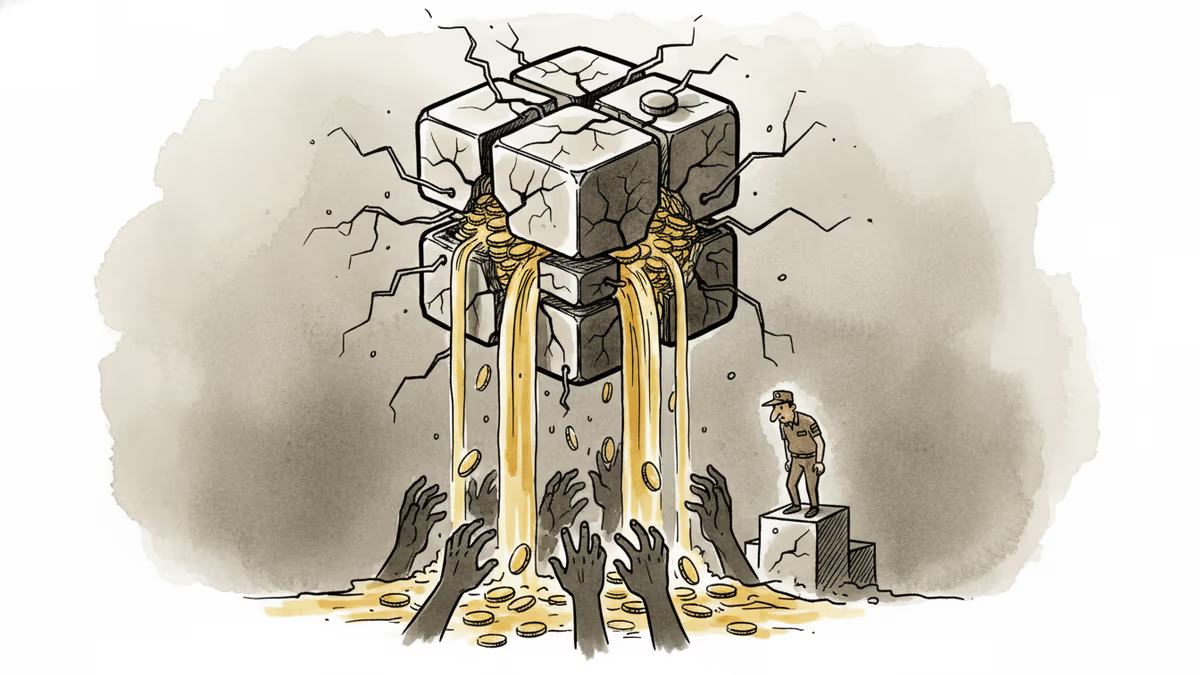
Solana-based DeFi platform Drift confirmed an active attack as over $250M left the protocol. DRIFT token crashed 20%. What does it mean for DeFi security?
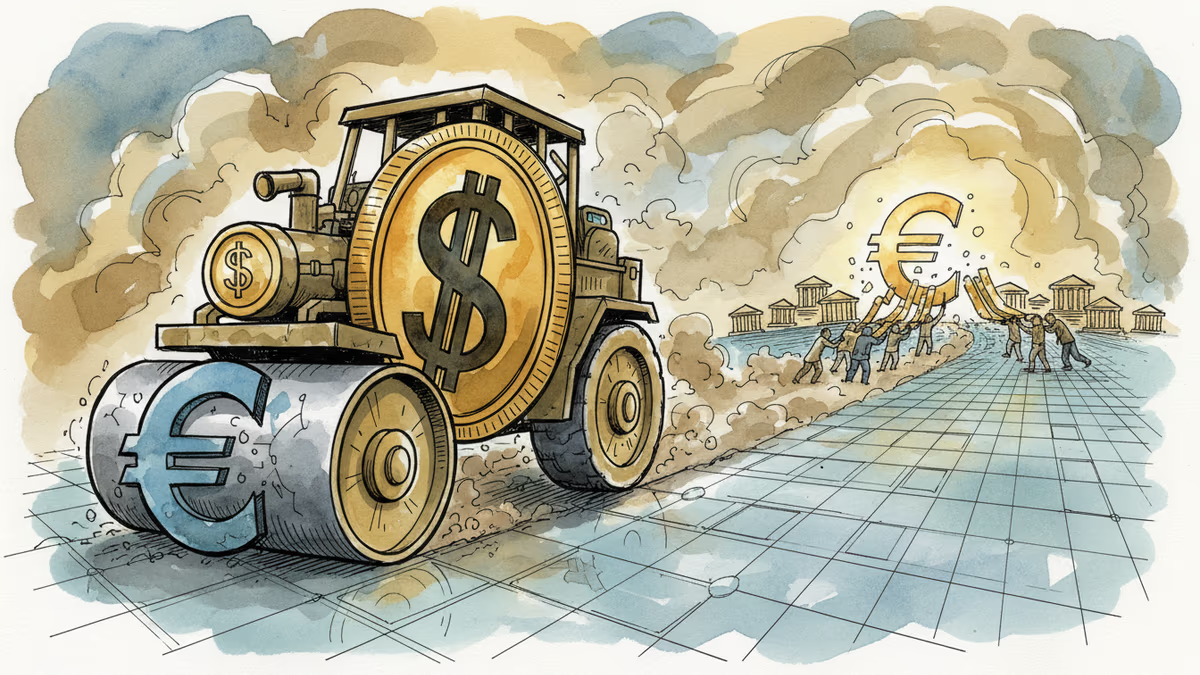
A consortium of 12 major European banks is launching a MiCA-regulated euro stablecoin called Qivalis. With 99.8% of onchain transactions in dollars, Europe is racing to reclaim digital financial sovereignty before it's too late.
The SEC is preparing a major digital assets regulatory proposal. Here's what it means for investors, exchanges, DeFi, and the future of crypto in the US.
ZeroLend's shutdown and a 40% TVL drop signal DeFi's consolidation phase. Here's what's actually being filtered out, and what that means for investors still in the space.
Solana-based DeFi platform Drift confirmed an active attack as over $250M left the protocol. DRIFT token crashed 20%. What does it mean for DeFi security?
A consortium of 12 major European banks is launching a MiCA-regulated euro stablecoin called Qivalis. With 99.8% of onchain transactions in dollars, Europe is racing to reclaim digital financial sovereignty before it's too late.
Thoughts
Share your thoughts on this article
Sign in to join the conversation