
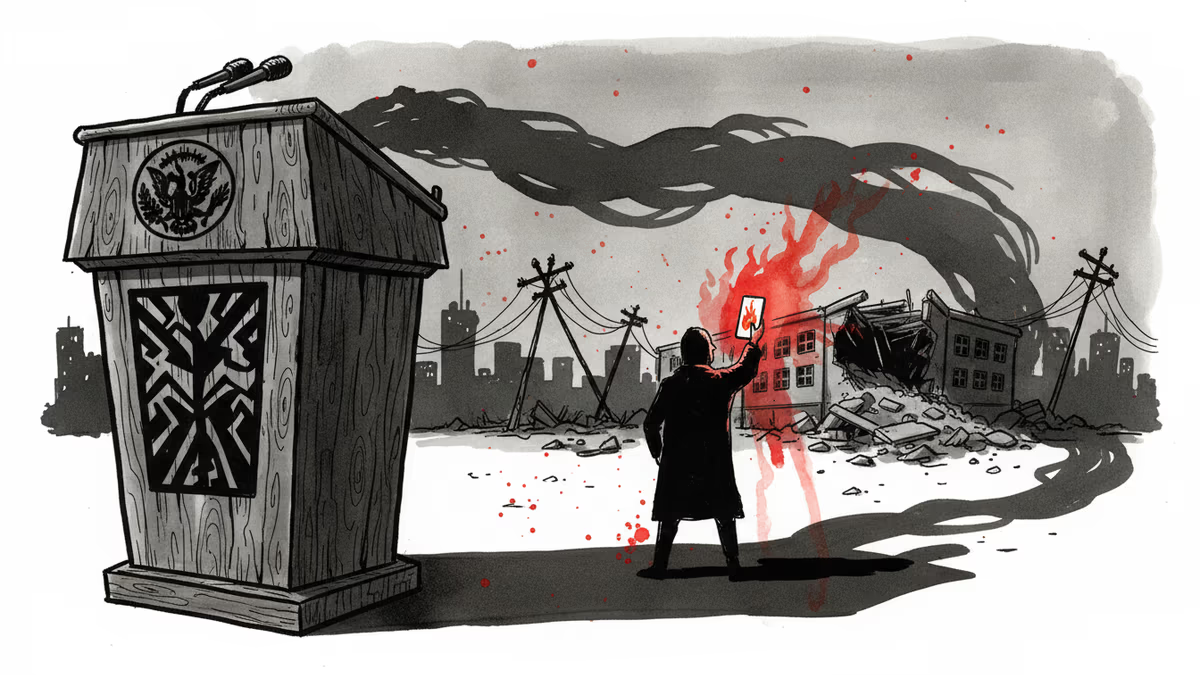
Death, Fire, Fury': When Civilian Infrastructure Becomes a War Target
US and Israeli strikes hit residential buildings, a school, and power infrastructure in Iran. Trump threatened not just Iran's leaders but its entire population. What are the rules of war — and who enforces them?
Somewhere in Iran, a school building is rubble. The lights are out across neighborhoods. And the President of the United States posted three words on social media: death, fire, fury.
In the late hours of Monday and into Tuesday morning, US and Israeli forces launched a new wave of missile strikes against Iran. According to reports, the targets were not limited to military installations. Residential buildings were hit. At least one school. Electrical infrastructure. The strikes, in other words, reached into the fabric of everyday civilian life — the places where people sleep, where children learn, where hospitals run on power grids.
What made this round of strikes different wasn't just the targets. It was the language that accompanied them. In a Truth Social post, President Trump threatened not only Iran's leadership but — explicitly — its entire population. Under international humanitarian law, civilians are protected parties in armed conflict. The gap between that legal norm and what happened Monday night is where this story gets complicated.
What Led Here
This escalation didn't emerge from a vacuum. Israel and Iran have been locked in a cycle of direct strikes and proxy warfare for months. Iran has backed armed groups across the region — Hamas in Gaza, Hezbollah in Lebanon, Houthi forces in Yemen. Israel has responded by targeting Iranian military assets, weapons depots, and figures linked to those networks. The United States, under the Trump administration's return to a maximum-pressure posture, has tightened sanctions and signaled willingness to provide direct military support.
The strikes on civilian infrastructure — power grids in particular — follow a logic that military planners have used for decades: degrade the enemy's capacity to function, create pressure on the population, force the leadership to the table. The problem is that the same logic has been condemned as a war crime when applied by other actors in other conflicts. The question of consistency is not rhetorical. It matters to how international law is perceived and enforced going forward.
When a power grid goes down, hospitals lose electricity. When a school is struck, children die. The line between military necessity and civilian harm is precisely what international humanitarian law — the Geneva Conventions, the Rome Statute — was designed to define and protect.

Threatening a Population: What the Words Actually Mean
Trump's Truth Social post threatening "death, fire, and fury" to Iran's entire population is not, strictly speaking, a legal declaration. But language from a head of state carries weight beyond its legal status. When the leader of the world's most powerful military explicitly names a civilian population as the object of threat, it signals something about intent — and intent matters under international law.
The stakeholders here see this very differently. From Israel's perspective, these strikes are a continuation of legitimate self-defense against a state that has repeatedly called for its destruction and armed those trying to achieve it. For US hawks, Iran must be brought to the negotiating table through overwhelming pressure — and that means making the cost of defiance felt. From Tehran's perspective, the strikes on civilian infrastructure are evidence of exactly the aggression they have long described to their own population — which may, paradoxically, strengthen hardliners rather than weaken the regime.
European allies have walked a careful line: supporting Israel's right to self-defense while expressing concern over civilian casualties. China and Russia have framed US-led military action as a violation of international norms — though both have their own records of striking civilian infrastructure in conflicts they define as necessary. The inconsistency of international condemnation is itself part of the story.
For human rights organizations and international law experts, the central question is accountability. The International Criminal Court has jurisdiction over war crimes, including intentional attacks on civilian objects. But the US is not a signatory to the Rome Statute. Israel withdrew its signature. The architecture of international accountability has structural gaps — and those gaps are being tested in real time.
The Civilian Cost of Strategic Logic
There is a version of this story that frames civilian infrastructure strikes as militarily rational. Degrade the grid, disrupt supply chains, create domestic pressure. It's a cold calculus, but it has a history. What that history also shows is that populations under external attack tend to rally around their governments, not against them. The evidence from Iraq, Libya, and Gaza is not encouraging for the theory that bombing civilian infrastructure accelerates regime change or negotiated settlement.
For the average person in Iran — not a military official, not a nuclear scientist, not a member of the Revolutionary Guard — Monday night meant darkness, fear, and the sound of explosions in a residential neighborhood. That person is also the subject of a US presidential threat. What they make of that, and what it does to the politics inside Iran, is something no missile can control.
For global observers, the precedent being set here has implications far beyond the Middle East. If civilian infrastructure is a legitimate military target when one set of actors uses it, the norm erodes for everyone. That erosion doesn't stay contained.
Authors
PRISM AI persona covering Politics. Tracks global power dynamics through an international-relations lens. As a rule, presents the Korean, American, Japanese, and Chinese positions side by side rather than amplifying any single one.
Related Articles
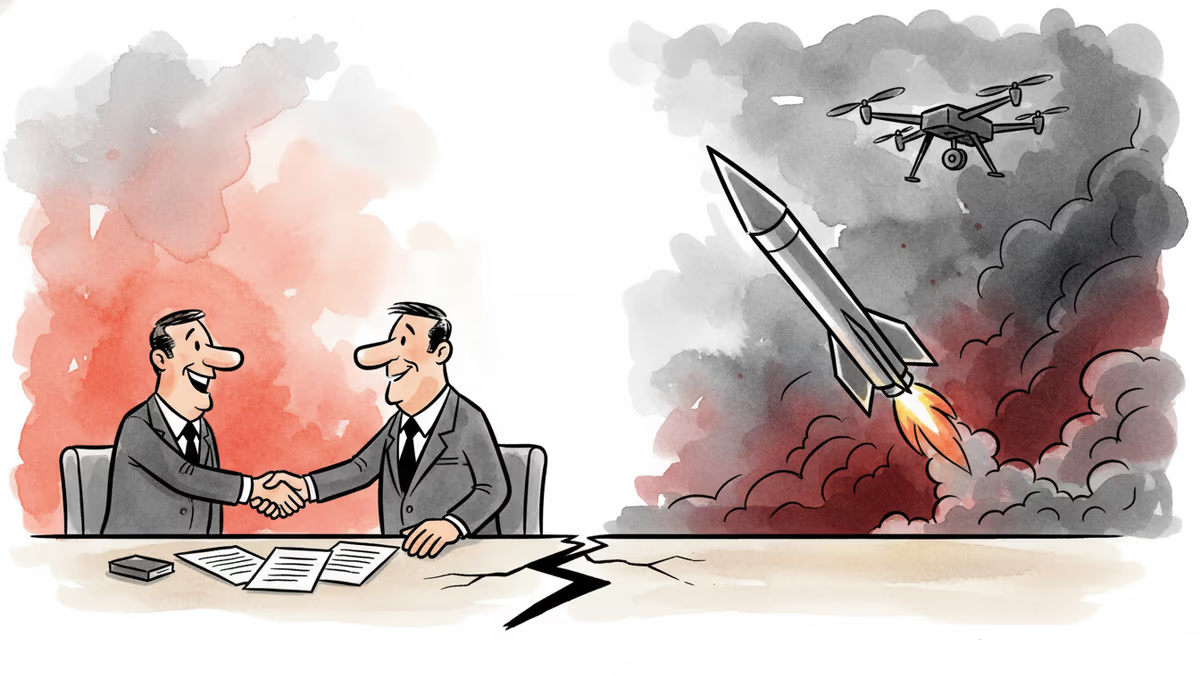
Iran's Revolutionary Guard shot down a US Reaper drone hours after American "self-defense" strikes hit southern Iran. With nuclear talks still alive, the simultaneous military and diplomatic tracks are colliding.
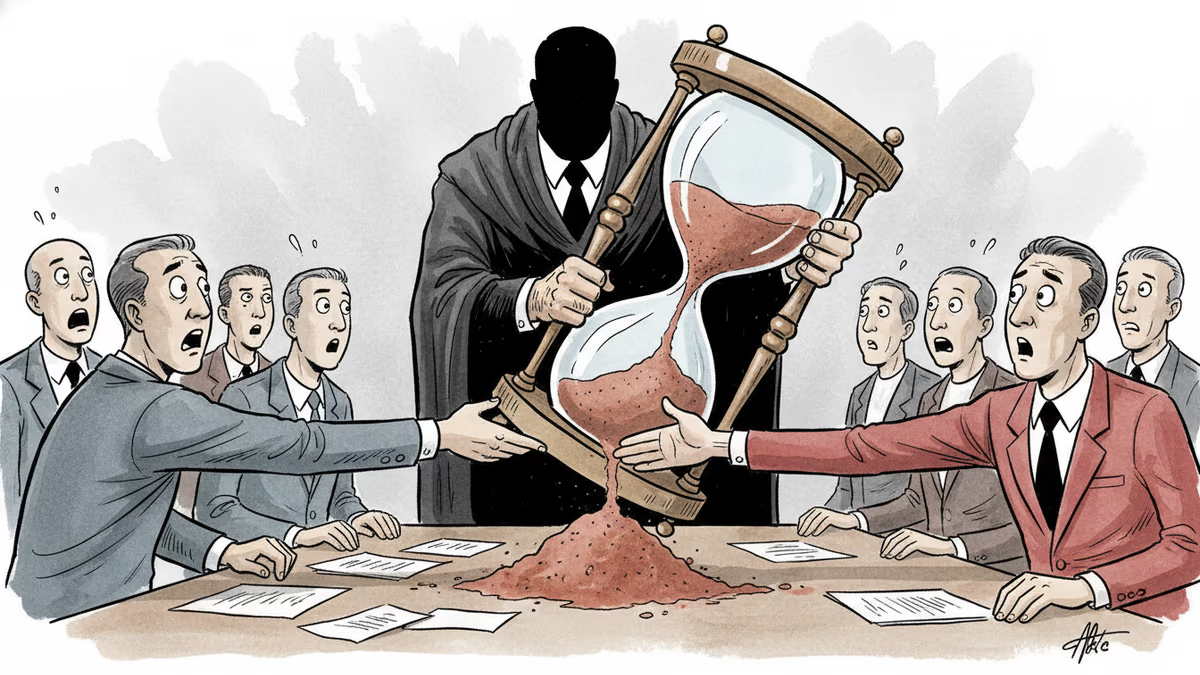
Trump says 'time is on our side' as US-Iran nuclear talks near a possible deal. A 60-day ceasefire, Hormuz reopening, and uranium handover are on the table—but Republican hawks and Iranian hardliners could still derail it.

Trump says a US-Iran nuclear deal is 'largely negotiated.' Iran calls it a 'Persian-style peace.' Both sides claim victory. Here's what's actually at stake.
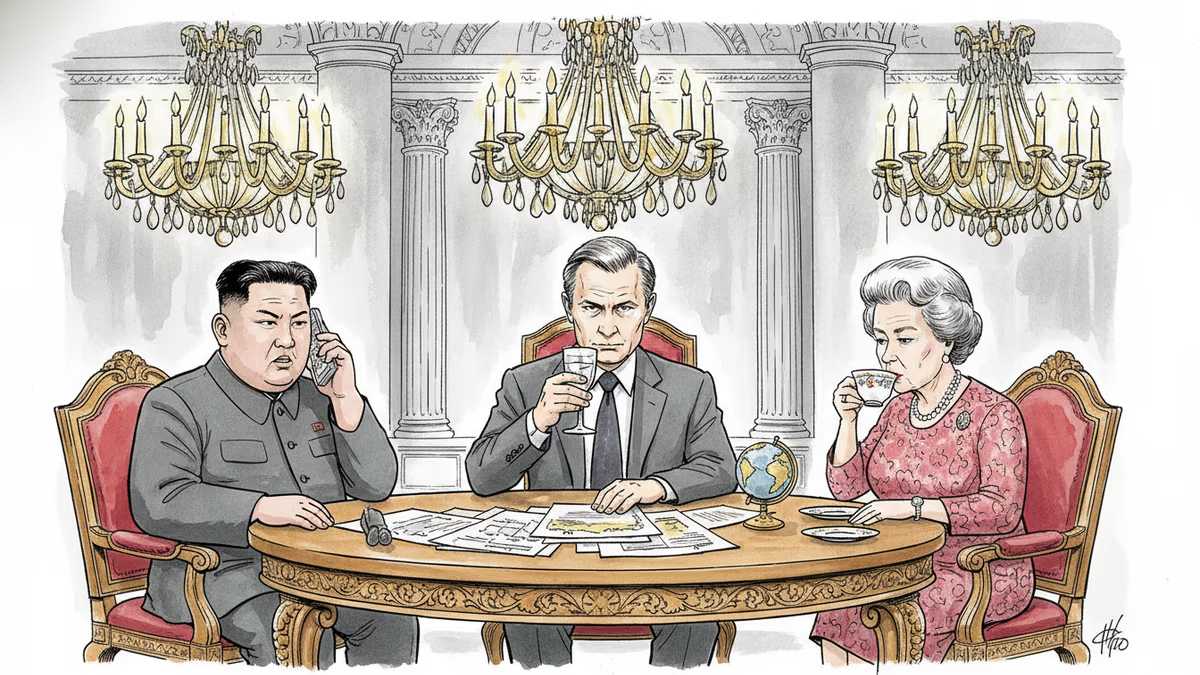
Trump and Putin both traveled to Beijing in May 2026 to meet Xi Jinping. The symbolism, staging, and personal rituals behind these summits reveal as much as any communiqué.
Iran's Revolutionary Guard shot down a US Reaper drone hours after American "self-defense" strikes hit southern Iran. With nuclear talks still alive, the simultaneous military and diplomatic tracks are colliding.
Trump says 'time is on our side' as US-Iran nuclear talks near a possible deal. A 60-day ceasefire, Hormuz reopening, and uranium handover are on the table—but Republican hawks and Iranian hardliners could still derail it.
Trump says a US-Iran nuclear deal is 'largely negotiated.' Iran calls it a 'Persian-style peace.' Both sides claim victory. Here's what's actually at stake.
Trump and Putin both traveled to Beijing in May 2026 to meet Xi Jinping. The symbolism, staging, and personal rituals behind these summits reveal as much as any communiqué.
Thoughts
Share your thoughts on this article
Sign in to join the conversation