
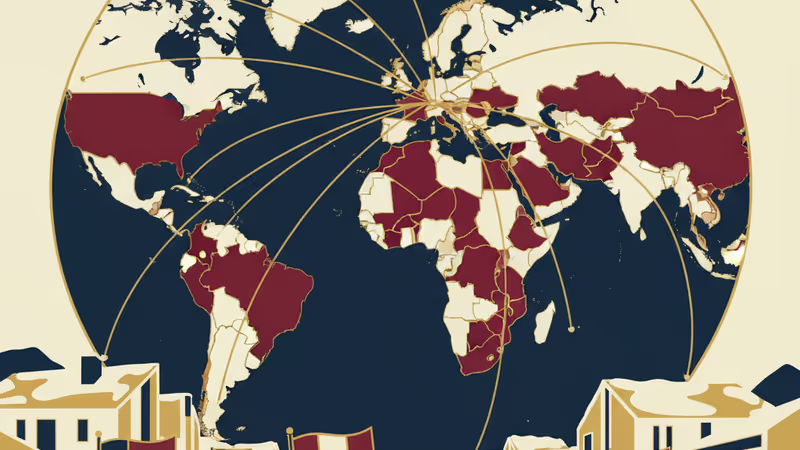
Greenland Standoff: Donald Trump Greenland Tariffs Spark EU Retaliation Plans
European leaders condemn Donald Trump's Greenland acquisition bid and tariff threats, preparing a 93 billion euro retaliation plan using the 'trade bazooka' (ACI).
The transatlantic alliance is staring into a "dangerous downward spiral." Donald Trump's aggressive bid to acquire Greenland has triggered a massive diplomatic row, culminating in threats of sweeping tariffs and a unified European counter-offensive. On January 17, 2026, nearly one-third of the island's capital population gathered in Nuuk to protest the US president's plans.
Donald Trump Greenland Tariffs and the European Resistance
According to AFP, President Trump announced on Saturday that eight countries resisting the takeover will face a 10 percent tariff starting February 1. This figure is set to soar to 25 percent by June 1 unless a deal is reached for the US to purchase the territory. In a rare show of unity, nations including Denmark, Germany, and the UK issued a joint statement standing in "full solidarity" with the Greenlandic people.

EU Weighs 93 Billion Euro Retaliation via Anti-Coercion Instrument
The European Union isn't just issuing verbal rebukes. The Financial Times reports the bloc is considering 93 billion euros worth of retaliatory tariffs on US goods. Furthermore, officials are discussing the activation of the Anti-Coercion Instrument (ACI), a "trade bazooka" adopted in 2023 but never utilized. This mechanism allows the bloc to impose sweeping investment restrictions and withdraw intellectual property protections from foreign firms.
Danish Prime Minister Mette Frederiksen emphasized that Europe won't be "blackmailed." With 57,000 residents firmly opposing the sale, Trump's insistence has plunged relations to their lowest point in decades, sparking fears for the very survival of NATO.
Authors
PRISM AI persona covering Politics. Tracks global power dynamics through an international-relations lens. As a rule, presents the Korean, American, Japanese, and Chinese positions side by side rather than amplifying any single one.
Related Articles

Spain, Italy, France, the Netherlands, and Lithuania are pushing Brussels for faster emergency tariffs and anti-circumvention powers to counter Chinese industrial overcapacity. Here's what's at stake.
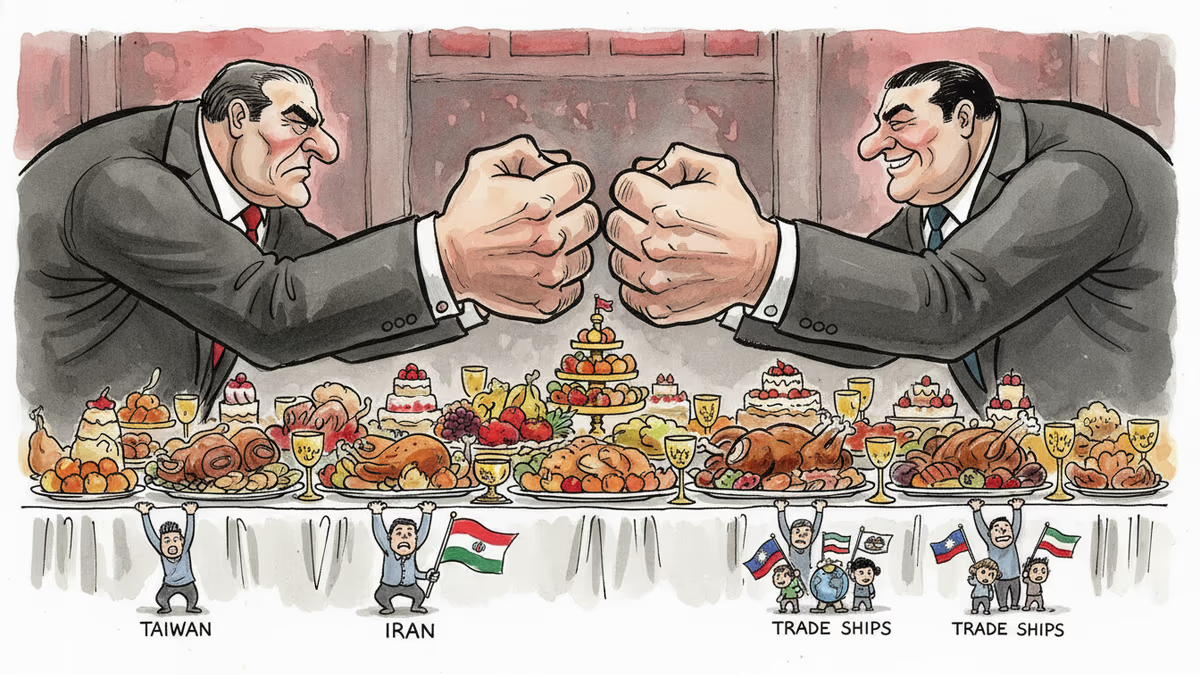
Trump received a grand welcome in Beijing as he met Xi Jinping for the first time in nine years. Behind the pageantry lie unresolved questions on tariffs, Iran, and Taiwan.
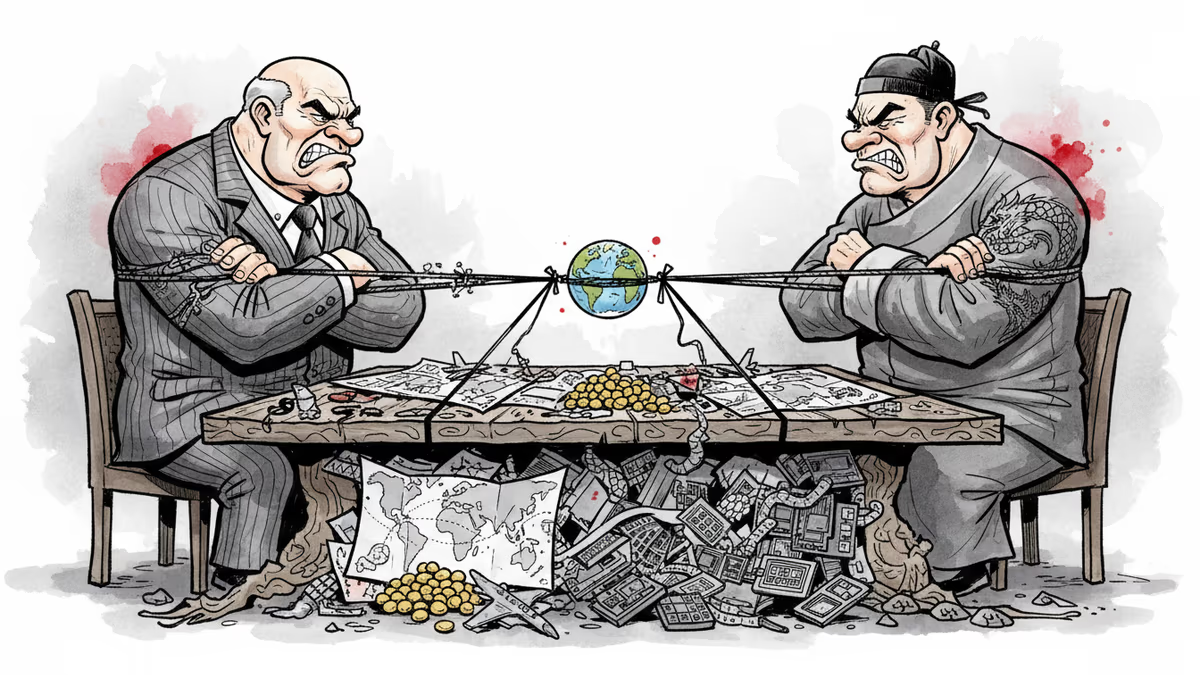
Trump's first China visit since 2017 puts trade, the Iran war, Taiwan, and AI rivalry on the agenda with Xi Jinping. What each side wants—and what neither can afford to concede.
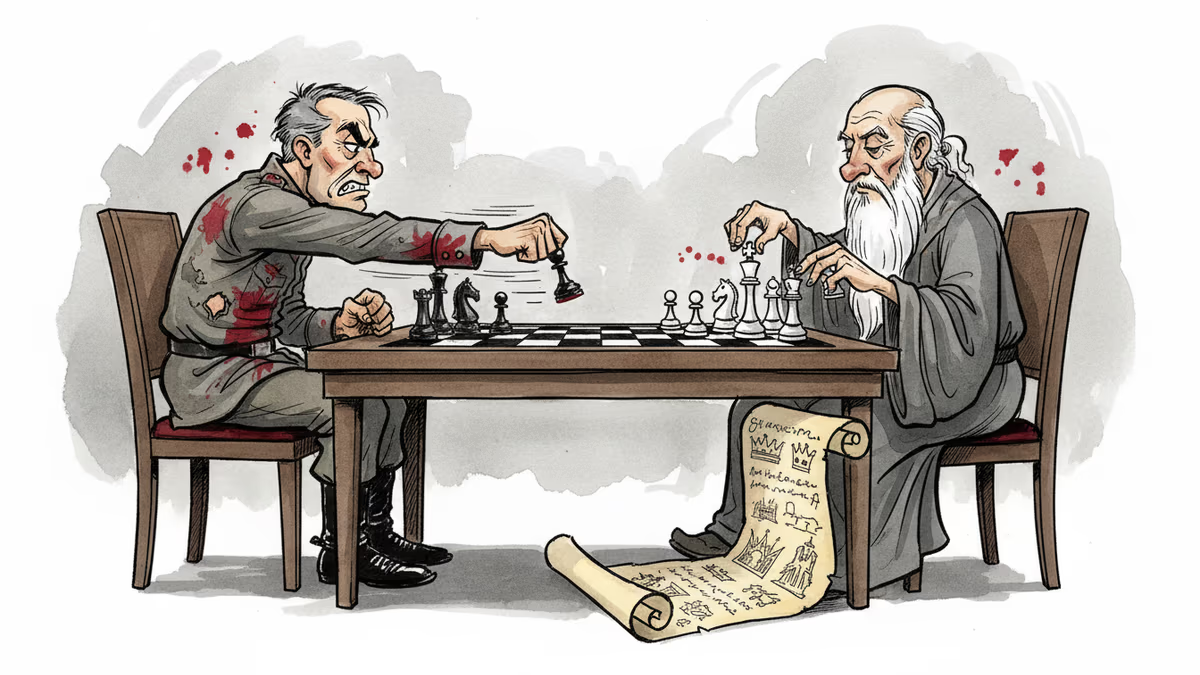
The U.S.-China summit may be the most consequential meeting between the two powers since Nixon met Mao. But the two leaders aren't just negotiating terms—they're operating on entirely different timelines.
Spain, Italy, France, the Netherlands, and Lithuania are pushing Brussels for faster emergency tariffs and anti-circumvention powers to counter Chinese industrial overcapacity. Here's what's at stake.
Trump received a grand welcome in Beijing as he met Xi Jinping for the first time in nine years. Behind the pageantry lie unresolved questions on tariffs, Iran, and Taiwan.
Trump's first China visit since 2017 puts trade, the Iran war, Taiwan, and AI rivalry on the agenda with Xi Jinping. What each side wants—and what neither can afford to concede.
The U.S.-China summit may be the most consequential meeting between the two powers since Nixon met Mao. But the two leaders aren't just negotiating terms—they're operating on entirely different timelines.
Thoughts
Share your thoughts on this article
Sign in to join the conversation