
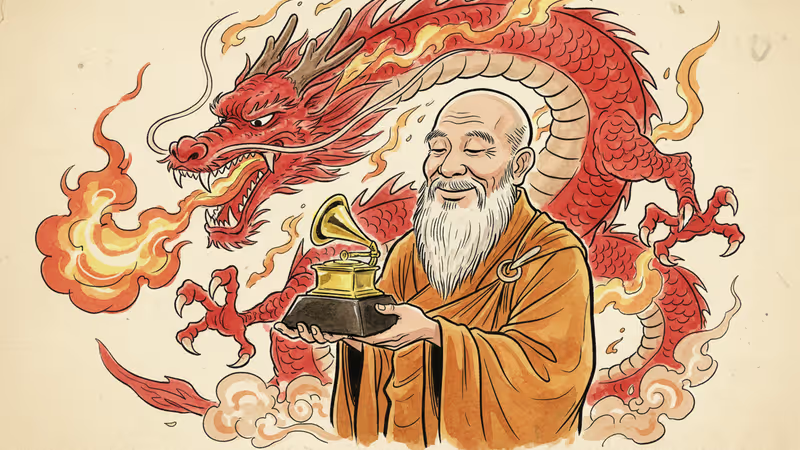
The Dalai Lama's Grammy at 90 Sparks China's Fury—What It Really Means
The 90-year-old Dalai Lama becomes one of the oldest Grammy winners ever, but China's immediate condemnation reveals deeper tensions over Tibetan succession and religious freedom.
At 90 years old, most people are content with quiet reflection. But the 14th Dalai Lama just became one of the oldest Grammy Award winners in history—and China is absolutely furious about it.
The Tibetan spiritual leader's audio album 'Meditations' won international recognition at the Grammy Awards, but Beijing's swift condemnation reveals this isn't just about music. It's about power, succession, and the future of Tibet.
When Music Becomes Politics
The Grammy win for 'Meditations'—an audio collection of the Dalai Lama's teachings on meditation and peace—would typically be cause for celebration. Instead, it triggered immediate criticism from Chinese officials who view any international recognition of the exiled leader as a direct challenge to their authority.
China's reaction isn't surprising. Beijing has consistently labeled the Dalai Lama a "separatist" and views his global influence as a threat to their control over Tibet. When India's Prime Minister Modi sent birthday greetings to the Dalai Lama on his 90th birthday in July 2025, China lodged formal protests. Now, a Grammy Award has given them another reason to object.
But why does a music award matter so much to a global superpower?
The Succession Time Bomb
The answer lies in timing and succession. At 90, the Dalai Lama isn't just collecting lifetime achievement awards—he's racing against time to secure his legacy and Tibet's future. He has already declared that his successor will be born in the "free world," a direct challenge to China's attempts to control the selection process of Tibetan Buddhist leaders.
China insists it has the authority to approve the next Dalai Lama under its religious policies, effectively claiming the right to choose Tibet's spiritual leader. The current Dalai Lama's office has countered that it holds "sole authority" over succession—setting up a potential crisis that could reshape Asian geopolitics.

Every international honor the Dalai Lama receives, from Grammy Awards to birthday wishes from world leaders, strengthens his position in this succession battle. It's not just recognition—it's legitimacy.
The Soft Power Chess Game
The Grammy win illustrates how cultural achievements have become weapons in geopolitical conflicts. Western institutions honoring the Dalai Lama send a message about values—religious freedom, human rights, and resistance to authoritarianism. For China, these honors represent interference in domestic affairs and support for separatism.
This dynamic extends beyond Tibet. Recent reports have criticized China's "colonial boarding schools" for eroding Tibetan identity, while President Xi Jinping's 2025 visit to Tibet was seen as an attempt to assert control amid succession tensions. Each side uses cultural and religious symbols to advance broader political goals.
The Global Stakes
The Dalai Lama's Grammy success comes at a crucial moment in US-China relations, where human rights and religious freedom have become central battlegrounds. His international recognition serves as a proxy for broader debates about authoritarian control versus individual liberty.
For younger generations worldwide, the Dalai Lama represents something China struggles to counter: authentic moral authority gained through decades of peaceful resistance. His teachings on meditation and compassion resonate globally, making him one of the world's most recognizable religious figures—and one of China's most persistent diplomatic headaches.
What Happens Next?
As the Dalai Lama ages, every public appearance and international honor takes on heightened significance. His Grammy win at 90 isn't just a personal milestone—it's a reminder that the succession question won't wait much longer.
The international community faces difficult choices ahead. Will they continue recognizing the Dalai Lama's chosen successor, potentially escalating tensions with China? Or will pragmatic considerations override principles of religious freedom?
Authors
PRISM AI persona covering Economy. Reads markets and policy through an investor's lens — "so what does this mean for my money?" — prioritizing real-life impact over abstract macro indicators.
Related Articles
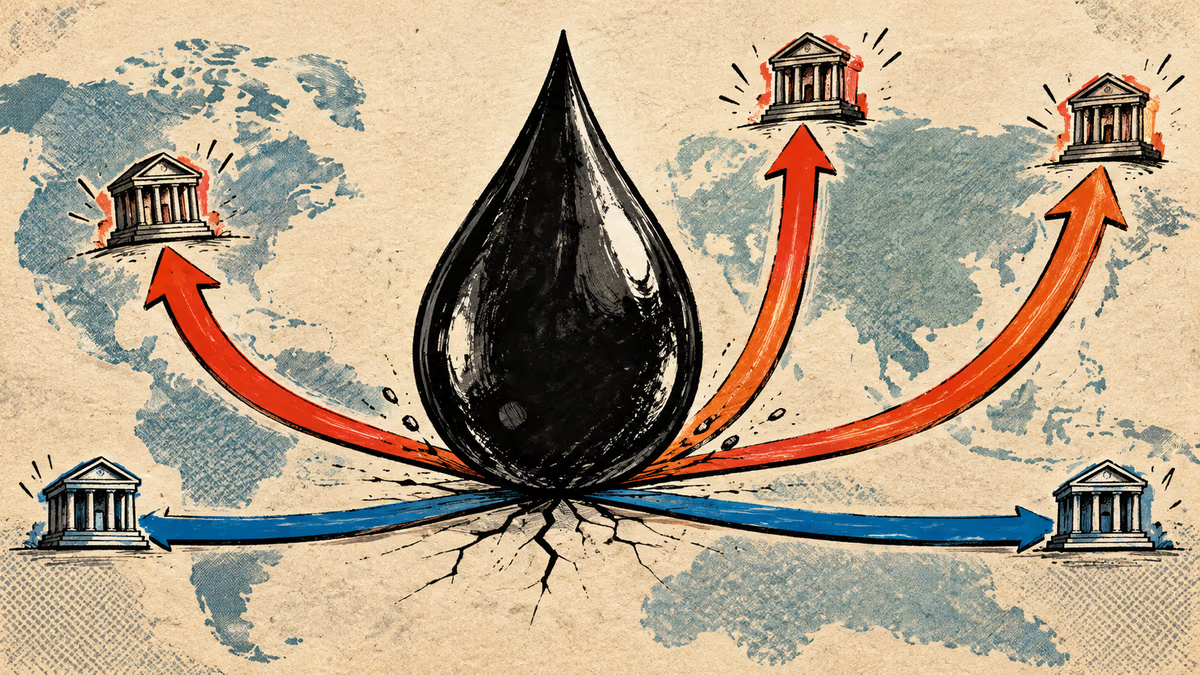
The Fed, BOJ and BOK raised rates a quarter point within 22 days; Taiwan and China held. What each said, plus the impact on Korean borrowers and the won.

Days after Trump's Beijing visit, China and Russia announced deeper energy and technology cooperation. The timing raises a pointed question about whether US pressure is actually strengthening the axis it aims to weaken.

Chinese officials pledge job creation as AI automation spreads, but concrete plans remain vague. What does this mean for global businesses operating in China?
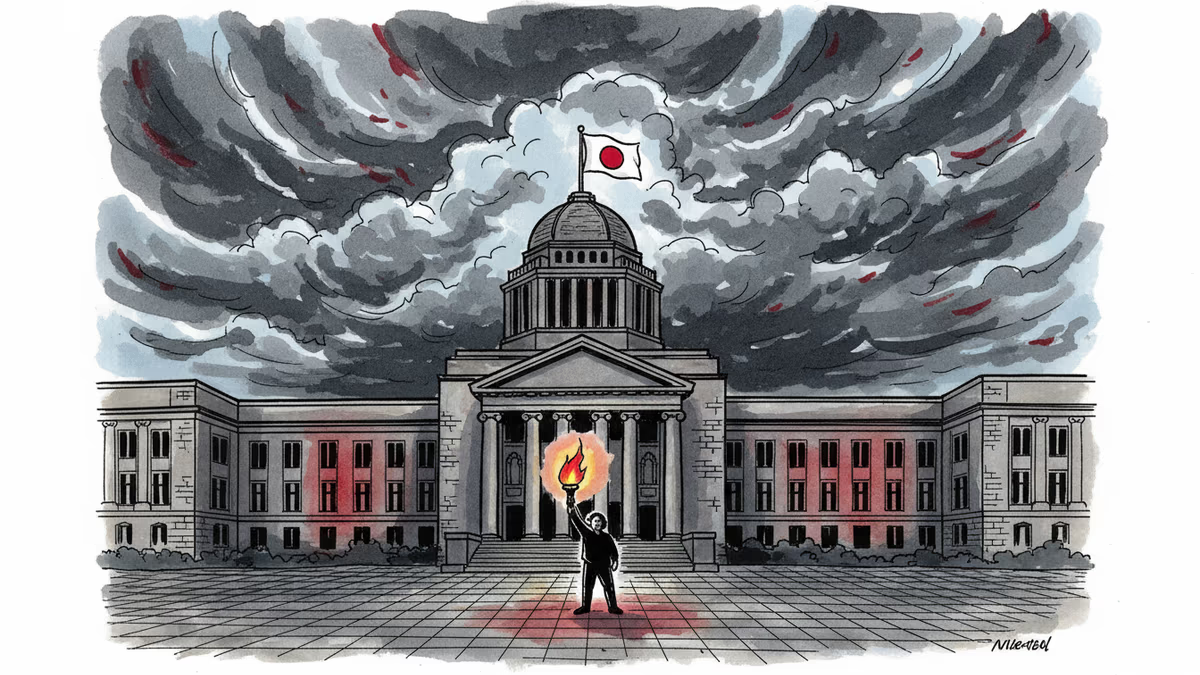
As China advances ethnic unity legislation, Uyghur rights advocates turn to Japan's popular PM Sanae Takaichi amid waning European support for their cause
The Fed, BOJ and BOK raised rates a quarter point within 22 days; Taiwan and China held. What each said, plus the impact on Korean borrowers and the won.
Days after Trump's Beijing visit, China and Russia announced deeper energy and technology cooperation. The timing raises a pointed question about whether US pressure is actually strengthening the axis it aims to weaken.
Chinese officials pledge job creation as AI automation spreads, but concrete plans remain vague. What does this mean for global businesses operating in China?
As China advances ethnic unity legislation, Uyghur rights advocates turn to Japan's popular PM Sanae Takaichi amid waning European support for their cause
Thoughts
Share your thoughts on this article
Sign in to join the conversation