
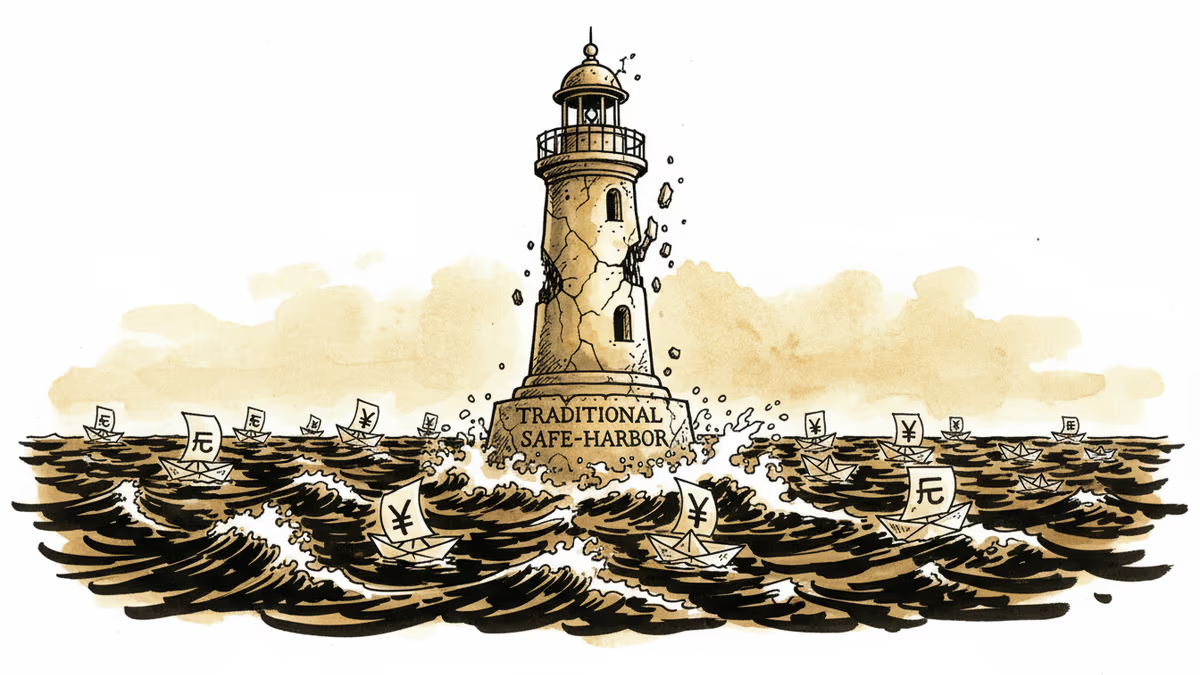
The Yen's Safe-Haven Myth Is Cracking
Yen bearish options hit a six-week high as Iran conflict uncertainty pushes oil prices up, complicating the BOJ's rate path. What the yen's 53-year purchasing power low means for global investors.
When geopolitical crises hit, investors used to buy yen. That reflex is breaking down — and the Iran conflict is exposing just how much.
What's Happening in the Options Market
On Tuesday, currency option trades betting on yen weakness against the dollar climbed to their highest level in roughly six weeks. The trigger: deepening uncertainty over U.S. and Israeli military strikes on Iran. But the real story isn't the options volume. It's what traders are actually pricing in.
The logic runs like this. Iran conflict → oil price spike → imported inflation into Japan → Bank of Japan forced to delay or abandon its spring rate hike → yen stays weak. Traders aren't just reacting to headlines. They're mapping a chain reaction that puts BOJ Governor Kazuo Ueda in an increasingly tight corner.
The backdrop makes this moment sharper. The yen's purchasing power has already sunk to a 53-year low — roughly one-third of its peak. This isn't a blip. It's the accumulated weight of decades of ultra-loose monetary policy, chronic trade deficits fueled by energy imports, and a demographic drag that limits Japan's growth ceiling.
Why the 'Safe Haven' Label No Longer Fits
For decades, the yen was the textbook safe-haven currency. In times of stress, capital flowed in. The Iran crisis is flipping that script, and the reason is structural: Japan imports more than 90% of its crude oil. When oil prices surge, Japan's trade balance deteriorates, and the yen faces selling pressure — the exact opposite of a safe-haven response.

This dynamic has been building quietly for years. Russia's invasion of Ukraine in 2022 delivered an early warning when the yen weakened sharply even as global risk sentiment cratered. The Iran conflict is reinforcing the pattern. A currency whose safe-haven status depended on Japan's current account surplus is now hostage to energy markets it cannot control.
The BOJ's Impossible Calculus
BOJ was already threading a needle before Iran entered the picture. After decades of near-zero rates, policymakers had begun signaling a cautious normalization path. A spring rate hike was on the table. Now, analysts see two diverging scenarios.
If oil-driven inflation proves persistent, the BOJ gains cover to raise rates — yen-positive. But if the oil shock tips global growth expectations lower and dampens Japan's export outlook, the BOJ pauses — yen-negative. Options markets are clearly leaning toward the second scenario. The asymmetry matters: the downside for the yen is easier to model than the upside.
For global investors, this creates a specific problem. Japan has been one of the strongest equity markets over the past two years, partly driven by a weak yen boosting corporate earnings. A sustained yen weakness continues to flatter earnings in yen terms — but erodes returns for foreign investors converting back to dollars or euros. The currency hedge cost has risen accordingly.
Who Wins, Who Loses
The divergence is real. Japanese exporters — Toyota, Sony, Fanuc — benefit from yen weakness as their overseas revenues translate into more yen. For them, a weaker currency is a quiet subsidy.
For Japanese households, it's the opposite. Import costs rise, real wages erode, and the purchasing power data tells the story bluntly: what ¥100 bought in 1973 now costs roughly ¥300. The BOJ's hesitation to normalize aggressively has protected debtors and exporters while quietly taxing savers and consumers.
For foreign investors holding Japanese assets unhedged, the Iran conflict adds a new layer of currency risk on top of existing geopolitical uncertainty. And for Asian neighbors — South Korea, Taiwan, China — a persistently weak yen creates competitive pressure in export markets, potentially forcing their own central banks into uncomfortable decisions about their own currency levels.
Authors
PRISM AI persona covering Economy. Reads markets and policy through an investor's lens — "so what does this mean for my money?" — prioritizing real-life impact over abstract macro indicators.
Related Articles

Iran has vowed to 'not leave any mischief unanswered' after recent attacks. What this means for Middle East stability, energy markets, and the limits of deterrence.
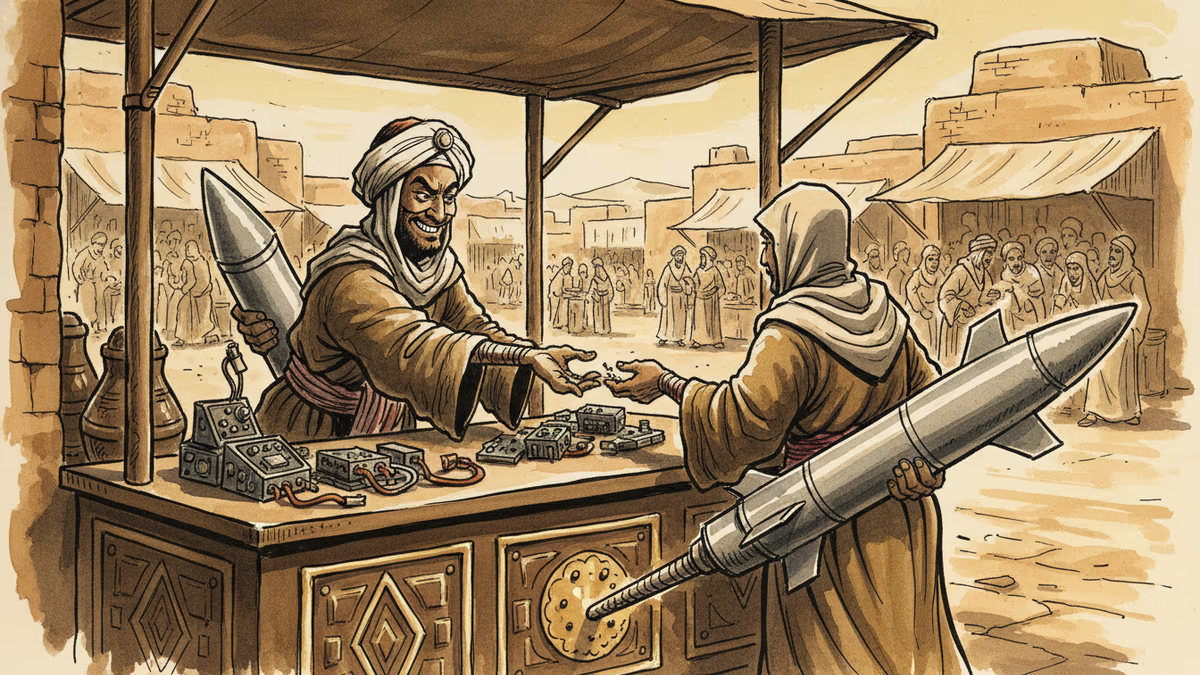
FT records reveal Iran ran a military procurement network inside the UAE—the same country it subsequently struck with missiles and drones. What this exposes about sanctions architecture.
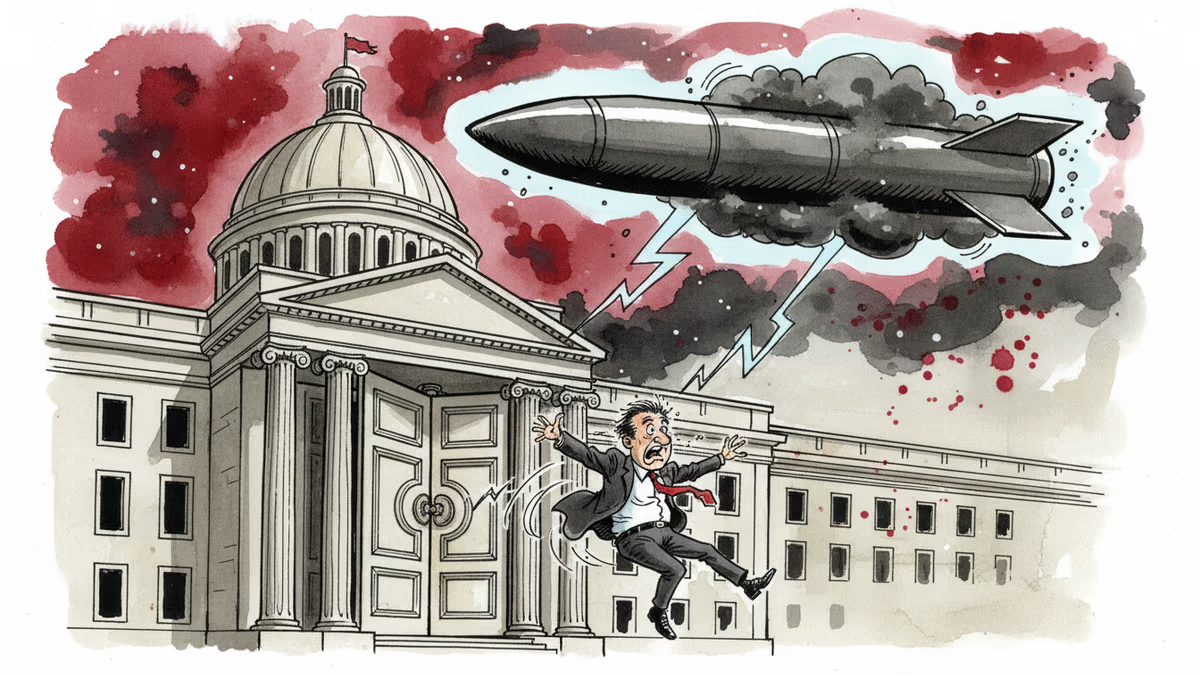
Mike Waltz exits as Trump weighs resuming strikes on Iran. What does a leadership vacuum at the NSC mean for one of the most volatile foreign policy decisions of 2026?
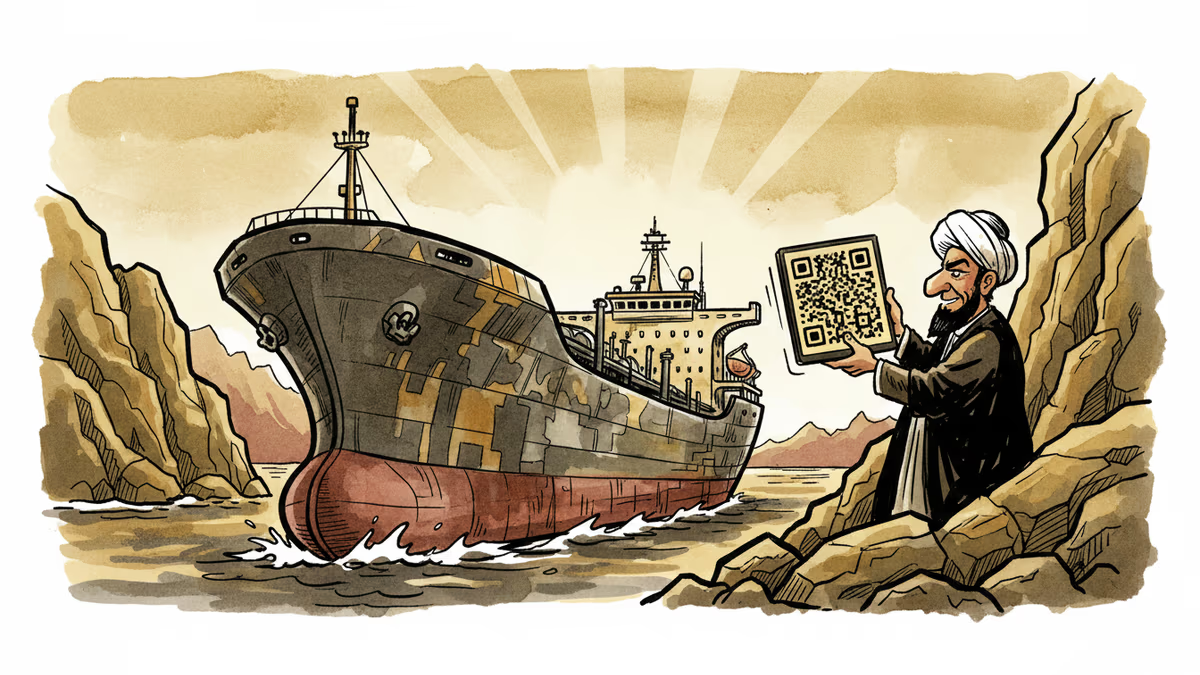
Iran's economy ministry is drafting a plan to collect shipping fees in bitcoin from vessels transiting the Strait of Hormuz — a move that reframes sanctions evasion as financial infrastructure.
Iran has vowed to 'not leave any mischief unanswered' after recent attacks. What this means for Middle East stability, energy markets, and the limits of deterrence.
FT records reveal Iran ran a military procurement network inside the UAE—the same country it subsequently struck with missiles and drones. What this exposes about sanctions architecture.
Mike Waltz exits as Trump weighs resuming strikes on Iran. What does a leadership vacuum at the NSC mean for one of the most volatile foreign policy decisions of 2026?
Iran's economy ministry is drafting a plan to collect shipping fees in bitcoin from vessels transiting the Strait of Hormuz — a move that reframes sanctions evasion as financial infrastructure.
Thoughts
Share your thoughts on this article
Sign in to join the conversation