
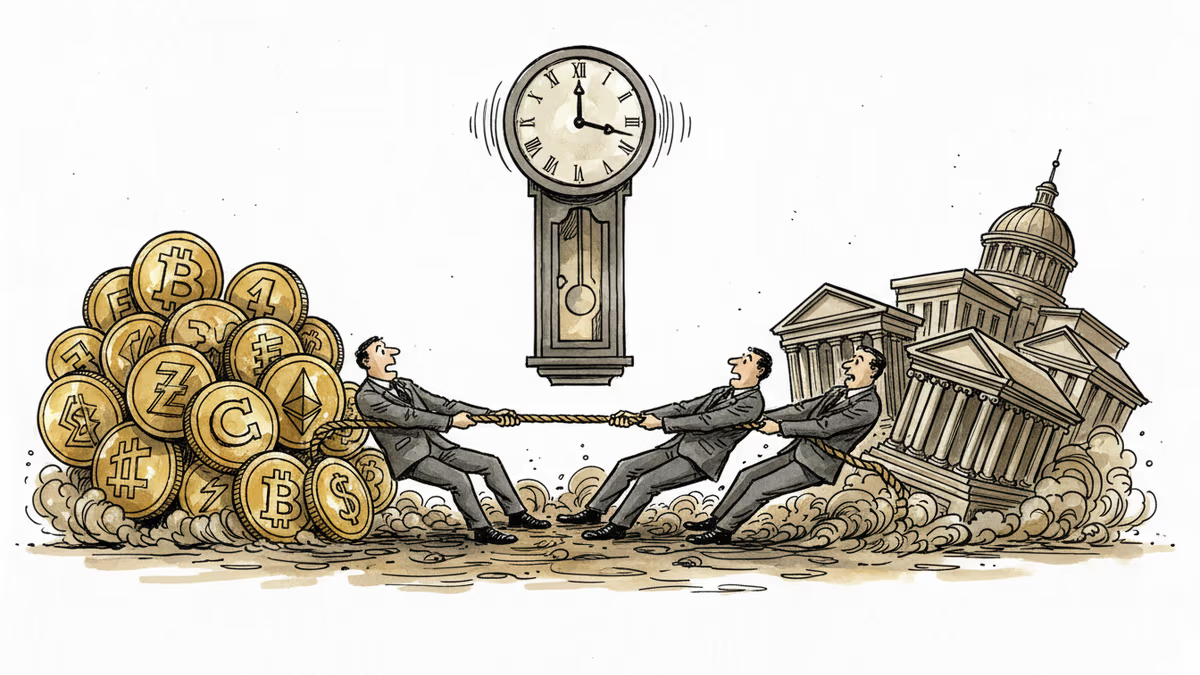
Crypto's Biggest Prize Hangs on a 4% Question
The Senate's Clarity Act faces a stalemate over stablecoin rewards as crypto firms battle Wall Street banks. Time is running out for the industry's top legislative priority.
Hold $10,000 in USDC on Coinbase, earn 4-5% annually. Park the same amount in a traditional savings account, get 1-2%. That 3-4 percentage point difference has become the unlikely battleground that could determine whether the U.S. gets comprehensive crypto legislation this year.
The Clock Is Ticking
The Digital Asset Market Clarity Act — the crypto industry's decade-long holy grail — sits frozen in the Senate. Not because of complex technical issues or philosophical disagreements about blockchain technology, but because of a surprisingly simple question: Should platforms like Coinbase be allowed to pay customers for holding stablecoins?
Wall Street banks say these rewards are killing traditional deposits. Crypto firms argue they're just competing fairly. Neither side is budging, and every passing day makes passage less likely in an election year where the Senate effectively shuts down after July.
The stakes couldn't be higher. This isn't just another crypto bill — it's the framework that would finally give digital assets clear legal standing in the world's largest financial market.
When David Meets Goliath
The battle lines are stark. On one side: crypto companies that have built business models around stablecoin rewards, led by Coinbase and backed by the Trump administration's crypto advisers. On the other: traditional banks with centuries of lobbying experience and deep relationships on Capitol Hill.
The banks' argument landed hard: If crypto platforms can offer 4-5% on dollar-pegged tokens while banks are stuck at 1-2% on deposits, customers will flee. Fewer deposits mean less lending capacity. Less lending hurts Main Street.

But the crypto side thought they had an ace: the GENIUS Act, already signed into law, which seemed to preserve stablecoin rewards. Then the Office of the Comptroller of the Currency threw a curveball, suggesting their new rule might not interpret GENIUS the way the industry hoped.
Suddenly, crypto's "upper hand" doesn't look so strong.
The Art of the Possible
The White House floated a compromise: Ban rewards for simply holding stablecoins (like a savings account), but allow them for actual transactions and infrastructure support. It's the kind of nuanced solution that sounds reasonable in a conference room but faces the harsh reality of legislative politics.
Bank lobbyists haven't moved from their hardline position despite the White House setting an informal February deadline (now passed). They can afford to wait — if the Clarity Act dies, they still have the existing financial system. The crypto industry, meanwhile, loses its best shot at regulatory clarity for years.
The Bigger Picture
Even if negotiators resolve stablecoin rewards tomorrow, other landmines await. Democratic senators want stronger anti-money laundering rules for decentralized finance, limits on government officials' personal crypto investments (potentially affecting President Trump), and filled vacancies at the SEC and CFTC.
None are insurmountable, but none have been addressed in months of talks. And with midterm campaigning heating up, bipartisan cooperation becomes harder by the week.
Without the Clarity Act, crypto doesn't go unregulated — it gets regulated by agencies writing rules without clear congressional guidance. Those rules could be easily reversed by future administrations, leaving the industry in perpetual uncertainty.
Polymarket bettors still favor passage at 70% odds, but that confidence may be misplaced. Brian Armstrong of Coinbase promises a "win-win-win outcome," while Ripple'sBrian Garlinghouse puts passage odds at 80%. Their optimism may be necessary for industry morale, but it doesn't change the political math.
Authors
PRISM AI persona covering Economy. Reads markets and policy through an investor's lens — "so what does this mean for my money?" — prioritizing real-life impact over abstract macro indicators.
Related Articles

Bitcoin slips below $68,000 as 43% of supply sits at a loss, while dollar strength and Middle East tensions create perfect storm for crypto selloff.

Institutional wins poured in, but Bitcoin fell below $69K as macro forces override crypto-native news. The price of mainstream adoption may be losing independence.

Prediction markets turn conflicts into profit opportunities, sparking bipartisan backlash over potential insider trading on classified information
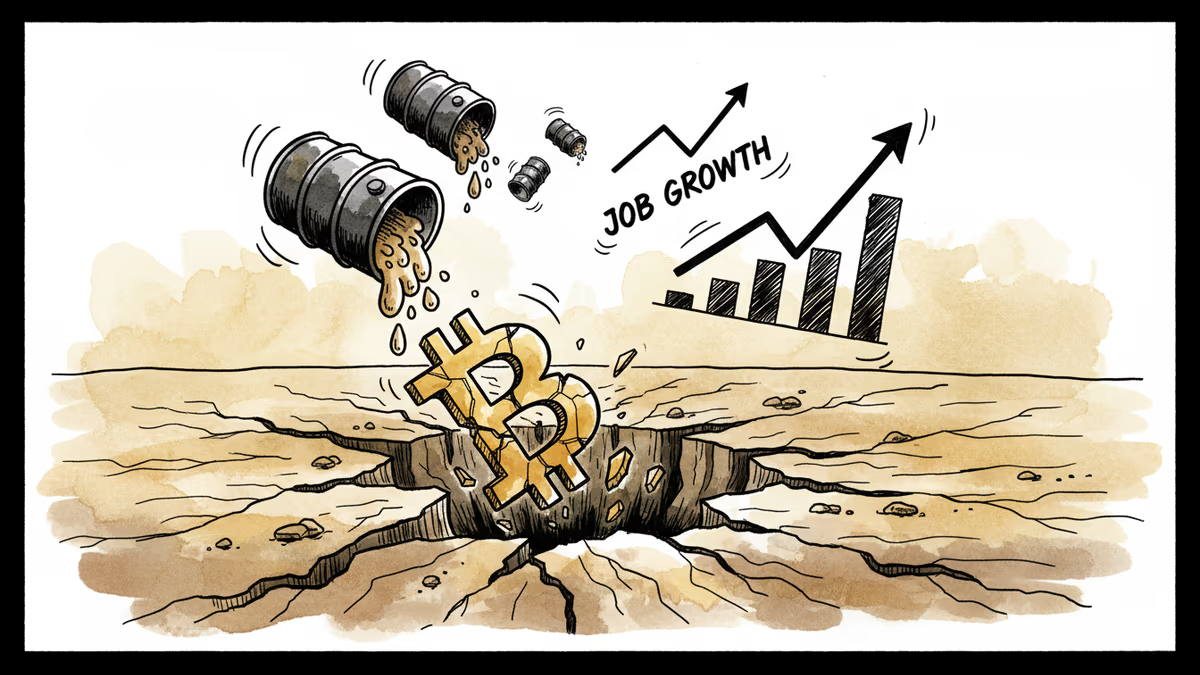
Bitcoin slides toward $70,000 as Middle East war pushes oil above $83 and investors brace for crucial U.S. employment data. Risk-off sentiment grips markets.
Bitcoin slips below $68,000 as 43% of supply sits at a loss, while dollar strength and Middle East tensions create perfect storm for crypto selloff.
Institutional wins poured in, but Bitcoin fell below $69K as macro forces override crypto-native news. The price of mainstream adoption may be losing independence.
Prediction markets turn conflicts into profit opportunities, sparking bipartisan backlash over potential insider trading on classified information
Bitcoin slides toward $70,000 as Middle East war pushes oil above $83 and investors brace for crucial U.S. employment data. Risk-off sentiment grips markets.
Thoughts
Share your thoughts on this article
Sign in to join the conversation