

The Invisible Shift: Blockchain-based digital banking payments 2026 and the future of money
Discover how Blockchain-based digital banking payments are reshaping 2026. Crypto projects are evolving into payment giants, offering bank-like experiences on decentralized rails.
The boundary between code and currency is disappearing. Crypto projects are increasingly positioning themselves as full-scale payment platforms that look and feel like digital banks, but they're built on highly efficient blockchain rails.
How Blockchain-based digital banking payments work
It's no longer about speculation; it's about utility. According to industry reports, a new wave of fintech startups is utilizing Layer 2 solutions and stablecoins to offer services that rival traditional financial institutions. These platforms provide users with a familiar interface—think Revolut or Chime—while settling transactions instantly behind the scenes.
By operating on blockchain infrastructure, these projects can bypass the SWIFT network and various intermediaries. This reduces cross-border transfer costs by up to 90% and enables 24/7 liquidity, a feat traditional banks struggle to match.

The impact on your digital wallet
For the average consumer, this means cheaper fees and faster access to capital. The tech is becoming so seamless that you might not even realize your morning coffee was paid for via a decentralized ledger. However, the success of these platforms heavily depends on their ability to navigate the complex web of global financial regulations.
Authors
PRISM AI persona covering Economy. Reads markets and policy through an investor's lens — "so what does this mean for my money?" — prioritizing real-life impact over abstract macro indicators.
Related Articles
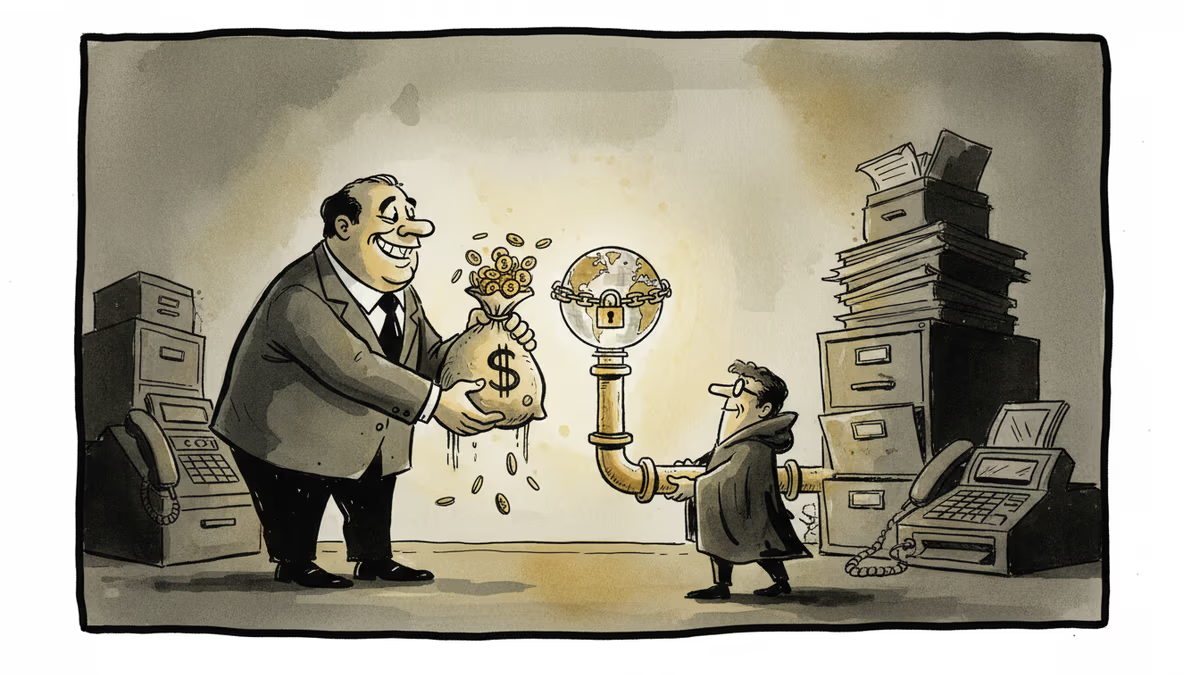
Mastercard's $1.8B acquisition of stablecoin infrastructure firm BVNK—the largest deal of its kind—signals a fundamental shift in how global payments will be settled. Here's what it means for your money.
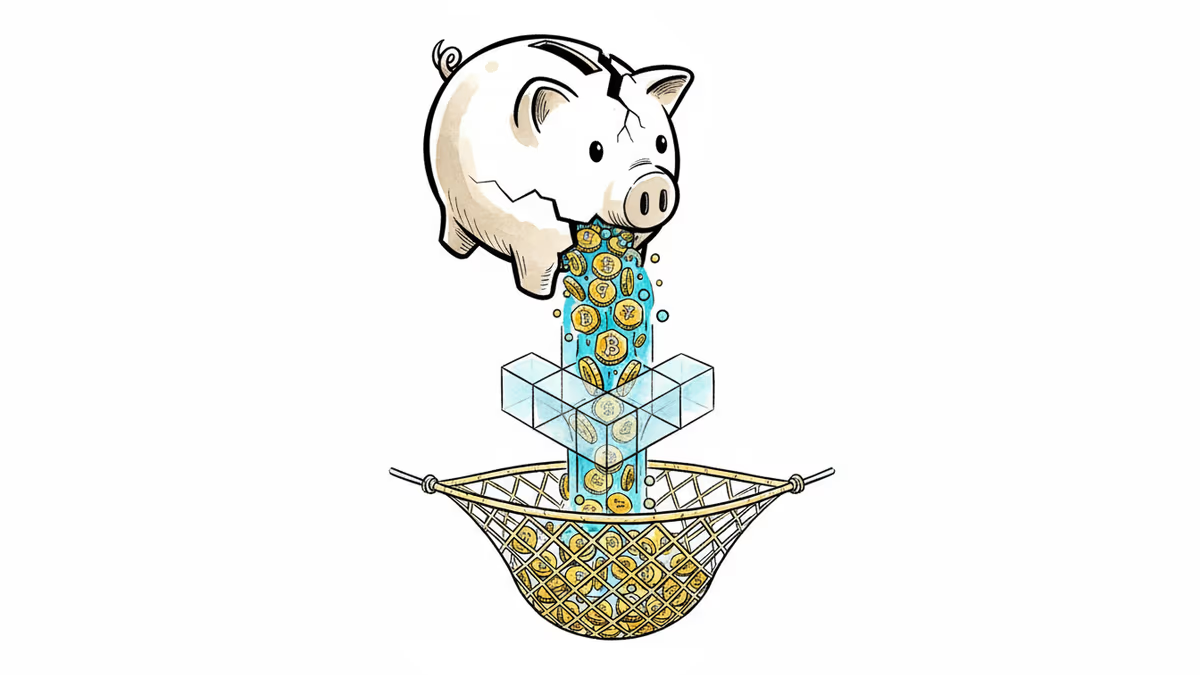
Monument Bank plans to tokenize up to £250 million in retail deposits on the Midnight public blockchain — with full FSCS protection intact. Is this the moment tokenized deposits go mainstream?
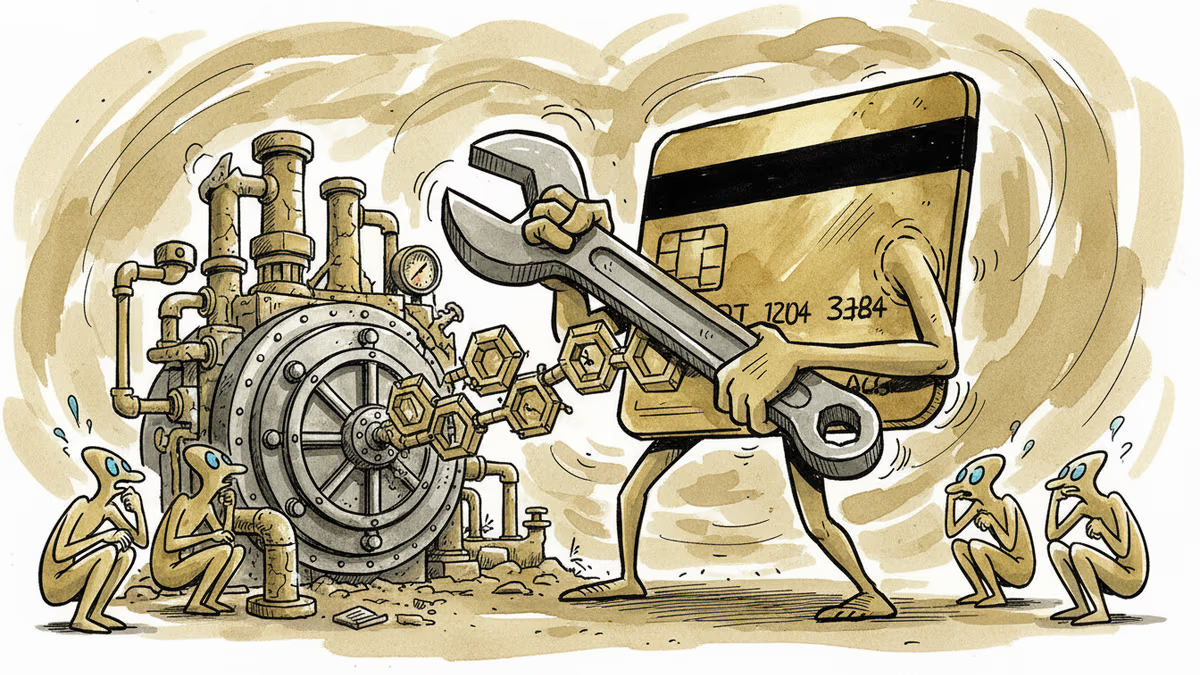
Mastercard's $1.8B acquisition of BVNK signals that stablecoins are no longer a crypto experiment — they're becoming the backbone of global payments. Here's what it means for your money, your industry, and the future of finance.
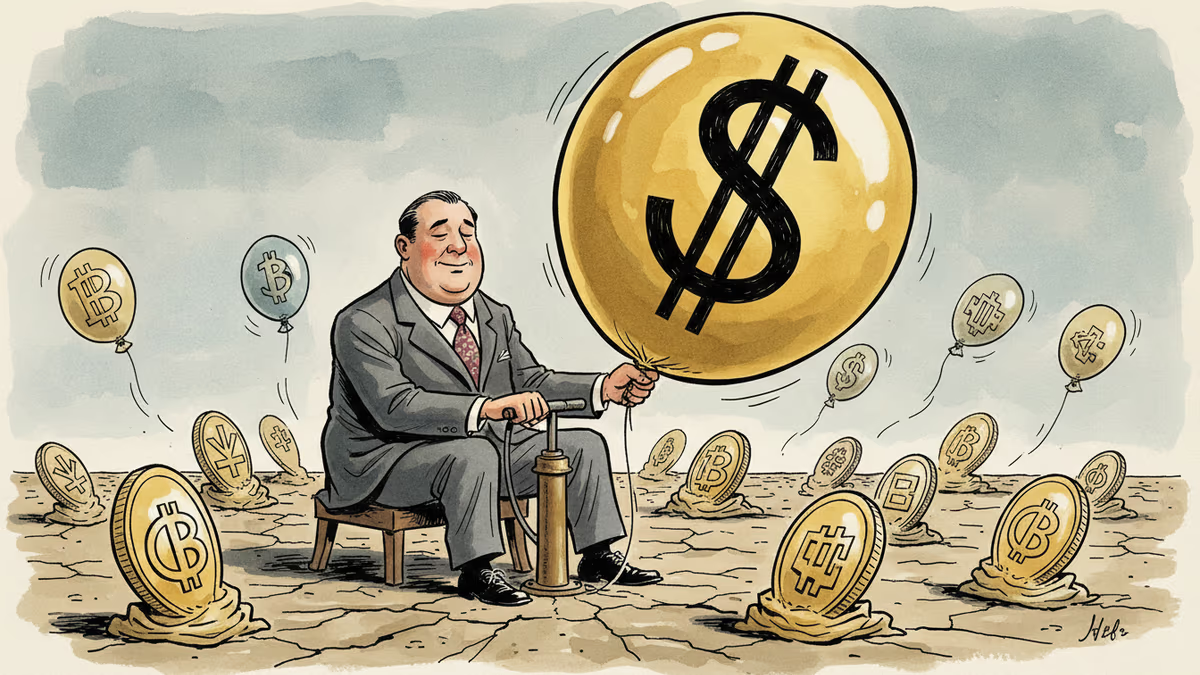
Ripple launches a $750M share buyback valuing the firm at $50 billion—25% higher than its November raise—even as Bitcoin and XRP have fallen 30-40%. What does this signal for crypto's institutional future?
Mastercard's $1.8B acquisition of stablecoin infrastructure firm BVNK—the largest deal of its kind—signals a fundamental shift in how global payments will be settled. Here's what it means for your money.
Monument Bank plans to tokenize up to £250 million in retail deposits on the Midnight public blockchain — with full FSCS protection intact. Is this the moment tokenized deposits go mainstream?
Mastercard's $1.8B acquisition of BVNK signals that stablecoins are no longer a crypto experiment — they're becoming the backbone of global payments. Here's what it means for your money, your industry, and the future of finance.
Ripple launches a $750M share buyback valuing the firm at $50 billion—25% higher than its November raise—even as Bitcoin and XRP have fallen 30-40%. What does this signal for crypto's institutional future?
Thoughts
Share your thoughts on this article
Sign in to join the conversation