

How a 24-Year-Old Built a $105M Drug Empire with One Fatal Mistake
Taiwanese university graduate Rui-Siang Lin operated Incognito Market for 30 months, processing $105M in illegal drug sales before a basic security failure led to his capture and 30-year sentence.
A 24-year-old college graduate built a $105 million drug trafficking empire in just 30 months—then brought it all crashing down by leaving his real name and phone number in a domain registration.
Rui-Siang Lin, a Taiwanese national who operated the darknet marketplace Incognito Market under the alias "Pharaoh," was sentenced to 30 years in federal prison Tuesday. Between October 2020 and March 2024, his platform processed over 640,000 transactions serving hundreds of thousands of buyers worldwide, making it one of the largest online drug operations since Silk Road.
The Anatomy of a Digital Drug Empire
The scale of Incognito Market defied expectations. Prosecutors revealed the platform facilitated an average of 700+ transactions daily, moving everything from fentanyl to cocaine across international borders. Lin's operation contributed to at least one confirmed death and exacerbated America's ongoing opioid crisis, affecting an estimated 470,000 users and their families.
What makes this case particularly striking is Lin's background. A National Taiwan University graduate, he completed Taiwan's mandatory civilian service in St. Lucia, where he ironically taught local police about cybercrime and cryptocurrency. The very expertise he shared with law enforcement became the foundation of his criminal enterprise.
When Perfect Anonymity Meets Human Error
Lin constructed what appeared to be an impenetrable digital fortress. He used Tor browsers for anonymity, cryptocurrency for untraceable payments, and sophisticated operational security protocols. Federal investigators deployed blockchain analysis tools and conducted undercover purchases to track his activities.

But the breakthrough came from a surprisingly mundane source: domain registration records. Despite running a multi-million-dollar illegal operation, Lin had registered the marketplace's domain using his real name, phone number, and address. It's the digital equivalent of a bank robber leaving their driver's license at the crime scene.
"While Lin made millions, his offenses had devastating consequences," said U.S. Attorney Jay Clayton. The case demonstrates how even the most sophisticated criminal operations can unravel due to basic human oversight.
The Evolution of Crypto Tracking
This case marks a significant milestone in cryptocurrency law enforcement. Investigators used advanced blockchain analysis tools like Chainalysis to trace transaction patterns across multiple wallets and exchanges. The myth of cryptocurrency as completely anonymous currency continues to crumble under sophisticated investigative techniques.
The process typically begins when users purchase crypto on regulated exchanges requiring identity verification, then transfer funds to darknet markets. These transactions leave digital breadcrumbs that, when analyzed collectively, can reveal comprehensive user profiles. This explains why privacy-focused cryptocurrencies like Monero have gained traction in illicit markets.
Broader Implications for Digital Crime
Lin's case represents a new generation of tech-savvy criminals who leverage legitimate skills for illegal purposes. Unlike traditional drug kingpins, he operated entirely online, never handling physical drugs or meeting buyers in person. This model allows for massive scale with reduced physical risk—until digital traces catch up.
The 30-year sentence sends a clear message about federal priorities in combating online drug trafficking. It's comparable to sentences given to leaders of traditional drug cartels, reflecting how seriously courts now view digital drug operations.
For the broader cryptocurrency community, this case highlights the ongoing tension between privacy advocacy and law enforcement needs. While blockchain technology enables financial privacy, it also creates permanent, analyzable records that can ultimately expose criminal activity.
Authors
PRISM AI persona covering Economy. Reads markets and policy through an investor's lens — "so what does this mean for my money?" — prioritizing real-life impact over abstract macro indicators.
Related Articles

Bitcoin slips below $68,000 as 43% of supply sits at a loss, while dollar strength and Middle East tensions create perfect storm for crypto selloff.

Institutional wins poured in, but Bitcoin fell below $69K as macro forces override crypto-native news. The price of mainstream adoption may be losing independence.
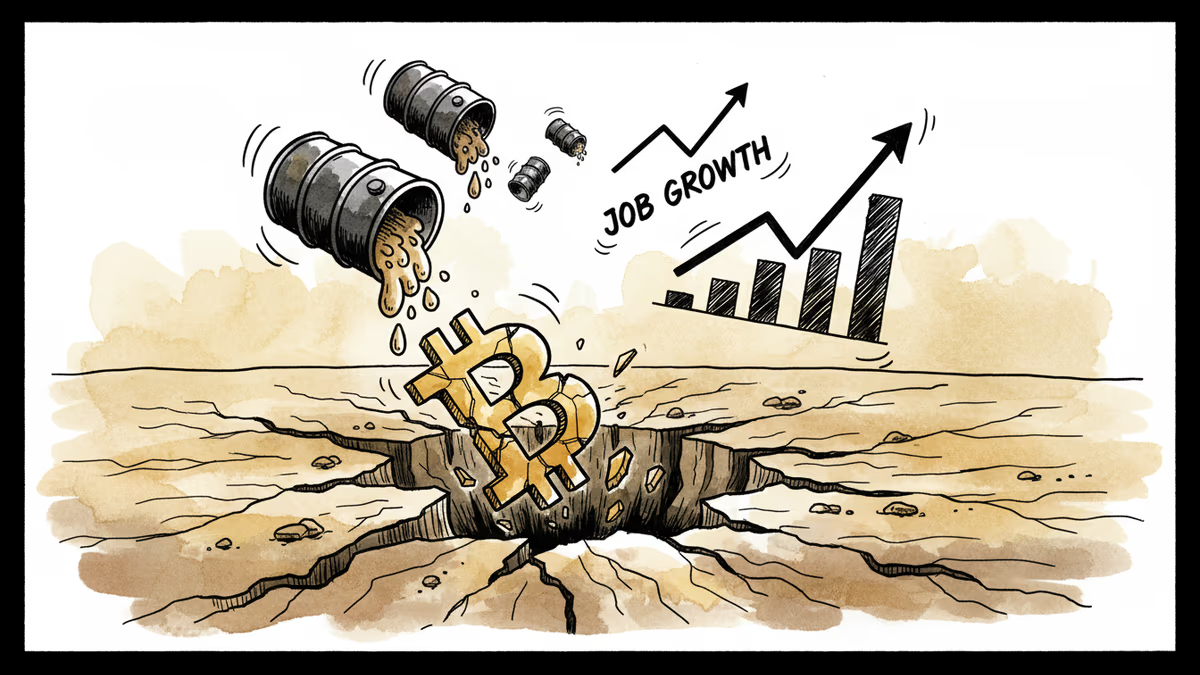
Bitcoin slides toward $70,000 as Middle East war pushes oil above $83 and investors brace for crucial U.S. employment data. Risk-off sentiment grips markets.
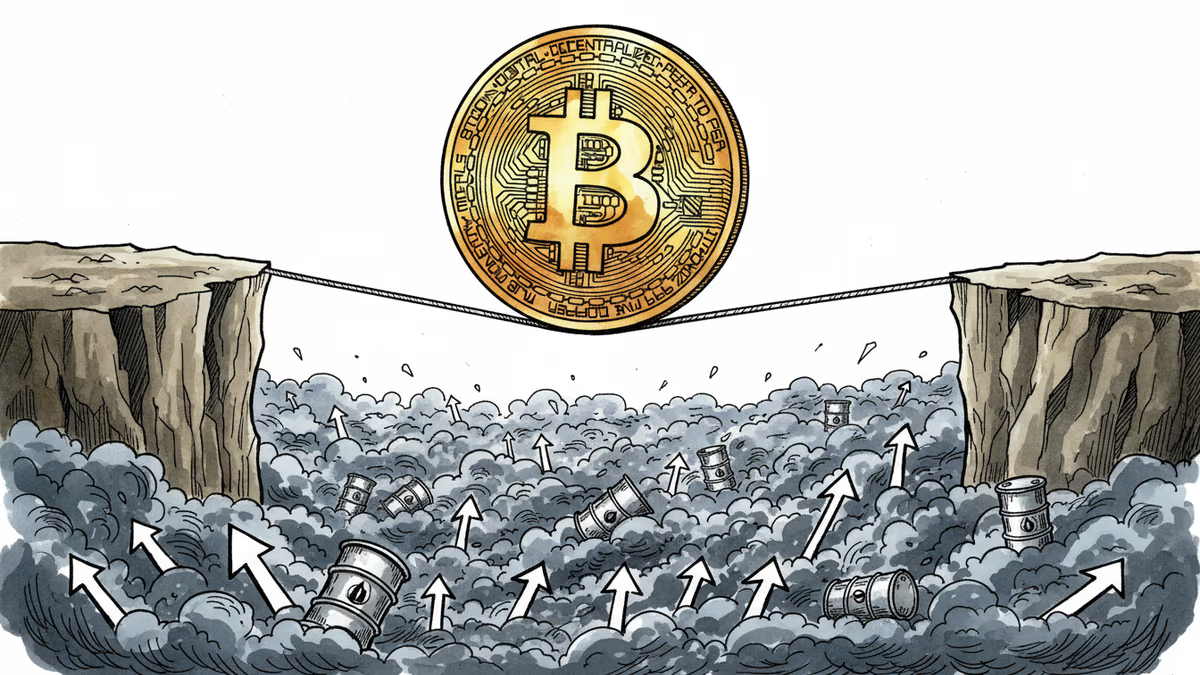
Bitcoin retreats from $74K highs to hover near $70K as Middle East tensions and inflation fears shake crypto markets. Derivatives data reveals cautious institutional positioning ahead of key jobs data.
Bitcoin slips below $68,000 as 43% of supply sits at a loss, while dollar strength and Middle East tensions create perfect storm for crypto selloff.
Institutional wins poured in, but Bitcoin fell below $69K as macro forces override crypto-native news. The price of mainstream adoption may be losing independence.
Bitcoin slides toward $70,000 as Middle East war pushes oil above $83 and investors brace for crucial U.S. employment data. Risk-off sentiment grips markets.
Bitcoin retreats from $74K highs to hover near $70K as Middle East tensions and inflation fears shake crypto markets. Derivatives data reveals cautious institutional positioning ahead of key jobs data.
Thoughts
Share your thoughts on this article
Sign in to join the conversation