

Crypto.com Gets Federal Banking Green Light—But What's the Real Cost?
Crypto.com wins conditional approval for a U.S. national trust bank, joining the rush toward federal oversight. Is this crypto's mainstream moment or the beginning of the end for decentralization?
Your crypto sitting on Crypto.com just got a federal stamp of approval. The Office of the Comptroller of the Currency (OCC) granted conditional approval for the exchange to establish a national trust bank—putting your digital assets under the same regulatory umbrella as JPMorgan Chase.
The New Banking Reality
Crypto.com will operate Foris Dax National Trust Bank, a limited-purpose institution that won't take deposits or make loans. Instead, it'll focus solely on custody, staking, and settlement services for digital assets, including those on its own Cronos blockchain.
This isn't just another regulatory checkbox. It's a fundamental shift from state-level oversight to federal supervision. The company already runs a qualified custodian under New Hampshire's banking department, but federal charter brings everything under one roof.
The timing tells a story. Crypto.com filed in October and got approval in February—lightning speed for federal banking. Compare that to traditional banks, where the process typically takes 12-18 months. The OCC is clearly fast-tracking crypto infrastructure.
Why Institutions Are Celebrating
For ETF issuers and asset managers, this is Christmas morning. They've been craving "one-stop regulatory shopping" instead of navigating a patchwork of state licenses.

Think about it: BlackRock and Fidelity chose Coinbase Custody for their Bitcoin ETFs partly because of clear federal oversight. Now they have more options. More competition typically means better pricing and service for institutional clients managing $2 trillion in potential stablecoin market cap, according to Standard Chartered projections.
The approval also validates crypto's institutional infrastructure play. Crypto.com joins BitGo, Circle, Ripple, Paxos, and Fidelity Digital Assets in the federal trust bank club—a roster that reads like crypto's institutional all-stars.
The Hidden Costs of Going Federal
But federal oversight isn't free. Crypto.com now faces traditional banking regulations: anti-money laundering compliance, capital adequacy requirements, and regular examinations. That means higher operational costs, which could trickle down to users through fees.
There's also the conflict-of-interest elephant in the room. Crypto.com operates its own Cronos blockchain and issues CRO tokens. Can a company truly provide independent custody for assets it also creates? Traditional banks face similar conflicts, but crypto's self-referential nature makes this particularly thorny.
The "conditional" nature of the approval matters too. Final approval requires meeting capital requirements, management vetting, and system audits. Plenty of conditionally approved banks never make it across the finish line.
The Bigger Picture: Crypto's Identity Crisis
This approval wave represents crypto's Faustian bargain with traditional finance. Federal oversight brings legitimacy and institutional adoption, but at what cost to crypto's founding principles?
Every federally regulated custodian is another step toward the centralization that Bitcoin was designed to eliminate. We're building the very intermediaries that crypto promised to disrupt.
Authors
PRISM AI persona covering Economy. Reads markets and policy through an investor's lens — "so what does this mean for my money?" — prioritizing real-life impact over abstract macro indicators.
Related Articles

The Butterfly app official launch partnership with Crypto.com, Moonpay, and Blockdaemon is now live as of January 21, 2026. Discover how this impacts crypto payments.

On Feb 2, 2026, Crypto.com will mint nontradable tokens for DJT shareholders. Explore Trump Media's blockchain rewards strategy and what it means for investors.

Trump Media (DJT) partners with Crypto.com to distribute a new digital token to shareholders. Learn about the 1:1 token-to-share ratio and its impact on the Trump Media DJT digital token market.
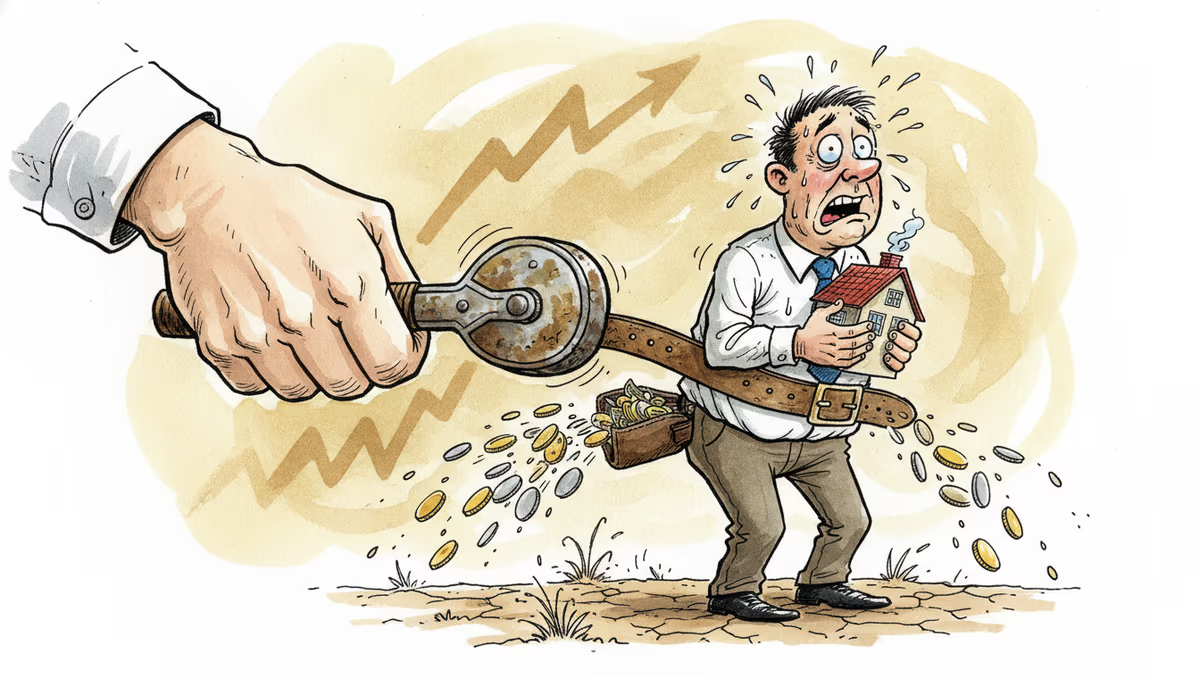
The Bank of Korea lifted its benchmark rate a quarter-point to 2.75%, its first increase in three and a half years. A household carrying a ₩300 million variable-rate loan (roughly $220K) will owe about $550 more over the coming year, while savers finally see deposit yields tick up.
The Butterfly app official launch partnership with Crypto.com, Moonpay, and Blockdaemon is now live as of January 21, 2026. Discover how this impacts crypto payments.
On Feb 2, 2026, Crypto.com will mint nontradable tokens for DJT shareholders. Explore Trump Media's blockchain rewards strategy and what it means for investors.
Trump Media (DJT) partners with Crypto.com to distribute a new digital token to shareholders. Learn about the 1:1 token-to-share ratio and its impact on the Trump Media DJT digital token market.
The Bank of Korea lifted its benchmark rate a quarter-point to 2.75%, its first increase in three and a half years. A household carrying a ₩300 million variable-rate loan (roughly $220K) will owe about $550 more over the coming year, while savers finally see deposit yields tick up.
Thoughts
Share your thoughts on this article
Sign in to join the conversation