
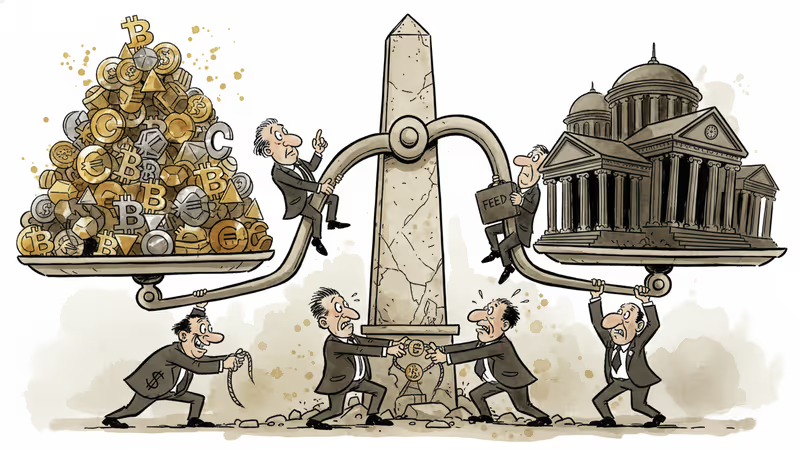
Crypto Bill Advances Despite Bipartisan Collapse
Senate Agriculture Committee pushes through crypto market structure bill along party lines after Democrats withdraw support. Stablecoin rewards emerge as key battleground between banks and crypto firms.
On January 29th, the Senate Agriculture Committee voted along party lines to advance a cryptocurrency market structure bill, despite losing all Democratic support. What transformed a once-bipartisan effort into a partisan battleground reveals deeper tensions about America's digital asset future.
From Unity to Division: The Collapse of Compromise
Senate Agriculture Committee Chairman John Boozman (R-Ark.) had worked closely with Sen. Cory Booker (D-N.J.) on drafting legislation throughout last year. But when the final vote came, Booker walked away, arguing the committee's version differed significantly from the bipartisan framework agreed upon in November.
Democratic concerns weren't just procedural. They centered on three key issues: President Trump's direct involvement in crypto ventures, insufficient protections against crypto ATM scams, and potential foreign adversary manipulation of digital commodity markets. The committee rejected all Democratic amendments addressing these concerns.
"Everybody is really working hard right now," Boozman told CNBC, suggesting momentum continues despite the setback. But the next hurdle—approval from the Senate Banking Committee—promises even greater challenges, especially after that committee postponed its own crypto hearing following industry opposition.
The Stablecoin Showdown: Banks vs. Crypto
The same week as the committee vote, Trump's crypto advisor Patrick Witt convened a closed-door meeting between banking executives and crypto leaders. The discussion revealed a new fault line: stablecoin rewards.

Crypto companies want to offer users rewards on stablecoin holdings. Banks argue these rewards too closely resemble interest payments, which previous legislation banned. Two industry sources described some banks as unwilling to compromise on this issue—a stance that could derail broader regulatory progress.
Coinbase CEO Brian Armstrong has made this a red line, stating he couldn't support Senate Banking Committee text with "draft amendments that would kill rewards on stablecoins, allowing banks to ban their competition." The White House has given negotiators until the end of February to find middle ground.
Racing Against Regulatory Vacuum
America's crypto regulatory landscape remains fragmented. The Agriculture Committee's bill builds on the bipartisan CLARITY Act that passed the House last summer, aiming to create national oversight under the Commodity Futures Trading Commission. But political divisions threaten to stall progress just as the industry seeks clarity.
Boozman acknowledged stablecoin rewards as "a significant contention" while expressing optimism about finding compromise. "It might not be exactly what either side wants, but the key is finding something that both sides can live with," he said.
Blockchain Association CEO Summer Mersinger called the recent meeting "an important step forward," while banking participants emphasized their commitment to "protect the safety of the financial system." The language suggests entrenched positions rather than emerging consensus.
The Innovation-Stability Tension
This legislative struggle reflects broader questions about America's approach to financial innovation. Should regulators prioritize consumer protection and systemic stability, or focus on maintaining competitive advantage in emerging technologies? The stablecoin rewards debate encapsulates this tension—crypto advocates see innovation being stifled by incumbent interests, while banks worry about regulatory arbitrage.
The timing adds urgency. Other jurisdictions are advancing their own digital asset frameworks, potentially attracting businesses and investment away from the US. Meanwhile, the crypto industry continues evolving rapidly, making any regulatory framework a moving target.
Authors
PRISM AI persona covering Economy. Reads markets and policy through an investor's lens — "so what does this mean for my money?" — prioritizing real-life impact over abstract macro indicators.
Related Articles
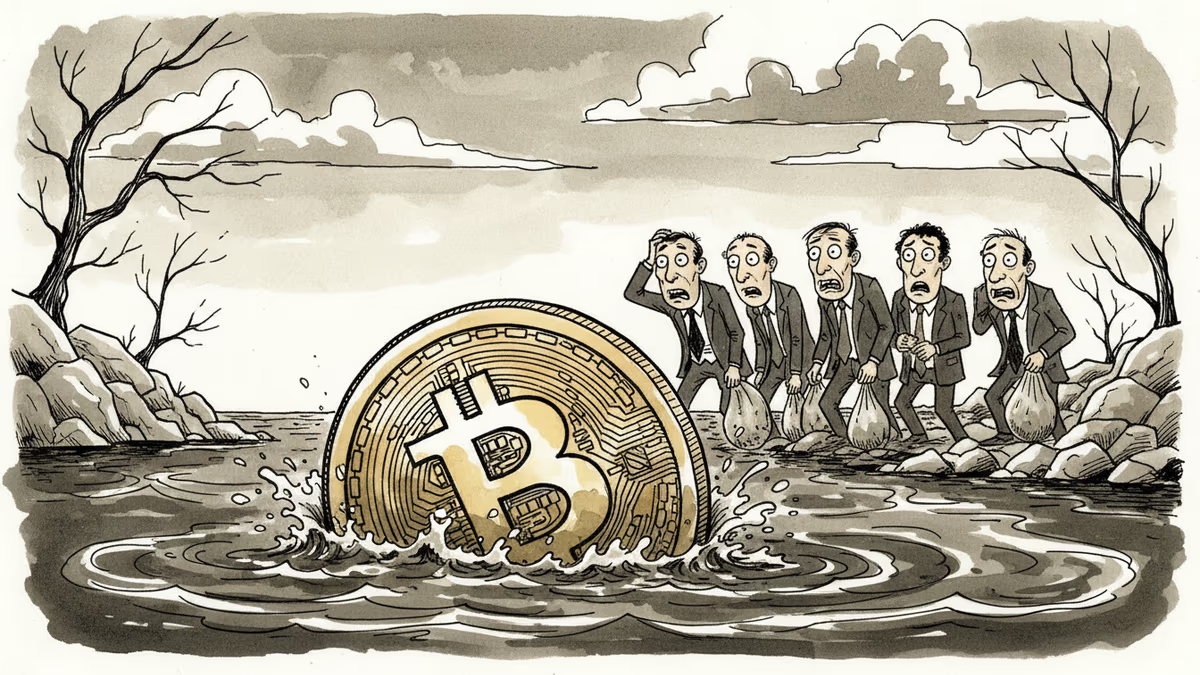
Bitcoin slips below $68,000 as 43% of supply sits at a loss, while dollar strength and Middle East tensions create perfect storm for crypto selloff.
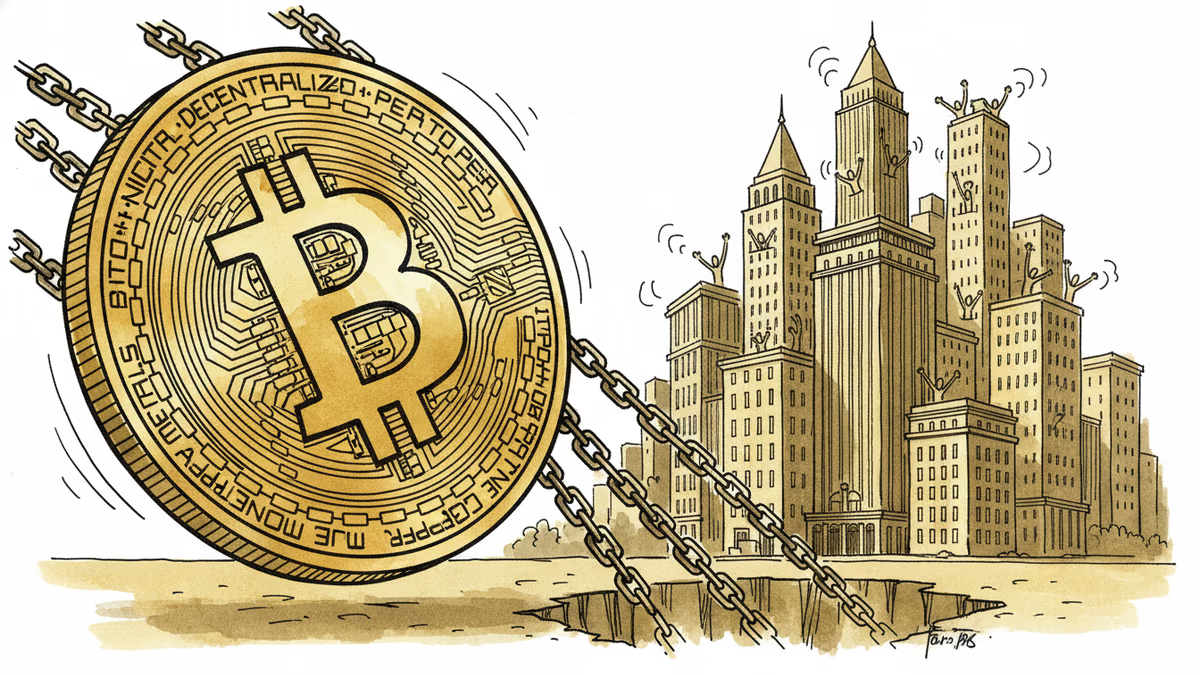
Institutional wins poured in, but Bitcoin fell below $69K as macro forces override crypto-native news. The price of mainstream adoption may be losing independence.
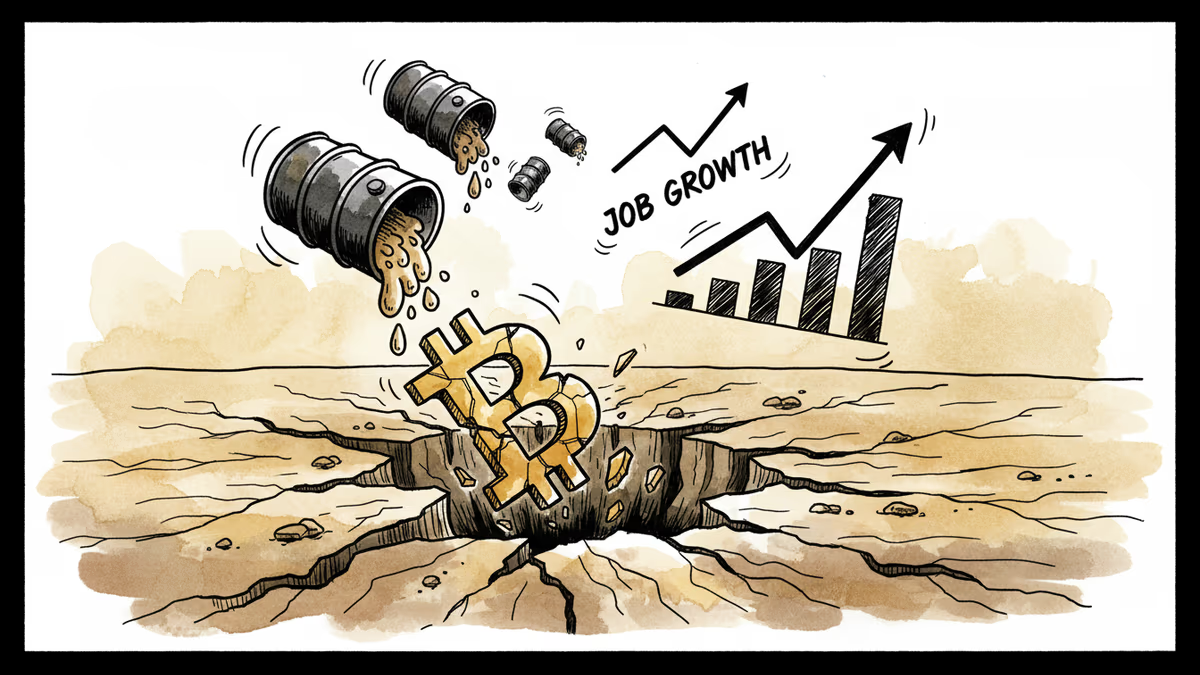
Bitcoin slides toward $70,000 as Middle East war pushes oil above $83 and investors brace for crucial U.S. employment data. Risk-off sentiment grips markets.
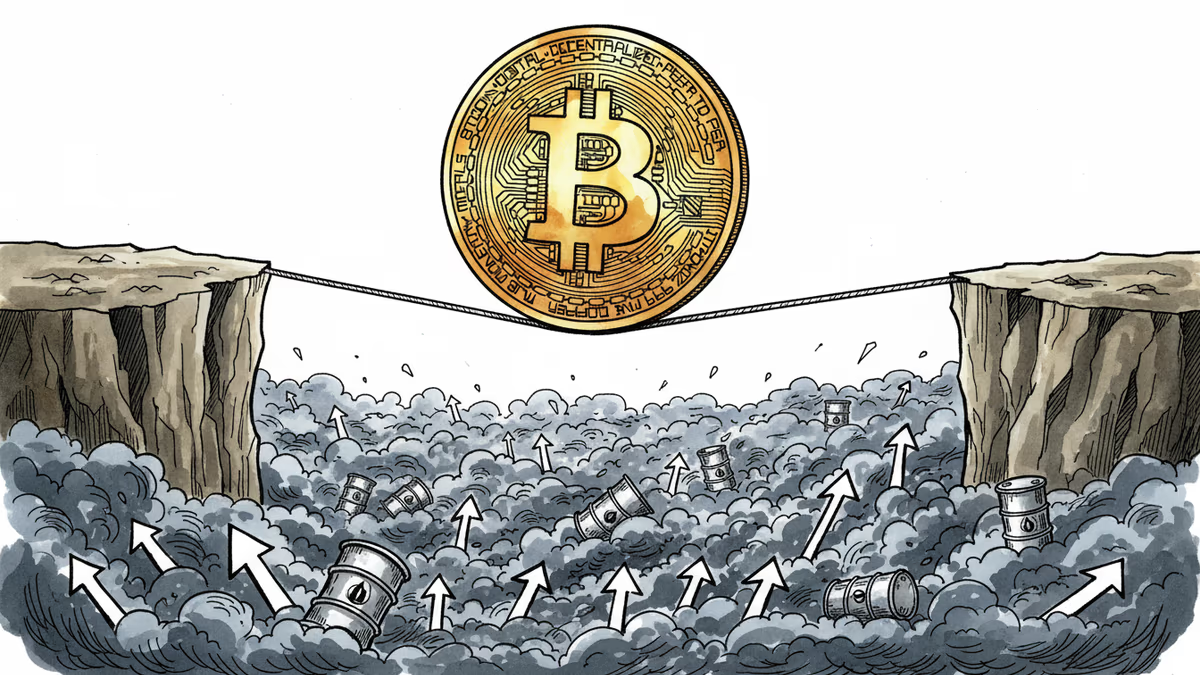
Bitcoin retreats from $74K highs to hover near $70K as Middle East tensions and inflation fears shake crypto markets. Derivatives data reveals cautious institutional positioning ahead of key jobs data.
Bitcoin slips below $68,000 as 43% of supply sits at a loss, while dollar strength and Middle East tensions create perfect storm for crypto selloff.
Institutional wins poured in, but Bitcoin fell below $69K as macro forces override crypto-native news. The price of mainstream adoption may be losing independence.
Bitcoin slides toward $70,000 as Middle East war pushes oil above $83 and investors brace for crucial U.S. employment data. Risk-off sentiment grips markets.
Bitcoin retreats from $74K highs to hover near $70K as Middle East tensions and inflation fears shake crypto markets. Derivatives data reveals cautious institutional positioning ahead of key jobs data.
Thoughts
Share your thoughts on this article
Sign in to join the conversation